Cholesteatoma
Cholesteatoma is an abnormal skin growth in the middle ear. Learn symptoms, causes, diagnosis and treatment options from ENT specialists.

Quick answer
Cholesteatoma is an abnormal collection of skin cells in the middle ear or mastoid that can damage nearby structures and lead to hearing loss, infections, dizziness, or facial nerve problems. Treatment depends on the extent of disease and typically includes ear examination, hearing tests, imaging when needed, and surgery to remove the growth and protect ear function.
Cholesteatoma is an abnormal collection of skin cells that grows in the middle ear or mastoid area behind the eardrum. It is not cancer, but it can enlarge over time and damage nearby ear structures, so assessment and treatment by an ear, nose and throat specialist are important.
Overview
Cholesteatoma is an abnormal build-up of skin cells and keratin inside the middle ear, behind the eardrum, or in the mastoid bone, which is the air-filled bone behind the ear. Although the word may sound like a tumor, cholesteatoma is not cancer. However, it can slowly expand and erode delicate structures in the ear if it is not treated.
The middle ear contains tiny hearing bones and connects to the back of the nose through the Eustachian tube. When ventilation of the middle ear is poor, the eardrum may become pulled inward, forming a pocket that traps skin cells. Over time, this pocket can collect debris and become infected, leading to persistent discharge and hearing changes.
Cholesteatoma can occur in children and adults. Some cases are congenital, meaning present from birth, while many are acquired later in life due to repeated ear infections or chronic Eustachian tube problems. Because early symptoms can seem similar to a routine ear infection, persistent or recurring ear problems should be assessed by an ENT specialist.
Symptoms
Cholesteatoma symptoms often develop gradually. One of the most common signs is ongoing or repeated ear discharge, which may have an unpleasant smell. The discharge can continue despite routine cleaning or may return after treatment for ear infection.
Hearing loss is another common symptom. It may happen because the cholesteatoma blocks sound transmission, damages the eardrum or affects the tiny bones of hearing. Some people also notice a feeling of fullness or pressure in the ear, mild ear pain or a sensation that the ear is blocked.
Possible symptoms of cholesteatoma include:
- Persistent or recurrent fluid or pus from the ear
- Reduced hearing in one ear
- Ear fullness, pressure or discomfort
- Ringing or buzzing sounds in the ear
- Dizziness, vertigo or balance disturbance
- Rarely, weakness of the facial muscles on one side
Symptoms such as dizziness, severe pain, swelling around the ear, facial weakness or sudden worsening of hearing need prompt medical attention. These symptoms do not always mean a serious complication is present, but they should be evaluated quickly to protect ear function.
Causes & Risk Factors
Most acquired cholesteatomas are linked to poor ventilation of the middle ear. The Eustachian tube normally helps equalize pressure and drain fluid from the middle ear. When it does not work well, negative pressure can pull part of the eardrum inward, creating a retraction pocket where skin cells become trapped.
Repeated ear infections and chronic middle ear inflammation can increase the chance of developing cholesteatoma. A previous eardrum perforation, ear surgery or long-term fluid behind the eardrum may also contribute. In some cases, skin cells can grow through a hole in the eardrum into the middle ear.
Risk factors include a history of recurrent middle ear infections, chronic ear discharge, Eustachian tube dysfunction, cleft palate, allergies or nasal problems that affect ear ventilation, and previous ear trauma or surgery. Children may be more prone to Eustachian tube problems because their tubes are shorter and more horizontal than in adults.
Congenital cholesteatoma is less common and occurs when skin cells are present behind an intact eardrum from birth. It may be discovered during a routine ear examination or when a child develops hearing difficulty. Regardless of the cause, the condition should be assessed because the growth can continue slowly over time.
Diagnosis
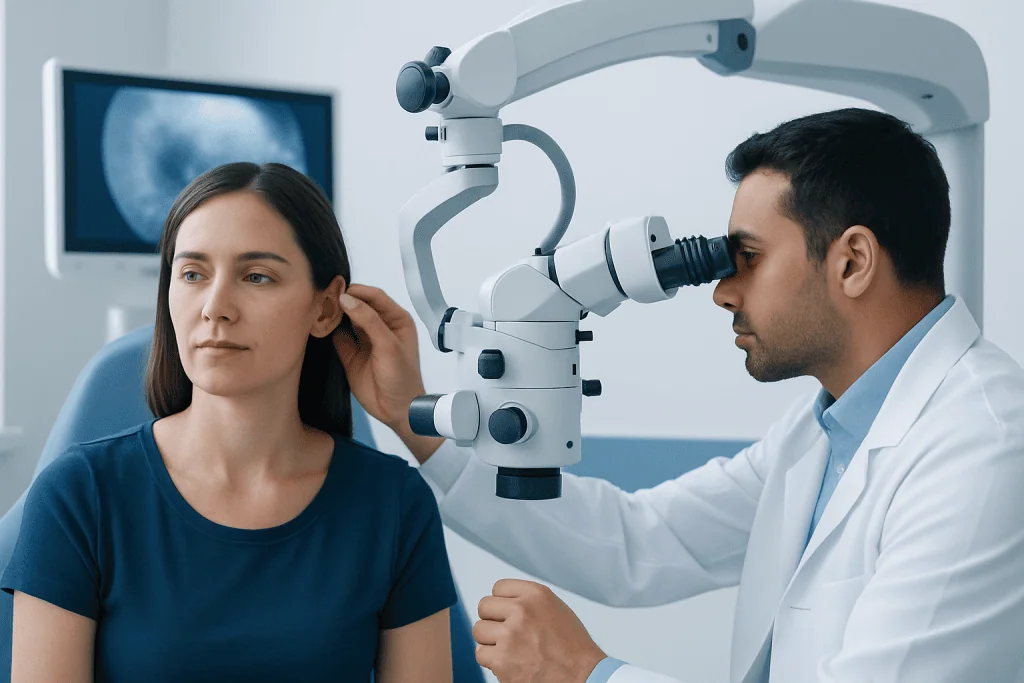
Diagnosis of cholesteatoma begins with a detailed medical history and examination by an ENT specialist. The doctor asks about ear infections, discharge, hearing changes, pain, previous ear procedures and balance symptoms. The ear is then examined using an otoscope or microscope to look for retraction pockets, debris, infection, eardrum perforation or signs of a mass behind the eardrum.
Microscopic ear examination is especially useful because cholesteatoma may be hidden behind crusting or discharge. Gentle cleaning may be needed so the specialist can see the eardrum and ear canal clearly. Patients should not try to remove deep ear debris themselves, as this may injure the ear or worsen infection.
Hearing tests are commonly performed to measure the type and degree of hearing loss. These tests help show whether sound conduction through the middle ear is affected and provide a baseline before treatment. In children, age-appropriate hearing assessment is important because hearing loss can affect speech, learning and development.
Imaging may be recommended when the extent of disease is unclear or surgery is being planned. CT scans can show the bony anatomy of the middle ear and mastoid, while MRI may help identify residual or recurrent cholesteatoma in selected cases. The choice of tests depends on the examination findings and the specialist’s clinical judgment.
Treatment Options
The main goals of cholesteatoma treatment are to remove the abnormal skin growth, control infection, create a safe and dry ear, and preserve or improve hearing when possible. The right approach is decided by an ENT specialist after assessing the ear, hearing level, imaging results, age, general health and whether complications are present.
Initial care may include careful ear cleaning under medical supervision and treatment of infection or inflammation. Ear drops or other medicines may be used to reduce discharge and make the ear safer before definitive treatment. These measures can help symptoms, but they usually do not remove the cholesteatoma itself.
Surgery is commonly required because cholesteatoma tends to persist and enlarge if left in place. Surgical options vary depending on the size and location of the cholesteatoma and may include removal of disease from the middle ear and mastoid bone. In some cases, reconstruction of the eardrum or hearing bones may be performed at the same operation or during a later procedure.
Follow-up after treatment is an important part of care. Some patients need regular ear cleaning, repeat hearing tests or surveillance imaging. A second-look procedure may be considered in selected cases to check for residual disease. These decisions are individualized by the treating specialist and explained to the patient in advance.
Living With / Prognosis
With appropriate specialist care, many people with cholesteatoma achieve good control of infection and a stable, dry ear. Hearing outcomes vary depending on the extent of disease, whether the hearing bones are affected and what reconstruction is possible. Even when hearing does not fully return to normal, treatment aims to prevent further damage and protect balance and facial nerve function.
Living with cholesteatoma often means taking ear care seriously. Patients may be advised to keep water out of the affected ear until cleared by their doctor, attend scheduled follow-up visits and report any new discharge, pain, dizziness or hearing change. Hearing support, such as hearing aids, may be discussed if hearing loss remains after treatment.
Cholesteatoma can recur, especially in children or in ears with ongoing Eustachian tube dysfunction. This is why long-term monitoring is recommended even after apparently successful surgery. Regular follow-up allows the care team to detect small problems early, often before they cause noticeable symptoms.
For international patients seeking coordinated assessment, Acibadem International provides ENT evaluation and treatment for cholesteatoma through multidisciplinary specialists in JCI-accredited hospitals. Care decisions are based on individual examination findings and current medical standards.
When to See a Doctor
A person should see a doctor if ear discharge lasts more than a few days, repeatedly returns, has a bad smell or is associated with hearing loss. Persistent symptoms should not be ignored, even if pain is mild or absent, because cholesteatoma can progress quietly.
An ENT specialist should assess anyone with recurrent middle ear infections, a known eardrum perforation, a retracted eardrum or unexplained hearing loss in one ear. Children should be evaluated promptly if parents notice reduced response to sound, speech delay, frequent ear drainage or repeated ear infections.
Urgent medical attention is needed for severe dizziness, sudden hearing change, swelling or redness behind the ear, severe headache, fever with ear symptoms, or weakness of the face on one side. These symptoms can have several causes, but they require timely evaluation to reduce the risk of complications.
Frequently asked questions
What is cholesteatoma?
Cholesteatoma is a non-cancerous growth of trapped skin cells in the middle ear or mastoid area behind the ear. It can enlarge slowly and damage nearby structures, including the eardrum and tiny hearing bones. Because it does not usually go away on its own, it should be assessed by an ENT specialist.
Is cholesteatoma a cancer?
No, cholesteatoma is not cancer and it does not spread through the body like a malignant tumor. However, it can behave locally in a destructive way by expanding and eroding delicate ear structures. This is why timely diagnosis and treatment are important.
What are the early symptoms of cholesteatoma?
Early symptoms may include recurrent ear discharge, a blocked feeling in the ear, mild discomfort and gradual hearing loss. Some people have very little pain, so the condition can be overlooked. Persistent or foul-smelling ear drainage is a common reason to seek ENT evaluation.
Can cholesteatoma be treated without surgery?
Medicines and careful cleaning can help control infection and reduce discharge, but they usually do not remove the cholesteatoma itself. In many cases, surgery is needed to remove the trapped skin growth and prevent further damage. The final treatment plan depends on specialist assessment.
Can cholesteatoma come back after surgery?
Yes, cholesteatoma can recur or small areas can remain after surgery, particularly in children or in ears with ongoing ventilation problems. Regular follow-up appointments, hearing tests and sometimes imaging help detect recurrence early. Long-term monitoring is a normal part of cholesteatoma care.
Does cholesteatoma cause permanent hearing loss?
Cholesteatoma can cause hearing loss if it affects the eardrum, middle ear space or hearing bones. Treatment may improve hearing in some patients, but the result depends on the extent of damage and the type of reconstruction possible. An audiology test helps the specialist explain the likely hearing outlook.
What happens if cholesteatoma is left untreated?
Untreated cholesteatoma may continue to grow and can lead to ongoing infection, worsening hearing loss, dizziness or damage to nearby ear structures. Serious complications are uncommon but possible, which is why medical assessment is recommended. Early specialist care usually makes treatment more manageable.
References
- American Academy of Otolaryngology–Head and Neck Surgery
- National Institute on Deafness and Other Communication Disorders
- Cleveland Clinic
- Merck Manual Professional Edition
- European Society of Pediatric Otorhinolaryngology
This article is for general information only and is not a substitute for professional medical advice. Please consult a qualified doctor about your individual situation.
Treatments for This Condition
Doctors Who Treat This Condition

Prof. Dr. Ahmet Koç
Ear Nose & Throat
Prof. Dr. Ahmet Onur Odabaşı
Ear Nose & Throat
Prof. Dr. Çetin Vural
Ear Nose & Throat
Asst. Prof. Dr. Emel Uğur
Audiology
Ody. Asime Kurter
Audiology
Ody. Ayça Nilay Doğan
Audiology
Ody. Betül Yıldızlı
Audiology
Ody. Buket Ari
Audiology
Ody. Ece Atac Geris
Audiology
Ody. Eda Yüksel
Audiology
Ody. Elifnur Sevinç
Audiology
Ody. Eren Yilmaz
AudiologyRelated Articles

Dizziness With Hearing Loss: When Neurotology Evaluation Is Needed

Vestibular Neuritis: Sudden Vertigo, Balance Problems, and Recovery

Neuro-Otology Tests for Dizziness: What Happens at Your Visit?

Persistent Dizziness After a Viral Illness: When Neuro-Otology Can Help

Tonsillectomy Recovery: What to Expect Each Day After Surgery

Ear Tubes Recovery: How Long Healing Takes and How to Care for the Ear

Common Cold or Sinus Infection: When ENT Assessment Is Needed

ESS vs FESS: Which Sinus Surgery Is Right for You?

When Dizziness Needs a Neurotology Second Opinion

How Ear Tubes Drain Fluid and Relieve Repeated Ear Infections

FESS Surgery for Nasal Polyps: Who May Benefit and What to Expect