Sudden Sensorineural Hearing Loss
Sudden Sensorineural Hearing Loss is rapid inner-ear hearing loss. Learn symptoms, causes, diagnosis, urgent treatment options, and recovery.

Quick answer
Sudden sensorineural hearing loss is a rapid, unexplained drop in hearing caused by inner ear or auditory nerve dysfunction and is treated as an urgent condition. At Acibadem in Turkey, evaluation typically includes ear examination, hearing tests, and imaging when needed, with treatment planned according to the cause and may involve corticosteroids and supportive care.
Sudden Sensorineural Hearing Loss is a rapid loss of hearing caused by a problem in the inner ear or hearing nerve, usually developing within 72 hours and most often affecting one ear. It is considered an urgent ear, nose and throat condition because early assessment and treatment can improve the chance of hearing recovery.
Overview
Sudden Sensorineural Hearing Loss, often shortened to SSNHL, is a sudden decrease in hearing caused by a problem in the inner ear, cochlea, or auditory nerve pathway. In medical practice, it is commonly described as hearing loss of at least 30 decibels across three connected sound frequencies that develops within 72 hours. It usually affects one ear, although both ears can be involved in rare situations.
This condition is different from conductive hearing loss, which happens when sound cannot travel properly through the outer or middle ear because of problems such as earwax, fluid, or eardrum disease. Sensorineural hearing loss means the sound reaches the inner ear, but the hearing cells or nerve signals are not working normally. Because a person may feel only blocked or muffled hearing at first, SSNHL can be mistaken for congestion or earwax.
Sudden Sensorineural Hearing Loss is treated as an urgent ENT condition. Early evaluation helps confirm the type of hearing loss, rule out causes that need specific care, and begin appropriate treatment when suitable. Many people recover some or all of their hearing, but the degree of recovery varies from person to person and is influenced by the severity of hearing loss, associated symptoms, underlying cause, and timing of treatment.
Symptoms
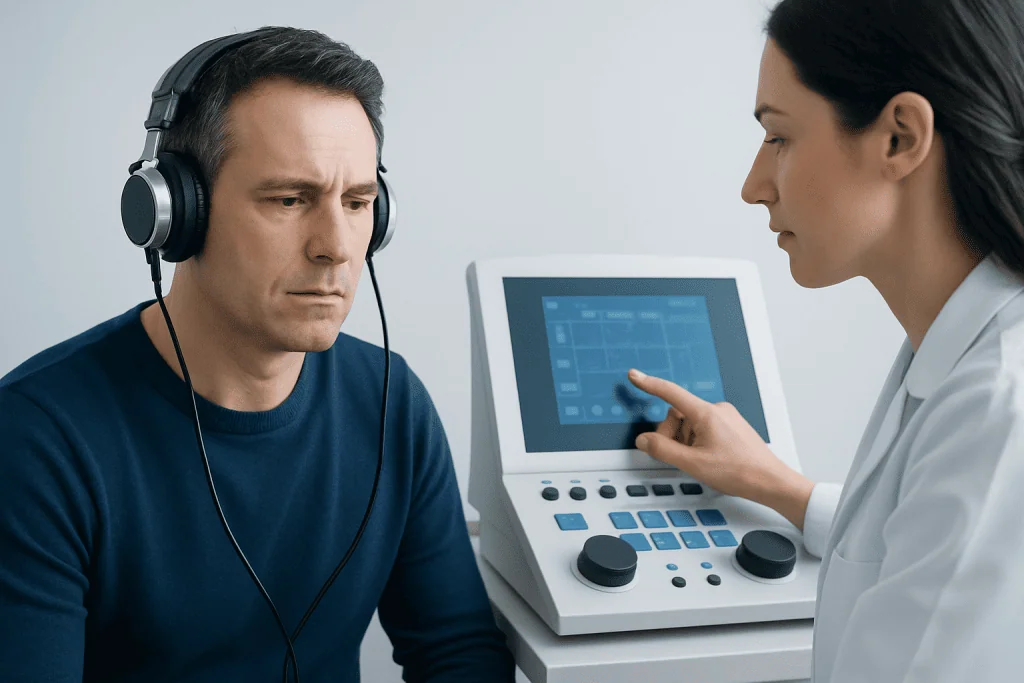
The main symptom of Sudden Sensorineural Hearing Loss is a rapid decrease in hearing, usually in one ear. Some people notice it immediately on waking, while others recognize it during a phone call, while listening to music, or when one ear suddenly seems less clear. The hearing change may be mild, moderate, or severe, and speech may sound distorted rather than simply quieter.
Common symptoms can include:
- Sudden muffled or reduced hearing in one ear
- A feeling of pressure, blockage, or fullness in the ear
- Tinnitus, such as ringing, buzzing, hissing, or roaring sounds
- Dizziness, imbalance, or vertigo in some cases
- Difficulty understanding speech, especially in background noise
- A popping sensation before the hearing changes, reported by some patients
Pain is not a typical main feature of SSNHL. If ear pain, discharge, fever, or recent trauma is present, other ear conditions may also be considered. However, the absence of pain does not make sudden hearing loss less important; a painless sudden hearing drop still needs prompt medical assessment.
Causes & Risk Factors
In many people, no single cause of Sudden Sensorineural Hearing Loss is identified even after appropriate testing. These cases are called idiopathic, meaning the cause is unknown. This can be frustrating for patients, but it is common in SSNHL and does not prevent doctors from offering evidence-based treatment and follow-up.
Possible causes or contributing factors include viral inflammation affecting the inner ear, reduced blood flow to the cochlea, autoimmune inner ear disease, head or ear trauma, inner-ear membrane problems, neurological disorders, and certain infections. Less commonly, a benign tumor on the hearing and balance nerve, such as a vestibular schwannoma, may be found during evaluation. Some medicines or toxins can also affect hearing, although medication-related hearing loss often has a different pattern and history.
Risk factors are not always clear, but doctors may pay closer attention in people with cardiovascular risk factors, autoimmune disease, recent viral illness, migraine-like inner-ear symptoms, previous ear disease, or significant noise or head injury history. A careful medical history is important because sudden hearing loss can occasionally be the first sign of a wider medical problem. The goal is to identify treatable causes without delaying urgent hearing-focused care.
Diagnosis
Diagnosis begins with a discussion of when the hearing loss started, whether it happened suddenly or gradually, which ear is affected, and whether tinnitus, dizziness, infection symptoms, injury, or neurological symptoms are present. An ENT specialist examines the ear canal and eardrum to look for conductive causes such as earwax, fluid behind the eardrum, infection, or eardrum perforation. Simple bedside tests, such as tuning fork tests, may help distinguish sensorineural from conductive hearing loss.
The key diagnostic test is an audiogram, a formal hearing test performed by an audiologist or hearing specialist. Pure-tone audiometry measures the quietest sounds a person can hear at different frequencies, while speech testing evaluates how clearly speech is understood. These tests confirm the degree and pattern of hearing loss and provide a baseline for monitoring recovery.
Additional tests are chosen according to the clinical situation. Magnetic resonance imaging may be recommended to assess the inner ear, hearing nerve, and nearby brain structures, especially to exclude uncommon causes such as vestibular schwannoma. Blood tests are not needed for every patient, but may be used when infection, autoimmune disease, metabolic problems, or other systemic conditions are suspected. The diagnostic plan should be individualized by a qualified doctor.
Treatment Options
Treatment for Sudden Sensorineural Hearing Loss depends on the timing, severity, hearing test results, associated symptoms, medical history, and any identified cause. The right approach is decided by an ENT specialist after assessment. Because SSNHL can be time-sensitive, treatment is often considered soon after diagnosis rather than waiting for all possible tests to be completed, when clinically appropriate.
Corticosteroid therapy is a commonly used treatment category for idiopathic SSNHL because it may reduce inflammation and swelling in the inner ear. Steroids may be given by mouth or placed directly into the middle ear through the eardrum as intratympanic treatment, depending on the patient, medical risks, and specialist judgment. Intratympanic therapy may be considered as an initial option for some patients or as additional treatment if hearing does not improve sufficiently.
In selected cases, other treatment categories may be considered. These can include treatment of an underlying infection or autoimmune disorder when identified, balance medication or vestibular rehabilitation for significant vertigo, and hearing rehabilitation if hearing does not fully return. Hyperbaric oxygen therapy may be discussed in some centers as an adjunct in carefully selected patients, but suitability depends on timing, availability, and medical assessment.
If hearing loss remains after the acute phase, rehabilitation can help communication and quality of life. Options may include hearing aids, tinnitus management, assistive listening devices, communication strategies, or cochlear implant assessment for severe persistent loss when appropriate. Acibadem International’s multidisciplinary ENT, audiology, radiology, and rehabilitation teams in JCI-accredited hospitals diagnose and treat sudden hearing loss for international patients as part of individualized care.
Living With / Prognosis
The outlook after Sudden Sensorineural Hearing Loss varies. Some people experience substantial recovery within days or weeks, while others recover partially or have longer-lasting hearing changes. Recovery is influenced by factors such as how severe the loss was at the start, whether vertigo was present, the hearing frequencies affected, age and general health, and how soon medical care began.
Follow-up hearing tests are important because they show whether hearing is improving, stable, or worsening. These results help the specialist decide whether additional treatment, imaging, or rehabilitation is needed. Even when hearing improves, tinnitus or sound sensitivity may persist for a period of time, and supportive strategies can make daily life easier.
Living with temporary or permanent hearing change may require practical adjustments. Patients may benefit from facing speakers directly, reducing background noise, using captions or assistive devices, and informing family or colleagues about the hearing difficulty. Emotional stress is understandable, especially when symptoms come on suddenly, but reassurance, clear follow-up, and hearing rehabilitation can help patients regain confidence in communication.
When to See a Doctor
A person should seek urgent medical care if hearing suddenly decreases in one or both ears, even if there is no pain. Sudden hearing loss should not be assumed to be earwax, allergy, sinus congestion, or a minor cold without examination and a hearing test. Prompt ENT evaluation is especially important when the hearing change develops over minutes, hours, or within a few days.
Immediate assessment is also important if sudden hearing loss is accompanied by dizziness, severe vertigo, new neurological symptoms, facial weakness, severe headache, head injury, ear drainage, or symptoms affecting both ears. These features may suggest a condition that needs rapid evaluation beyond routine ear care. If emergency symptoms are present, a person should seek emergency medical attention.
Patients already diagnosed with SSNHL should attend follow-up appointments and repeat hearing tests as recommended. They should also contact their doctor if hearing worsens, new balance symptoms develop, tinnitus becomes distressing, or treatment side effects occur. Early communication with the care team helps adjust the plan safely.
Frequently asked questions
What is Sudden Sensorineural Hearing Loss?
Sudden Sensorineural Hearing Loss is a rapid loss of hearing caused by a problem in the inner ear or hearing nerve. It usually develops within 72 hours and most often affects one ear. It is considered urgent because early diagnosis and treatment may improve the chance of recovery.
Is sudden hearing loss always caused by earwax?
No. Earwax can cause blocked hearing, but Sudden Sensorineural Hearing Loss comes from the inner ear or hearing nerve rather than a blockage in the ear canal. Because the symptoms can feel similar, a medical examination and hearing test are needed to tell the difference.
How quickly should someone see a doctor for sudden hearing loss?
A person should seek urgent medical assessment as soon as possible, ideally the same day or within the first few days. Sudden hearing loss should not be watched for weeks to see if it improves. Early ENT evaluation helps confirm the diagnosis and start appropriate treatment when suitable.
Can Sudden Sensorineural Hearing Loss recover completely?
Some people recover most or all of their hearing, while others have partial or persistent hearing loss. Recovery depends on several factors, including the severity of the initial loss, the presence of vertigo, the underlying cause, and how quickly care begins. Follow-up hearing tests help measure progress.
What tests are used to diagnose SSNHL?
The most important test is an audiogram, which measures hearing levels and speech understanding. An ENT examination checks for other causes such as wax, infection, or eardrum problems. Imaging, usually MRI, and selected blood tests may be recommended depending on the patient’s symptoms and history.
What treatments are available for Sudden Sensorineural Hearing Loss?
Treatment may include corticosteroid therapy, intratympanic ear treatment, management of an identified underlying cause, and hearing rehabilitation if hearing does not fully recover. Some patients may be considered for additional supportive treatments such as vestibular rehabilitation or, in selected cases, hyperbaric oxygen therapy. The best plan should be chosen by an ENT specialist after assessment.
Can tinnitus occur with Sudden Sensorineural Hearing Loss?
Yes. Tinnitus, such as ringing, buzzing, hissing, or roaring in the affected ear, is common with SSNHL. It may improve as hearing recovers, but it can persist in some people. Tinnitus management, hearing support, and counseling strategies can help reduce its impact.
References
- American Academy of Otolaryngology–Head and Neck Surgery Foundation
- National Institute on Deafness and Other Communication Disorders
- National Health Service
- Merck Manual Professional Edition
- National Institute for Health and Care Excellence
This article is for general information only and is not a substitute for professional medical advice. Please consult a qualified doctor about your individual situation.
Treatments for This Condition
Doctors Who Treat This Condition

Prof. Dr. Ahmet Koç
Ear Nose & Throat
Prof. Dr. Ahmet Onur Odabaşı
Ear Nose & Throat
Prof. Dr. Çetin Vural
Ear Nose & Throat
Asst. Prof. Dr. Emel Uğur
Audiology
Ody. Asime Kurter
Audiology
Ody. Ayça Nilay Doğan
Audiology
Ody. Betül Yıldızlı
Audiology
Ody. Buket Ari
Audiology
Ody. Ece Atac Geris
Audiology
Ody. Eda Yüksel
Audiology
Ody. Elifnur Sevinç
Audiology
Ody. Eren Yilmaz
AudiologyRelated Articles

Dizziness With Hearing Loss: When Neurotology Evaluation Is Needed

Vestibular Neuritis: Sudden Vertigo, Balance Problems, and Recovery

Neuro-Otology Tests for Dizziness: What Happens at Your Visit?

Persistent Dizziness After a Viral Illness: When Neuro-Otology Can Help

Tonsillectomy Recovery: What to Expect Each Day After Surgery

Ear Tubes Recovery: How Long Healing Takes and How to Care for the Ear

Common Cold or Sinus Infection: When ENT Assessment Is Needed

ESS vs FESS: Which Sinus Surgery Is Right for You?

When Dizziness Needs a Neurotology Second Opinion

How Ear Tubes Drain Fluid and Relieve Repeated Ear Infections

FESS Surgery for Nasal Polyps: Who May Benefit and What to Expect