

Gamma Knife Radiosurgery in Turkey: Treatment Guide
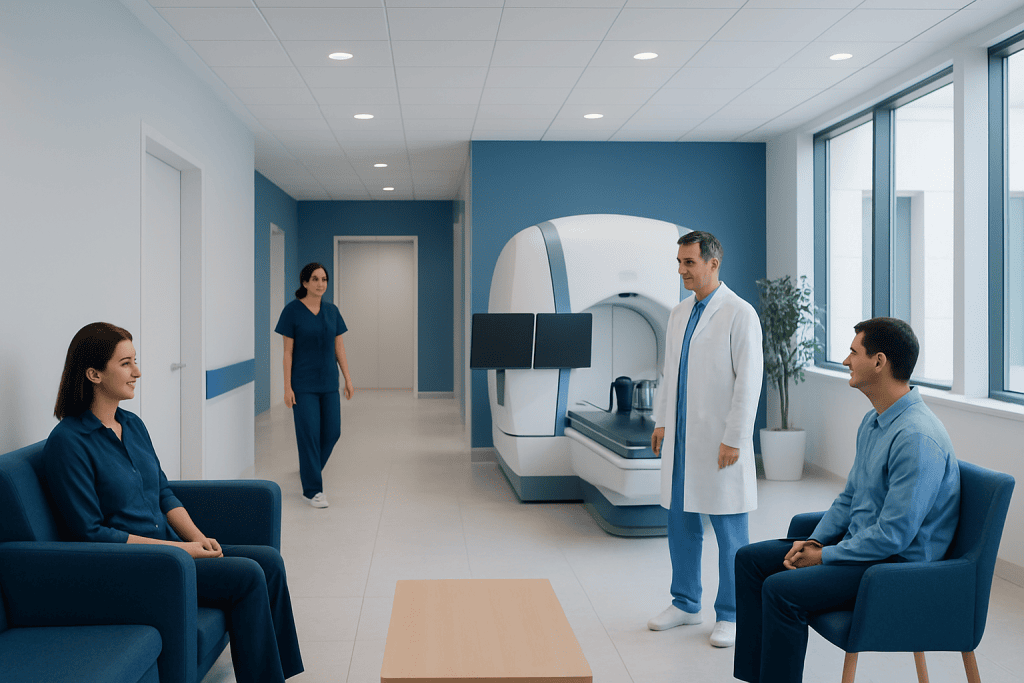
Gamma Knife radiosurgery is a non-invasive treatment that uses highly focused radiation to target brain tumors and certain neurological conditions without a surgical incision. In Turkey, Acibadem plans Gamma Knife treatment with detailed brain imaging and multidisciplinary review, then delivers the radiation in a single session or short course with close follow-up.
This guide explains how Gamma Knife radiosurgery is planned and delivered in Turkey, who it may suit, what recovery is like, and how international patients can prepare. You will also learn what to expect from evaluation, travel planning, cost factors and follow-up with Acibadem International.
At a glance
- Procedure type: Non-invasive stereotactic radiosurgery for selected brain conditions
- Purpose: To target tumors, vascular malformations or functional nerve conditions with highly focused radiation
- Anesthesia: Usually local anesthesia for head-frame placement, sometimes mild sedation; general anesthesia is uncommon and case-dependent
- Hospital stay: Often same-day discharge; some patients may stay overnight depending on diagnosis and overall condition
- Estimated recovery: Most patients recover from the treatment day within a few days, although medical response develops gradually
- Return to daily life: Many patients resume light daily activities within 1–3 days, depending on symptoms and physician advice
- Final result timeline: Weeks to months for many tumors and nerve conditions; vascular malformations may require longer follow-up
- Suitable department: Neurosurgery, Radiation Oncology, Neuroradiology and Medical Physics teams
- International patient support: Online medical review, interpreter assistance, airport transfers, accommodation guidance and remote follow-up coordination
What is this treatment?
Gamma Knife radiosurgery is a highly precise form of stereotactic radiosurgery used to treat selected conditions inside the brain. Despite the word “knife,” it does not involve a surgical incision. Instead, many narrow beams of radiation are directed from different angles so that the highest dose is concentrated at the target while surrounding healthy tissue receives much lower exposure.
The treatment is commonly planned by a multidisciplinary team that may include neurosurgeons, radiation oncologists, neuroradiologists, medical physicists and specialized nurses. Imaging such as MRI, CT or angiography is used to define the target very accurately. The treatment plan is then customized to your diagnosis, lesion size, location, symptoms and previous treatments.
Gamma Knife is most often used for brain conditions such as small or selected brain metastases, vestibular schwannoma, meningioma, pituitary adenoma, arteriovenous malformation and trigeminal neuralgia. It may be recommended when open surgery is not ideal, when a lesion is difficult to reach safely, or when focused radiation is expected to offer meaningful control with a shorter recovery.
When is it recommended?
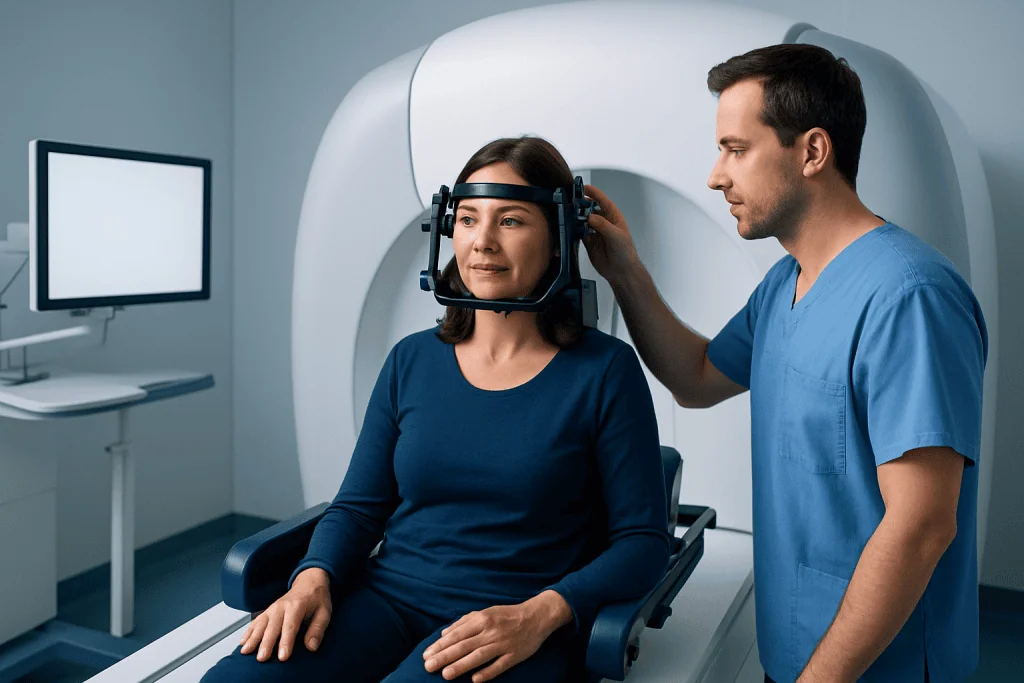
Gamma Knife radiosurgery may be recommended when a brain lesion is well-defined and can be targeted safely. Your medical team considers many details before advising this treatment, including the diagnosis, number and size of lesions, location near sensitive brain structures, current symptoms, previous surgery or radiotherapy, and your overall health.
For benign tumors such as vestibular schwannoma or meningioma, the goal is often to stop or slow growth while preserving neurological function as much as possible. For certain cancer-related brain metastases, the goal may be local tumor control as part of a broader oncology plan. For arteriovenous malformations, the goal is gradual closure of abnormal blood vessels over time. For trigeminal neuralgia, the goal is pain reduction by targeting a specific nerve pathway.
Gamma Knife is not suitable for every brain condition. Large tumors causing significant pressure, widespread disease, severe swelling, urgent bleeding, or conditions requiring tissue diagnosis may need different approaches such as surgery, medication, whole-brain radiotherapy or combined treatment. A physician evaluation is essential before deciding whether radiosurgery is appropriate for you.
Who is a good candidate?

You may be a good candidate if you have a brain lesion or functional nerve condition that can be clearly identified on imaging and safely targeted. Candidates often include patients who want to avoid open surgery when medically reasonable, patients with lesions in delicate areas, and patients who may not tolerate a longer surgical recovery. However, suitability depends on precise medical details rather than diagnosis name alone.
Your team will assess your neurological symptoms, imaging quality, current medications, cancer history if relevant, previous radiotherapy, and any implanted devices or medical conditions. The size, shape and location of the target are especially important. For some diagnoses, Gamma Knife may be used alone; for others, it may be one part of a wider care plan involving oncology, endocrinology, neurology or neurosurgery.
A good candidate is also someone who understands that the effect is usually gradual. Gamma Knife does not always make a lesion disappear immediately. The aim may be to stop growth, shrink a lesion over time, reduce pain, or lower future risk. Results vary, and continued follow-up imaging is a normal part of safe care.
Treatment options
Gamma Knife radiosurgery is one type of stereotactic radiosurgery designed specifically for intracranial targets. Treatment may be delivered as a single session or, in selected cases and depending on the system and clinical plan, as staged or fractionated radiosurgery. The correct approach depends on target size, location, proximity to sensitive structures and the expected tolerance of surrounding tissue.
For tumors, options may include single-session Gamma Knife, fractionated stereotactic radiotherapy, conventional radiotherapy, microsurgery, systemic therapy or observation with regular imaging. For arteriovenous malformations, options may include Gamma Knife, embolization, microsurgery or a combination. For trigeminal neuralgia, options can include medication, radiosurgery, percutaneous procedures or microvascular decompression depending on your condition.
At Acibadem International, your case can be reviewed by relevant specialists before travel whenever possible. This helps clarify whether Gamma Knife is likely to be appropriate, whether additional imaging is needed, and whether another treatment pathway should be considered. The final recommendation is made after physician evaluation and review of current imaging.
Online evaluation before travel
Online evaluation is an important first step for international patients. You can share your medical history, diagnosis, recent MRI or CT images, pathology reports if available, previous treatment notes and current symptoms. For brain tumors or metastases, oncology records and previous radiotherapy details are particularly helpful. For vascular malformations, angiography reports may be requested.
The Acibadem International medical coordination team helps organize your documents for preliminary review by the relevant department. This review can indicate whether Gamma Knife may be an option, what additional tests may be required, how many days you may need in Turkey, and whether your case should be discussed by a multidisciplinary team.
Online review is not a final diagnosis or guaranteed treatment approval. Imaging quality, updated scans and in-person neurological assessment can change the plan. You should travel with the understanding that the medical team will confirm suitability after examination and necessary tests in Turkey.
Before the treatment
Before Gamma Knife radiosurgery, your team will review your medical history, neurological condition, medications, allergies and previous treatments. You may need updated MRI, CT, blood tests or other investigations. If you have a pacemaker, implanted device, kidney disease, contrast allergy, pregnancy possibility or difficulty lying flat, you should inform the team early.
Medication instructions are individualized. Some patients may need guidance about blood thinners, anti-seizure medication, steroids, diabetes medication or pain medication. Do not stop prescribed medicines on your own. Your doctor will explain what to take on the treatment day and whether fasting is needed, especially if sedation is planned.
You should also plan practical details. Wear comfortable clothing, avoid bringing unnecessary metal items into imaging areas, and arrange a companion if recommended. International patients should keep copies of their passport, travel documents, insurance information, medical records and imaging on a secure digital device as well as in printed form when possible.
What happens during the treatment
On the treatment day, the team first prepares you for stereotactic targeting. In many Gamma Knife treatments, a lightweight head frame is attached using local anesthesia at several pin sites to keep the head stable and create a precise coordinate system. Some treatment approaches may use a mask-based system depending on the technology and clinical plan. Mild sedation may be offered for comfort when appropriate.
After frame or mask preparation, detailed imaging is performed. This may include MRI, CT and sometimes angiography. The medical team uses these images to define the target and protect critical structures such as the optic nerves, brainstem or hearing pathways. A customized plan is created and checked by physicians and medical physicists before treatment begins.
During the actual radiosurgery session, you lie on the treatment couch while the machine delivers focused radiation. You do not feel the radiation itself. The duration varies depending on the number of targets, treatment complexity and dose plan. Staff monitor you throughout, and you can communicate with the team. After treatment, the frame is removed if one was used, and the pin sites are cleaned and covered if needed.
Hospital stay and discharge
Gamma Knife radiosurgery is often performed as a same-day procedure. After treatment, you spend time in a recovery or observation area while the team checks your comfort, neurological status, blood pressure and any pin-site tenderness. Some patients may have a mild headache, tiredness or temporary swelling at the pin sites.
An overnight hospital stay may be recommended if you have significant symptoms, complex disease, travel-related concerns, need closer monitoring, or receive additional investigations. The decision is individualized and made for safety. If you are traveling internationally, your team may also consider your flight timing and whether a short local recovery period is advisable before returning home.
Before discharge, you will receive instructions about medications, wound or pin-site care, activity, warning signs and follow-up imaging. You should make sure you understand when to contact the hospital, when to resume travel, and how your remote follow-up will be coordinated after you leave Turkey.
Recovery timeline
Recovery after Gamma Knife is usually shorter than after open brain surgery because there is no incision and no surgical wound inside the skull. Still, your body may need time to rest, especially if you traveled internationally or had symptoms before treatment. Some effects are related to the head frame, imaging contrast, sedation or the underlying condition rather than the radiation itself.
| Timeframe | What to expect |
|---|---|
| First 24 hours | Observation after treatment, possible mild headache, fatigue, pin-site tenderness or nausea. You may be advised to rest and avoid driving if sedation was used. |
| First week | Most patients return to light activities. Small pin-site marks or scalp sensitivity may improve. Follow medication instructions carefully and report new symptoms. |
| Weeks 2-4 | Energy levels often normalize. Some patients may notice temporary symptom fluctuation depending on lesion location and swelling risk. |
| Months 1-3 | Early follow-up may be planned. Tumor or nerve-related response may begin, but imaging changes can be gradual and must be interpreted by specialists. |
| Final result | For many tumors, assessment continues over months. For arteriovenous malformations, full response can take much longer and requires scheduled imaging follow-up. |
Your personal recovery timeline depends on the diagnosis, size and location of the target, medications, neurological symptoms and whether other treatments are part of your care plan. Your doctor will tell you when to fly, work, exercise and resume specific activities.
What to avoid after treatment
After Gamma Knife, you should avoid strenuous activity, heavy lifting and long exhausting days until your doctor confirms it is safe. If you received sedation, do not drive, operate machinery, drink alcohol or make important decisions for the period advised by your care team. If a head frame was used, avoid scratching or irritating the pin sites.
Do not stop or change prescribed medications without medical advice. This is especially important for anti-seizure medicines, steroids, blood thinners, blood pressure medicines and diabetes medicines. If you are given a medication plan for swelling, pain or nausea, follow it exactly and ask for clarification if anything is unclear.
International travel should be planned with your medical team. Avoid scheduling a long flight immediately after treatment unless your physician has cleared it. You should also avoid skipping follow-up imaging, because Gamma Knife results are evaluated over time and safe monitoring is part of the treatment.
Risks and possible complications
Gamma Knife radiosurgery is considered a focused and non-invasive treatment, but it still has risks. Possible short-term effects include headache, fatigue, nausea, dizziness, scalp tenderness, pin-site discomfort or temporary swelling. These are often manageable, but you should always follow your medical team’s instructions.
Depending on the target location and diagnosis, delayed effects may include brain swelling, radiation-related tissue changes, temporary or permanent neurological symptoms, seizure, hearing or balance changes, visual pathway concerns, hormone changes for pituitary-region treatments, or incomplete response requiring additional therapy. These risks vary widely and are discussed individually during consent.
There is also a possibility that the lesion may continue to grow, recur, or not respond as expected. Some patients may need repeat radiosurgery, surgery, radiotherapy, medication or ongoing observation. Your physician will explain the balance between expected benefit and risk for your specific condition before you decide.
Warning signs: when to contact a doctor
Most patients recover without urgent problems, but you should know which symptoms require prompt medical attention. Contact your care team or seek emergency help if you develop new, severe or worsening neurological symptoms after treatment.
- Severe or worsening headache that does not improve with prescribed medication
- New weakness, numbness, facial drooping or difficulty speaking
- New or worsening seizures
- Persistent vomiting, confusion, fainting or unusual sleepiness
- Vision loss, double vision or sudden hearing change
- Fever, increasing redness, swelling, bleeding or discharge at pin sites
- Severe dizziness, loss of balance or difficulty walking
- Any symptom that feels sudden, unusual or concerning to you or your companion
If you are already back in your home country, contact the Acibadem International coordination team as well as a local emergency service when urgent care is needed. Remote follow-up is helpful, but emergency symptoms should be assessed without delay.
Results and expectations
Gamma Knife results are not always immediate. For many benign tumors, the aim is growth control, and shrinkage may occur slowly or not be the main goal. For brain metastases, follow-up imaging helps assess local response and detect any new lesions. For trigeminal neuralgia, pain relief may develop gradually and medication adjustments should be guided by your doctor.
For arteriovenous malformations, the treated abnormal vessels may close over a longer period, and the risk profile during that waiting period must be discussed with your physician. Regular imaging is essential to confirm progress. In all diagnoses, radiology reports should be interpreted in context, because post-treatment changes can sometimes look complex.
It is important to have realistic expectations. Gamma Knife can be a valuable treatment for carefully selected patients, but it is not a guarantee of cure and does not replace comprehensive care. Some patients need repeat treatment, additional surgery, systemic therapy or long-term monitoring. Your medical team will help you understand what “success” means for your diagnosis.
International patient travel planning
Travel planning begins with medical review. Once your records are assessed, you can receive guidance on the expected length of stay, likely tests, consultation schedule and whether you should travel with a companion. Patients with neurological symptoms, seizures, mobility issues or anxiety about treatment may benefit from having a trusted person with them.
Acibadem International can support practical arrangements such as airport transfers, interpreter services and accommodation guidance. The team can also help coordinate appointment timing so your imaging, consultation, treatment planning and first control are organized as efficiently as medically appropriate.
You should not book very tight return travel until your plan is confirmed. Occasionally, updated imaging, multidisciplinary discussion or a different treatment recommendation may change timing. It is wise to allow some flexibility in flights and accommodation, especially if your case is complex or you need additional specialist consultations.
Cost and package information
The cost of Gamma Knife radiosurgery depends on several factors, including diagnosis, number of lesions or targets, imaging requirements, treatment complexity, need for additional consultations, hospital stay, medications and follow-up planning. If other treatments are required, such as surgery, oncology care or additional radiotherapy, the overall cost structure may change.
A typical international patient package may include medical coordination, specialist consultation, treatment planning, Gamma Knife session, standard hospital services related to the procedure, interpreter assistance and selected transfers. Depending on your case, imaging, blood tests, anesthesia or sedation services, additional specialist consultations and medications may be included or listed separately in your quotation.
Items that are often not included unless specifically stated may include international flights, hotel accommodation, companion expenses, extended hospital stay, unrelated medical care, additional tests requested after evaluation, emergency care outside the planned treatment, and long-term follow-up in your home country. Acibadem International provides individualized quotations after medical review; no reliable price can be given without evaluating your records.
Why choose Acibadem
Gamma Knife treatment requires more than advanced technology. It depends on accurate diagnosis, high-quality imaging, careful planning, physician experience and coordinated follow-up. Acibadem’s JCI-accredited hospitals bring together neurosurgery, radiation oncology, neuroradiology, medical physics and nursing teams to plan care around your specific condition.
For international patients, clear communication is especially important. Acibadem International supports you with medical record collection, appointment coordination, interpreter services, airport transfers, accommodation guidance and remote follow-up communication. This helps you understand each step before, during and after your stay in Turkey.
The goal is to provide safe, personalized and evidence-informed care without rushing decisions. If Gamma Knife is appropriate, the team will explain the expected benefits, limitations and follow-up plan. If another treatment is safer or more suitable, your physicians will discuss that pathway with you.
Medical review and disclaimer
This guide has been reviewed by the Acibadem International medical team. It is intended to provide general information for international patients considering Gamma Knife radiosurgery in Turkey and to help you prepare informed questions for your consultation.
The information here does not replace a medical consultation, diagnosis or individualized treatment plan. Brain conditions require careful evaluation by qualified physicians, and recommendations may change after examination, updated imaging or multidisciplinary review.
Your suitability for Gamma Knife radiosurgery can only be confirmed by a physician after reviewing your medical history, imaging, symptoms and overall health. If you have urgent neurological symptoms, seek emergency medical care without delay.
Step by step
- Initial contact. You contact Acibadem International and share your diagnosis, main concerns, preferred travel dates and contact details so a coordinator can guide the next steps.
- Medical record / photo submission. You send recent MRI, CT, angiography if relevant, pathology reports, oncology records, previous radiotherapy details, medication list and a summary of symptoms.
- Preliminary medical review. The relevant specialists review your documents to assess whether Gamma Knife may be appropriate and whether additional information or updated imaging is needed.
- Treatment plan and quotation. If treatment appears feasible, you receive a preliminary plan, expected length of stay and individualized quotation based on your medical needs.
- Travel planning. Your coordinator helps arrange appointment dates, airport transfer options, interpreter support and accommodation guidance, while you confirm flights with suitable flexibility.
- Arrival. You arrive in Turkey and are met according to the agreed plan, then transferred to your hotel or hospital depending on your schedule.
- In-person consultation. You meet the specialist team for examination, review of your records, discussion of treatment goals, risks, alternatives and consent.
- Pre-operative tests. You undergo required tests such as updated MRI, CT, blood tests, anesthesia or sedation assessment if needed, and any additional imaging for precise planning.
- Treatment. On the treatment day, the team prepares stereotactic immobilization, obtains planning images, creates the radiosurgery plan and delivers focused radiation to the target.
- Hospital stay. You are observed after treatment for comfort and safety; many patients leave the same day, while some may stay overnight.
- First control. The medical team checks your neurological status, reviews discharge instructions and confirms medication and follow-up recommendations.
- Discharge / travel clearance. Your doctor advises when you can travel, what symptoms to watch for, and how to continue care after returning home.
- Remote follow-up. Acibadem International helps coordinate communication for follow-up questions and review of future imaging when appropriate.
Your checklist
- Passport with sufficient validity and any required visa documents
- Recent MRI or CT images in DICOM format, preferably on CD/USB or secure digital link
- Radiology reports, angiography reports or PET/CT reports if relevant
- Pathology report for tumors if a biopsy or surgery was previously performed
- Summary of previous treatments, including surgery, radiotherapy, chemotherapy, immunotherapy or targeted therapy
- Current medication list, including blood thinners, anti-seizure medicines, steroids and supplements
- Known allergies, especially contrast dye, medications, latex or antiseptics
- Medical history including chronic diseases, implanted devices, seizures, pregnancy possibility and kidney problems
- Description of current symptoms, when they started and whether they are changing
- Previous discharge summaries, operation notes and oncology consultation notes
- Travel insurance and international health insurance documents if available
- Contact details for your local doctor or oncology team for follow-up coordination
Key takeaways
- Gamma Knife radiosurgery may be suitable for selected brain tumors, metastases, arteriovenous malformations, vestibular schwannomas, meningiomas, pituitary adenomas and trigeminal neuralgia.
- It is not open surgery: there is usually no incision, no shaving of the head and no surgical wound, but careful imaging and treatment planning are essential.
- Many international patients can travel for assessment and treatment within a short stay, but the recommended length of stay depends on diagnosis, tests, symptoms and follow-up needs.
- Recovery from the treatment session is often quick, yet the medical effect is gradual and results vary by condition.
- You should contact your doctor urgently if you develop worsening neurological symptoms, severe headache, seizures, persistent vomiting, fever or new weakness after treatment.
Frequently asked questions
Is Gamma Knife radiosurgery actually surgery?
No. Gamma Knife radiosurgery does not involve an incision or removal of tissue. It uses highly focused radiation to treat a carefully defined target inside the brain, but it still requires detailed planning and medical consent.
How do I know if I am suitable for Gamma Knife?
Suitability depends on your diagnosis, lesion size, location, symptoms, previous treatments and overall health. Your recent imaging must be reviewed by specialists. A final decision is made after physician evaluation and, when needed, updated tests in Turkey.
How long should I stay in Turkey for Gamma Knife treatment?
Many patients need only a short stay, but the exact duration depends on your case, required imaging, consultations, treatment planning and first control. Complex cases or patients needing additional specialist opinions may need more time. Your coordinator will advise after medical review.
Can I fly after Gamma Knife radiosurgery?
Many patients can fly after they are medically cleared, but timing should be confirmed by your doctor. Your diagnosis, symptoms, medication needs and treatment-day recovery all matter. Avoid booking a very tight return flight before your in-person evaluation is complete.
Will I feel pain during the treatment?
You do not feel the radiation itself. If a head frame is used, local anesthesia is given for placement, and you may feel pressure or mild discomfort. The team monitors you throughout and can support your comfort during the process.
How soon will I see results?
Results are usually gradual. Some nerve pain conditions may improve over weeks or months, while tumors are followed over time for growth control or shrinkage. Arteriovenous malformations may require longer follow-up before full response can be assessed.
What affects the cost of Gamma Knife treatment?
Cost is influenced by the diagnosis, number of targets, imaging requirements, planning complexity, hospital stay, medications and whether other consultations or treatments are needed. Acibadem International provides an individualized quotation after reviewing your medical records. Prices cannot be accurately stated without evaluation.
Is Gamma Knife safe?
Gamma Knife is designed to deliver radiation very precisely, and it is used worldwide for selected brain conditions. However, every treatment has risks, including swelling, neurological changes or incomplete response. Your physician will explain the benefits and risks for your specific target before treatment.
Will I need follow-up after returning home?
Yes. Follow-up imaging and medical review are essential because the effect of radiosurgery develops over time. Your Acibadem team can guide the recommended schedule and may help review future scans remotely when appropriate.
Can Gamma Knife be repeated if needed?
Repeat treatment is sometimes possible, but it depends on the previous dose, target location, diagnosis, response and safety limits for surrounding tissue. Your medical team will consider all options if further treatment is needed. Repeat radiosurgery is never automatic and requires careful evaluation.
Add us as a Preferred Source to see more of our trusted health content across Google Search, AI Overviews and Discover.
More Patient Guides
Day Surgery in Turkey: Can You Leave Hospital the Same Day?
Day surgery in Turkey often lets you go home the same day if your procedure and recovery are suitable and your doctor…
11 min read
General Anesthesia in Turkey: How to Prepare and What Happens Before You Sleep
General anesthesia in Turkey helps you sleep safely through surgery. Learn preparation, recovery, risks, and travel planning in Istanbul.
11 min read
Choosing Between Outpatient and Inpatient Treatment in Turkey: What Affects the Decision
Choosing Between Outpatient and Inpatient Treatment in Turkey depends on your procedure, health, recovery needs and travel plans.
11 min read