

Eyelid Surgery in Turkey: Treatment Guide

Eyelid surgery, or blepharoplasty, reshapes the upper or lower eyelids by removing or repositioning excess skin and fat to address drooping lids, under-eye bags, or vision obstruction caused by sagging tissue. At Acibadem in Turkey, evaluation focuses on eye health, facial anatomy, and treatment goals, and the procedure is planned accordingly with hospital-based care and follow-up.
This guide explains eyelid surgery, also called blepharoplasty, for international patients considering treatment in Turkey. You will learn about suitability, treatment options, recovery, travel planning, cost factors and how Acibadem International supports you before, during and after care.
At a glance
- Procedure type: Surgical facial rejuvenation procedure, commonly known as blepharoplasty
- Purpose: To reduce excess eyelid skin, puffiness or eyelid heaviness, and in selected cases improve visual field obstruction
- Anesthesia: Local anesthesia with sedation or general anesthesia, depending on the plan and patient needs
- Hospital stay: Often same-day discharge; some patients may stay one night depending on anesthesia, combined procedures or medical needs
- Estimated recovery: Bruising and swelling usually improve significantly within 1 to 2 weeks; refinement continues for several months
- Return to daily life: Many patients resume light daily activities within several days and social activities when bruising has settled
- Final result timeline: Early results are visible after swelling decreases; final scar maturation and eyelid refinement may take 3 to 6 months or longer
- Suitable department: Plastic, Reconstructive and Aesthetic Surgery; in selected cases Ophthalmology or Oculoplastic care may be involved
- International patient support: Online evaluation, interpreters, airport transfers, accommodation guidance, appointment coordination and remote follow-up
What is this treatment?
Eyelid surgery, medically known as blepharoplasty, is a surgical procedure that reshapes the upper eyelids, lower eyelids or both. It is commonly performed to remove excess skin, reduce puffiness caused by fat pads, improve eyelid contour and create a more rested appearance. In some patients, upper eyelid skin may hang over the eyelashes and contribute to a heavy sensation or limit part of the visual field; in these cases, surgery may have both functional and aesthetic benefits.
The procedure is highly individualized. Your surgeon evaluates your eyelid anatomy, eyebrow position, skin quality, facial balance, eye health and expectations before recommending a plan. Eyelid surgery does not change your identity or stop the natural aging process, but it can refresh the eye area when performed with a conservative, anatomy-based approach.
At Acibadem International, eyelid surgery is planned within JCI-accredited hospital standards, with attention to medical safety, pre-operative assessment and continuity of care for international patients. Depending on your needs, your care may involve plastic surgery and, when appropriate, ophthalmology input for eye surface health, visual symptoms or more complex eyelid concerns.
When is it recommended?
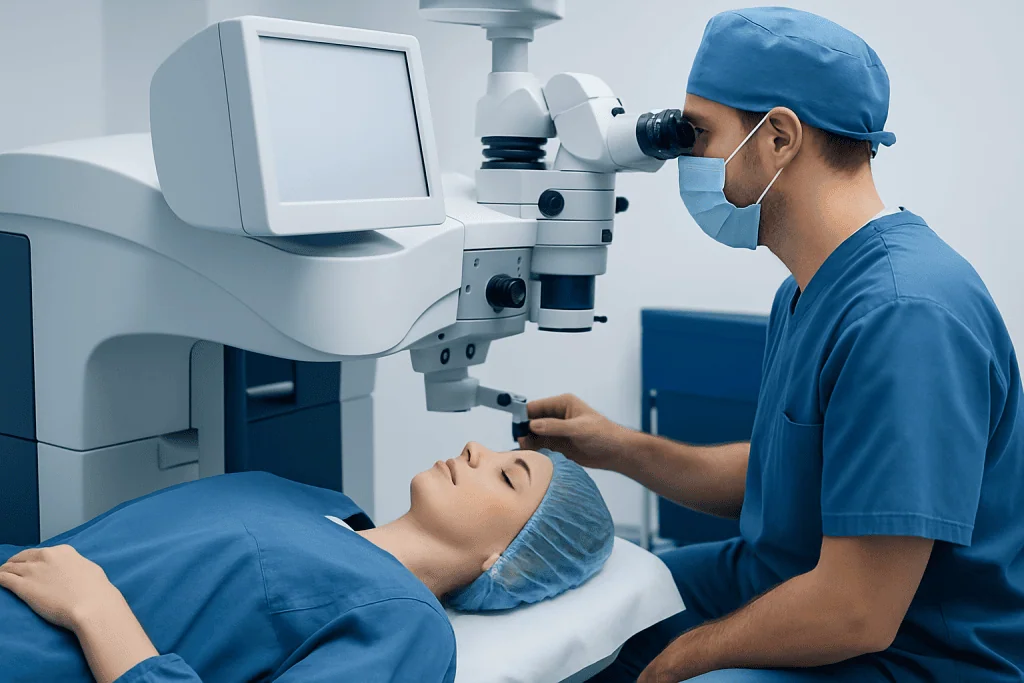
Eyelid surgery may be recommended when excess upper eyelid skin creates a tired or aged appearance, causes makeup to smudge, feels heavy, or rests near the eyelashes. It may also be considered when lower eyelid puffiness, under-eye bags or skin laxity make the eye area look swollen or fatigued despite adequate rest.
In functional cases, upper eyelid skin or eyelid position may interfere with peripheral vision or daily comfort. Your doctor may recommend specific eye examinations or visual field testing if there is concern that the eyelids affect sight. Not every droopy upper eyelid is treated with standard blepharoplasty; true eyelid muscle weakness, called ptosis, may require a different or additional procedure.
Eyelid surgery is usually considered after non-surgical measures are no longer sufficient or when the concern is mainly due to excess skin and tissue rather than temporary swelling, allergies or lifestyle factors. A physician evaluation is essential to distinguish between eyelid skin excess, brow descent, eye bags, fluid retention and other medical or anatomical causes.
Who is a good candidate?

You may be a good candidate for eyelid surgery if you are in generally stable health, have realistic expectations and are bothered by upper eyelid heaviness, loose eyelid skin, lower eyelid bags or a tired eye appearance. Good candidates understand that the goal is usually natural refinement rather than a dramatic change in facial expression.
Your doctor will ask about dry eyes, contact lens use, glaucoma, thyroid disease, allergies, previous eye surgery, previous aesthetic procedures, bleeding tendency and medications that may affect healing. These details matter because the eyelids are delicate structures, and both the appearance and function of the eyes must be protected.
Smoking, uncontrolled medical conditions, active eye infections or unrealistic expectations may delay or change the treatment plan. If you have significant brow drooping, facial volume loss, deep tear troughs or eyelid ptosis, your surgeon may recommend a combined or alternative approach to achieve a balanced and safe result.
Treatment options
Eyelid surgery can involve the upper eyelids, lower eyelids or both. Upper blepharoplasty typically removes or repositions excess skin and sometimes a small amount of fat through an incision placed in the natural eyelid crease. The aim is to reduce heaviness while preserving normal eyelid closure and a natural eyelid fold.
Lower blepharoplasty focuses on under-eye bags, puffiness, skin laxity and contour irregularities. Depending on your anatomy, the incision may be placed just below the eyelashes or inside the lower eyelid. Fat may be removed, repositioned or blended to soften the transition between the lower eyelid and cheek. In selected cases, skin tightening, laser resurfacing or other supportive techniques may be considered.
Some patients need additional procedures rather than blepharoplasty alone. These may include ptosis correction for a weak eyelid lifting muscle, brow lift for brow descent, canthopexy or canthoplasty for lower eyelid support, or facial fat grafting for hollowing. Revision eyelid surgery is more complex because scar tissue and previous tissue removal affect planning; it requires careful examination and realistic goals.
Your Acibadem physician will recommend the option that best matches your anatomy, eye health and priorities. A conservative approach is often preferred around the eyes because overcorrection can affect both appearance and comfort.
Online evaluation before travel
For international patients, the process often begins with an online evaluation. You may be asked to share clear face and eyelid photos from several angles, a short description of your concerns, your medical history and information about previous eye or facial procedures. If you have visual field test results, ophthalmology reports or imaging, these can also be helpful.
The preliminary review helps the medical team understand whether eyelid surgery may be appropriate and whether additional assessments may be needed after arrival. It can also help identify issues such as possible ptosis, brow drooping, dry eye symptoms or asymmetry that should be discussed carefully during the in-person consultation.
Online evaluation is useful for planning, but it cannot replace a physical examination. The final treatment decision is made in Turkey after your surgeon evaluates eyelid movement, skin quality, eye closure, tear function, facial balance and general medical readiness.
Before the treatment
Before eyelid surgery, you will have an in-person consultation to confirm your goals, examine your eyelids and review your medical history. Your doctor may ask about medications, supplements, allergies, previous surgeries, smoking, chronic illnesses and eye symptoms such as dryness, irritation or blurred vision. Pre-operative blood tests and anesthesia assessment may be arranged according to your age, health status and planned anesthesia.
You may be advised to stop or adjust certain medications or supplements that can increase bleeding risk, but only under medical guidance. If you take prescription blood thinners, heart medications or medications for chronic disease, do not stop them on your own. Your care team will coordinate safe instructions based on your health background.
Practical preparation is also important. Arrange comfortable clothing, sunglasses, easy-to-prepare meals, and time away from strenuous work or social commitments. If you are traveling internationally, it is helpful to plan a companion if possible, especially for the first day after anesthesia and the early recovery period.
What happens during the treatment
On the day of surgery, your identity, consent, treatment plan and anesthesia plan are confirmed. Your surgeon may make pre-operative markings while you are sitting upright, because eyelid skin and brow position change when lying down. These markings guide incision placement and tissue adjustment.
For upper eyelid surgery, the incision is usually hidden in the natural eyelid crease. Excess skin is removed in a measured way, and fat or muscle may be adjusted only when needed. For lower eyelid surgery, the incision may be placed inside the eyelid or just beneath the lash line, depending on whether fat repositioning, skin tightening or other refinements are required.
The procedure length varies according to whether upper eyelids, lower eyelids, both sides or additional procedures are performed. At the end, fine sutures, small strips or protective ointment may be used. You are then monitored in a recovery area until the medical team confirms that you are stable and comfortable.
Hospital stay and discharge
Eyelid surgery is often performed as a same-day procedure, especially when it is limited to the upper eyelids or carried out under local anesthesia with sedation. Some patients may stay overnight if general anesthesia is used, if multiple procedures are combined, or if the doctor recommends observation for medical reasons.
Before discharge, your team will explain how to care for the eyelid area, how to use prescribed medications or eye drops if given, how to sleep, and when to attend your first control visit. You should not drive after sedation or general anesthesia. International patients are usually advised to rest locally and attend the scheduled follow-up before traveling.
Acibadem International patient services can help coordinate transfers, interpreter support and appointment timing so you feel oriented during the early recovery period. You will also receive guidance on how to contact the medical team if you have questions after leaving the hospital.
Recovery timeline
Recovery after eyelid surgery is usually manageable, but the eye area can bruise and swell visibly. Most swelling is temporary and tends to improve day by day, although mild asymmetry, tightness or sensitivity can continue while tissues heal. Your surgeon will give instructions tailored to your procedure and skin type.
The timeline below is a general guide. Your recovery may be faster or slower depending on your age, health, procedure extent, tendency to bruise and whether additional procedures were performed.
| Timeframe | What to expect |
|---|---|
| First 24 hours | Rest, mild discomfort, tightness, watery eyes, blurred vision from ointment, swelling and bruising may begin. Cold compresses may be recommended if approved by your doctor. |
| First week | Bruising and swelling often peak and then start to improve. You may have a first control visit, and sutures may be reviewed or removed depending on the technique. |
| Weeks 2-4 | Most visible bruising improves, and many patients feel comfortable returning to social activities. Mild swelling, sensitivity or unevenness may still be present. |
| Months 1-3 | Eyelid contour becomes more refined. Scars continue to soften and fade, though they may still appear pink or firm in some areas. |
| Final result | Final scar maturation and eyelid settling may take 3 to 6 months or longer. Results vary, and small asymmetries can be part of normal healing. |
Follow-up is important even if you feel well. Your doctor will check healing, eyelid closure, scar quality and comfort, and will advise when you can return to exercise, contact lenses, makeup and sun exposure.
What to avoid after treatment
In the early recovery period, you should avoid rubbing your eyes, applying pressure to the eyelids, bending with your head down for long periods, and strenuous activity that increases swelling or bleeding risk. Sleep with your head elevated if your doctor recommends it, and follow instructions about cold compresses, eye drops or ointment.
Avoid eye makeup, contact lenses and swimming until your surgeon confirms it is safe. Do not use non-prescribed creams, scar products or herbal remedies on the eyelids without approval, as the skin is delicate and irritation can affect healing.
Smoking and nicotine products can interfere with healing and should be avoided according to your doctor’s advice. Sun exposure can darken healing scars, so protective sunglasses and physician-approved sun protection are helpful once the incisions are sufficiently healed.
Risks and possible complications
All surgery carries risks, even when performed carefully. Common temporary effects after eyelid surgery include swelling, bruising, tightness, mild irritation, watery eyes, dryness, sensitivity to light and temporary blurred vision from ointment or swelling. These usually improve as healing progresses.
Possible complications include bleeding, infection, delayed wound healing, noticeable scarring, asymmetry, changes in eyelid position, difficulty closing the eyes, dry eye symptoms, undercorrection or overcorrection. Rare but serious eye-related complications require urgent medical attention, which is why you should follow all warning sign instructions carefully.
Your individual risk depends on your anatomy, eye health, medical history, medications, smoking status and the complexity of the procedure. A detailed consultation and honest discussion of your expectations are essential. Results vary, and revision surgery may sometimes be considered after healing if a functional or aesthetic concern remains.
Warning signs: when to contact a doctor
Some swelling, bruising and mild discomfort are expected after eyelid surgery. However, certain symptoms should not be ignored. If you are in Turkey, contact your Acibadem care team using the numbers provided at discharge; if you have already returned home and symptoms are urgent, seek local emergency medical care.
- Sudden change in vision, loss of vision, double vision that is new or worsening, or severe eye pain
- Rapidly increasing swelling, especially if one side becomes tense, painful or much larger than the other
- Persistent bleeding that does not improve with the instructions provided by your doctor
- Fever, chills, worsening redness, warmth, pus-like discharge or a foul smell from the incision area
- Severe headache, nausea or vomiting associated with eye pain or vision changes
- Inability to close the eye, significant eye dryness or intense irritation that is not relieved by prescribed care
- Shortness of breath, chest pain, fainting or any symptom that feels like a medical emergency
It is always better to ask early if something worries you. Prompt communication helps your doctor decide whether reassurance, medication adjustment, an earlier control visit or urgent assessment is needed.
Results and expectations
The goal of eyelid surgery is to create a fresher, more open and balanced eye appearance while preserving your natural expression. Upper eyelid results often become noticeable once swelling and bruising decrease, while lower eyelid refinement can take longer because swelling may persist in the under-eye area.
Scars are usually placed in natural eyelid folds or discreet locations, but every person heals differently. Early scars may look pink, firm or slightly uneven before gradually softening. Sun protection and proper aftercare support scar maturation.
It is important to have realistic expectations. Eyelid surgery does not remove every wrinkle, dark circle, hollow or facial aging sign. Under-eye pigmentation, deep tear troughs, cheek volume loss or brow descent may need different treatments. Your surgeon will explain what blepharoplasty can and cannot achieve in your specific case.
International patient travel planning
When planning eyelid surgery in Turkey, allow enough time for consultation, pre-operative tests, the procedure, early recovery and at least one post-operative control. The ideal length of stay varies depending on whether you have upper eyelid surgery only, lower eyelid surgery, combined procedures or any medical factors that require closer observation.
Before booking flights, wait for guidance from the international patient coordination team and your preliminary medical review. You should avoid tight schedules that require flying immediately after surgery, because swelling, bruising and the need for follow-up may make early travel uncomfortable or medically inappropriate.
Acibadem International can support practical arrangements such as interpreter services, airport transfers, appointment coordination and accommodation guidance. If you travel with a companion, they can help with transportation, medication schedules and daily comfort during the first days after surgery.
Cost and package information
The cost of eyelid surgery depends on several factors, including whether the upper eyelids, lower eyelids or both are treated; whether additional procedures such as ptosis correction, brow lift or canthal support are needed; the anesthesia type; hospital requirements; pre-operative tests; and the complexity of revision or reconstructive cases. Because the safest plan must be personalized, a final quotation is usually provided after medical review and may be confirmed after in-person evaluation.
International patient packages may typically include items such as the surgeon consultation, hospital services related to the planned procedure, anesthesia services, nursing care, standard pre-operative tests, interpreter support for hospital appointments and scheduled early controls. The exact inclusions should always be reviewed in your written quotation.
Items that may not be included can vary and may involve flights, accommodation, personal expenses, additional consultations, extra tests requested because of medical findings, treatment for unrelated conditions, extended hospital stay, companion costs or revision procedures. Acibadem International will explain what is included and what is not before you make travel decisions, so you can plan with clarity.
Why choose Acibadem
Choosing where to have eyelid surgery is an important decision, especially when you are traveling abroad. Acibadem International provides care within a large healthcare group in Turkey with JCI-accredited hospitals, structured patient safety processes and access to multidisciplinary medical expertise when needed.
For eyelid surgery, careful planning matters because the eyelids affect both appearance and eye comfort. Your physician evaluates your anatomy, medical history and eye-related symptoms before confirming the treatment plan. If additional eye assessment is needed, coordination with relevant departments can be arranged.
International patient support is designed to make your journey easier, from online evaluation and appointment scheduling to interpreter assistance, transfers, accommodation guidance and remote follow-up after you return home. The aim is to help you feel informed, supported and medically guided at every stage.
Medical review and disclaimer
This guide has been reviewed by the Acibadem International medical team. It is intended to provide general information for international patients considering eyelid surgery in Turkey and to help you prepare informed questions for your consultation.
The information in this guide does not replace a personal consultation, physical examination, diagnosis or treatment recommendation by a qualified physician. Eyelid surgery suitability depends on your eyelid anatomy, eye health, medical history, medications, expectations and examination findings.
Your final treatment plan, anesthesia plan, recovery instructions and travel clearance must be confirmed by your doctor. If you have urgent symptoms or a medical emergency, seek immediate medical care in your current location.
Step by step
- Initial contact. You contact Acibadem International and share your main concern, preferred travel period and whether you are interested in upper eyelid, lower eyelid or combined eyelid surgery.
- Medical record / photo submission. You provide clear eyelid and face photos, medical history, medication list, allergies, previous surgeries and any eye examination reports or visual field tests if available.
- Preliminary medical review. The medical team reviews your information to assess whether eyelid surgery may be appropriate and whether additional evaluation may be needed after arrival.
- Treatment plan and quotation. You receive a preliminary plan and a written quotation outlining expected inclusions and exclusions, with the understanding that the final plan is confirmed after in-person examination.
- Travel planning. International patient services help coordinate appointment dates, airport transfers, interpreter needs and accommodation guidance so your schedule allows consultation, treatment and follow-up.
- Arrival. You arrive in Turkey and are guided to your appointments according to the agreed schedule, with support available for hospital navigation and communication.
- In-person consultation. Your surgeon examines your eyelids, facial balance, eye closure, skin quality and goals, then confirms whether the proposed procedure is suitable for you.
- Pre-operative tests. You complete the required blood tests, anesthesia assessment and any additional eye-related checks if your doctor recommends them.
- Treatment. Your eyelid surgery is performed according to the confirmed plan, using local anesthesia with sedation or general anesthesia depending on your needs and medical suitability.
- Hospital stay. You are monitored after the procedure and either discharged the same day or kept overnight if medically appropriate.
- First control. Your surgeon checks healing, swelling, comfort and incision condition, and may review or remove sutures depending on the technique and timing.
- Discharge / travel clearance. You receive aftercare instructions and your doctor confirms when it is appropriate for you to travel, based on your healing and procedure details.
- Remote follow-up. After returning home, you can share updates and photos through the international patient team, who coordinate medical feedback when needed.
Your checklist
- Valid passport and travel documents
- Recent clear photos of your face and eyelids from the front, side and upward-looking angles
- Summary of your medical history and current health conditions
- List of all medications, supplements and blood thinners you use
- Known allergies, especially to medications, antiseptics, latex or anesthesia
- Details of previous eye surgery, laser vision correction, facial surgery or injectable treatments
- Information about dry eye, glaucoma, thyroid disease, contact lens use or vision problems
- Relevant test results, ophthalmology reports, visual field tests or imaging if available
- Smoking or nicotine use history
- Your main goals and concerns, including what you hope to improve and what you want to avoid
Key takeaways
- Eyelid surgery may suit you if excess upper eyelid skin, lower eyelid bags or eyelid heaviness affect your appearance, comfort or visual field.
- A careful medical and eye-related evaluation is important because eyelid shape, dry eye symptoms, previous eye surgery and facial anatomy influence the treatment plan.
- International patients often plan to stay in Turkey until the first control visit and travel clearance, especially if stitches need review or removal.
- Temporary swelling, bruising, tightness and mild irritation are expected; final results develop gradually as tissues settle and scars mature.
- You should contact your doctor promptly for severe pain, sudden vision changes, increasing one-sided swelling, bleeding, fever or signs of infection.
Frequently asked questions
Am I suitable for eyelid surgery?
You may be suitable if you have excess eyelid skin, eyelid heaviness, under-eye bags or eyelid changes that bother you and you are in stable health. Suitability can only be confirmed after your doctor evaluates your eyelid anatomy, eye health, medical history and expectations.
Can eyelid surgery improve my vision?
In some patients, upper eyelid skin can hang low enough to affect the upper or side visual field. If your doctor suspects a functional problem, additional eye assessment or visual field testing may be recommended. Not all eyelid concerns are vision-related, and the treatment plan depends on the cause.
How long should I stay in Turkey?
Your recommended stay depends on the procedure type, anesthesia, healing and whether sutures or early controls are needed. Many international patients plan to remain until the first post-operative control and travel clearance. Your coordinator will help you plan a realistic schedule after medical review.
Is eyelid surgery painful?
Most patients describe the early recovery as tightness, soreness or mild discomfort rather than severe pain. Swelling, bruising and temporary irritation are common. Your doctor will provide appropriate aftercare instructions and medication guidance.
When can I return to work and daily life?
Light daily activities may often resume within several days, but visible bruising and swelling can last longer. Many patients prefer to allow 1 to 2 weeks before social or professional activities where appearance matters. Your surgeon will advise based on your healing and job demands.
Will I have visible scars?
Incisions are usually placed in natural eyelid creases, under the lash line or inside the lower eyelid depending on the technique. Scars typically fade over time, but healing varies from person to person. Careful aftercare and sun protection support scar maturation.
What factors affect the cost?
Cost is influenced by whether upper, lower or both eyelids are treated, the complexity of the case, anesthesia type, hospital services, pre-operative tests and any combined procedures. Revision surgery or procedures involving ptosis or eyelid support may require different planning. A personalized quotation is provided after medical review.
Is it safe to travel for eyelid surgery?
Medical travel can be safe when your treatment is properly planned, your health is assessed and you allow enough time for recovery and follow-up. Acibadem International helps coordinate appointments, transfers, interpreter support and remote follow-up. You should avoid rushing travel immediately after surgery unless your doctor clears you.
Can I combine eyelid surgery with other procedures?
Some patients combine eyelid surgery with procedures such as brow lift, facelift, fat grafting or skin resurfacing. Combining treatments may be appropriate in selected cases, but it can also affect anesthesia, recovery and risk. Your surgeon will recommend only what is suitable for your health and goals.
How long do results last?
Eyelid surgery can provide long-lasting improvement, but it does not stop natural aging, skin changes or lifestyle effects. Genetics, sun exposure, weight changes and tissue quality all influence long-term results. Some patients may consider additional treatment years later, while others do not need further surgery.
What if I am unhappy with the result?
Early swelling and asymmetry can make it difficult to judge the final result too soon. Your surgeon will monitor healing and explain when it is appropriate to assess the outcome. If a functional or aesthetic concern remains after full healing, revision may sometimes be discussed, but it is never guaranteed or rushed.
Add us as a Preferred Source to see more of our trusted health content across Google Search, AI Overviews and Discover.
More Patient Guides
Day Surgery in Turkey: Can You Leave Hospital the Same Day?
Day surgery in Turkey often lets you go home the same day if your procedure and recovery are suitable and your doctor…
11 min read
General Anesthesia in Turkey: How to Prepare and What Happens Before You Sleep
General anesthesia in Turkey helps you sleep safely through surgery. Learn preparation, recovery, risks, and travel planning in Istanbul.
11 min read
Choosing Between Outpatient and Inpatient Treatment in Turkey: What Affects the Decision
Choosing Between Outpatient and Inpatient Treatment in Turkey depends on your procedure, health, recovery needs and travel plans.
11 min read