

Wisdom Teeth: Impaction, Pain, and When Removal Is Needed

Wisdom teeth do not always need removal, but they should be assessed if they are painful, partly erupted, or difficult to clean. Impaction happens when a wisdom tooth is blocked by bone, gum tissue, or another tooth and cannot come through properly.
Key Takeaways
- Wisdom teeth do not always need removal, but they should be assessed if they are painful, partly erupted, or difficult to clean.
- Impaction happens when a wisdom tooth is blocked by bone, gum tissue, or another tooth and cannot come through properly.
- Pain, swelling, bad taste, gum inflammation, jaw stiffness, or repeated infections can signal a wisdom tooth problem.
- Diagnosis usually includes a dental examination and panoramic X-rays or other imaging to assess tooth position and nearby nerves.
- Removal is generally planned when the benefits outweigh the risks, and recovery instructions help reduce discomfort and complications.
Wisdom teeth, also called third molars, are the last adult teeth to develop and may not have enough space to emerge normally. When they cause pain, infection, crowding, or damage to nearby teeth, a dentist or oral surgeon may recommend monitoring or removal.
Overview
Wisdom teeth are the third molars at the very back of the mouth. They usually develop later than other adult teeth, often in the late teenage years or early adulthood. Some people have all four wisdom teeth, some have fewer, and some never develop them. Their presence alone is not a disease; the main concern is whether they have enough room to erupt and function without harming nearby tissues.
Because modern jaws may not always have space for these late-developing molars, wisdom teeth can become impacted, meaning they are trapped partially or completely under the gum or bone. An impacted tooth may remain quiet for years, or it may lead to pain, swelling, gum infection, tooth decay, cyst formation, or pressure on the second molar. Regular dental check-ups are important because problems may develop before symptoms are obvious.
Management is individualized. A healthy wisdom tooth that has fully erupted, is well positioned, and can be cleaned effectively may simply be monitored. Removal is considered when a wisdom tooth is causing symptoms, is likely to damage nearby teeth, or has a position that makes future problems more likely. A dentist or oral and maxillofacial surgeon can explain the expected benefits, risks, and recovery process.
Symptoms of Wisdom Tooth Problems
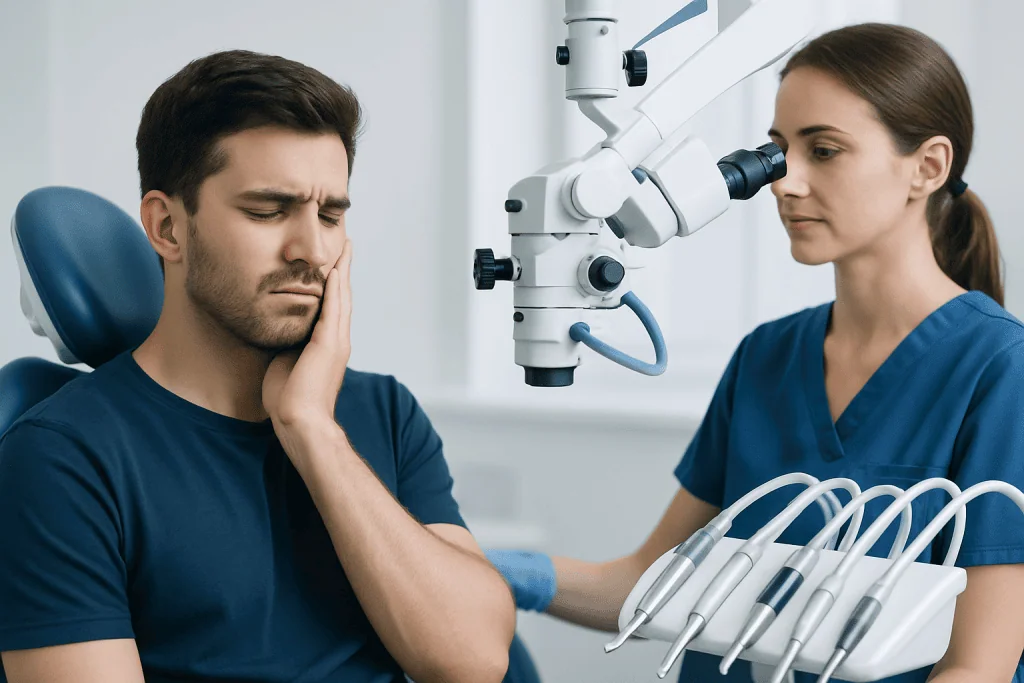
Wisdom tooth pain can feel different from person to person. Some people describe a dull ache at the back of the jaw, while others feel sharp pain when chewing or opening the mouth. Discomfort may come and go as the tooth tries to erupt through the gum. Pain can also be referred to nearby areas, such as the ear, temple, or throat, which may make it difficult to identify the source without a dental examination.
A partly erupted wisdom tooth can create a small flap of gum tissue where food and bacteria collect. This can lead to pericoronitis, an inflammation or infection around the crown of the tooth. Common signs include swollen or tender gums, redness, bad breath, an unpleasant taste, difficulty biting down, or pus around the gum. Jaw stiffness or difficulty opening the mouth may occur when inflammation spreads to surrounding tissues.
Not all impacted wisdom teeth cause immediate pain. Some are discovered on routine dental X-rays because they are angled toward the second molar, trapped horizontally, or buried under bone. Even without pain, a poorly positioned wisdom tooth may make cleaning difficult or contribute to decay and gum disease on the adjacent molar. For this reason, symptoms and imaging findings are considered together when planning care.
Causes and Risk Factors
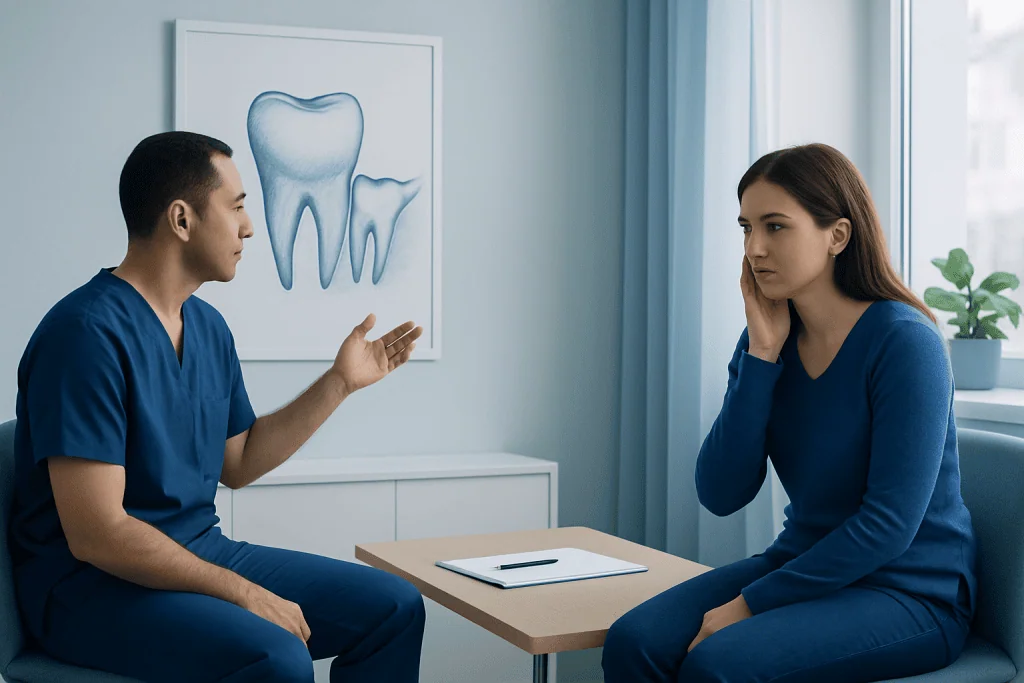
The most common reason for wisdom tooth impaction is lack of space. By the time the third molars begin to erupt, the other teeth are already in place. If the jaw does not provide enough room, the wisdom tooth may push against the second molar, tilt forward or backward, remain partly covered by gum tissue, or stay fully embedded in bone.
The angle and depth of the tooth also influence the risk of problems. A tooth that is only partly erupted may be harder to keep clean than one that is fully erupted. A deeply impacted tooth may not cause gum infection but can still require monitoring if it is close to the roots of nearby teeth, the jawbone, or important nerves. Dentists use imaging to understand these relationships before recommending treatment.
Several factors may affect whether wisdom teeth become troublesome:
- Limited space at the back of the jaw
- Wisdom teeth that erupt at an unusual angle
- Partial eruption that leaves a gum flap over the tooth
- Difficulty brushing or flossing the area effectively
- Previous episodes of gum swelling or infection around the tooth
- Decay or gum disease affecting the wisdom tooth or the second molar
Family traits, jaw growth, and tooth development patterns can also play a role. However, it is not possible to predict every future problem based only on age or the presence of wisdom teeth. A personalized evaluation is the safest way to decide whether monitoring or treatment is appropriate.
Diagnosis
Diagnosis begins with a dental history and clinical examination. The dentist asks about pain, swelling, chewing discomfort, previous infections, mouth opening, and any changes in taste or breath. During the examination, the dentist checks the gums at the back of the mouth, looks for partial eruption, assesses bite contact, and evaluates whether the tooth can be cleaned properly.
Dental imaging is often needed because much of a wisdom tooth may be hidden under the gum or bone. A panoramic X-ray can show the number, position, and angle of the wisdom teeth, as well as their relationship to neighboring molars. In selected cases, three-dimensional imaging such as cone beam computed tomography may be used to evaluate complex anatomy, especially when the tooth is close to a nerve canal or the roots of adjacent teeth.
The dentist also considers the health of the whole mouth. Decay on the wisdom tooth, decay on the back surface of the second molar, periodontal pockets, cyst-like changes, or repeated inflammation may affect the treatment recommendation. Diagnosis is not only about whether the tooth is impacted; it is about whether the tooth is healthy, functional, cleanable, and safe to leave in place.
Treatment Options
Treatment depends on symptoms, tooth position, oral hygiene, and the risk of future problems. If a wisdom tooth is fully erupted, healthy, and easy to clean, the dentist may recommend routine monitoring at dental check-ups. If mild gum irritation occurs, professional cleaning, improved home care, and short-term measures recommended by the dentist may be enough. However, recurrent infection, decay, or damage to adjacent teeth often makes removal the more appropriate option.
Wisdom teeth removal may be simple or surgical. A fully erupted tooth may be removed similarly to other teeth. An impacted tooth may require a small incision in the gum, removal of a small amount of bone, and sometimes sectioning the tooth into smaller pieces to reduce pressure on the jaw. The procedure may be performed with local anesthesia, sedation, or general anesthesia depending on complexity, patient comfort, medical history, and clinical setting.
Before removal, the clinician explains the expected benefits and possible risks. These can include temporary swelling, discomfort, bleeding, dry socket, infection, delayed healing, or, rarely, nerve-related numbness or tingling in the lip, chin, or tongue. Careful imaging and surgical planning help reduce risk, but no procedure is risk-free. Patients should share all medical conditions, medications, allergies, and previous anesthesia experiences with the dental team.
Antibiotics are not automatically needed for every wisdom tooth problem or every extraction. They may be used when there is evidence of spreading infection or specific medical risk factors, according to the clinician’s judgment. Pain relief, antiseptic rinses, and other supportive treatments should also be used only as advised, especially for people who are pregnant, have chronic illness, take blood thinners, or have medication allergies.
Recovery and Aftercare
Recovery after wisdom teeth removal varies according to the number of teeth removed, the degree of impaction, and the person’s general health. It is common to have some swelling, jaw stiffness, and mild bleeding during the first phase of healing. The dental team provides written instructions on biting on gauze, taking recommended pain relief, using cold compresses if appropriate, and caring for the surgical sites.
Protecting the blood clot in the socket is important. Patients are usually advised to avoid vigorous rinsing, spitting, smoking, using straws, and strenuous activity for the initial healing period, as these can disturb the clot and increase the risk of dry socket. Soft foods, adequate fluids, and gentle oral hygiene support recovery. Brushing should continue, but the surgical area should be cleaned carefully according to the dentist’s instructions.
Follow-up may be recommended, especially after surgical removal or if stitches were placed. The patient should contact the dental team if pain worsens after initially improving, bleeding is persistent, swelling increases, fever develops, pus appears, or swallowing and breathing feel difficult. Most healing concerns can be managed effectively when assessed promptly by a qualified clinician.
Prevention and Self-Care
Wisdom tooth problems cannot always be prevented, especially when the issue is related to jaw space or tooth angle. Still, good oral hygiene can reduce the risk of gum inflammation and decay around partly erupted teeth. Brushing the back of the mouth carefully, using floss or interdental aids when possible, and attending regular dental check-ups help keep the area healthier.
People who know they have wisdom teeth should ask their dentist whether periodic X-rays are appropriate. Monitoring can show whether a tooth is moving, affecting the second molar, or developing disease. This is especially useful when wisdom teeth are not painful, because hidden decay, gum problems, or cyst-like changes may not cause symptoms at first.
For temporary discomfort while waiting for dental care, gentle warm salt-water rinses may soothe irritated gums, if the person has been told this is safe for them. Over-the-counter pain relievers should be used only according to label instructions and personal medical suitability. Home remedies should not replace dental assessment when there is swelling, pus, fever, increasing pain, or difficulty opening the mouth.
When to See a Doctor or Dentist
A dental appointment is recommended if there is pain at the back of the jaw, swelling around a partially erupted tooth, bad taste, bad breath that does not improve with cleaning, difficulty chewing, or repeated gum tenderness. Early assessment can often prevent a small problem from becoming more uncomfortable. It also allows the dentist to decide whether the tooth can be monitored or should be treated.
More urgent care is needed if swelling spreads to the face or neck, fever occurs, swallowing becomes difficult, the mouth cannot open normally, or pain is severe and not improving. These signs can indicate a spreading infection or another condition that requires prompt professional evaluation. People with diabetes, immune system problems, heart valve conditions, or those taking medications that affect bleeding or healing should seek advice early.
Patients considering wisdom tooth removal should feel comfortable asking about the reason for the recommendation, alternatives, anesthesia options, expected recovery, and possible risks. International patients can also seek coordinated evaluation and treatment planning through experienced dental and maxillofacial teams. Acibadem International’s multidisciplinary specialists and JCI-accredited hospitals diagnose and treat wisdom tooth conditions for international patients, with care plans tailored to individual needs.
Frequently asked questions
Do all wisdom teeth need to be removed?
No. Wisdom teeth do not need removal simply because they exist. If they are fully erupted, healthy, correctly positioned, and easy to clean, a dentist may recommend regular monitoring instead of extraction.
What does an impacted wisdom tooth mean?
An impacted wisdom tooth is one that cannot erupt normally because it is blocked by bone, gum tissue, or another tooth. It may be fully hidden or partly visible in the mouth. Impacted teeth can remain symptom-free, but they can also cause pain, infection, decay, or damage to nearby teeth.
How can someone tell if wisdom tooth pain is serious?
Pain that is mild and short-lived may be related to gum irritation, but it still deserves dental attention if it returns. Swelling, pus, fever, bad taste, difficulty opening the mouth, or pain that worsens should be assessed promptly. A dentist can identify whether the source is the wisdom tooth, gum infection, decay, or another dental problem.
Is wisdom teeth removal painful?
The procedure is performed with anesthesia, so patients should not feel sharp pain during removal. Pressure or movement may be felt with local anesthesia, and sedation options may be available for suitable patients. Some soreness and swelling afterward are expected and are managed with the aftercare plan provided by the dental team.
How long does recovery take after wisdom tooth extraction?
Initial recovery commonly takes several days, while deeper tissue healing continues for longer. The exact timeline depends on whether the tooth was impacted, how many teeth were removed, and the person's overall health. Following instructions about eating, rinsing, oral hygiene, and activity helps support comfortable healing.
Can wisdom teeth cause crowding of front teeth?
Wisdom teeth are often blamed for crowding, but tooth movement is usually influenced by several factors, including natural changes in the bite over time. A wisdom tooth pressing on the second molar can still create local problems and should be evaluated. An orthodontist or dentist can assess crowding concerns and recommend appropriate care.
What happens if an infected wisdom tooth is not treated?
A small gum infection around a wisdom tooth may improve temporarily, but it can return if the area remains difficult to clean. Untreated infection can spread to surrounding tissues and cause increasing pain, swelling, or jaw stiffness. Dental evaluation helps determine whether cleaning, medication, drainage, or removal is needed.
References
- American Dental Association
- American Association of Oral and Maxillofacial Surgeons
- National Institute of Dental and Craniofacial Research
- NHS
- Mayo Clinic
This article is for general information only and is not a substitute for professional medical advice. Please consult a qualified doctor about your individual situation.
Wisdom Teeth in Turkey — costs, top hospitals & a free quote
JCI-accredited · board-certified surgeons · reply within 24h
Add us as a Preferred Source to see more of our trusted health content across Google Search, AI Overviews and Discover.

Dental & Oral Health
Full-scope dental care from implants and aesthetics to oral and maxillofacial surgery.
158 specialists in this unitRelated Treatments
More from the Health Library



Related Specialists

Assoc. Prof. Dr. Ferit Bayram
Oral & Dental Health
Dt. Alara Naz Kenir
Oral & Dental Health
Dt. Gonca Katmer
Oral & Dental HealthDt. Doğa Baysal
Oral & Dental Health