Amputee Rehabilitation
Amputee rehabilitation is a coordinated program that supports people through recovery after losing all or part of a limb. It combines pain management, wound and residual limb care, strengthening and balance exercises,…
Quick answer
Amputee rehabilitation is a team-based program of therapy, prosthetic fitting and training that helps people regain mobility and independence after losing a limb. It typically begins soon after amputation surgery with pain control, wound care and exercises, progresses to prosthesis training, and continues with long-term follow-up for skin care and socket adjustments.
What is amputee rehabilitation?
Amputee rehabilitation is a structured program of medical care, exercise and training that helps a person regain movement, independence and confidence after losing all or part of a limb. It usually starts before or shortly after amputation surgery (the surgical removal of a limb or part of a limb) and continues through wound healing, the fitting of a prosthesis (an artificial limb) and the return to everyday life. When the program focuses on learning to use an artificial limb it is often called prosthetic rehabilitation; the broader term amputation rehabilitation covers the whole journey, including care for people who do not use a prosthesis.
Rehabilitation is delivered by a team rather than a single clinician. This team commonly includes a physiatrist (a doctor who specializes in physical medicine and rehabilitation), physical therapists who provide amputee physiotherapy, occupational therapists who focus on daily tasks such as dressing and cooking, a prosthetist (a specialist who designs and fits artificial limbs), nurses, a psychologist or counselor and a social worker. In a hospital group such as Acibadem, this care is typically coordinated by the Physical Medicine & Rehabilitation department, working together with the surgical team.
Amputee rehabilitation is used after amputation for many underlying conditions, including:
- Poor blood flow caused by peripheral arterial disease (narrowed arteries in the legs), often linked with diabetes; this is one of the most common reasons for lower limb amputation in adults.
- Severe injury from road accidents, workplace incidents, burns or blast injuries.
- Cancer, when a bone or soft tissue tumor cannot be removed while keeping the limb.
- Serious infection that does not respond to other treatment, including infections in people with diabetic foot ulcers.
- Congenital limb difference, where a child is born with a missing or incomplete limb.
Who is a candidate
In principle, almost everyone who has an amputation can benefit from some form of amputee rehabilitation, because the program is adapted to the individual. The goals may range from walking with a prosthetic leg to safely transferring from bed to wheelchair, managing pain and caring for the residual limb (the remaining part of the limb, sometimes called the stump).
Common indications include:
- A planned (elective) amputation, where rehabilitation can begin before surgery.
- A recent amputation of the leg, foot, arm or hand for any cause.
- A long-standing amputation where a person wants to try a prosthesis for the first time, needs a new prosthesis, or has developed new problems such as pain, falls or skin breakdown.
- Children with congenital limb difference, whose needs change as they grow.
Prosthetic leg rehabilitation is not suitable, or may be delayed, in some situations. Your doctor may advise against fitting a prosthesis, at least for now, if the wound has not healed, if there is active infection, if heart or lung disease makes the physical effort of walking with a prosthesis unsafe, or if severe cognitive impairment (difficulty with memory and understanding) means a person cannot safely learn to use the device. Some people with very high amputations, amputation of both legs, or serious problems in the remaining leg may find a wheelchair more practical than a prosthesis. In these cases, rehabilitation still has an important role but concentrates on different goals, such as wheelchair skills, transfers and home adaptations. Rehabilitation is not a one-time decision; candidacy for a prosthesis can be reviewed as health improves.
How the procedure works
Amputee rehabilitation is a process rather than a single procedure. It is usually described in phases, although the timing and order vary between people.
Before surgery. When amputation is planned, the rehabilitation team may meet you in advance. This visit is used to explain what to expect, to assess your general strength, balance and home situation, and to begin simple exercises that keep the joints above the amputation flexible. Many people find that meeting the team beforehand reduces anxiety.
Immediately after surgery. In the first days, the priorities are pain control, wound care and preventing complications such as blood clots and pneumonia. Nurses and therapists help you sit up, move in bed and, when safe, transfer to a chair. The residual limb is usually wrapped or placed in a rigid or soft dressing to control swelling and protect the wound. Gentle positioning is important to prevent contractures (permanent tightening of muscles and joints), for example keeping the knee straight after a below-knee amputation.
Pre-prosthetic phase. Once the wound is stable, therapy becomes more active. Amputee physiotherapy at this stage includes strengthening exercises for the residual limb, the other leg, the trunk and the arms; balance training; and practice with a wheelchair, crutches or a walking frame. You will be taught how to care for the skin of the residual limb, how to use a compression sock or elastic bandage to shape it, and how to desensitize the limb by gently touching, tapping and massaging it. Occupational therapists work on daily activities and may suggest changes at home.
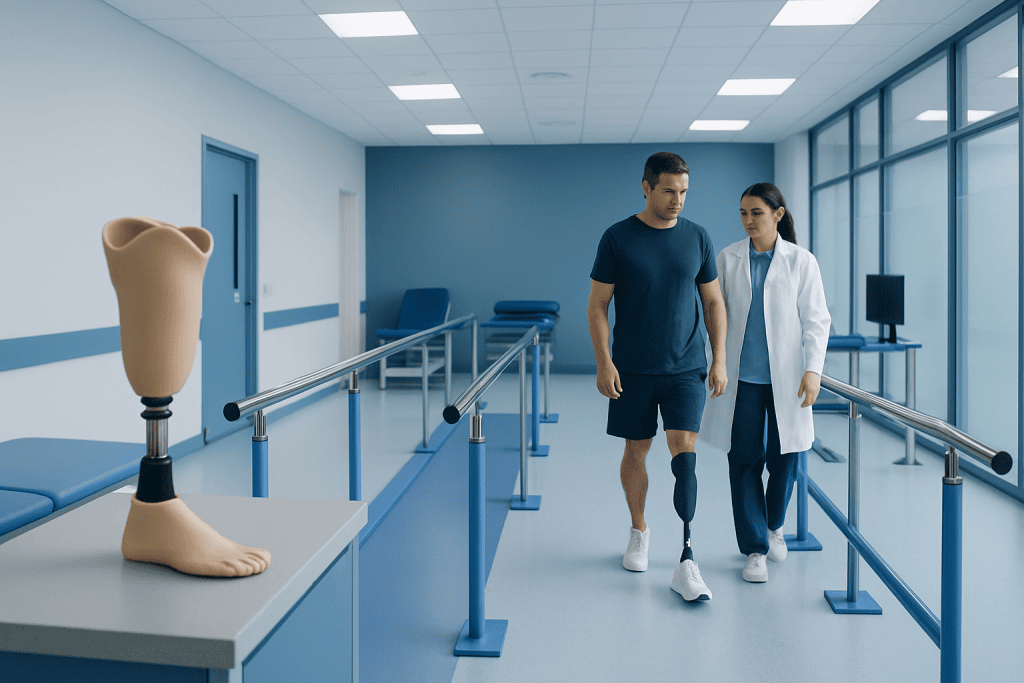
Prosthetic fitting and training. When the residual limb has healed and its swelling has settled enough, the prosthetist takes measurements or a cast and makes a temporary (check) socket, the part of the prosthesis that fits over the residual limb. Fitting is adjusted over several visits. Prosthetic rehabilitation then teaches you to put the limb on and take it off, stand and shift weight, walk between parallel bars, and gradually progress to walking with aids, on slopes and stairs, and over uneven ground. Upper limb prosthetic training focuses on grasping, reaching and two-handed tasks. A definitive (long-term) prosthesis is usually made after the residual limb has reached a stable shape, which may take several months.
Return to daily life. The final phase covers community activities such as shopping, using public transport, returning to work or school, driving assessment where relevant, and sport or leisure interests. Follow-up visits continue to check the fit of the prosthesis and the health of the skin.
Preparation for amputee rehabilitation
Preparation depends on whether the amputation is planned or has already happened. If surgery is scheduled, practical steps often include:
- Managing medical conditions as well as possible, especially blood sugar in diabetes, blood pressure and heart disease, because these affect wound healing and the ability to exercise.
- Stopping smoking, which is strongly linked with poor healing and further blood vessel disease.
- Bringing a list of all medicines and allergies to your appointments.
- Discussing your home layout, including stairs, bathroom access and door widths, so equipment or adaptations can be arranged in advance.
- Asking about the likely level of amputation and what it means for prosthetic options, so expectations are realistic.
- Arranging support from family or friends for the early weeks at home.
For rehabilitation itself, comfortable clothing and supportive footwear for the remaining foot are useful. It is helpful to write down personal goals, such as walking to a particular place or returning to a hobby, because the team uses these to plan therapy. Emotional preparation matters too: limb loss is a major life event, and many people benefit from speaking with a counselor or with others who have been through amputation, either before or after surgery.
Recovery and aftercare
Recovery timelines vary widely with the cause of amputation, the level of amputation, age and general health. The following pattern is typical but not universal.
- Hospital stay. After amputation surgery, many patients remain in hospital for about one to two weeks, followed by either inpatient rehabilitation or outpatient therapy. People who have amputation because of vascular disease often need longer than those with traumatic amputations, because healing is slower.
- Wound healing. Sutures or staples are usually removed after a few weeks. Swelling of the residual limb typically continues to decrease for several months.
- First prosthesis. A temporary prosthesis is often fitted between about four and twelve weeks after surgery, once the wound is healed and swelling has reduced, although some programs use earlier walking aids under close supervision.
- Walking independently. Learning to walk confidently with a prosthetic leg often takes several months of regular training. Progress is usually faster after below-knee amputation than after above-knee amputation, because the knee joint is preserved.
- Long-term follow-up. The residual limb changes shape over the first year or more, so the socket usually needs adjusting or replacing. Ongoing reviews are recommended even after rehabilitation is complete.
Aftercare focuses on the skin and the prosthesis. Inspect the residual limb every day, ideally with a mirror, for redness, blisters or open areas, and wash and dry it carefully. Clean the socket liner as instructed. Wear compression garments as advised to control swelling. Continue the home exercise program to maintain strength and joint flexibility, and protect the remaining foot, particularly if you have diabetes or poor circulation. Report any change in the fit of the prosthesis, as weight changes and residual limb shrinkage can alter it.
Risks and side effects
Rehabilitation itself is generally safe, but the period after amputation carries several recognized risks, and the exercises and devices used in prosthetic rehabilitation have side effects of their own.
- Phantom limb pain is pain that feels as if it comes from the part of the limb that has been removed. It is very common in the months after amputation and often improves over time, though for some people it persists. Phantom sensation without pain is also common and is not harmful.
- Residual limb pain can result from the wound, a neuroma (a sensitive bundle of nerve endings), bone spurs or a poorly fitting socket.
- Skin problems such as pressure sores, blisters, rashes, sweat-related irritation and infection can develop where the socket meets the skin.
- Wound complications, including delayed healing, infection or the need for further surgery, are more common in people with diabetes or vascular disease.
- Contractures can develop if joints are kept bent for long periods, and they can make prosthetic fitting harder.
- Falls are a risk during transfers and early walking training, and can injure the residual limb or the other leg.
- Overuse strain on the back, hips and the remaining leg may occur as the body adapts to a changed walking pattern.
- Emotional effects, including grief, low mood, anxiety and altered body image, are common and deserve the same attention as physical problems.
The rehabilitation team monitors for these problems and adjusts the program, the prosthesis or medication as needed. Most side effects are manageable when they are reported early.
Results and outlook
The evidence generally supports early, team-based amputee rehabilitation. Programs that begin soon after surgery and combine physical therapy, occupational therapy, prosthetic care and psychological support are associated with better mobility, greater independence in daily activities and improved quality of life compared with unstructured care. Most people with a below-knee amputation who are otherwise reasonably fit can expect to walk with a prosthesis, often with a walking aid at first. Outcomes after above-knee amputation are more variable and depend heavily on age, heart and lung fitness and the condition of the other leg.
Several factors influence results. Younger age, amputation due to injury rather than disease, good control of diabetes, absence of major heart disease, preserved knee joint and strong personal motivation are all linked with better functional outcomes. Some people, especially older adults with severe vascular disease, ultimately use a wheelchair for most mobility while using a prosthesis for short distances or for cosmetic reasons; this is also a valid and successful outcome when it matches the person’s goals.
Rehabilitation does not end when walking is achieved. Long-term outlook depends on protecting the remaining limb, maintaining general health and keeping the prosthesis well fitted. Because the conditions that lead to amputation, such as diabetes and arterial disease, continue after surgery, regular medical follow-up remains important.
Cost considerations
The cost of amputation rehabilitation varies considerably and is driven by several components rather than a single fee. The main factors are:
- Length and setting of care. Inpatient rehabilitation, where you stay in a rehabilitation unit, generally costs more than outpatient sessions. The number of therapy sessions needed depends on the level of amputation and how quickly you progress.
- The prosthesis. Devices range from basic mechanical designs to microprocessor-controlled knees, energy-storing feet and myoelectric arms that respond to muscle signals. More advanced components, custom sockets and specialized liners increase the price, as does the need for a temporary prosthesis before the definitive one.
- Replacements and adjustments. Sockets often need remaking during the first year as the residual limb changes shape, and prostheses have a limited lifespan.
- Equipment and home adaptations. Wheelchairs, walking aids, shower chairs, ramps and rails may be needed.
- Follow-up care. Ongoing reviews with the physiatrist and prosthetist, treatment of skin or pain problems, and psychological support add to long-term costs.
Coverage by public health systems or insurance differs widely, and some plans limit the type of prosthesis or the number of replacements. It is sensible to ask the rehabilitation team and your insurer about what is included before starting a program.
Frequently asked questions
How long does amputee rehabilitation take?
There is no fixed duration. Many patients spend a few weeks in intensive therapy after surgery and then continue outpatient prosthetic rehabilitation for several months. Reaching confident, independent walking with a prosthetic leg often takes three to six months or longer, and follow-up for socket adjustments continues well beyond that. Your team can give a more personal estimate based on your amputation level and health.
When does prosthetic leg rehabilitation start after surgery?
Training with a prosthesis usually begins once the wound has healed and swelling has settled enough for a socket to fit, which is often several weeks after surgery. Before that, rehabilitation is already under way with exercises, positioning, wheelchair or crutch training and residual limb care. Some centers use early walking devices under supervision, but the timing always depends on wound healing and your overall condition.
Can everyone get a prosthesis after amputation?
Not everyone is fitted with a prosthesis, and not everyone who is fitted uses it for walking. Severe heart or lung disease, an unhealed wound, cognitive impairment or very high or double amputations can make prosthetic walking impractical or unsafe. In these situations amputation rehabilitation still helps with transfers, wheelchair skills and daily activities, and the decision can be reviewed later if health improves.
What does amputee physiotherapy involve?
Amputee physiotherapy includes exercises to strengthen the residual limb, the other leg, the trunk and the arms; stretching to prevent contractures; balance training; and practice with mobility aids. Once a prosthesis is fitted, the physiotherapist teaches weight shifting, walking patterns, stairs, slopes, getting up from the floor and, later, more demanding activities. Home exercise programs are usually part of the plan.
Does phantom limb pain go away with rehabilitation?
Phantom limb pain is common after amputation and often becomes less frequent and less intense over the first year, although it does not disappear for everyone. Rehabilitation approaches such as desensitization, mirror therapy (using a mirror to create the visual impression of the missing limb moving), regular prosthesis use and certain medicines may help. Your doctor may combine several approaches, and persistent pain should always be discussed rather than endured.
Will I be able to return to work or sports after prosthetic rehabilitation?
Many people return to work, driving and recreational activities after prosthetic rehabilitation, although the type of job or sport may need to be adapted and specialized prostheses are sometimes used for running or swimming. The outcome depends on the amputation level, general health and the physical demands of the activity. Occupational therapists and vocational specialists can assess specific tasks and suggest adjustments.
When to see a doctor
Anyone who has had an amputation, or who is facing one, should be assessed by a rehabilitation specialist so that a personal program can be planned. You should also arrange a review if you notice a change in how your prosthesis fits, new pain in the residual limb or back, more frequent stumbles or falls, difficulty putting the prosthesis on, or if low mood, anxiety or sleep problems are affecting your daily life. People with a long-standing amputation who have never had structured rehabilitation, or who want to try a new type of prosthesis, can also benefit from an assessment.
Some symptoms after amputation surgery or during rehabilitation need urgent medical attention:
- Fever, chills or feeling generally unwell together with redness, warmth, swelling or pus around the wound or residual limb.
- A wound that opens, bleeds heavily or turns dark or black at the edges.
- Sudden severe pain, coldness or color change in the residual limb or the remaining leg, which can signal a blood flow problem.
- Swelling, pain or redness in the calf of the remaining leg, or sudden shortness of breath or chest pain, which may indicate a blood clot.
- A new open sore, blister or ulcer on the remaining foot, especially if you have diabetes or poor circulation.
- A fall with a head injury, or an injury to the residual limb that causes bruising or a wound.
If any of these occur, contact the treating team or emergency services promptly rather than waiting for the next scheduled appointment.
Preparation
- If amputation is planned, optimize blood sugar, blood pressure and heart health, and stop smoking to support healing. Bring a list of medicines and describe your home layout so equipment and adaptations can be arranged. Write down personal goals for therapy and consider counseling or peer support to prepare emotionally.
Aftercare
- Inspect the residual limb daily for redness, blisters or open skin, and wash and dry it carefully. Wear compression garments as advised, clean the prosthetic liner, and continue home exercises to maintain strength and joint flexibility. Protect the remaining foot, especially with diabetes, and report any change in prosthesis fit or new pain promptly.
Medically reviewed by the Acıbadem International Medical Board — September 8, 2026
See our medical review board →
Update history
- PublishedSeptember 8, 2026
- Medical review approvedSeptember 8, 2026
- Last content updateSeptember 8, 2026
References2
Doctors Performing This Treatment
Prof. Dr. Cihan Aksoy
Physical Medicine & Rehabilitation
Prof. Dr. İlker Yağcı
Physical Medicine & Rehabilitation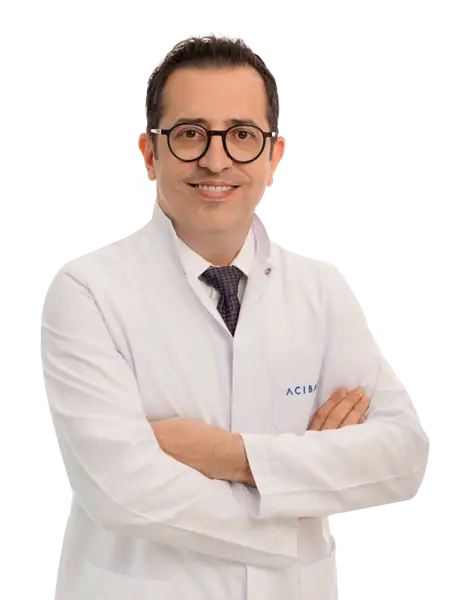
Prof. Dr. Ayhan Aşkın
Physical Medicine & Rehabilitation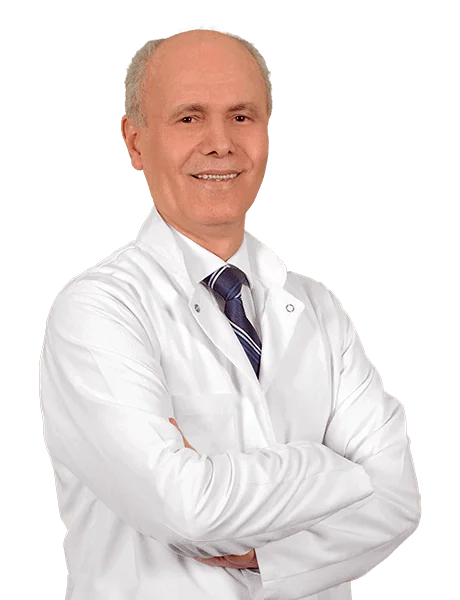
Prof. Dr. Halil Koyuncu
Physical Medicine & Rehabilitation
Prof. Dr. Tuba Ümit Gafuroğlu
Physical Medicine & Rehabilitation
Prof. Dr. Ece Aydoğ
Physical Medicine & Rehabilitation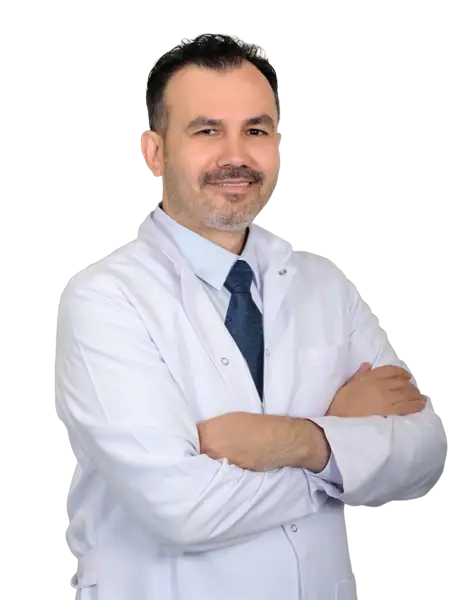
Assoc. Prof. Dr. Gökşen Gökşenoğlu
Physical Medicine & Rehabilitation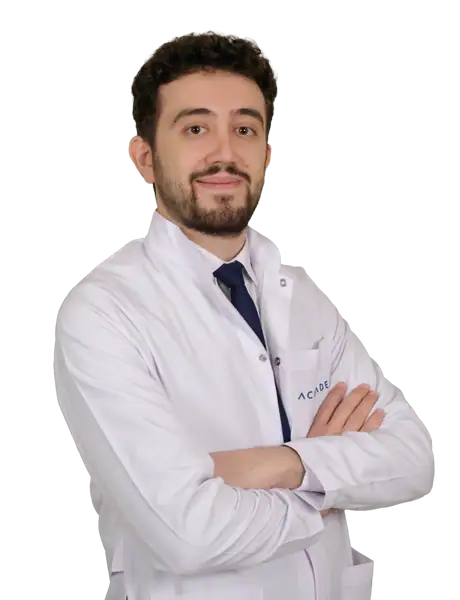
Dr. Mukhtar Shahgaldıyev
Physical Medicine & Rehabilitation
Dr. Aynur Göksel
Physical Medicine & RehabilitationDr. Serap Kapcı
Physical Medicine & Rehabilitation
Dr. R.Şirin Atlığ
Physical Medicine & Rehabilitation
Dr. Nesrin Yılmaz Baıramov
Physical Medicine & Rehabilitation
Dr. Tuba Hazal Taş
Physical Medicine & Rehabilitation
Fzt. Perihan Yıldız
Physical Medicine & Rehabilitation
Fzt. Kenan Kesgin
Physical Medicine & Rehabilitation
Fzt. Serkan Başkurt
Physical Medicine & Rehabilitation
Fzt. Kübra Otabaş
Physical Medicine & Rehabilitation
Fzt. Mert Vural
Physical Medicine & Rehabilitation
Fzt. Faika Nur Erkol
Treatment of Lymphedema
Fzt. Erdem Terzi
Physical Medicine & Rehabilitation
Fzt. Gizem Aydın
Physical Medicine & Rehabilitation
Fzt. Necla Aleyna Yiğit
Physical Medicine & Rehabilitation
Fzt. Eda Özgür
Physical Medicine & Rehabilitation
Fzt. Busenur Sezer
Physical Medicine & RehabilitationMedical Units
Available at These Hospitals