Thyroid Cancer: Neck Nodules, Ultrasound, and Treatment Planning

Most thyroid nodules are benign, but suspicious nodules should be evaluated with ultrasound and, in selected cases, fine-needle aspiration biopsy. The main types of thyroid cancer include papillary, follicular, medullary, and anaplastic thyroid cancer, each with different treatment considerations.
Key Takeaways
- Most thyroid nodules are benign, but suspicious nodules should be evaluated with ultrasound and, in selected cases, fine-needle aspiration biopsy.
- The main types of thyroid cancer include papillary, follicular, medullary, and anaplastic thyroid cancer, each with different treatment considerations.
- Treatment planning may include surgery, thyroid hormone therapy, radioactive iodine, targeted therapy, radiation therapy, or active surveillance for very low-risk cases.
- Follow-up usually involves physical examination, blood tests, neck ultrasound, and individualized monitoring based on cancer type and risk level.
- A multidisciplinary team can help coordinate diagnosis, surgery, pathology review, endocrine care, oncology treatment, and long-term surveillance.
Thyroid cancer often begins as a thyroid nodule found during a neck exam or imaging test. Careful ultrasound assessment, biopsy when needed, and individualized treatment planning help doctors choose the safest and most effective approach.
Overview
Thyroid cancer is a disease that starts in the thyroid gland, a small butterfly-shaped gland at the front of the neck. The thyroid produces hormones that help regulate metabolism, body temperature, heart rate, and energy use. Many thyroid cancers are discovered when a person or clinician notices a neck lump, or when an imaging test performed for another reason shows a thyroid nodule.
A thyroid nodule is a growth within the thyroid gland. Nodules are common, especially in adults, and most are not cancer. The goal of evaluation is to identify the small number of nodules that may be malignant while avoiding unnecessary procedures for clearly low-risk findings. Ultrasound is the key imaging test because it shows the size, shape, borders, and internal features of a nodule in detail.
Thyroid cancer is not a single condition. The most common forms, papillary and follicular thyroid cancer, are known as differentiated thyroid cancers and often grow slowly. Medullary thyroid cancer arises from different thyroid cells and may be linked to inherited conditions. Anaplastic thyroid cancer is rare and more aggressive. Because the type of cancer matters, treatment planning is based on the ultrasound findings, biopsy results, pathology, stage, general health, and patient preferences.
Symptoms and Neck Nodule Warning Signs
Many people with early thyroid cancer have no symptoms. A nodule may be found during a routine physical examination, a dental or ENT evaluation, or an ultrasound or CT scan performed for another health concern. Some people notice a painless lump in the lower front of the neck that moves when swallowing.
Symptoms, when present, can be related to the size or position of the nodule rather than cancer itself. A larger nodule may cause a sensation of pressure in the neck, difficulty swallowing, a persistent feeling of something in the throat, or rarely, breathing discomfort when lying flat. Hoarseness or voice change can occur if the nodule affects the nerve that controls the vocal cords, but many voice changes are due to non-cancer causes such as reflux, infection, or vocal strain.
Features that deserve timely medical assessment include:
- A new or growing neck lump
- A firm nodule fixed to surrounding tissues
- Swollen lymph nodes in the neck
- Persistent hoarseness without a clear explanation
- Difficulty swallowing or breathing
- A history of radiation exposure to the head or neck, especially in childhood
These signs do not necessarily mean thyroid cancer is present. They do mean that a clinician should evaluate the thyroid and neck carefully, usually starting with examination, thyroid blood tests, and ultrasound.
Causes and Risk Factors
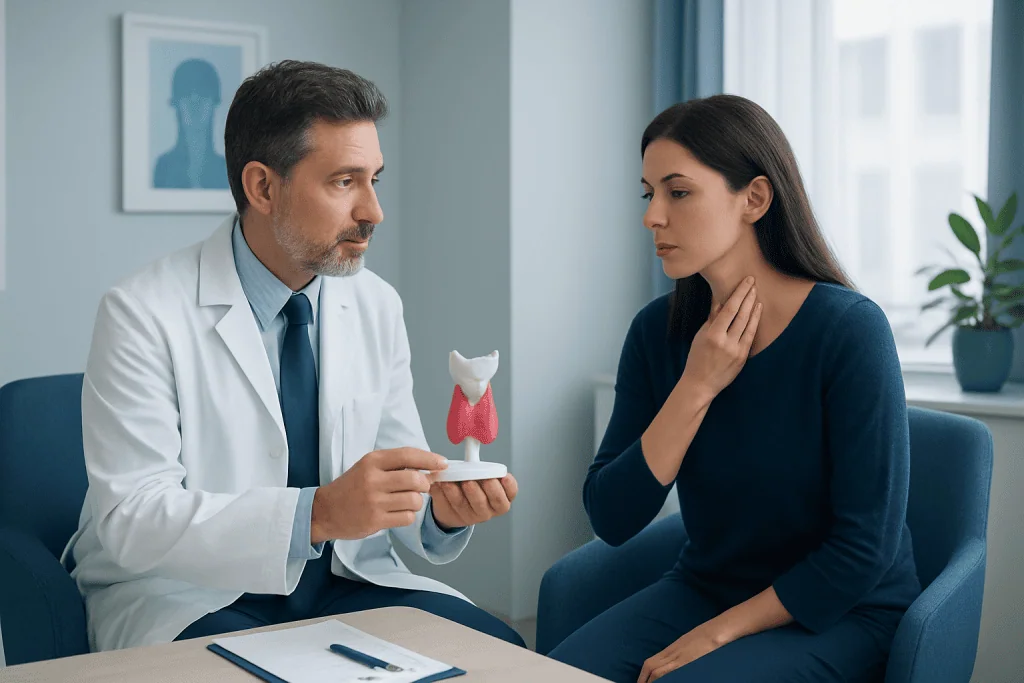
In most people, the exact cause of thyroid cancer is not known. Cancer develops when thyroid cells acquire genetic changes that allow them to grow in an uncontrolled way. These changes may occur by chance over time, or less commonly, be related to inherited syndromes or prior radiation exposure.
Several factors can increase the likelihood of thyroid nodules or thyroid cancer. A family history of thyroid cancer, particularly medullary thyroid cancer or certain endocrine tumor syndromes, may increase risk. Exposure to ionizing radiation to the head, neck, or chest, especially during childhood, is a recognized risk factor. Thyroid nodules are also more commonly detected in women and with increasing age, although thyroid cancer can occur in any adult and, less commonly, in children.
Risk factors are useful for deciding how closely a nodule should be evaluated, but they do not confirm a diagnosis. Many people with thyroid cancer have no obvious risk factor, and many people with risk factors never develop thyroid cancer. This is why ultrasound appearance, biopsy results, and expert pathology review are central to diagnosis and treatment planning.
Diagnosis: Ultrasound, Biopsy, and Staging
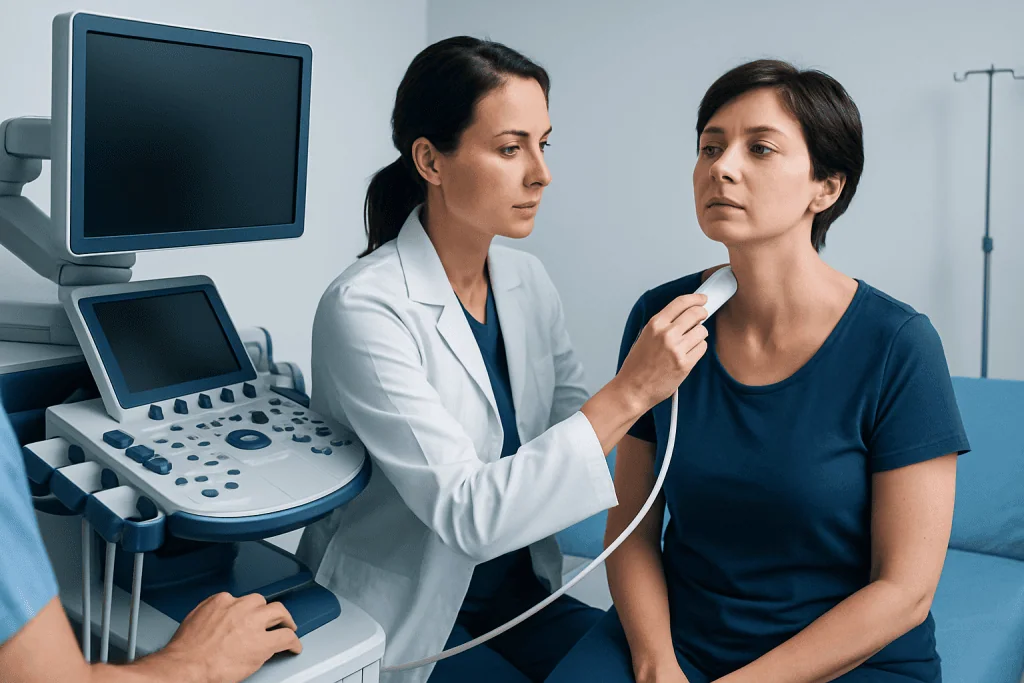
Thyroid ultrasound is the main test used to assess a nodule. It can show whether a nodule is solid or cystic, smooth or irregular, taller-than-wide or wider-than-tall, and whether it contains tiny bright spots called microcalcifications. Ultrasound also checks the lymph nodes in the neck, which is important because some thyroid cancers, especially papillary thyroid cancer, can spread to nearby lymph nodes.
Not every thyroid nodule needs a biopsy. Doctors use ultrasound risk patterns and nodule size to decide whether fine-needle aspiration is recommended. Fine-needle aspiration, often called FNA, is a minimally invasive biopsy performed with a thin needle, usually guided by ultrasound. The sample is examined by a cytopathologist to determine whether the cells look benign, suspicious, malignant, or indeterminate.
Blood tests are also part of the evaluation. Thyroid-stimulating hormone, or TSH, helps assess thyroid function. If TSH is low, a thyroid scan may be considered to see whether the nodule is producing thyroid hormone; overactive nodules are less often malignant. Calcitonin and genetic testing may be used in selected situations, especially when medullary thyroid cancer is suspected or there is a family history.
If cancer is diagnosed or strongly suspected, staging helps guide treatment. Staging may involve ultrasound of the neck, review of biopsy findings, and sometimes CT, MRI, or other imaging when there is concern about spread beyond the thyroid. For most patients, the most precise information comes after surgery, when the tumor size, margins, lymph nodes, and tissue characteristics can be examined.
Treatment Planning and Main Treatment Options
Treatment for thyroid cancer is individualized. Important planning questions include the cancer type, nodule size, whether there are involved lymph nodes, whether the tumor extends outside the thyroid, the patient’s age and general health, and the expected benefits and risks of each option. A team may include an endocrinologist, endocrine surgeon, head and neck surgeon, nuclear medicine specialist, oncologist, radiologist, pathologist, and speech or voice specialist when needed.
Surgery is the primary treatment for many thyroid cancers. Depending on the case, surgery may remove one thyroid lobe, called lobectomy, or the entire thyroid gland, called total thyroidectomy. Lymph nodes may be removed if they are suspicious or confirmed to contain cancer. The surgical plan aims to remove cancer while protecting the parathyroid glands, which regulate calcium, and the nerves that control the vocal cords.
After thyroidectomy, many patients need thyroid hormone replacement. This medication replaces the hormone the thyroid would normally make. In some differentiated thyroid cancers, doctors may use thyroid hormone in a way that keeps TSH lower than usual because TSH can stimulate thyroid cells. The target level depends on recurrence risk and must be balanced with bone and heart health.
Radioactive iodine treatment may be recommended for selected differentiated thyroid cancers after surgery. It is used to destroy remaining thyroid tissue or treat microscopic disease that takes up iodine. It is not useful for all thyroid cancers, and it is generally not used for medullary or anaplastic thyroid cancer. Other treatments, such as external beam radiation therapy, targeted therapy, or systemic cancer medicines, may be considered for advanced, recurrent, or specific molecular types of thyroid cancer. In carefully selected very small, low-risk papillary thyroid cancers, active surveillance with regular ultrasound may be discussed instead of immediate surgery.
Recovery, Follow-Up, and Long-Term Monitoring
Recovery depends on the extent of treatment. After thyroid surgery, patients are monitored for calcium levels, voice changes, swallowing comfort, wound healing, and thyroid hormone needs. Temporary throat discomfort and fatigue can occur. Most people receive clear instructions about incision care, activity, medications, and when to report symptoms such as tingling around the mouth, muscle cramps, fever, increasing swelling, or breathing difficulty.
Long-term follow-up is an important part of thyroid cancer care. For differentiated thyroid cancers, monitoring may include physical examination, neck ultrasound, TSH testing, and thyroglobulin blood testing. Thyroglobulin is a protein made by thyroid tissue and can help detect persistent or recurrent disease after total thyroidectomy in appropriate patients. For medullary thyroid cancer, calcitonin and carcinoembryonic antigen, often called CEA, are commonly used for follow-up.
The intensity of follow-up is based on risk. A person with a small, completely removed low-risk tumor may need less frequent testing over time. A person with lymph node involvement, aggressive tumor features, or persistent abnormal markers may need closer monitoring and additional imaging. Follow-up plans should be explained clearly so patients understand what is being checked, how often, and what results may mean.
Prevention, Self-Care, and Living With Thyroid Cancer
There is no guaranteed way to prevent thyroid cancer. However, avoiding unnecessary radiation exposure, following safety guidance for medical imaging, and seeking genetic counseling when medullary thyroid cancer or endocrine tumor syndromes run in the family can help with risk awareness. People should not take iodine supplements or thyroid products to prevent cancer unless advised by a qualified clinician, because unnecessary supplementation may be harmful in some thyroid conditions.
Self-care during and after treatment focuses on recovery, medication consistency, and overall health. If thyroid hormone replacement is prescribed, it should be taken exactly as directed, and blood tests should be performed as recommended. Patients should tell their doctor about calcium, iron, acid-reducing medicines, and supplements because some products can affect thyroid hormone absorption.
Emotional wellbeing is also important. Even when thyroid cancer is treatable, diagnosis and follow-up can create uncertainty. Patients may benefit from writing down questions before appointments, bringing a family member or friend to visits, and asking the care team to explain pathology reports, risk categories, and treatment choices in plain language. Reliable patient education can help reduce confusion and support shared decision-making.
When to See a Doctor
A person should see a doctor if they notice a new lump in the front of the neck, a nodule that appears to be growing, swollen lymph nodes, persistent hoarseness, or unexplained difficulty swallowing. People with a history of childhood radiation exposure to the head or neck, or a family history of thyroid cancer, should discuss whether earlier evaluation or genetic counseling is appropriate.
Anyone already diagnosed with a thyroid nodule should attend recommended follow-up appointments. Nodules that are benign on biopsy may still need periodic ultrasound, especially if they are large, have suspicious features, or change over time. If biopsy results are indeterminate, additional molecular testing, repeat biopsy, diagnostic surgery, or observation may be considered depending on the case.
International patients who need evaluation or treatment planning for thyroid cancer may seek care from centers with coordinated endocrinology, imaging, pathology, surgery, nuclear medicine, and oncology services. Acibadem International’s multidisciplinary specialists and JCI-accredited hospitals diagnose and treat thyroid cancer for international patients, with care plans tailored to the individual diagnosis and medical needs.
Frequently asked questions
Are most thyroid nodules cancer?
No. Most thyroid nodules are benign, especially when they have low-risk ultrasound features and stable size over time. Because a small percentage can be cancerous, doctors use ultrasound patterns, nodule size, risk factors, and sometimes biopsy to decide what needs further evaluation.
What does a thyroid ultrasound show?
A thyroid ultrasound shows the size, number, and structure of thyroid nodules. It also helps identify features that may suggest higher or lower risk, such as irregular borders, calcifications, shape, and whether nearby lymph nodes look abnormal. Ultrasound does not diagnose cancer by itself, but it guides the need for biopsy and follow-up.
Is a fine-needle aspiration biopsy painful?
Fine-needle aspiration is usually well tolerated and is often performed with ultrasound guidance. A thin needle is used to collect cells from the nodule, and the procedure typically takes a short time. Some people feel pressure or mild soreness afterward, but serious complications are uncommon.
Does every thyroid cancer require total thyroid removal?
Not always. Some patients may be treated with removal of one thyroid lobe, while others need total thyroidectomy depending on tumor size, location, type, lymph node involvement, and overall risk. In carefully selected very low-risk cases, active surveillance may also be discussed.
What is radioactive iodine treatment used for?
Radioactive iodine may be used after surgery for selected differentiated thyroid cancers because thyroid cells can absorb iodine. It can help destroy remaining thyroid tissue or treat iodine-avid microscopic disease. It is not appropriate for every patient and is generally not effective for medullary or anaplastic thyroid cancer.
Will a person need thyroid hormone after treatment?
A person who has the entire thyroid removed will need lifelong thyroid hormone replacement. After lobectomy, some people still produce enough thyroid hormone, while others may need medication. Blood tests guide the dose and help the doctor choose a safe target based on the patient’s cancer risk and general health.
Can thyroid cancer come back after treatment?
Thyroid cancer can recur in some patients, which is why follow-up is important even after successful initial treatment. Monitoring may include neck ultrasound, blood tests, and clinical examination. The follow-up schedule is individualized according to the cancer type, stage, pathology findings, and response to treatment.
References
- American Thyroid Association
- National Cancer Institute
- European Society for Medical Oncology
- World Health Organization
- Endocrine Society
This article is for general information only and is not a substitute for professional medical advice. Please consult a qualified doctor about your individual situation.
Thyroid Cancer in Turkey — costs, top hospitals & a free quote
JCI-accredited · board-certified surgeons · reply within 24h
Add us as a Preferred Source to see more of our trusted health content across Google Search, AI Overviews and Discover.
Check your numbers in seconds
BMI, calories, due date, blood pressure and 30+ more clinical calculators — free, instant, doctor-reviewed ranges.

Check-up & Preventive Medicine
Comprehensive health screenings designed for early detection and prevention.
3 specialists in this unit