

Cracked Tooth Syndrome: Symptoms, Diagnosis, and Treatment

Cracked tooth syndrome often causes sharp pain when biting, chewing, or releasing pressure, but symptoms may come and go. Cracks are common in back teeth, especially teeth with large fillings, heavy bite forces, or a history of grinding.
Key Takeaways
- Cracked tooth syndrome often causes sharp pain when biting, chewing, or releasing pressure, but symptoms may come and go.
- Cracks are common in back teeth, especially teeth with large fillings, heavy bite forces, or a history of grinding.
- Diagnosis may require bite tests, magnification, transillumination, dental X-rays, or cone beam CT in selected cases.
- Treatment depends on the crack’s depth and direction and may include a crown, root canal treatment, or extraction if the tooth cannot be saved.
- Avoiding hard foods, wearing a night guard when recommended, and treating small cracks early can help protect teeth.
Cracked tooth syndrome is a dental condition in which a tooth has a crack that may be too small to see on routine X-rays but can cause pain when biting or sensitivity to temperature. Early dental assessment can help protect the tooth, relieve discomfort, and reduce the risk of more complex treatment.
Overview
Cracked tooth syndrome refers to symptoms caused by a crack in a tooth that is not always visible during a routine dental examination. The crack may run through the enamel and dentin and, in some cases, extend toward the pulp, which contains nerves and blood vessels. Because the crack can open slightly under chewing pressure and then close again, discomfort may be intermittent and difficult for a patient to locate.
This condition is most often seen in molars and premolars, the back teeth that do most of the chewing. A cracked tooth is different from a small surface craze line, which is a shallow enamel line that usually does not cause pain. It is also different from a completely split tooth, where the tooth segments are separated and the prognosis is often more limited.
Cracked tooth syndrome can be frustrating because symptoms may appear before the crack is obvious on X-rays. However, prompt evaluation is helpful. When a crack is identified early, dentists can often stabilize the tooth, reduce pain, and help prevent the crack from progressing deeper into the root or pulp.
Symptoms of Cracked Tooth Syndrome
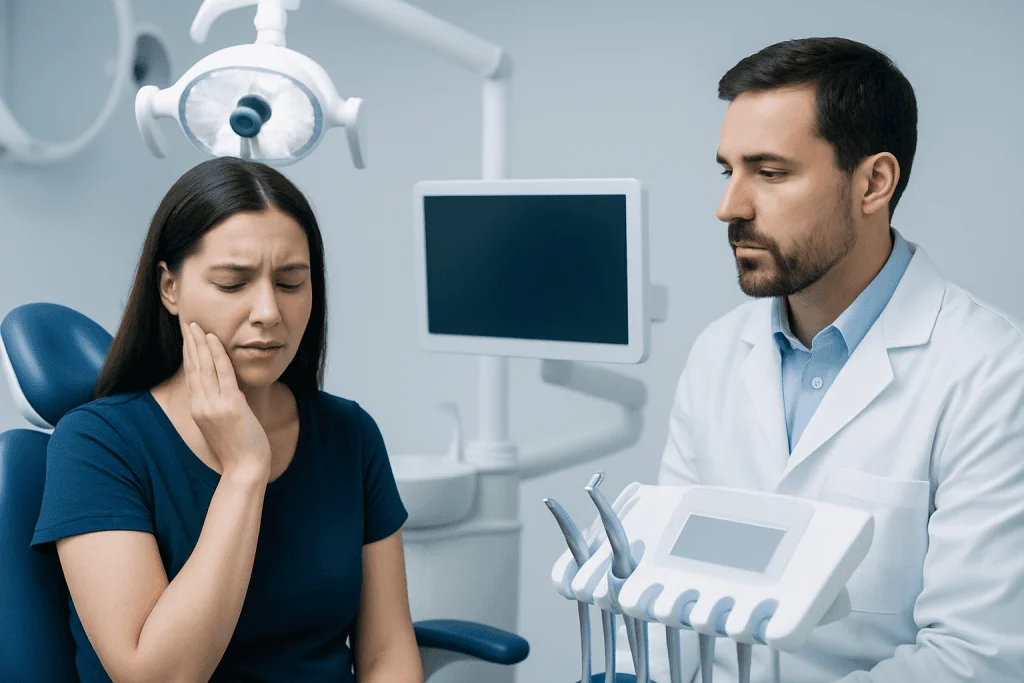
The classic symptom of cracked tooth syndrome is a sharp, brief pain when biting down or when releasing the bite. Some patients describe pain with specific foods, such as bread crusts, nuts, seeds, or chewy foods. The discomfort may not occur every time they chew, which can make the problem seem unpredictable.
Temperature sensitivity is also common, especially sensitivity to cold drinks or cold air. The tooth may feel normal between episodes, and there may be no visible cavity or swelling. If the crack irritates or exposes the pulp, pain may become more prolonged, spontaneous, or throbbing, suggesting pulp inflammation that needs more urgent dental care.
Possible symptoms include:
- Sharp pain on chewing or biting pressure
- Pain when releasing the bite
- Sensitivity to cold, sweet, or sometimes hot foods and drinks
- Discomfort that is difficult to pinpoint to one tooth
- Pain that comes and goes over weeks or months
- Gum tenderness near one tooth if the crack extends deeper
Not every cracked tooth causes symptoms immediately. Some cracks are found during dental check-ups before they become painful. Regular dental visits are important because early signs, such as a small crack beside a large filling, may be easier to manage before the tooth becomes inflamed.
Causes and Risk Factors

Cracked tooth syndrome develops when forces placed on a tooth exceed what the tooth structure can comfortably withstand. This may happen suddenly, such as biting unexpectedly on a hard object, or gradually over time due to repeated chewing forces. Teeth with large fillings can be more vulnerable because less natural tooth structure remains to absorb pressure.
Back teeth are at higher risk because they receive strong chewing forces and have grooves and cusps that can concentrate pressure. A crack may begin on the chewing surface and travel downward. If it remains above the gumline and does not reach the pulp, the tooth may be more straightforward to restore. If it extends below the gumline or into the root, treatment becomes more complex.
Common risk factors include:
- Large or older fillings, especially in molars
- Teeth weakened by decay or previous dental treatment
- Teeth grinding or clenching, also called bruxism
- Biting hard foods such as ice, hard candies, or unpopped popcorn kernels
- Uneven bite or high spots on restorations
- Trauma, sports injuries, or accidents
- Age-related wear and repeated chewing stress
Having one risk factor does not mean a person will develop a cracked tooth. Dentists assess the whole mouth, including bite pattern, existing restorations, gum health, and symptoms, to understand why a crack may have formed and how to reduce further stress on the tooth.
Diagnosis
Diagnosing cracked tooth syndrome can require several steps because the crack may be very fine or hidden under an existing filling. The dentist will ask about the type of pain, what triggers it, how long it lasts, and whether the patient can identify the tooth. A history of grinding, recent dental work, trauma, or pain with specific foods can provide useful clues.
The examination may include careful visual inspection with magnification and drying the tooth to reveal fracture lines. A bite test is often used, where the patient bites on a small instrument placed on individual cusps. Pain when biting or releasing pressure can help identify the affected tooth and the part of the tooth involved.
Additional diagnostic tools may include:
- Dental X-rays to check for decay, bone changes, previous restorations, and other causes of pain
- Transillumination, where a bright light helps highlight a crack line
- Periodontal probing to check for a deep, narrow gum pocket that may suggest a crack extending below the gumline
- Cold testing or other pulp vitality tests to assess nerve response
- Removal of an old filling in selected cases to inspect the tooth more fully
- Cone beam CT in selected complex cases, especially when root fracture is suspected
It is important to understand that standard X-rays may not show a crack, especially if the crack is parallel to the X-ray beam or very fine. Diagnosis is therefore based on a combination of symptoms, clinical tests, imaging, and professional judgment.
Treatment Options
Treatment for cracked tooth syndrome depends on the location, depth, and direction of the crack, as well as whether the pulp is healthy. The main goals are to stabilize the tooth, protect it from further splitting, relieve symptoms, and preserve function. The dentist will also consider the patient’s bite, oral hygiene, and long-term restorative needs.
For a shallow crack that does not involve the pulp, treatment may include replacing a weakened filling or placing an onlay or crown to cover and hold the tooth together. A dental crown is commonly recommended for cracked molars because it surrounds the tooth and helps distribute chewing forces. In some cases, a temporary crown may be placed first to see whether symptoms improve before a final restoration is made.
If the crack has caused inflammation or infection of the pulp, root canal treatment may be needed before the tooth is restored with a crown. Root canal treatment removes the inflamed or infected pulp tissue, cleans and seals the root canals, and allows the tooth to be protected with a suitable restoration. If the crack extends deeply below the gumline, into the root, or splits the tooth, extraction may be the safest option because the tooth may not be predictable to save.
Pain control and short-term protection may also be part of care. The dentist may advise avoiding chewing on the affected side, limiting hard foods, or adjusting a high bite point. Antibiotics are not routinely used for a cracked tooth unless there is evidence of spreading infection or specific clinical need, and pain medicines should be used only as directed by a qualified healthcare professional.
Recovery, Follow-Up, and Prognosis
Many patients feel improvement after the tooth is stabilized with a well-fitting restoration. If the pulp was not damaged, discomfort may settle once the crack is protected from flexing during chewing. Mild sensitivity after treatment can occur for a short period, especially after restorative work, but persistent or worsening pain should be reassessed.
After root canal treatment and crown placement, follow-up visits help confirm that healing is progressing and that the bite is comfortable. A restored cracked tooth can function well, but it may still require monitoring because cracks can sometimes progress. The outcome is generally better when the crack is treated before it extends into the root or causes significant infection.
Patients should report symptoms such as lingering pain, swelling, gum boil, bad taste, or pain that wakes them at night. These signs may indicate pulp involvement or infection that needs further dental attention. Regular check-ups allow the dentist to monitor the restoration, surrounding gum tissues, and the patient’s bite forces over time.
Prevention and Self-Care
Not all cracked teeth can be prevented, but certain habits can reduce the risk. Avoid chewing ice, hard candies, pens, and other hard objects. People who enjoy foods with hard shells, seeds, or kernels should chew carefully and avoid using teeth as tools to open packages or crack shells.
Patients who grind or clench their teeth may benefit from a custom night guard if recommended by a dentist. Managing bruxism can reduce excessive bite forces that contribute to cracks, tooth wear, jaw discomfort, and restoration failure. Bite adjustments or replacement of worn restorations may also be considered when uneven forces are contributing to symptoms.
Good oral hygiene helps prevent decay that can weaken teeth. Brushing with fluoride toothpaste, cleaning between the teeth, and attending regular dental check-ups support long-term tooth strength. If a tooth has a large filling or visible crack line, the dentist may recommend monitoring or preventive restoration before symptoms become more serious.
Self-care should not replace professional evaluation. If a person suspects a cracked tooth, they should avoid chewing on that side and arrange a dental appointment. Delaying care may allow the crack to deepen, increasing the chance of root canal treatment or extraction.
When to See a Dentist
A person should see a dentist if they have sharp pain when biting, pain when releasing a bite, repeated cold sensitivity in one tooth, or discomfort that appears with certain foods. Even if the pain is mild or intermittent, early assessment can help identify a crack before it becomes more difficult to treat. Dental pain that comes and goes is still a valid reason to seek care.
More urgent evaluation is needed if pain becomes constant, swelling appears, the gum becomes tender or drains pus, there is fever, or the tooth feels loose after injury. These symptoms may indicate pulp infection, abscess, or trauma-related damage. In such cases, timely care helps relieve pain and protect general health.
At Acibadem International, multidisciplinary dental and medical specialists in JCI-accredited hospitals can diagnose and treat cracked tooth syndrome for international patients, including cases that require restorative dentistry, root canal treatment, or coordinated care. Patients should always discuss their individual diagnosis, treatment options, expected outcomes, and follow-up plan with a qualified dentist.
Frequently asked questions
Can a cracked tooth heal on its own?
A cracked tooth does not heal in the same way that bone can heal. Once a crack forms in enamel or dentin, it usually needs monitoring or dental treatment to prevent progression. Treatment aims to protect the tooth from further movement and reduce symptoms.
Why does a cracked tooth hurt only when biting?
Biting can cause the cracked parts of the tooth to flex slightly, irritating the dentin or pulp inside the tooth. Pain may be especially noticeable when releasing the bite because the crack closes again and stimulates the nerve. This pattern is one reason cracked tooth syndrome can be difficult to identify without dental testing.
Will an X-ray always show a cracked tooth?
No. Many cracks are too fine or positioned in a way that standard dental X-rays do not clearly show them. Dentists often combine X-rays with bite testing, magnification, transillumination, periodontal probing, and pulp tests to make a diagnosis.
Is a crown enough to treat cracked tooth syndrome?
A crown may be enough if the crack has not reached the pulp and the tooth can be stabilized. If the pulp is inflamed or infected, root canal treatment may be needed before the crown. If the crack extends too deeply into the root, extraction may be necessary.
What should someone do while waiting for a dental appointment?
They should avoid chewing on the painful side and stay away from hard or sticky foods that could worsen the crack. Over-the-counter pain relief may be used if appropriate for the person, following the product label or medical advice. They should seek urgent care if swelling, fever, severe pain, or facial swelling develops.
Can teeth grinding cause cracked teeth?
Yes. Grinding and clenching can place repeated heavy forces on teeth, which may contribute to cracks, worn enamel, and jaw discomfort. A dentist may recommend a custom night guard, bite evaluation, or other strategies to reduce stress on the teeth.
References
- American Dental Association
- American Association of Endodontists
- Mayo Clinic
- National Institute of Dental and Craniofacial Research
- FDI World Dental Federation
This article is for general information only and is not a substitute for professional medical advice. Please consult a qualified doctor about your individual situation.
Explore treatments in Turkey — costs, top hospitals & a free quote
JCI-accredited · board-certified surgeons · reply within 24h
Add us as a Preferred Source to see more of our trusted health content across Google Search, AI Overviews and Discover.

Dental & Oral Health
Full-scope dental care from implants and aesthetics to oral and maxillofacial surgery.
158 specialists in this unitRelated Treatments
More from the Health Library



Related Specialists

Assoc. Prof. Dr. Ferit Bayram
Oral & Dental Health
Dt. Alara Naz Kenir
Oral & Dental Health
Dt. Gonca Katmer
Oral & Dental HealthDt. Doğa Baysal
Oral & Dental Health