

Pterygium: Eye Surface Growth, UV Risk, and Surgery Decisions

Pterygium is usually benign, but it can cause redness, irritation, dryness, and sometimes blurred vision. Long-term UV exposure is the most important risk factor, especially for people who spend significant time outdoors.
Key Takeaways
- Pterygium is usually benign, but it can cause redness, irritation, dryness, and sometimes blurred vision.
- Long-term UV exposure is the most important risk factor, especially for people who spend significant time outdoors.
- Diagnosis is usually made during a routine eye examination with slit-lamp evaluation.
- Artificial tears, anti-inflammatory drops, and UV protection can reduce symptoms but do not remove the growth.
- Surgery may be recommended when pterygium grows toward the cornea center, causes astigmatism, limits eye movement, or creates persistent discomfort.
- Recurrence can occur after surgery, so postoperative care and ongoing UV protection are important.
Pterygium is a noncancerous growth on the surface of the eye that is strongly associated with long-term ultraviolet light exposure, wind, dust, and dry conditions. Many cases can be managed with eye protection and lubricating drops, while surgery may be considered if the growth affects vision, comfort, or daily life.
Overview
Pterygium is a raised, wedge-shaped growth of tissue that starts on the conjunctiva, the clear membrane covering the white part of the eye, and may extend onto the cornea, the transparent front window of the eye. It often appears on the side of the eye closest to the nose, although it can occur on the outer side or in both eyes. The growth is usually pinkish or reddish because it contains small blood vessels.
Pterygium is not a cancer in most cases. It is considered a benign eye surface condition related to chronic environmental irritation, particularly ultraviolet light exposure. Some people notice it because the eye looks red or because they feel grittiness, dryness, or a sensation that something is in the eye.
The condition can remain small and stable for years, or it can slowly grow. If it advances onto the cornea, it may disturb the smooth optical surface of the eye and cause astigmatism, glare, or blurred vision. For this reason, regular ophthalmology follow-up is useful, even when symptoms are mild.
Symptoms and Signs
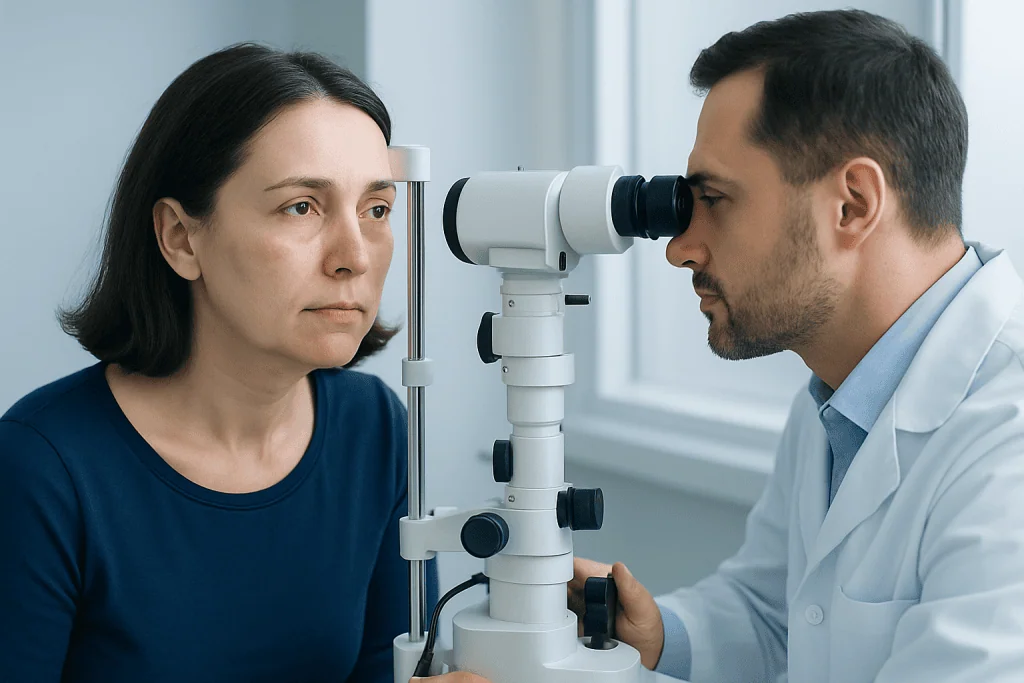
Many people with early pterygium have no symptoms other than a visible change on the eye surface. Others experience intermittent redness, burning, itching, tearing, dryness, or mild discomfort. Symptoms can become more noticeable in sunny, windy, dusty, smoky, or air-conditioned environments.
As the growth becomes thicker or more inflamed, the eye may feel gritty or irritated. The surface can look persistently red, especially after outdoor activity. Contact lens wear may become uncomfortable because the growth changes the shape or smoothness of the eye surface.
Vision changes are more likely when the pterygium grows onto the cornea. It may pull on the cornea and create astigmatism, or it may approach the central visual axis. People may notice blurred vision, ghosting of images, glare, or difficulty with reading and driving, especially at night.
- A visible triangular or wing-shaped growth on the white of the eye
- Redness, dryness, burning, or foreign-body sensation
- Increased irritation after sun, wind, dust, or smoke exposure
- Blurred vision or astigmatism if the cornea is affected
- Cosmetic concern due to persistent redness or eye appearance
Causes and Risk Factors

The exact cause of pterygium is not fully explained, but long-term ultraviolet radiation is the main recognized risk factor. UV light can damage the eye surface over time, contributing to abnormal tissue growth and chronic inflammation. This is why pterygium is more common in people who live in sunny climates or spend many hours outdoors.
Environmental irritation also plays an important role. Wind, dust, sand, dry air, and smoke can irritate the conjunctiva and worsen inflammation. People who work outdoors, such as farmers, fishermen, construction workers, athletes, and lifeguards, may have higher exposure. Recreational activities such as sailing, skiing, hiking, and cycling can also increase UV and wind exposure if eye protection is not used.
Dry eye disease may contribute to symptoms and may make pterygium feel more uncomfortable. A family tendency may be present in some cases, but pterygium is primarily linked to cumulative environmental exposure rather than a single inherited cause. It is not contagious and cannot be passed from one person to another.
A related condition called pinguecula is a small yellowish or raised area on the conjunctiva that does not grow onto the cornea. A pinguecula can become inflamed and may sometimes be confused with pterygium. An eye specialist can distinguish between these conditions during examination.
Diagnosis
Pterygium is usually diagnosed by an ophthalmologist or optometrist through a clinical eye examination. The doctor inspects the eye surface and uses a slit-lamp microscope to assess the size, thickness, inflammation, and how far the tissue extends onto the cornea. The location of the leading edge is often measured and documented to monitor progression over time.
Vision testing helps determine whether the growth is affecting eyesight. Refraction may identify astigmatism caused by corneal distortion. In some cases, corneal topography or tomography is used to map the cornea and show subtle shape changes, especially before surgery or when vision symptoms are present.
The doctor may also evaluate the tear film and look for dry eye, blepharitis, allergic eye disease, or other causes of redness and irritation. Although pterygium is typically benign, unusual features such as rapid growth, irregular pigmentation, repeated bleeding, or an atypical appearance may require closer evaluation to rule out less common eye surface disorders.
Treatment Options
Treatment depends on symptoms, growth pattern, vision impact, and the patient’s daily needs. A small, stable pterygium that does not affect vision may not need active treatment beyond observation, lubricating eye drops, and protection from UV light and irritants. Artificial tears can reduce dryness and foreign-body sensation, especially in dry or windy environments.
If inflammation is present, an eye doctor may recommend short-term anti-inflammatory eye drops or other prescription treatments. These medicines can improve redness and discomfort, but they do not remove the pterygium or make it disappear permanently. People should avoid using steroid or antibiotic drops without medical supervision because inappropriate use can cause side effects or delay proper diagnosis.
Surgery is the only way to remove a pterygium. It may be recommended if the growth threatens or affects the visual axis, causes significant astigmatism, limits eye movement, repeatedly becomes inflamed, interferes with contact lens use, or creates substantial cosmetic concern. The decision is individualized and should include a discussion of benefits, risks, recovery, recurrence, and alternatives.
Modern pterygium surgery often involves excision of the abnormal tissue followed by placement of a conjunctival autograft, which uses the patient’s own healthy conjunctival tissue to cover the area. Tissue adhesive or sutures may be used. This approach is commonly preferred because it helps reduce recurrence compared with simple removal alone. In selected cases, the surgeon may use additional measures to reduce regrowth risk, based on the eye’s condition and the patient’s risk profile.
Surgery Decisions and Recovery
Choosing surgery for pterygium is not based only on how the eye looks. The most important factors are whether the pterygium is growing, whether it is changing corneal shape, whether it is approaching the center of the cornea, and whether symptoms remain troublesome despite appropriate medical care. Timing matters because advanced pterygium can leave corneal scarring or irregular astigmatism even after removal.
Before surgery, the ophthalmologist usually assesses visual acuity, refractive error, corneal shape, dry eye status, and any other eye conditions. Patients should share information about previous eye surgery, contact lens use, medications, allergies, keloid tendency, autoimmune disease, or bleeding risks. If cataract or refractive surgery is being considered, pterygium may need to be addressed first because it can affect corneal measurements.
Recovery varies, but redness, watering, mild discomfort, and light sensitivity are common in the early healing period. Patients are typically given prescribed eye drops and clear instructions about hygiene, activity limits, follow-up visits, and warning symptoms. Rubbing the eye should be avoided, and sunglasses or protective eyewear are important during healing and afterward.
Recurrence is possible, particularly in younger patients, people with high UV exposure, or cases with marked inflammation. Careful surgical technique, grafting methods, postoperative medication use as prescribed, and long-term UV protection help reduce the likelihood of regrowth. A patient should discuss expected healing time and work or travel plans with the surgeon before the procedure.
Prevention and Self-Care
Prevention focuses on reducing UV exposure and environmental irritation. Wraparound sunglasses that block UVA and UVB rays, wide-brimmed hats, and protective eyewear during outdoor work can help protect the eye surface. Protection is useful even on cloudy days because UV radiation can still reach the eyes.
People who live or work in dusty, windy, or dry settings may benefit from safety glasses, frequent lubricating drops, and avoiding smoke exposure when possible. Preservative-free artificial tears can be helpful for frequent use, especially for people with dry eye symptoms. Hydration, regular breaks from screens, and managing eyelid inflammation may also improve comfort.
Self-care cannot remove an existing pterygium, but it can reduce irritation and may help limit triggers associated with inflammation. Patients should not try home remedies that involve applying chemicals, plant extracts, or unprescribed medicines to the eye. The eye surface is delicate, and unsafe products can cause injury.
Routine eye examinations are recommended if a pterygium is visible, changing, or symptomatic. At Acibadem International, multidisciplinary eye care teams in JCI-accredited hospitals evaluate and treat pterygium and related eye surface conditions for international patients, including surgical planning when appropriate.
When to See a Doctor
A person should schedule an eye examination if a growth is noticed on the white of the eye, especially if it is new, enlarging, red, or uncomfortable. Early assessment helps confirm the diagnosis and establish a baseline measurement. Monitoring is particularly important if the growth is moving toward the cornea or if vision is changing.
Medical advice is also recommended for persistent redness, irritation, dryness, tearing, foreign-body sensation, contact lens intolerance, or cosmetic concern. People with outdoor occupations or high UV exposure may benefit from regular check-ups even when symptoms are mild. A doctor can recommend protective strategies and treatment tailored to the patient’s environment and eye surface health.
Prompt care is appropriate if there is significant eye pain, sudden vision loss, severe light sensitivity, eye injury, discharge, or a rapidly changing lesion. These symptoms are not typical of uncomplicated pterygium and may indicate another eye condition requiring timely evaluation. Any medication for the eye, especially steroid drops, should be used only under professional guidance.
Frequently asked questions
Is pterygium dangerous?
Pterygium is usually a benign eye surface growth and is not cancer. It can still cause discomfort, redness, or vision changes if it grows onto the cornea. An eye examination is important to confirm the diagnosis and monitor whether it is progressing.
Can pterygium go away without surgery?
An established pterygium does not usually disappear on its own. Lubricating drops and anti-inflammatory treatment can improve redness and irritation, but they do not remove the growth. Surgery is the only treatment that physically removes pterygium.
When is pterygium surgery recommended?
Surgery may be recommended if pterygium affects vision, causes astigmatism, grows toward the center of the cornea, limits eye movement, or causes persistent symptoms despite medical treatment. It may also be considered for significant cosmetic concern. The decision should be made with an ophthalmologist after a full eye assessment.
Can pterygium come back after surgery?
Yes, recurrence can occur after surgery, although modern techniques such as conjunctival autografting help reduce the risk. Younger age, high UV exposure, and inflammation may increase recurrence risk. Ongoing sun protection and following postoperative instructions are important.
What is the difference between pterygium and pinguecula?
A pinguecula is a small raised or yellowish area on the conjunctiva that does not grow onto the cornea. A pterygium is a wing-shaped growth that can extend onto the cornea and potentially affect vision. An eye specialist can distinguish between them during a slit-lamp examination.
Do sunglasses really help prevent pterygium?
Sunglasses that block UVA and UVB rays are one of the most useful preventive measures. Wraparound styles are especially helpful because they reduce side exposure to sunlight, wind, and dust. A wide-brimmed hat adds further protection for people who spend time outdoors.
Can contact lenses be worn with pterygium?
Some people can wear contact lenses comfortably with a small, stable pterygium, while others experience irritation or poor lens fit. The growth can disturb the smooth eye surface and make lenses uncomfortable. An eye care professional can assess whether contact lenses remain suitable and suggest safer options.
References
- American Academy of Ophthalmology
- National Eye Institute
- World Health Organization
- Mayo Clinic
- Royal College of Ophthalmologists
This article is for general information only and is not a substitute for professional medical advice. Please consult a qualified doctor about your individual situation.
Oncology care in Turkey — second opinion and treatment plan
JCI-accredited · board-certified surgeons · reply within 24h
Add us as a Preferred Source to see more of our trusted health content across Google Search, AI Overviews and Discover.

More from the Health Library



Related Specialists

Assoc. Prof. Dr. Yeşim Çimen
Physical Medicine & Rehabilitation
Prof. Dr. Hakan Ümit Ünal
Gastroenterology
Dr. Buğra Alpan
Orthopedic Surgery & Traumatology
Ody. Betül Yıldızlı
Audiology