

Acid Reflux After Gastric Sleeve: Symptoms, Prevention, and Treatment

Acid reflux after gastric sleeve may cause heartburn, sour fluid coming up, chest discomfort, chronic cough, hoarseness, or a lump-like feeling in the throat. Reflux can occur because sleeve surgery changes stomach shape, pressure, emptying, and the relationship between the stomach and the lower esophageal valve.
Key Takeaways
- Acid reflux after gastric sleeve may cause heartburn, sour fluid coming up, chest discomfort, chronic cough, hoarseness, or a lump-like feeling in the throat.
- Reflux can occur because sleeve surgery changes stomach shape, pressure, emptying, and the relationship between the stomach and the lower esophageal valve.
- Persistent or severe symptoms should be assessed by a bariatric surgeon or gastroenterologist, especially when swallowing problems, vomiting, bleeding, or weight loss occur.
- Treatment often begins with meal timing, smaller portions, trigger reduction, and acid-suppressing medicines when appropriate.
- If reflux remains significant despite medical care, tests may identify a hiatal hernia, sleeve narrowing, twisting, or severe GERD that may require surgical correction or conversion to gastric bypass.
Acid reflux after gastric sleeve surgery is a recognized concern that may appear for the first time or worsen in people who already had reflux. Most cases can be evaluated and managed with careful eating habits, medication, follow-up testing, and, in selected cases, revisional surgery.
Overview
Acid reflux after gastric sleeve occurs when stomach contents flow back into the esophagus, the tube that carries food from the mouth to the stomach. This backflow can irritate the esophageal lining and cause symptoms such as heartburn, sour-tasting regurgitation, chest burning, or throat discomfort. When reflux is frequent or causes inflammation, it may be called gastroesophageal reflux disease, or GERD.
Gastric sleeve surgery, also known as sleeve gastrectomy, removes a large portion of the stomach and creates a narrow, tube-like stomach. The procedure can be an effective part of weight-loss treatment for people with obesity, but the new stomach shape can affect pressure and reflux mechanics. Some patients notice reflux for the first time after surgery, while others had reflux before surgery and find that it improves, worsens, or fluctuates over time.
Not every episode of heartburn means there is a serious problem. However, persistent reflux after gastric sleeve surgery deserves medical attention because it can affect comfort, nutrition, sleep, and long-term esophageal health. A structured evaluation helps identify whether symptoms are related to eating patterns, acid production, a hiatal hernia, sleeve shape, or another digestive condition.
Symptoms of Acid Reflux After Gastric Sleeve

The most familiar symptom is heartburn, usually described as a burning sensation behind the breastbone or in the upper abdomen. It may occur after meals, when bending forward, or when lying down. Some people also experience regurgitation, which means bitter, sour, or acidic fluid rises into the throat or mouth.
Reflux after sleeve gastrectomy can also cause symptoms outside the stomach. These may include frequent burping, nausea, a persistent sore throat, hoarseness, a chronic cough, bad breath, dental enamel irritation, or a feeling that something is stuck in the throat. Symptoms may be worse at night because lying flat makes it easier for stomach contents to move upward.
Some symptoms require prompt assessment because they may suggest irritation, narrowing, ulceration, or another condition. These include difficulty swallowing, painful swallowing, repeated vomiting, black stools, vomiting blood, unexplained anemia, severe chest pain, or unintended ongoing weight loss. Chest pain should always be assessed carefully, because heart and lung conditions can sometimes mimic reflux.
Why Reflux Can Happen After Sleeve Surgery
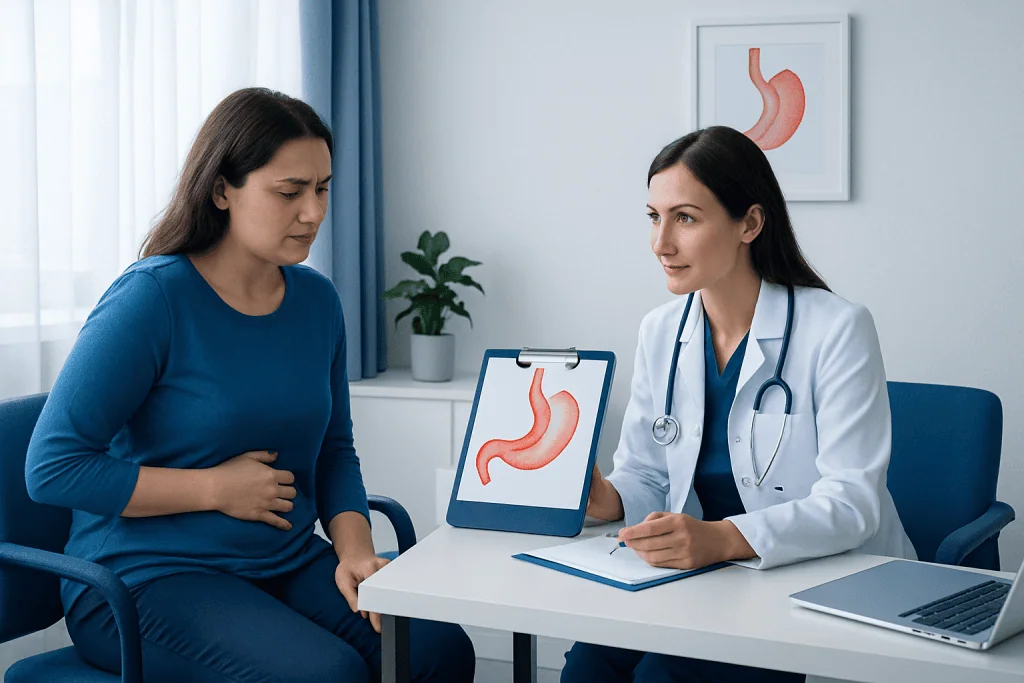
Several changes after sleeve gastrectomy can contribute to reflux. The smaller sleeve-shaped stomach may hold less food and may generate higher pressure during meals. If pressure in the stomach is higher than the pressure at the lower esophageal sphincter, stomach contents may move upward more easily. The lower esophageal sphincter is the valve-like muscle between the esophagus and stomach that normally helps prevent reflux.
The anatomy around the top of the stomach can also change. Some patients have a hiatal hernia, where part of the stomach moves upward through the diaphragm. A hiatal hernia may exist before surgery or become more noticeable after surgery. Sleeve shape also matters; a narrowed, twisted, or uneven sleeve can slow emptying or increase pressure, which may aggravate reflux symptoms.
Risk factors may include having GERD before surgery, a hiatal hernia, smoking, large or late meals, rapid eating, carbonated drinks, alcohol, high-fat foods, weight regain, pregnancy, and certain medications that relax the esophageal sphincter. Reflux risk is one reason that preoperative evaluation and procedure selection are important parts of bariatric surgery planning.
Diagnosis and Medical Evaluation
Diagnosis begins with a detailed medical history. The doctor asks when symptoms started, what triggers them, whether they occur at night, and whether there are warning signs such as swallowing difficulty or bleeding. It is also important to review previous reflux history, medications, smoking status, eating patterns, weight changes, and the details of the original sleeve operation when available.
Upper endoscopy is commonly used when symptoms are persistent, severe, new after surgery, or associated with warning signs. During endoscopy, a thin flexible camera examines the esophagus, stomach sleeve, and the connection between them. It can identify esophagitis, ulcers, narrowing, hiatal hernia, bile reflux signs, or Barrett’s esophagus, a change in the esophageal lining associated with long-term GERD.
Other tests may be recommended in selected patients. A contrast swallow study can show sleeve shape, narrowing, twisting, delayed emptying, or a hiatal hernia. Ambulatory pH monitoring measures acid exposure in the esophagus, while impedance testing can detect non-acid reflux. Esophageal manometry evaluates swallowing muscle function and sphincter pressure, especially before revisional surgery is considered.
Treatment Options
Treatment is usually stepwise and tailored to the cause and severity of reflux. Many patients start with lifestyle and nutrition changes, along with acid-suppressing medication if appropriate. Proton pump inhibitors, H2 blockers, antacids, or alginate-based therapies may be considered by a clinician, depending on symptom pattern, other medical conditions, and medication safety. Patients should avoid starting or continuing long-term medication without medical follow-up.
If tests show inflammation, a hiatal hernia, sleeve narrowing, twisting, or poor emptying, treatment may need to address the underlying problem. Endoscopic dilation may be considered for selected sleeve narrowing. Surgical repair of a hiatal hernia may help some patients, particularly when anatomy is a major contributor. The best approach depends on the patient’s anatomy, reflux severity, nutritional status, and weight-loss history.
When GERD remains significant despite optimized medical therapy, conversion to gastric bypass may be discussed. Gastric bypass can reduce acid and bile exposure to the esophagus in many appropriately selected patients, although it is still major surgery and requires careful assessment. Acibadem International’s multidisciplinary specialists and JCI-accredited hospitals evaluate and treat reflux and bariatric surgery concerns for international patients, including cases that require coordinated gastroenterology, nutrition, and surgical input.
Prevention and Self-Care
Self-care focuses on reducing stomach pressure and minimizing reflux triggers. After a sleeve gastrectomy, eating slowly and stopping at comfortable fullness are especially important. Large portions, rushed meals, and drinking large amounts with meals can overfill the sleeve and increase pressure. Many bariatric teams advise separating fluids from meals and following the staged diet plan provided after surgery.
Common reflux-reducing habits include eating smaller meals, avoiding food within two to three hours before lying down, raising the head of the bed if nighttime reflux occurs, and avoiding tight clothing around the abdomen. Trigger foods vary from person to person, but frequent triggers include fried or fatty foods, chocolate, peppermint, coffee, alcohol, spicy foods, citrus, tomato-based foods, and carbonated drinks.
Other health habits can also help. Smoking cessation is important because nicotine can relax the lower esophageal sphincter and impair tissue healing. Maintaining weight loss, treating constipation, and staying physically active within medical guidance may reduce abdominal pressure. Patients who have had sleeve gastrectomy should keep regular follow-up appointments so that reflux, vitamin levels, hydration, and nutrition can be monitored over time.
When to See a Doctor
A doctor should be consulted when reflux symptoms occur more than occasionally, interfere with sleep, require frequent over-the-counter medication, or continue despite careful eating habits. Medical review is also appropriate when reflux begins soon after sleeve surgery or worsens months to years later. Early evaluation can identify treatable causes before symptoms become more difficult to control.
Prompt medical attention is important for difficulty swallowing, painful swallowing, repeated vomiting, dehydration, unintentional weight loss, black or bloody stools, vomiting blood, severe abdominal pain, or chest pain. These symptoms do not always mean a dangerous condition is present, but they should not be managed with home remedies alone. Emergency care is appropriate if chest pain is severe, associated with shortness of breath, sweating, fainting, or pain spreading to the arm, jaw, or back.
Patients should also seek care before pregnancy planning, before stopping prescribed reflux medication, or before using non-prescribed supplements and anti-inflammatory pain medicines. A bariatric surgeon, gastroenterologist, and dietitian can work together to confirm the diagnosis, protect nutrition, and choose the safest long-term plan.
Frequently asked questions
Is acid reflux common after gastric sleeve surgery?
Acid reflux is a recognized possible issue after gastric sleeve surgery. Some patients develop new reflux, while others with pre-existing GERD may improve or worsen. The pattern depends on anatomy, sleeve shape, hiatal hernia status, eating habits, and individual healing.
Can reflux after gastric sleeve go away on its own?
Mild reflux may improve as swelling settles, eating patterns stabilize, and weight decreases. However, reflux that persists, worsens, or requires frequent medication should be evaluated. Ongoing symptoms can often be managed more effectively when the cause is identified.
What foods should be avoided with reflux after gastric sleeve?
Common triggers include fatty or fried foods, chocolate, peppermint, coffee, alcohol, carbonated drinks, citrus, tomatoes, and spicy foods. Triggers vary, so a food and symptom diary can help identify individual patterns. Eating slowly and keeping portions small is often as important as avoiding specific foods.
Which medicine is used for acid reflux after sleeve gastrectomy?
Doctors may recommend proton pump inhibitors, H2 blockers, antacids, or alginate-based treatments depending on the symptoms and test results. The safest option depends on the patient’s medical history, other medications, and the expected duration of treatment. Long-term use should be monitored by a qualified clinician.
When is surgery needed for reflux after gastric sleeve?
Surgery may be considered when significant reflux continues despite optimized lifestyle measures and medication, or when testing shows a correctable anatomical problem. Examples include a hiatal hernia, sleeve narrowing, twisting, or severe GERD with esophageal inflammation. Options may include hernia repair, correction of sleeve problems, or conversion to gastric bypass in selected cases.
Does gastric bypass help reflux after sleeve surgery?
Gastric bypass can help reduce reflux in many patients who have severe GERD after sleeve gastrectomy, particularly when medical treatment is not enough. It is not suitable for everyone and requires careful nutritional and surgical evaluation. A bariatric specialist can explain the benefits, risks, and follow-up requirements.
References
- American Society for Metabolic and Bariatric Surgery
- Society of American Gastrointestinal and Endoscopic Surgeons
- American College of Gastroenterology
- International Federation for the Surgery of Obesity and Metabolic Disorders
- National Institute of Diabetes and Digestive and Kidney Diseases
This article is for general information only and is not a substitute for professional medical advice. Please consult a qualified doctor about your individual situation.
Medical weight-loss options in Turkey — costs & eligibility
JCI-accredited · board-certified surgeons · reply within 24h
Add us as a Preferred Source to see more of our trusted health content across Google Search, AI Overviews and Discover.

Related Treatments
Related Conditions
More from the Health Library



Related Specialists
Prof. Dr. Tayfun Karahasanoğlu
General Surgery
Prof. Dr. Güralp Onur Ceyhan
General Surgery
Prof. Dr. Volkan Özben
General Surgery
Assoc. Prof. Dr. Halil Kara
General Surgery