Sperm Retrieval for IVF: TESA, TESE, and When They Are Used

Sperm retrieval may be recommended when semen analysis shows no sperm or too few usable sperm for standard IVF. TESA uses a needle to aspirate tissue or fluid from the testicle, while TESE removes a small testicular tissue sample through a minor incision.
Key Takeaways
- Sperm retrieval may be recommended when semen analysis shows no sperm or too few usable sperm for standard IVF.
- TESA uses a needle to aspirate tissue or fluid from the testicle, while TESE removes a small testicular tissue sample through a minor incision.
- Retrieved sperm are usually used with ICSI, because only a small number of sperm may be available.
- The choice of procedure depends on the cause of male infertility, hormone results, testicular examination, prior surgery, and fertility goals.
- A careful evaluation by a reproductive urologist and fertility specialist helps couples understand realistic options, timing, and next steps.
Sperm retrieval for IVF is a group of procedures used to collect sperm directly from the male reproductive tract when sperm are absent or very low in the semen. Techniques such as TESA and TESE are often combined with ICSI to help selected couples pursue pregnancy using their own sperm.
Overview
Sperm retrieval for IVF refers to medical procedures that obtain sperm directly from the testicle or epididymis, rather than from an ejaculated semen sample. These procedures are most often considered when sperm are not present in the semen, a condition called azoospermia, or when the number or quality of sperm in the ejaculate is too low for treatment. The retrieved sperm can then be used in assisted reproduction, most commonly with intracytoplasmic sperm injection, or ICSI.
In many cases, only a very small number of sperm are needed because ICSI involves injecting a single sperm into each mature egg in the laboratory. This is why sperm retrieval can be helpful even when sperm production is limited. It is typically part of a coordinated fertility plan that also includes ovarian stimulation, egg retrieval, embryo culture, and embryo transfer during IVF treatment.
The most commonly discussed testicular sperm retrieval techniques include TESA, which stands for testicular sperm aspiration, and TESE, which stands for testicular sperm extraction. Other related procedures may include PESA or MESA, which retrieve sperm from the epididymis, and micro-TESE, which uses an operating microscope to identify areas of sperm production within the testicle. The best option depends on the medical cause of infertility and the couple’s overall fertility assessment.
When Sperm Retrieval Is Used
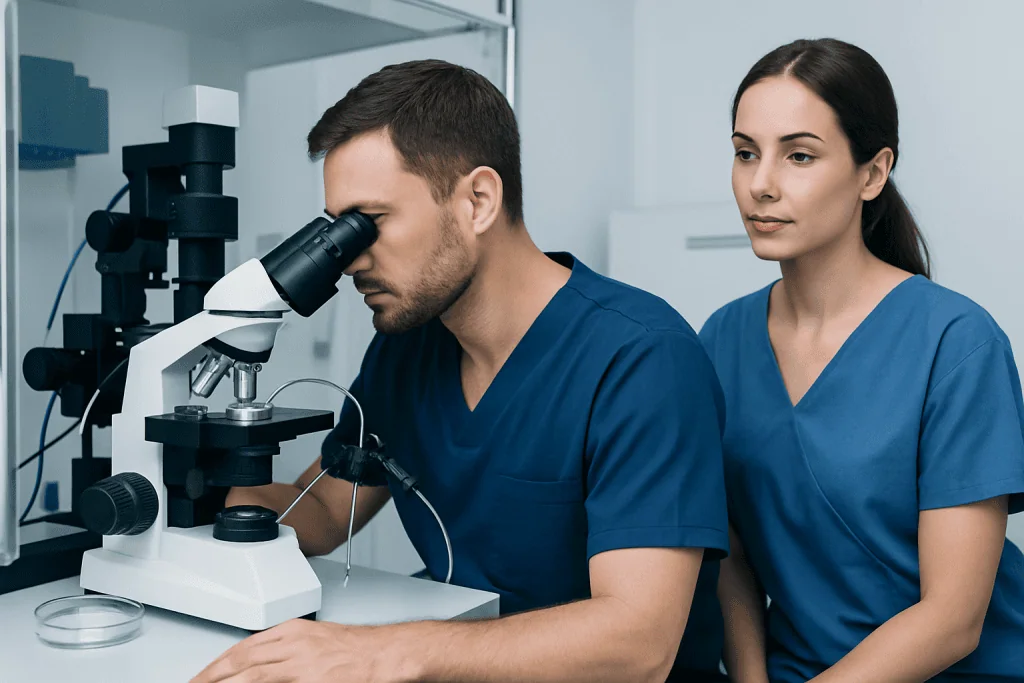
Sperm retrieval is used when sperm cannot be obtained in sufficient quantity or quality from ejaculation. One of the most common reasons is azoospermia. Azoospermia can be obstructive, meaning sperm are being produced but cannot pass through the reproductive tract, or non-obstructive, meaning sperm production inside the testicles is reduced or inconsistent.
Obstructive azoospermia may occur after vasectomy, congenital absence of the vas deferens, scarring from infection, prior surgery, or blockage in the epididymis or ejaculatory ducts. In these situations, sperm production may be normal, and retrieval rates are often more favorable. Non-obstructive azoospermia can be related to genetic conditions, prior chemotherapy or radiotherapy, undescended testes, hormonal problems, testicular injury, or unexplained impaired sperm production.
Retrieval may also be considered when a man cannot ejaculate, has retrograde ejaculation that cannot be managed with simpler measures, or has severe sperm DNA or motility problems in ejaculated samples. Sometimes sperm are retrieved and frozen in advance of cancer treatment or other medical procedures that may affect fertility. The decision is individualized and is usually made after a detailed infertility evaluation of both partners.
TESA, TESE, and Related Techniques

TESA, or testicular sperm aspiration, is a needle-based procedure. A fine needle is inserted into the testicle to aspirate small amounts of tissue or fluid that may contain sperm. It is often performed with local anesthesia, sedation, or short anesthesia depending on the patient’s situation and the clinic’s protocol. TESA may be suitable for some men with obstructive azoospermia or when a less invasive approach is appropriate.
TESE, or testicular sperm extraction, involves making a small incision in the scrotal skin and testicular covering to remove a tiny sample of testicular tissue. The tissue is examined in the laboratory to look for sperm. TESE may be used when aspiration is unlikely to provide enough sperm or when previous aspiration has not been successful. It can be performed as a planned procedure and may allow tissue to be frozen for future IVF cycles if enough sperm are found.
Micro-TESE is a more specialized form of testicular sperm extraction. During micro-TESE, the surgeon uses an operating microscope to identify small areas of the testicle that appear more likely to contain sperm. This approach is often considered for non-obstructive azoospermia, where sperm production may occur only in limited areas. PESA and MESA are epididymal retrieval procedures used mainly for obstruction; they obtain sperm from the epididymis rather than the testicle.
There is no single best procedure for every patient. A reproductive urologist considers the diagnosis, testicular size, hormone levels, previous surgery, genetic test results, and whether sperm should be retrieved fresh on the day of egg collection or frozen ahead of time. The fertility laboratory’s experience with processing very small samples is also important.
Evaluation Before Sperm Retrieval
Before sperm retrieval, the medical team usually confirms the semen findings with at least one repeat semen analysis performed in an experienced laboratory. A physical examination can assess testicular size, the presence or absence of the vas deferens, varicocele, prior surgical scars, and signs of hormonal imbalance. A detailed history reviews childhood conditions, infections, medications, anabolic steroid use, heat exposure, cancer treatment, and any previous fertility results.
Blood tests commonly include reproductive hormones such as follicle-stimulating hormone, luteinizing hormone, testosterone, and sometimes prolactin or thyroid tests. In azoospermia, genetic testing may be recommended, particularly karyotype testing and Y-chromosome microdeletion testing. Men with congenital absence of the vas deferens may be offered cystic fibrosis gene testing, often together with partner testing, because of reproductive implications.
The female partner’s fertility evaluation is also essential. Sperm retrieval is usually useful only if eggs can be collected or donor eggs are planned, because retrieved sperm are most often used with ICSI. Factors such as age, ovarian reserve, uterine health, and previous IVF outcomes influence timing and whether sperm retrieval should be done before or on the same day as egg retrieval.
How the Procedure and IVF Cycle Are Coordinated
Sperm retrieval may be scheduled in two main ways. In a fresh approach, retrieval is performed on or near the day of the female partner’s egg retrieval, and sperm are used immediately in the laboratory. In a planned or staged approach, sperm retrieval is done earlier, and any usable sperm are frozen for later use. Freezing sperm before ovarian stimulation can reduce uncertainty, especially in non-obstructive azoospermia where sperm may not be found.
On the procedure day, anesthesia options depend on the technique and patient preference. Needle aspiration may be brief, while TESE or micro-TESE may take longer. After retrieval, embryologists process the sample carefully to identify sperm under the microscope. If sperm are found, they may be used fresh for ICSI or cryopreserved. If none are found, the fertility team discusses alternative options, which may include repeat retrieval in selected cases, donor sperm, donor embryos, or other family-building choices.
Couples are usually advised to discuss possible outcomes before treatment begins. This includes what will happen if too few eggs are obtained, if no sperm are found, or if embryos do not develop as expected. Clear planning helps reduce stress during an already emotional process and allows decisions to be made calmly and with medical guidance.
Recovery, Risks, and Expected Outcomes
Recovery after TESA or TESE is usually straightforward, although the details vary with the procedure. Mild discomfort, swelling, bruising, or tenderness can occur for a few days. Patients are generally advised to rest briefly, use scrotal support if recommended, avoid strenuous activity and heavy lifting for a short period, and follow the doctor’s instructions about pain relief and wound care.
As with any procedure, there are possible risks. These may include bleeding, infection, hematoma, temporary swelling, and discomfort. Rarely, more significant injury to testicular tissue can occur. The risk profile may differ between needle aspiration, open biopsy, and micro-TESE. Men should tell their doctor about blood-thinning medicines, allergies, bleeding disorders, or previous scrotal surgery before the procedure.
Success depends strongly on the underlying cause of infertility. In obstructive azoospermia, sperm are often easier to retrieve because production is usually preserved. In non-obstructive azoospermia, sperm may or may not be present in small areas of the testicle, so retrieval is less predictable. Even when sperm are retrieved, pregnancy depends on many factors, including egg quality, embryo development, uterine health, and the couple’s overall reproductive history.
Prevention, Self-Care, and Fertility Preservation
Not all causes of male infertility can be prevented, but general reproductive health can be supported. Men trying to conceive are usually encouraged to avoid smoking, limit alcohol, avoid anabolic steroids and non-prescribed testosterone, maintain a healthy weight, and discuss medications or supplements with a doctor. Heat exposure to the testicles, untreated infections, and delayed evaluation of reproductive symptoms may also affect fertility in some men.
Men who are about to receive chemotherapy, radiotherapy, or certain pelvic or testicular surgeries should ask about fertility preservation before treatment begins whenever possible. Sperm freezing from an ejaculated sample is usually the simplest option, but retrieval may be considered if ejaculation is not possible or if no sperm are present in semen. Early referral gives patients more time to understand choices and arrange treatment safely.
Emotional support is also part of care. Male infertility can affect identity, relationships, and mental well-being, even when medical options are available. Couples may benefit from counseling, reliable education, and a care team that explains each step clearly. Acibadem International’s multidisciplinary specialists and JCI-accredited hospitals evaluate and treat fertility conditions for international patients, including coordinated male infertility and assisted reproduction care.
When to See a Doctor
A man or couple should seek medical advice if pregnancy has not occurred after 12 months of regular unprotected intercourse, or after 6 months if the female partner is 35 or older. Earlier evaluation is recommended if there is a known history of azoospermia, testicular surgery, undescended testes, cancer treatment, vasectomy, genital infection, erectile or ejaculation problems, or a genetic condition that may affect fertility.
Medical care is also important if semen analysis shows no sperm, very low sperm concentration, or repeatedly poor sperm movement or shape. A single abnormal semen result does not always mean permanent infertility, but it should be interpreted by a qualified doctor. Repeat testing and a structured evaluation can distinguish temporary factors from conditions that require treatment.
Urgent medical attention is needed for severe testicular pain, rapid swelling, fever, redness, or significant bleeding after any scrotal procedure. For planned fertility treatment, patients should ask their specialist which retrieval method is recommended, whether sperm freezing is advised, how results will be communicated, and what options are available if no sperm are found.
Frequently asked questions
What is sperm retrieval for IVF?
Sperm retrieval for IVF is a set of procedures used to collect sperm directly from the testicle or epididymis. It is considered when sperm are absent from semen or when ejaculated sperm are not suitable for treatment. The retrieved sperm are most commonly used with ICSI in an IVF laboratory.
What is the difference between TESA and TESE?
TESA uses a needle to aspirate small amounts of testicular tissue or fluid that may contain sperm. TESE involves a small incision and removal of a tiny testicular tissue sample. TESE is more invasive than TESA but may be preferred in certain diagnoses or when aspiration is unlikely to be sufficient.
Is sperm retrieval painful?
Sperm retrieval is usually performed with local anesthesia, sedation, or anesthesia chosen according to the procedure and patient needs. Patients may feel soreness, swelling, or bruising afterward, but this is commonly manageable with rest and doctor-recommended pain relief. The care team gives specific recovery instructions before discharge.
Can sperm retrieval help if a man has azoospermia?
Yes, sperm retrieval may help some men with azoospermia, but the chance of finding sperm depends on the cause. In obstructive azoospermia, sperm production is often preserved, so retrieval may be more likely to succeed. In non-obstructive azoospermia, sperm production may be limited, so results are less predictable.
Are retrieved sperm as effective as ejaculated sperm?
Retrieved sperm can be effective when used with ICSI, because only one sperm is needed for each mature egg. However, overall IVF success depends on several factors, including egg quality, embryo development, uterine health, and the reason sperm retrieval was needed. A fertility specialist can explain expectations based on the couple’s specific situation.
Should sperm retrieval be done before or during the IVF cycle?
Both approaches are possible. Some patients have sperm retrieved and frozen before ovarian stimulation to confirm that sperm are available. Others have retrieval on the day of egg collection, especially when the likelihood of finding sperm is high. The best timing should be discussed with the reproductive urologist and IVF team.
What happens if no sperm are found?
If no sperm are found, the fertility team reviews the diagnosis, procedure details, and whether another attempt is reasonable. Some men may be candidates for a different retrieval technique, such as micro-TESE, while others may consider donor sperm or other family-building options. These decisions are best made after careful counseling and time to consider personal values.
References
- American Society for Reproductive Medicine
- European Association of Urology
- American Urological Association
- European Society of Human Reproduction and Embryology
- World Health Organization
This article is for general information only and is not a substitute for professional medical advice. Please consult a qualified doctor about your individual situation.
IVF & fertility treatment in Turkey — success rates and costs
JCI-accredited · board-certified surgeons · reply within 24h

Related Treatments
Related Conditions
More from the Health Library



Related Specialists

Prof. Dr. Bülent Tıraş
Gynecology & Obstetrics
Prof. Dr. Mete Güngör
Gynecology & Obstetrics
Prof. Dr. Faruk Suat Dede
Gynecology & Obstetrics
Prof. Dr. Tansu Küçük
Gynecology & Obstetrics