What Is a Diagnostic Test? Common Types and Why Doctors Order Them

A diagnostic test helps doctors detect, confirm, rule out, or monitor a medical condition. Common types include laboratory tests, imaging scans, heart and lung function tests, and tissue sampling.
Key Takeaways
- A diagnostic test helps doctors detect, confirm, rule out, or monitor a medical condition.
- Common types include laboratory tests, imaging scans, heart and lung function tests, and tissue sampling.
- Doctors choose tests based on symptoms, medical history, age, risk factors, and the need for urgent answers.
- Many diagnostic tests are quick and routine, while some require preparation such as fasting or avoiding certain medicines.
- Test results are most useful when interpreted together with a physical exam and medical history.
A diagnostic test is any medical test used to help find the cause of symptoms, confirm a condition, or monitor health over time. These tests can include blood work, imaging scans, heart tests, biopsies, and other exams chosen to answer specific medical questions.
Overview: What is a diagnostic test?
A diagnostic test is a medical test that gives doctors information about how the body is working. It may be used to look for a disease, confirm a suspected diagnosis, measure the severity of a condition, or track changes over time. Diagnostic tests are an important part of modern medicine because many symptoms can have more than one possible cause.
These tests can be simple, such as a blood pressure check or a urine test, or more advanced, such as an MRI scan, endoscopy, or biopsy. Some tests look at body structure, while others assess body function. For example, an X-ray can show a broken bone, while a breathing test can show how well the lungs are working.
Doctors do not order tests at random. Each test is chosen to answer a specific question, such as whether an infection is present, whether a heart rhythm is abnormal, or whether a scan shows inflammation or injury. In many cases, test results are considered alongside symptoms, a physical examination, and medical history to reach the clearest possible diagnosis.
Why doctors order diagnostic tests
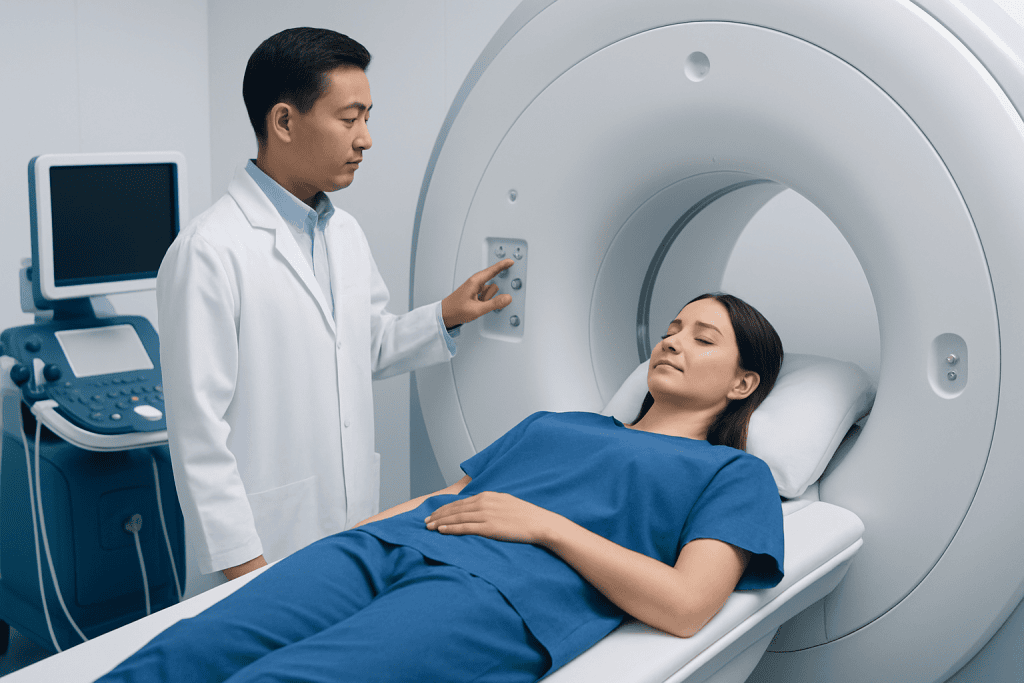
Doctors order diagnostic tests for several reasons. One common reason is to find the cause of symptoms such as pain, fever, fatigue, shortness of breath, or unexplained weight loss. A test may help narrow down a long list of possible explanations and guide the next step in care.
Tests are also used to confirm or rule out a condition. For example, a doctor may suspect an infection, diabetes, anemia, a fracture, or a heart problem based on symptoms and examination findings. In that situation, a diagnostic test provides objective evidence that can support or challenge the initial impression.
Another reason for testing is monitoring. People with ongoing conditions may need regular blood tests, scans, or function tests to see whether a treatment is working or whether the condition is stable. Screening tests are another category: these are used in people without symptoms to look for early signs of disease, such as breast imaging or colon examinations.
Sometimes a doctor orders more than one test because no single test gives a complete answer. A scan may show a change in the body, but blood tests or tissue sampling may still be needed to explain what that change means. This step-by-step approach helps avoid guesswork and supports safer, more personalized care.
Common types of diagnostic tests

Diagnostic tests are often grouped by how they collect information. Laboratory tests examine samples such as blood, urine, stool, or body fluids. They can detect infection, inflammation, hormone changes, kidney or liver problems, blood sugar levels, vitamin deficiencies, and many other abnormalities.
Imaging tests create pictures of structures inside the body. Common examples include X-rays, ultrasound, computed tomography (CT), magnetic resonance imaging (MRI), and mammography. These tests may be used to investigate bone injuries, abdominal pain, headaches, lumps, bleeding, or suspected problems involving organs, joints, or blood vessels. In some cases, a person may need an MRI scan or a CT scan to help clarify findings that cannot be seen with a basic exam.
Functional tests measure how an organ or body system works. Examples include electrocardiography (ECG) for heart rhythm, echocardiography for heart structure and pumping function, pulmonary function tests for breathing, exercise stress tests, hearing tests, and nerve conduction studies. These are especially helpful when symptoms come and go or when doctors need to understand performance rather than structure alone.
Some diagnostic tests involve direct visualization or tissue sampling. Endoscopy allows a doctor to look inside areas such as the stomach, bowel, or airways using a thin camera. A biopsy removes a small piece of tissue so it can be examined under a microscope. If a doctor needs to look closely inside the digestive tract, an endoscopy may be recommended. Tissue analysis can be especially important when investigating persistent inflammation, unusual growths, or conditions such as cancer.
How doctors choose the right test
The right diagnostic test depends on the person’s age, symptoms, medical history, family history, and overall level of risk. A doctor also considers how long symptoms have been present, whether they are mild or severe, and whether urgent treatment might be needed. For example, sudden chest pain, confusion, or weakness on one side of the body may require urgent heart or brain testing.
Doctors also think about which test will provide the most useful answer with the least burden. A simple blood test or ultrasound may be enough in one situation, while another may require more detailed imaging or specialist evaluation. If radiation exposure, contrast dye, sedation, or invasive procedures are involved, the likely benefit is weighed carefully against possible risks.
Previous test results can also guide decision-making. A person who has already had normal basic tests may need more specialized follow-up, while someone with known chronic disease may need targeted monitoring rather than broad testing. In some cases, a second test is done to confirm an unexpected result or to make sure a finding is not temporary.
Patient preferences matter too. People should feel comfortable asking why a test is being ordered, what alternatives exist, and how the result could affect treatment. A clear explanation often makes testing less stressful and helps patients take an active role in their care.
Preparing for a diagnostic test and what to expect
Preparation depends on the type of test. Some tests require no preparation at all, while others may involve fasting, drinking water, avoiding caffeine, stopping certain medicines temporarily, or arriving with a full bladder. For imaging with contrast dye, blood tests may be needed first to check kidney function. Following instructions carefully can improve the accuracy of results and reduce the chance that a test must be repeated.
Many diagnostic tests are quick and routine. Blood samples are usually taken through a small needle. Ultrasound uses sound waves and is generally painless. X-rays and CT scans are usually brief, while MRI scans take longer and require lying still in a narrow scanner. Endoscopy, biopsies, and some heart or lung tests may require special preparation, observation afterward, or mild sedation.
People can usually ask in advance whether the test is painful, how long it will take, whether someone should accompany them, and when normal activities can resume. This is especially helpful for children, older adults, or anyone who feels anxious about hospitals or enclosed spaces.
In more complex cases, testing may involve more than one department. A person might have lab work, imaging, and a specialist consultation on the same day. In some centers, this coordinated approach can help speed diagnosis. Near the end of the diagnostic process, patients may be referred for procedures such as a biopsy if tissue confirmation is needed.
Understanding test results
Test results are not always simply “normal” or “abnormal.” Many results fall within a reference range, but even then, they may need interpretation in context. A mild change may not mean disease, and a normal result does not always rule out every possible problem. This is why doctors review results together with symptoms, physical findings, and sometimes repeat testing.
Laboratory reports often include reference ranges, but these can vary by age, sex, pregnancy status, and the laboratory method used. Imaging reports may describe findings that are common and harmless, such as age-related changes, cysts, or small benign abnormalities. In other situations, a report may recommend follow-up imaging or additional testing to better understand a finding.
False-positive and false-negative results can happen with some tests. A false-positive result suggests a problem when none is actually present, while a false-negative result misses a condition that is there. For this reason, doctors may repeat a test, order a more specific one, or compare findings with previous results.
If a result is unclear, it is reasonable for patients to ask what it means, whether more tests are needed, and how urgently follow-up should happen. Good communication can reduce confusion and help people understand not just the result itself, but what it means for treatment, monitoring, or reassurance.
Benefits, limitations, and possible risks
The main benefit of a diagnostic test is clearer medical decision-making. A test can help avoid unnecessary treatment, identify a condition early, or show that a symptom is not caused by a serious disease. It can also help doctors choose the safest and most effective treatment and monitor how well that treatment is working.
At the same time, no test is perfect. Some tests provide only part of the picture, and some findings are incidental, meaning they are discovered by chance and may not be causing symptoms. While incidental findings can occasionally be important, they can also lead to extra testing that may not ultimately change care.
Risks depend on the type of test. Blood tests may cause brief discomfort or bruising. Imaging tests that use radiation, such as X-rays or CT scans, involve low but important exposure that doctors try to minimize. Contrast materials can rarely trigger allergic reactions or affect kidney function in vulnerable patients. Invasive tests such as biopsies or endoscopy may carry small risks of bleeding, infection, or sedation-related side effects.
Even with these limitations, diagnostic testing remains a valuable part of healthcare when used thoughtfully. The goal is not simply to collect information, but to gather the right information at the right time. For international patients who need coordinated evaluation, Acibadem International’s multidisciplinary specialists and JCI-accredited hospitals diagnose and treat a wide range of conditions using modern diagnostic services.
When to see a doctor for testing
A person should consider medical evaluation when symptoms are persistent, unexplained, worsening, or interfering with daily life. Examples include ongoing pain, repeated fever, unusual fatigue, fainting, new lumps, changes in bowel habits, blood in urine or stool, or unexplained shortness of breath. Testing may be needed to find the cause and guide treatment.
Urgent care is important for severe symptoms such as chest pain, sudden weakness, difficulty speaking, major injury, heavy bleeding, severe allergic reactions, or sudden vision loss. In these situations, doctors may need immediate diagnostic tests to look for conditions such as heart attack, stroke, internal bleeding, or serious infection.
Even without symptoms, routine screening tests may be appropriate based on age, sex, family history, and personal risk factors. A doctor can advise which preventive tests are most relevant. People with ongoing conditions such as diabetes, kidney disease, or heart disease may also need regular monitoring as part of long-term care.
It is always reasonable to ask a doctor what a test is meant to find, whether there are alternatives, and what happens next if the result is normal or abnormal. A clear plan can make the process feel more manageable and ensure that testing supports informed, patient-centered care.
Frequently asked questions
What is the difference between a screening test and a diagnostic test?
A screening test is used in people who do not have symptoms, with the goal of finding possible disease early. A diagnostic test is used when there are symptoms, abnormal screening results, or a specific reason to investigate a condition more closely.
Are diagnostic tests always necessary?
Not always. Doctors order tests when the results are likely to help make a diagnosis, guide treatment, or monitor a condition. In some situations, careful observation, a physical exam, and follow-up may be more appropriate than immediate testing.
Do abnormal test results always mean a serious illness?
No. Some abnormal results are mild, temporary, or unrelated to the person’s symptoms. Doctors interpret results in context and may repeat a test or order another one before making a diagnosis.
How long does it take to get diagnostic test results?
The timing depends on the test. Some results, such as basic blood work or X-rays, may be available quickly, while others, such as biopsies, cultures, or complex imaging reviews, can take longer. A doctor can usually explain the expected timeline.
Can a person eat or drink before a diagnostic test?
It depends on the test. Some require fasting or avoiding caffeine, while others require drinking water or taking usual medicines. It is best to follow the instructions given by the healthcare team to help ensure accurate results.
Are imaging tests safe?
Most imaging tests are considered safe when used appropriately. Ultrasound and MRI do not use ionizing radiation, while X-rays and CT scans do use radiation in carefully controlled amounts. Doctors choose the safest suitable test based on the medical need.
This article is for general information only and is not a substitute for professional medical advice. Please consult a qualified doctor about your individual situation.
Explore treatments in Turkey — costs, top hospitals & a free quote
JCI-accredited · board-certified surgeons · reply within 24h
Add us as a Preferred Source to see more of our trusted health content across Google Search, AI Overviews and Discover.
Check your numbers in seconds
BMI, calories, due date, blood pressure and 30+ more clinical calculators — free, instant, doctor-reviewed ranges.

More from the Health Library
Interventional Radiology: Minimally Invasive Treatments Guided by Imaging

How to Read Common Blood Test Results Without Panicking

Neuroradiology: When MRI, CT, and Advanced Brain Imaging Are Used

Diagnostic Mammogram: When It Is Used and What to Expect

Nerve Ultrasound in Neuromuscular Disease: When Imaging Adds Clarity