How to Prepare for a Medical Imaging Test: Fasting, Contrast, and Medications

Preparation for imaging tests varies by scan type, body area, and whether contrast will be used. Fasting is needed for some tests, but not all, so patients should follow the specific instructions they receive.
Key Takeaways
- Preparation for imaging tests varies by scan type, body area, and whether contrast will be used.
- Fasting is needed for some tests, but not all, so patients should follow the specific instructions they receive.
- Some medications can be taken as usual, while others may need temporary adjustment under medical guidance.
- Contrast agents help improve image quality and are usually safe, but allergies, kidney disease, and pregnancy should be discussed in advance.
- Wearing simple clothing, arriving early, and bringing a medication list can make the appointment smoother.
- Patients should contact their care team before the test if they are pregnant, claustrophobic, or have diabetes, kidney problems, or prior contrast reactions.
Preparing for a medical imaging test often involves simple but important steps such as fasting, drinking fluids, adjusting medications, or planning for contrast dye. The exact instructions depend on the type of scan, the body area being examined, and a person’s health history.
Overview: Why imaging test preparation matters
Medical imaging tests help doctors look inside the body to diagnose symptoms, monitor conditions, and plan treatment. Common tests include X-rays, ultrasound, computed tomography (CT), magnetic resonance imaging (MRI), mammography, nuclear medicine scans, and positron emission tomography (PET). Although many scans are quick and straightforward, some require special preparation to help produce clear, accurate images.
Preparation instructions may include not eating for several hours, drinking water, avoiding certain products, or taking medicines at a different time. In some cases, a contrast agent is used to make blood vessels, organs, or tissues easier to see. Because every person and every scan is different, the most important step is to follow the instructions provided by the imaging center or doctor.
Good preparation can reduce delays, improve comfort, and lower the chance that a test needs to be repeated. It also gives patients a chance to share important information, such as allergies, kidney disease, pregnancy, breastfeeding, implanted devices, or anxiety in small enclosed spaces. Asking questions before the appointment is always appropriate and can help people feel more informed and reassured.
Fasting before a scan: when it is needed
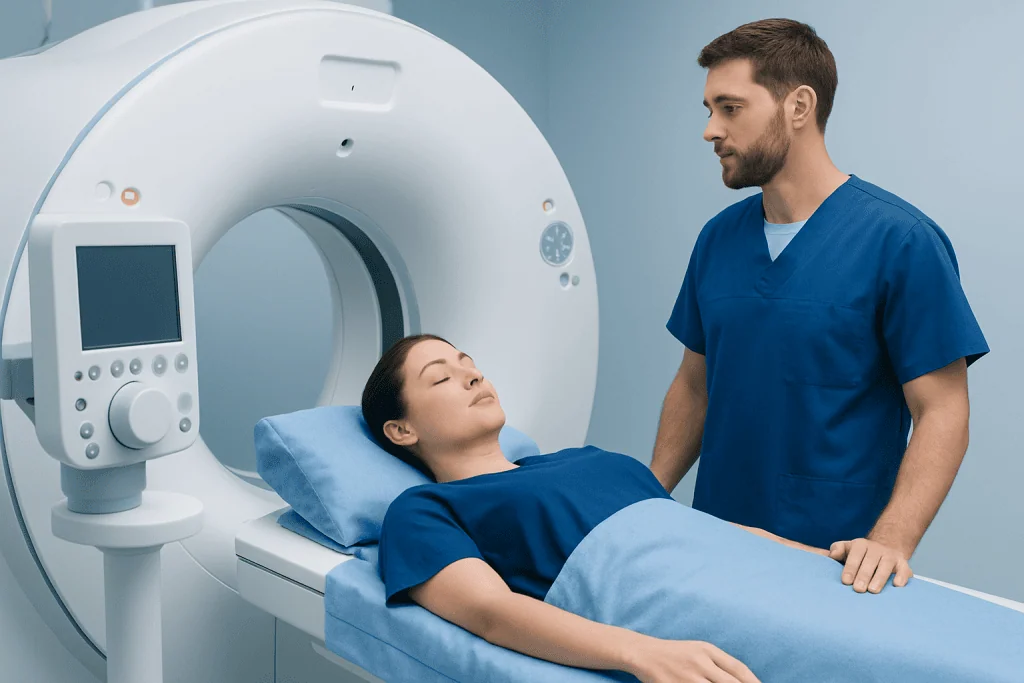
Fasting means not eating, and sometimes not drinking, for a period before the test. Not every imaging test requires fasting. For example, many standard X-rays and some ultrasounds do not need it, while certain abdominal scans, CT scans with contrast, MRI studies with contrast, or nuclear medicine tests may require no food for several hours beforehand.
The reason for fasting depends on the exam. Food in the stomach or intestines can sometimes make it harder to see nearby organs clearly. Fasting may also reduce the chance of nausea if contrast is given. For some tests, patients are encouraged to drink water, while for others they may be asked to limit both food and beverages except for small sips with medication.
If a patient has diabetes, fasting instructions should be reviewed especially carefully. Changes in meal timing can affect blood sugar, and medication schedules may need to be adjusted safely. Children, older adults, and people with other medical conditions may also need individualized guidance. If there is any uncertainty, the imaging team should be contacted before the appointment rather than guessing.
- Do not assume fasting is needed unless it is specifically stated.
- Follow the exact cut-off time for food and drinks.
- Ask whether water is allowed.
- Tell the care team if fasting may be difficult because of diabetes, pregnancy, or another condition.
Contrast agents: what they are and how to prepare

Contrast agents are substances used to improve the visibility of structures inside the body. They may be swallowed, given through a vein, or administered in another way depending on the test. Iodine-based contrast is commonly used for CT, while gadolinium-based contrast may be used for MRI. Some ultrasound and nuclear medicine studies also use special agents to highlight certain tissues or functions.
Most people tolerate contrast well, but the imaging team needs to know about any previous reaction to contrast material, asthma, severe allergies, kidney disease, or certain chronic illnesses. A prior reaction does not always mean contrast cannot be used again, but it may change the preparation plan. In some situations, the doctor may recommend extra precautions or choose a different type of scan.
Patients may be advised to drink fluids before or after contrast, depending on the test and their health status. Kidney function sometimes needs to be checked before contrast-enhanced scans, especially in people with kidney disease, diabetes, dehydration, or older age. If the exam involves advanced cross-sectional imaging such as an MRI scan or a CT scan, the team may also ask about metal implants, prior surgeries, or thyroid problems because these details can affect planning.
A brief warm feeling, a metallic taste, or the sensation of needing to urinate can occur with injected contrast and usually passes quickly. Patients should report any new symptoms during or after the injection, such as itching, rash, shortness of breath, or swelling, so staff can respond promptly and appropriately.
Medications: what to continue and what to discuss
Many regular medications can be taken as usual before an imaging test, but some may need special review. Patients should never stop a prescription medicine on their own unless a doctor or imaging professional has advised it. Instead, they should bring an up-to-date list of medications, including insulin, blood thinners, inhalers, over-the-counter drugs, and supplements.
Medicines are most often discussed when fasting is required, when contrast will be used, or when sedation is planned. For example, some diabetes medicines may need temporary timing changes if a person cannot eat normally. Blood sugar control is especially important before tests such as PET imaging, because glucose levels can affect image quality. Kidney-related medicines and other drugs may also be reviewed when contrast is being considered.
If a person takes medicines for blood pressure, heart disease, seizures, thyroid conditions, or chronic pain, the imaging center may advise taking them with a small sip of water even during fasting. However, this varies, so individual instructions should be confirmed in advance. Patients should also mention any history of contrast reaction, kidney disease, liver disease, or conditions such as diabetes that can influence preparation.
When sedation is expected, medication instructions become more important. Sedatives can interact with alcohol, sleeping tablets, and some anxiety medicines, and patients may need someone to accompany them home. Clear communication with the imaging team helps make the test safer and more comfortable.
Practical preparation on the day of the test
Simple practical steps can help the appointment go smoothly. Patients are often advised to wear comfortable clothing without metal zippers, snaps, or underwire, especially for MRI and some CT exams. Jewelry, watches, hearing aids, removable dental items, and hair accessories may need to be removed. For MRI, metal safety screening is especially important because the magnet can interact with some implants or fragments.
It is helpful to arrive early to complete forms and discuss medical history. Patients should bring identification, referral documents if needed, prior imaging reports if requested, and a current medication list. If contrast or sedation may be used, a companion may be useful, and driving afterward may not be recommended.
Some scans need additional preparation. A pelvic ultrasound may require a full bladder, while other abdominal tests may require an empty stomach. A PET scan may involve special dietary instructions the day before. If a person is scheduled for PET-CT or ultrasound imaging, following the exact timing and hydration instructions can help ensure the pictures are as useful as possible.
People who feel anxious in enclosed spaces should mention this before the scan, not only when they arrive. The team may be able to offer strategies such as extra explanation, music, breaks when possible, or discussion of medication options arranged ahead of time. Speaking up early often makes the experience easier.
Special situations: pregnancy, breastfeeding, implants, and kidney health
Pregnancy should always be discussed before imaging, even if it is only possible rather than confirmed. Many imaging tests can still be performed safely when needed, but the team may choose the most appropriate test or adapt the technique to reduce exposure. Ultrasound and some MRI studies may be preferred in certain situations because they do not use ionizing radiation in the same way as X-rays or CT.
Breastfeeding should also be mentioned if contrast is planned. In most cases, contrast agents used for imaging do not require major changes, but the advice may depend on the specific agent and the patient’s medical situation. Asking in advance allows for clear, individualized guidance and avoids unnecessary worry.
Implanted devices, prior surgeries, metal fragments, cochlear implants, pacemakers, aneurysm clips, and joint replacements may affect imaging plans, especially for MRI. Some devices are MRI-compatible and others require special precautions. Patients should tell the team about any implant cards or surgical records they have.
Kidney function is another important consideration when contrast is used. People with chronic kidney disease, dehydration, or a history of kidney problems should make sure the imaging center is aware. In some situations, blood tests, hydration guidance, or a non-contrast alternative may be recommended. Conditions such as kidney failure may require closer planning with the referring doctor and radiology team.
After the test and when to contact the care team
Most imaging tests require little recovery time. Patients can usually return to normal activities right away unless they received sedation or were given specific instructions to do otherwise. If contrast was used, some people may be advised to drink fluids afterward unless another health condition limits fluid intake.
Minor temporary effects, such as a brief metallic taste or warmth during contrast injection, are usually not a cause for concern. However, symptoms such as rash, itching, breathing difficulty, swelling, dizziness, or ongoing vomiting after the test should be reported promptly. The imaging center will explain what is expected and what should lead to urgent medical attention.
Results are commonly reviewed by a radiologist and then shared by the referring doctor, who can place the findings in the context of symptoms and next steps. Patients should ask when and how results will be available so expectations are clear. If preparation instructions were difficult to follow or a patient felt unwell during the test, it is helpful to mention that before leaving.
For international patients seeking coordinated imaging and follow-up, Acibadem International’s multidisciplinary specialists and JCI-accredited hospitals provide diagnosis and treatment planning across a wide range of conditions. Whatever the setting, the most reliable preparation advice always comes from the team performing the specific scan.
Frequently asked questions
Do all imaging tests require fasting?
No. Many imaging tests do not require fasting at all. Fasting is only needed for certain scans, such as some abdominal studies, contrast-enhanced exams, or specific nuclear medicine tests, so patients should follow the instructions for their exact appointment.
Can regular medications be taken before an imaging test?
Often yes, but it depends on the test and the medication. Patients should ask the imaging center or referring doctor, especially if they have diabetes, kidney disease, or are having contrast or sedation.
What should patients tell the imaging team before contrast is used?
They should mention any previous contrast reaction, severe allergies, asthma, kidney problems, pregnancy, breastfeeding, and current medications. This information helps the team decide whether extra precautions or a different approach is needed.
Is contrast dye safe?
Contrast agents are widely used and are generally safe for most people. Like any medical product, they can cause side effects or reactions in some patients, which is why medical history and kidney function may be reviewed in advance.
What if someone is claustrophobic and needs an MRI?
They should tell the imaging center before the appointment if possible. The team may suggest practical ways to make the test easier, such as extra support, scheduling adjustments, or discussing medication options with a doctor ahead of time.
Can a patient drive home after a medical imaging test?
Usually yes, if no sedation was given and the patient feels well. If sedation is planned, driving is generally not recommended, and the patient may need someone to accompany them home.
This article is for general information only and is not a substitute for professional medical advice. Please consult a qualified doctor about your individual situation.
Explore treatments in Turkey — costs, top hospitals & a free quote
JCI-accredited · board-certified surgeons · reply within 24h
Add us as a Preferred Source to see more of our trusted health content across Google Search, AI Overviews and Discover.

More from the Health Library
Cardiac CT Before Coronary Bypass Surgery: Why Imaging Matters
Open MRI vs Standard MRI: Which Patients May Benefit?

Biopsy vs Imaging: When a Scan Is Enough and When Tissue Testing Is Needed

Thyroid Ultrasound: Nodules, Goiter, and When Biopsy Is Needed
PET-CT Scan: Cancer Imaging, Preparation, and What Uptake Means