Open MRI vs Standard MRI: Which Patients May Benefit?
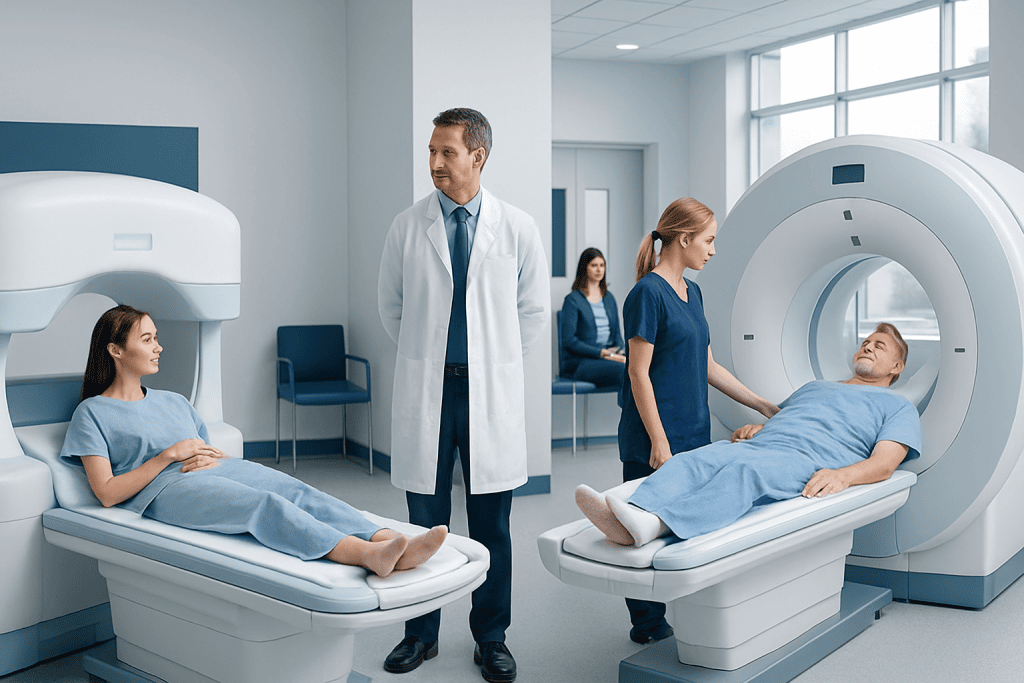
Both open MRI and standard MRI are noninvasive imaging tests that do not use ionizing radiation. Open MRI may be more comfortable for people with claustrophobia, larger body size, or difficulty lying still in a narrow tunnel.
Key Takeaways
- Both open MRI and standard MRI are noninvasive imaging tests that do not use ionizing radiation.
- Open MRI may be more comfortable for people with claustrophobia, larger body size, or difficulty lying still in a narrow tunnel.
- Standard MRI often provides higher image quality and may be preferred for more detailed or complex studies.
- The right MRI type depends on the medical question, body part being scanned, and the patient’s comfort and safety needs.
- Patients should tell the imaging team about implants, pregnancy, anxiety, pain, or mobility limitations before the scan.
Open MRI and standard MRI both use magnetic fields to create detailed images without radiation, but they differ in design, comfort, and image performance. The best choice depends on the body area being examined, the reason for the scan, and the patient’s individual needs.
Overview: How Open MRI and Standard MRI Compare
Magnetic resonance imaging, or MRI, is a diagnostic test that creates detailed pictures of organs, soft tissues, joints, and other structures inside the body. It uses a strong magnetic field and radio waves rather than X-rays. Doctors may request an MRI to help evaluate the brain, spine, joints, abdomen, blood vessels, and many other areas.
When people compare open MRI vs standard MRI, they are usually asking about comfort, image quality, and whether one option is better for certain patients. A standard MRI scanner is typically a tube-shaped machine with a short or longer tunnel around the part of the body being examined. An open MRI has a more open design, with wider space around the patient and less enclosure.
Neither type is automatically better for everyone. In many situations, standard MRI is preferred because it often produces clearer, more detailed images. Open MRI can still be very useful, especially for patients who may struggle in a traditional scanner. The choice should balance diagnostic accuracy with the patient’s ability to complete the exam safely and comfortably.
What Is the Difference Between Open MRI and Standard MRI?
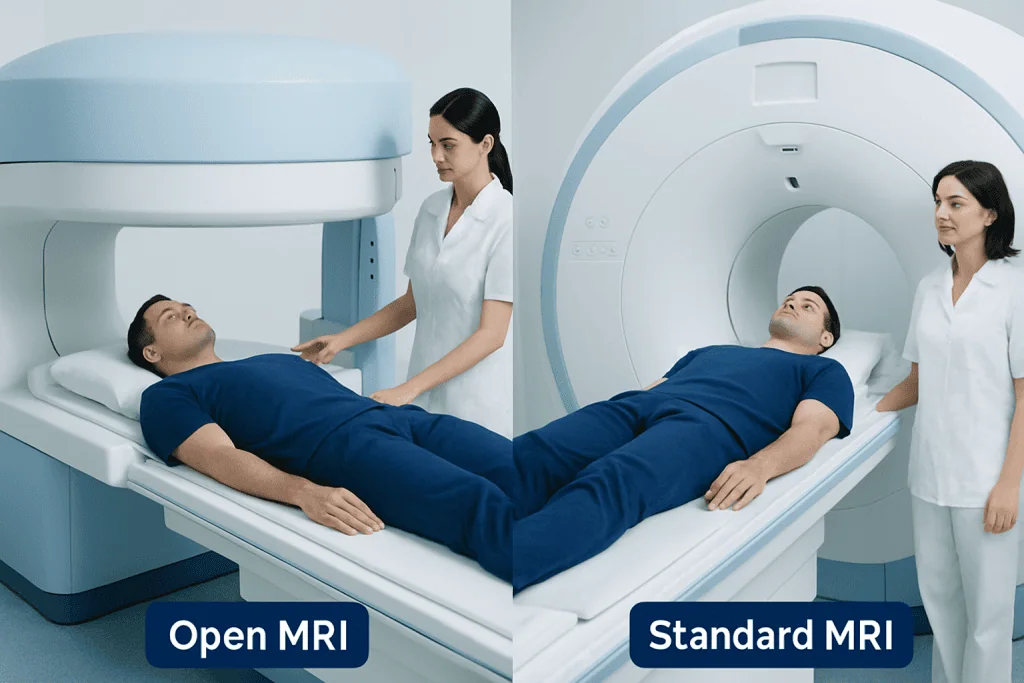
The main difference is the scanner design. Standard MRI systems usually surround the patient more fully, which helps create a strong and very uniform magnetic field. This often leads to excellent image resolution. For this reason, standard MRI is commonly used when doctors need very detailed images, such as for small joints, the brain, spinal cord, or complex soft-tissue conditions.
Open MRI systems are designed with more visible space around the patient. Some have open sides, and others have a wider or shorter opening than conventional machines. This can reduce the feeling of being enclosed and may make the test easier for some people to tolerate.
Another important difference can be image performance. Many standard MRI machines operate at higher field strengths than open MRI units, although technology varies by center. Higher field strength often supports sharper images and faster scanning for certain studies. Open MRI may still provide adequate images for many clinical questions, but in some cases the radiologist may recommend a standard exam for greater detail.
Both tests require the patient to remain as still as possible. Movement can blur images, sometimes leading to repeat sequences or a less useful scan. For some patients, the extra comfort of an open machine may actually improve image quality by making it easier to stay calm and still.
Which Patients May Benefit Most From Open MRI?

Open MRI may be especially helpful for patients with claustrophobia or significant anxiety about enclosed spaces. Even though standard MRI scanners are safe, the tunnel-like design can feel uncomfortable for some people. An open design may reduce distress and help the patient complete the test without interruption.
People with a larger body size may also benefit from an open or wider-bore MRI system, depending on the equipment available. In addition, open MRI can be useful for people with pain, stiffness, or mobility limitations that make positioning difficult in a narrow scanner. Some older adults and some children may also tolerate the more open setup better, although children still sometimes need additional support to remain still.
Open MRI may be considered for patients who have trouble lying flat for long periods, those who feel panicked during previous MRI exams, or those who need extra reassurance from a visible care team nearby. In selected situations, this can help avoid postponing or repeating an important diagnostic test.
Common groups who may benefit include:
- People with claustrophobia or panic symptoms
- Patients with larger body size, depending on scanner limits
- Those with chronic pain, arthritis, or limited mobility
- Patients who had difficulty completing a previous standard MRI
- Some children or older adults who need a less enclosed environment
When Standard MRI May Be the Better Choice
Standard MRI is often the preferred option when the clearest possible detail is important. This may include scans of the brain, inner ear structures, spine, ligaments, cartilage, pelvic organs, or small lesions that are difficult to see. If the doctor is investigating a subtle abnormality, a standard MRI may improve diagnostic confidence.
It may also be more suitable for advanced imaging techniques, depending on the center’s equipment. Some examinations require specialized protocols, contrast studies, or high-resolution sequences that are most reliably performed on standard systems. If a patient is being evaluated for a condition such as a brain tumor or needs detailed assessment before neurosurgery, image quality can be especially important.
In musculoskeletal imaging, standard MRI is commonly used to assess structures such as the knee, shoulder, hip, or spine in detail. For example, if a patient may need knee replacement or evaluation before spine surgery, the orthopedic or spine team may prefer the most detailed images possible. This does not mean open MRI is not useful, but it does mean the medical question guides the decision.
If a person can comfortably tolerate a standard MRI and the exam calls for fine detail, standard MRI is often chosen first. The radiologist and referring doctor decide based on the body part, suspected condition, and what information is needed from the scan.
What Patients Can Expect During the Scan
Before either type of MRI, the imaging team asks about medical history, metal implants, pacemakers, aneurysm clips, hearing devices, medication pumps, or any history of surgery. MRI is not safe for every implanted device, although many modern implants are MRI-conditional and can be scanned under specific conditions. Patients should always provide complete information before the appointment.
During the scan, the patient usually lies on a padded table that moves into position. The machine makes loud tapping or thumping sounds while images are taken, so ear protection is usually provided. The test itself is painless, though lying still may be uncomfortable for some people.
Depending on the body part and the purpose of the exam, the scan may take from around 15 minutes to longer. Some MRI studies use contrast material to highlight certain tissues or blood vessels. If contrast is needed, the care team explains why it is recommended and reviews any relevant kidney concerns or allergy history.
Patients who are worried about anxiety should mention it in advance. Helpful steps may include scheduling enough time, using relaxation techniques, having clear communication with the technologist, or asking whether a wider or open scanner is available. In some cases, a doctor may discuss additional support if anxiety is severe.
Safety, Limitations, and Practical Considerations
Both open MRI and standard MRI are generally considered safe when proper screening is completed. Because MRI uses a strong magnet, metal safety rules are very important. Patients should remove items such as jewelry, watches, hairpins, and clothing with metallic components if instructed. The team will also ask about tattoos, patches, or older implants that may need review.
One limitation of open MRI is that not every center has the same technology. Image quality, exam availability, and the types of body parts that can be studied vary by machine. Some open MRI systems may be fully appropriate for routine scans, while others may not be ideal for highly detailed imaging. This is one reason patients should not choose a scanner type based only on comfort without discussing the medical goal.
Another practical factor is whether the patient can stay still long enough for the exam. If pain, tremor, or anxiety causes repeated movement, image quality may suffer in either scanner. In some situations, the most comfortable scanner is also the most effective because it allows the patient to complete the test successfully.
For international patients or those needing coordinated care, experienced radiology teams can help match the scanner and protocol to the clinical need. Near the end of the care journey, institutions such as Acibadem International may support diagnosis and treatment through multidisciplinary specialists and JCI-accredited hospitals for patients traveling from abroad.
How Doctors Decide Which MRI Is Right
The decision is usually based on three main factors: the medical question, the body area being scanned, and the patient’s ability to tolerate the exam. If the doctor needs very high-detail images, a standard MRI may be recommended. If the patient is unlikely to complete a standard MRI because of claustrophobia, body size, or positioning difficulty, an open MRI may be the better practical option.
Radiologists and referring doctors also consider whether the scan is routine or highly specialized. For follow-up of certain known conditions, an open MRI may provide enough information. For a first-time diagnostic workup, or when surgery planning is involved, standard MRI may be preferred if feasible. When cancer evaluation is needed, detailed imaging may also influence whether additional tests such as PET-CT scans are considered as part of a broader assessment.
Patients can help by asking a few clear questions before the appointment:
- Why is the MRI being done, and what does the doctor need to see?
- Is open MRI appropriate for this body part and concern?
- Would image quality likely be better in a standard scanner?
- Are there options if claustrophobia or pain makes the test difficult?
- Do any implants or medical devices affect scanner choice?
A short conversation before the exam can often prevent delays, repeat scans, or unnecessary worry. The goal is not simply to choose the most comfortable machine, but to obtain the most useful images in the safest and most tolerable way.
When to Speak With a Doctor Before MRI
Patients should contact their doctor or imaging center before the scan if they have significant claustrophobia, severe back or joint pain, trouble lying flat, or a history of not completing MRI successfully. It is also important to mention pregnancy, kidney disease, or any implants or previous surgeries. These details can affect preparation and scanner selection.
Anyone with symptoms that need urgent evaluation, such as sudden weakness, severe headache with neurological changes, or signs of spinal cord compression, should seek prompt medical attention rather than delaying imaging because of fear about the scanner. In urgent situations, the care team can help determine the fastest and safest way to complete the needed study.
If a person is unsure whether open MRI or standard MRI is better, it is reasonable to ask for guidance from the referring physician or radiology department. A personalized recommendation can improve both comfort and diagnostic accuracy. In many cases, planning ahead makes the experience smoother and less stressful.
Frequently asked questions
Is open MRI as accurate as standard MRI?
Open MRI can be accurate and useful for many imaging needs, but it may not always provide the same level of detail as a standard MRI. The best choice depends on what body part is being examined and what the doctor needs to evaluate.
Who is a good candidate for open MRI?
Open MRI may suit people with claustrophobia, larger body size, limited mobility, or pain that makes a narrow scanner difficult to tolerate. It can also help patients who could not complete a previous standard MRI.
Does standard MRI take longer than open MRI?
The scan length varies by body part, protocol, and machine rather than by scanner type alone. In some cases, standard MRI may be faster, while in others the timing is similar.
Are both types of MRI safe?
Yes, both are generally safe when proper screening is done first. However, MRI is not suitable for every implant or device, so patients should always tell the imaging team about any metal, implants, or past surgeries.
Can a person with claustrophobia still have a standard MRI?
Many people with mild claustrophobia can still complete a standard MRI with preparation, reassurance, and communication from the imaging team. If anxiety is stronger, an open or wider-bore scanner may be a better option.
Do open MRI and standard MRI both use radiation?
No. Both types of MRI use magnetic fields and radio waves to create images, so they do not involve ionizing radiation like X-rays or CT scans.
This article is for general information only and is not a substitute for professional medical advice. Please consult a qualified doctor about your individual situation.
Explore treatments in Turkey — costs, top hospitals & a free quote
JCI-accredited · board-certified surgeons · reply within 24h
Add us as a Preferred Source to see more of our trusted health content across Google Search, AI Overviews and Discover.
Our Specialists Explain
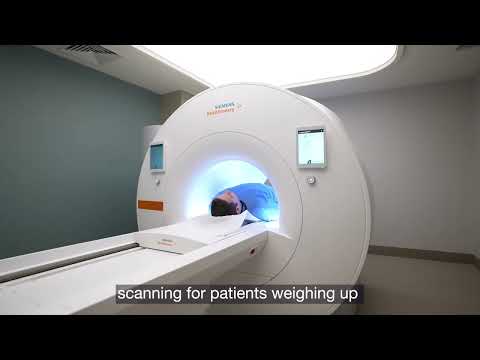 Open MRI at Acibadem | Prof. Dr. Ercan Karaarslan
More from the Health Library

How to Read a Lab Report: Reference Ranges, Flags, and Next Steps

Diagnostic Mammogram: Who Needs It and What Results Mean

Labcorp Appointment: How to Book, Prepare, and Avoid Delays

Walk-In Diagnostic Testing: When You Can Skip an Appointment

Saturday Lab Testing: How to Plan Weekend Blood Work and Imaging