Earwax Build Up: Symptoms, Safe Removal, and When to Get Help

Earwax helps protect the ear canal and usually clears naturally on its own. Build up may cause muffled hearing, fullness, itching, discomfort, or ringing in the ear.
Key Takeaways
- Earwax helps protect the ear canal and usually clears naturally on its own.
- Build up may cause muffled hearing, fullness, itching, discomfort, or ringing in the ear.
- Cotton swabs, hairpins, and ear candles can push wax deeper or injure the ear.
- If symptoms are significant or the ear has pain, discharge, or sudden hearing changes, medical assessment is important.
- Professional removal is often the safest option for impacted earwax, especially for people with hearing aids or previous ear problems.
Earwax build up is common and is usually manageable with safe home care or professional ear cleaning. Knowing when to leave earwax alone, when to soften it, and when to seek medical help can prevent irritation and protect hearing.
Overview: What earwax build up is
Earwax, also called cerumen, is a natural substance made by glands in the ear canal. It traps dust, debris, and small particles, helps keep the skin of the ear canal from drying out, and offers some protection against irritation and infection. In most people, earwax slowly moves outward on its own and does not need to be removed.
Earwax build up happens when this natural clearing process is disrupted or when too much wax collects in the canal. The wax may become dry, hard, or impacted, which means it is tightly packed and blocks part or all of the ear canal. This can affect hearing and cause uncomfortable symptoms, but it is usually treatable.
Build up can happen in one ear or both. It is more common in people who use cotton swabs, wear hearing aids or earbuds often, have narrow ear canals, or produce naturally drier or heavier earwax. Although earwax build up is usually not dangerous, symptoms should not be ignored if they are severe, sudden, or accompanied by pain or discharge.
Symptoms of earwax build up
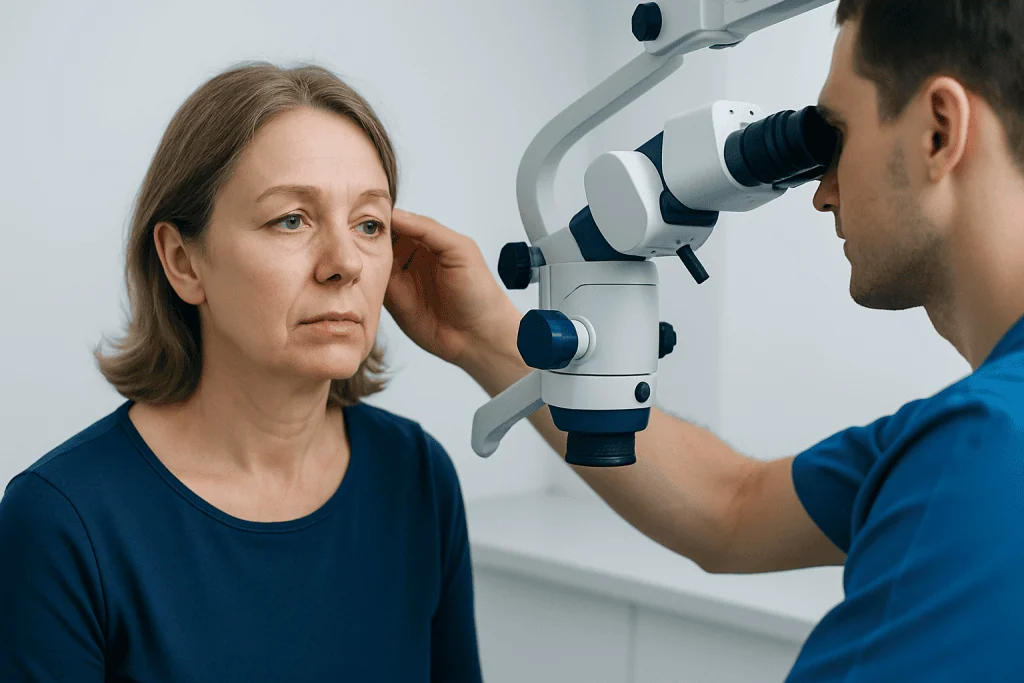
Symptoms vary depending on how much wax is present and whether it is pressing against the ear canal or eardrum. Some people notice only mild blockage, while others feel that hearing has suddenly become muffled, especially after showering or swimming when wax can swell.
Common symptoms include:
- Muffled or reduced hearing
- A blocked or full feeling in the ear
- Ear discomfort or mild pain
- Itching in the ear canal
- Ringing or buzzing in the ear, sometimes described as tinnitus
- Dizziness or imbalance in some cases
- Cough, rarely, due to stimulation of nerves in the ear canal
These symptoms can overlap with other ear conditions, such as infection, fluid behind the eardrum, Eustachian tube dysfunction, or other causes of hearing loss. For that reason, symptoms that do not improve or seem unusual should be assessed by a qualified clinician rather than assumed to be wax alone.
Causes and risk factors

Earwax build up often develops because the ear’s self-cleaning system is interrupted. The skin in the ear canal normally moves outward in a slow, natural way, carrying wax with it. When this process is blocked or wax is pushed deeper into the canal, accumulation becomes more likely.
Common causes and risk factors include frequent use of cotton swabs, fingers, or other objects in the ear. These do not remove wax effectively from deeper inside the canal and often push it further inward. Regular use of in-ear headphones, earplugs, or hearing aids can also trap wax and reduce its natural movement.
Some people are simply more prone to build up. Risk may be higher in older adults, who often produce drier wax; in children, who may place objects in the ear; and in people with narrow, curved, or hairy ear canals. Skin conditions affecting the ear canal may also contribute. Occasionally, wax becomes a repeated problem and needs periodic professional care.
Wax should not be blamed automatically for every ear symptom. Conditions such as otitis media or a perforated eardrum can cause pain, discharge, or hearing changes and require a different approach.
How earwax build up is diagnosed
Diagnosis is usually straightforward. A doctor or other trained clinician asks about symptoms, hearing changes, pain, discharge, dizziness, prior ear surgery, hearing aid use, and any attempts at home removal. This history helps determine whether wax is the likely cause or whether another ear problem could be present.
The ear is then examined with an otoscope, a lighted instrument used to look into the ear canal. This shows whether wax is present, how much of the canal is blocked, and whether the eardrum can be seen safely. The clinician also checks for redness, swelling, fluid, injury, or signs of infection.
If hearing symptoms are marked, additional assessment may be helpful, especially when wax removal does not fully explain the problem. In some patients, hearing testing or specialist ENT review may be recommended. Clinics with expertise in neurotology or neuro-otology may evaluate more complex ear symptoms such as persistent dizziness, balance complaints, or unexplained hearing changes.
Safe treatment and removal options
Treatment depends on symptoms, the amount and type of wax, and the condition of the ear. If earwax is not causing symptoms and the ear canal is healthy, it often does not need treatment at all. Many cases improve with simple earwax-softening drops designed to loosen wax so it can come out more easily.
When wax is impacted or symptoms are troublesome, professional removal is often the safest choice. A clinician may remove wax using gentle irrigation, suction, or small instruments under direct vision. The best method depends on whether the wax is soft or hard, whether there is a history of ear surgery or eardrum problems, and whether infection is suspected.
People should avoid ear candles and should not insert cotton swabs, hairpins, keys, or other objects into the ear. These methods can push wax deeper, scratch the ear canal, cause bleeding, or damage the eardrum. Anyone who has had ear surgery, recurrent infections, an eardrum perforation, or ear tubes should get medical advice before using drops or irrigation.
For patients seeking specialist assessment or care planning, earwax build up treatment may include examination, safe removal, and advice on prevention. If another ear problem is found at the same time, treatment may be adjusted accordingly.
Prevention and self-care
The simplest prevention strategy is not to clean inside the ear canal. The outer ear can be washed gently with a cloth, but the canal usually does best when left alone. Earwax is protective, so routine deep cleaning is not necessary for most people.
For people who get recurring build up, a doctor may recommend occasional wax-softening drops or a planned schedule for ear checks, particularly if hearing aids are used. Keeping earbuds and hearing aids clean according to manufacturer instructions may also help reduce trapped debris and wax accumulation.
Self-care is most appropriate only when there is no severe pain, no discharge, no known eardrum hole, and no history of ear surgery. If symptoms are mild, approved softening drops may be useful. If symptoms persist, it is better to stop home treatment and arrange an examination rather than repeat attempts that may irritate the ear.
Near the end of the care pathway, some people benefit from broader ENT support if symptoms seem related to other conditions such as balance disorders or chronic ear disease. Acibadem International’s multidisciplinary specialists in JCI-accredited hospitals diagnose and treat ear conditions for international patients when more detailed evaluation is needed.
When to get medical help
Medical help is recommended if there is significant pain, discharge from the ear, fever, bleeding, sudden hearing loss, or symptoms that do not improve after a short period of safe home care. Urgent assessment is especially important when hearing changes come on suddenly or are associated with marked dizziness, as these symptoms may point to something other than wax.
People with diabetes, reduced immunity, a history of ear surgery, known eardrum perforation, or previous complications should be more cautious and seek professional advice early. Children, older adults, and hearing aid users may also need help sooner because symptoms can affect communication and daily function more noticeably.
It is also sensible to get checked if wax build up keeps coming back. Recurrent blockage can sometimes be managed with routine follow-up and preventive advice, and persistent symptoms can be investigated for other causes. In some cases, care may overlap with treatments for related ear conditions, such as ear tubes when middle ear problems are present, although this is separate from wax treatment itself.
Frequently asked questions
Is earwax build up harmful?
Usually not. Earwax is a normal protective substance, but when too much collects it can block the ear canal and cause symptoms such as muffled hearing or discomfort. It becomes important to seek care if there is pain, discharge, or sudden hearing changes.
Can earwax cause temporary hearing loss?
Yes, impacted earwax can reduce hearing by blocking sound from reaching the eardrum efficiently. Hearing often improves once the wax is safely removed. If hearing does not return to normal, another cause may need to be investigated.
Should cotton swabs be used to clean earwax?
No. Cotton swabs often push wax deeper into the ear canal instead of removing it. They can also irritate the skin or injure the eardrum.
Are ear drops enough to remove earwax?
Sometimes. Softening drops can help loosen wax, especially when symptoms are mild and there is no history of ear surgery, perforation, or infection. If symptoms continue, professional removal is usually the safer and more effective option.
When should someone not try to remove earwax at home?
Home treatment should be avoided if there is ear pain, discharge, bleeding, a known hole in the eardrum, previous ear surgery, or ear tubes. It is also best avoided when symptoms are severe or hearing loss is sudden. In these situations, a clinician should examine the ear first.
Can earwax build up keep coming back?
Yes, some people are more prone to recurrent build up, especially hearing aid users and people with narrow or hairy ear canals. In those cases, a doctor may suggest preventive measures or periodic ear checks. Avoiding objects in the ear is an important part of prevention.
References
- American Academy of Otolaryngology–Head and Neck Surgery
- National Institute on Deafness and Other Communication Disorders
- National Health Service
- Mayo Clinic
- Merck Manual
This article is for general information only and is not a substitute for professional medical advice. Please consult a qualified doctor about your individual situation.
Earwax Build Up in Turkey — costs, top hospitals & a free quote
JCI-accredited · board-certified surgeons · reply within 24h
Add us as a Preferred Source to see more of our trusted health content across Google Search, AI Overviews and Discover.

Otorhinolaryngology (ENT)
Care for ear, nose, throat and head-and-neck conditions, including hearing and balance disorders.
126 specialists in this unitRelated Treatments
Related Conditions
More from the Health Library



Related Specialists

Prof. Dr. Nazim Korkut
Otorhinolaryngology
Prof. Dr. Hasan M. Tanyeri
Ear Nose & Throat
Prof. Dr. Güler Berkiten
Otorhinolaryngology
Assoc. Prof. Dr. A. Erdem Kilavuz
Ear Nose & Throat