Pink Eye at Home: How to Care for Conjunctivitis and Avoid Spread

Conjunctivitis is inflammation of the conjunctiva, the clear tissue covering the white of the eye and inner eyelids. Home care may ease symptoms, but treatment depends on the cause, such as viral, bacterial, allergic, or irritant conjunctivitis.
Key Takeaways
- Conjunctivitis is inflammation of the conjunctiva, the clear tissue covering the white of the eye and inner eyelids.
- Home care may ease symptoms, but treatment depends on the cause, such as viral, bacterial, allergic, or irritant conjunctivitis.
- Careful handwashing, not sharing towels, and avoiding contact lenses can help prevent spreading pink eye.
- Severe pain, vision changes, light sensitivity, or symptoms in a newborn need prompt medical assessment.
- A doctor can help distinguish conjunctivitis from other eye problems that may need different treatment.
Pink eye, also called conjunctivitis, is a common eye condition that can cause redness, irritation, tearing, and discharge. Many mild cases can be managed at home with good hygiene and comfort measures, but the right care depends on whether the cause is viral, bacterial, allergic, or irritant-related.
Overview: What Pink Eye Is
Pink eye is the common name for conjunctivitis, an inflammation of the conjunctiva. This is the thin, clear membrane that covers the white part of the eye and lines the inside of the eyelids. When it becomes irritated or inflamed, the eye may look red or pink and feel uncomfortable.
Conjunctivitis is common in both adults and children. It may affect one eye at first and later involve the other eye, especially if the cause is infectious. Although it is often mild, it can be bothersome and sometimes highly contagious, so simple hygiene steps are important.
Not all pink eye is the same. Viral conjunctivitis often comes with watery discharge and may occur alongside a cold. Bacterial conjunctivitis is more likely to cause thicker discharge. Allergic conjunctivitis often affects both eyes and is usually linked with itching, sneezing, or other allergy symptoms. Irritant conjunctivitis can happen after exposure to smoke, chlorine, dust, or chemicals.
Because these types can look similar, it is helpful to understand the pattern of symptoms. If there is any doubt, an eye specialist can confirm whether symptoms are due to conjunctivitis or another eye condition.
Symptoms of Conjunctivitis
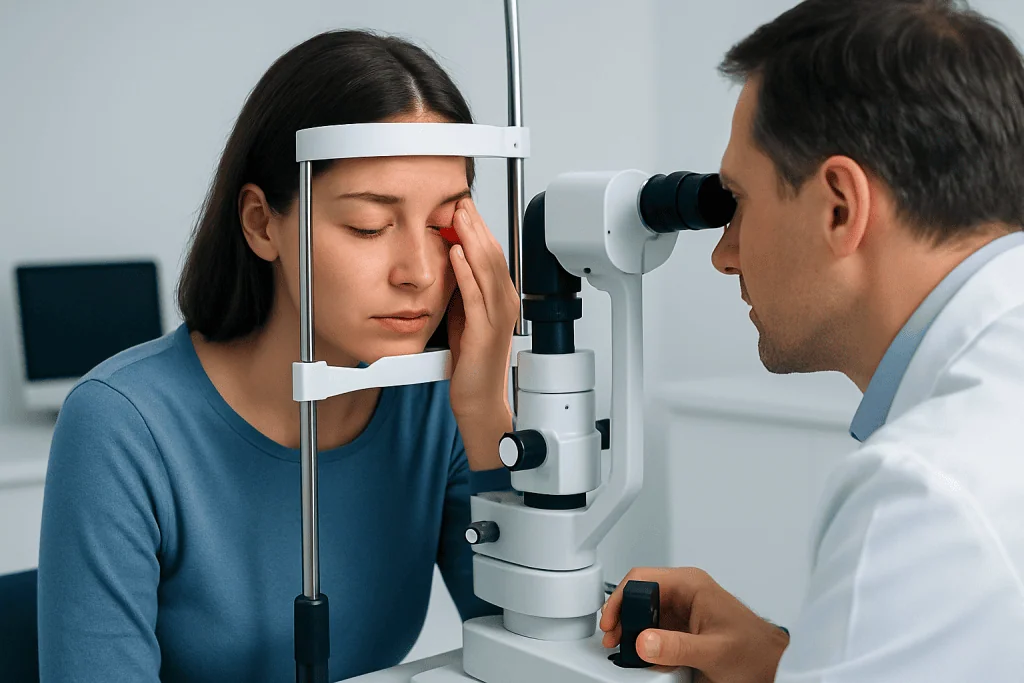
The most common symptom of pink eye is redness in the white of the eye. Many people also notice tearing, a gritty sensation, mild burning, itching, or discharge that can collect along the eyelids and lashes. In the morning, the eyelids may feel sticky or crusted.
Symptoms can vary depending on the cause. Viral conjunctivitis often causes watery eyes and irritation. Bacterial conjunctivitis may lead to thicker yellow, white, or green discharge. Allergic conjunctivitis typically causes intense itching, watery eyes, and puffiness, often in both eyes. Irritant conjunctivitis may begin soon after something enters or irritates the eye.
Vision is usually normal apart from temporary blur caused by discharge or excessive tearing. Mild discomfort is common, but significant eye pain is not typical of simple conjunctivitis. Sensitivity to light can happen, but marked light sensitivity should be assessed by a doctor.
- Red or pink appearance of the eye
- Watery or sticky discharge
- Itching, burning, or grittiness
- Crusting of the eyelids, especially after sleep
- Mild swelling of the eyelids
- Symptoms of allergies or a recent cold in some cases
Causes and Risk Factors

Conjunctivitis has several possible causes. Viral conjunctivitis is often linked to the same viruses that cause colds and sore throats. Bacterial conjunctivitis can be caused by common bacteria on the skin or in the respiratory tract. Allergic conjunctivitis happens when the eyes react to pollen, dust mites, pet dander, or other allergens. Irritant conjunctivitis may develop after exposure to smoke, air pollution, chlorine, cosmetics, or cleaning products.
Pink eye spreads more easily when infectious discharge is transferred from hands to eyes or to shared objects. This is why it often moves through homes, schools, and workplaces. Touching the eyes, not washing hands well, and sharing towels, pillowcases, or cosmetics can all increase the risk.
Contact lens wearers may be more prone to eye irritation and infection, particularly if lenses are worn too long, not cleaned properly, or used while sleeping. Anyone who wears lenses should stop using them as soon as conjunctivitis symptoms begin and only restart after professional advice. Safe lens habits are especially important for people who use contact lenses.
Young children, people with seasonal allergies, and those recovering from upper respiratory infections are also more likely to develop pink eye. In some cases, symptoms that seem like conjunctivitis may actually be related to another issue involving the cornea, eyelids, or tear drainage system, such as a blocked tear duct.
Pink Eye at Home: Safe Care and Comfort Measures
Home care for pink eye focuses on relieving discomfort and reducing spread. Clean the eyelids gently with a clean cotton pad or soft cloth moistened with lukewarm water. Use a separate pad for each eye if both are affected, and avoid rubbing. Artificial tears may help soothe irritation, especially in viral or irritant conjunctivitis, but they should be preservative-free if used frequently.
A cool compress can reduce swelling and discomfort, especially with allergic conjunctivitis. Some people find a warm compress more comfortable if the eyelids are crusted. Any cloth used on the eye should be washed after each use. Hands should be washed before and after touching the face or applying drops.
During recovery, it is best to avoid eye makeup and stop wearing contact lenses until symptoms are fully gone and a doctor says it is safe to resume. Disposable lenses and eye makeup used around the time symptoms began may need to be replaced to avoid reinfection. It is also wise not to share towels, pillowcases, or washcloths with others in the household.
Home care can help comfort, but it does not replace medical treatment when one is needed. Antibiotic drops do not help viral conjunctivitis, and allergic conjunctivitis may improve more with allergy management than with general eye care alone. If symptoms worsen or do not improve, a doctor should reassess the cause.
Diagnosis and How Doctors Tell the Cause
Doctors usually diagnose conjunctivitis by asking about symptoms, recent illness, allergies, contact lens use, and possible exposures. They also examine the eye closely to look at the pattern of redness, the type of discharge, and whether the eyelids or cornea are involved. In many routine cases, this is enough to identify the most likely cause.
Additional testing is not always necessary, but it may be used if symptoms are severe, recurrent, unusual, or not improving as expected. In selected situations, a doctor may take a sample of the discharge or check the surface of the eye more carefully with special instruments.
Diagnosis matters because several eye problems can mimic pink eye. These include corneal injury, dry eye, blepharitis, uveitis, and some more serious infections. People with contact lenses deserve particular attention because a painful red eye in a lens wearer can sometimes point to a corneal problem rather than simple conjunctivitis.
If symptoms are persistent or there is concern about deeper eye involvement, an ophthalmology evaluation may be recommended. In specialist settings, comprehensive assessment may include examination by teams experienced in external eye disease and corneal and external eye conditions.
Treatment Options
Treatment depends on the cause of conjunctivitis. Viral conjunctivitis often improves on its own with time, usually with supportive care such as lubricating drops, compresses, and rest. Because it can spread easily, hygiene remains an important part of treatment. Bacterial conjunctivitis may require antibiotic eye drops or ointment, especially if discharge is significant or symptoms are not mild.
Allergic conjunctivitis is treated by reducing exposure to triggers and using allergy-related eye drops or other medicines recommended by a doctor. Irritant conjunctivitis improves when the irritant is removed and the eye is soothed. If a chemical splashes into the eye, immediate rinsing with plenty of clean water is essential, followed by urgent medical advice.
Not every red eye should be treated the same way. Steroid eye drops, for example, are not appropriate for self-treatment and should only be used when prescribed by an eye specialist. Using the wrong treatment can delay recovery or worsen another underlying eye condition.
For international patients who need specialist evaluation, Acibadem International’s multidisciplinary eye teams in JCI-accredited hospitals diagnose and treat common and complex eye conditions, including conjunctivitis and conditions that may resemble it.
Preventing Spread and Protecting Others
If conjunctivitis is infectious, simple steps can lower the chance of passing it on. Hands should be washed often with soap and water, especially after touching the eyes, wiping discharge, or using eye drops. Alcohol-based hand rub can be useful when soap and water are not available, but visible discharge should still be cleaned carefully first.
People with pink eye should avoid sharing towels, linens, washcloths, cosmetics, eye drops, or pillowcases. Frequently touched surfaces such as door handles, remote controls, and bathroom fixtures can be cleaned regularly. Children may need reminders to avoid rubbing their eyes and to wash their hands often.
Staying home from school or work may be appropriate in some situations, especially when discharge is active and close contact is likely. Local school or workplace guidance can differ. A doctor can advise when it is reasonable to return, depending on the cause and the person’s symptoms.
Prevention also means avoiding triggers where possible. For allergic conjunctivitis, reducing exposure to pollen, dust, or pet dander may help. For irritant conjunctivitis, using protective eyewear and rinsing the eyes after exposure to mild irritants can reduce recurrence.
When to See a Doctor
Many mild cases of pink eye improve with home care, but some symptoms need prompt medical attention. A doctor should assess severe eye pain, marked sensitivity to light, worsening redness, significant eyelid swelling, or vision changes that do not clear after blinking away tears or discharge. These are not typical features of simple, mild conjunctivitis.
Medical review is also important if symptoms last longer than expected, keep returning, or affect a person who wears contact lenses. Newborns with eye redness or discharge should be examined urgently because eye infections in babies can become serious quickly.
Anyone with a weakened immune system, recent eye surgery, eye injury, or known eye disease should seek professional advice early. These situations may change the likely cause or increase the need for closer monitoring. A red eye may sometimes reflect another problem rather than conjunctivitis alone.
Patients should also seek help if they are unsure whether symptoms are due to pink eye or a different condition. Timely assessment can rule out other causes and guide the safest treatment plan.
Frequently asked questions
Can pink eye go away on its own?
Yes, many cases of viral conjunctivitis improve on their own with supportive care such as lubricating drops and compresses. However, bacterial, allergic, or irritant causes may need different treatment, so a doctor should assess persistent or worsening symptoms.
How long is pink eye contagious?
Infectious conjunctivitis can be contagious while symptoms such as tearing and discharge are active, especially in viral cases. The exact timing varies by cause, so good hand hygiene and avoiding shared items are important until a doctor advises otherwise.
Should contact lenses be worn during conjunctivitis?
No, contact lenses should not be worn while the eyes are red, irritated, or producing discharge. Lenses can worsen irritation and may increase the risk of more serious infection, especially if the cornea is involved.
Do antibiotics help all types of pink eye?
No, antibiotics only treat bacterial infections and do not help viral or allergic conjunctivitis. Using the wrong drops may delay proper treatment, so it is best to confirm the likely cause with a doctor.
What home remedies are safe for pink eye?
Safe home measures include gently cleaning discharge, using clean warm or cool compresses, and applying preservative-free artificial tears if suitable. It is important to avoid sharing cloths, rubbing the eyes, or using non-prescribed medicated drops.
When is pink eye an emergency?
Urgent medical care is needed if there is severe pain, vision loss, a chemical splash, marked light sensitivity, or a red eye in a newborn. These features may suggest a condition more serious than simple conjunctivitis.
References
- American Academy of Ophthalmology
- Centers for Disease Control and Prevention
- National Eye Institute
- NHS
- Mayo Clinic
This article is for general information only and is not a substitute for professional medical advice. Please consult a qualified doctor about your individual situation.
Conjunctivitis in Turkey — costs, top hospitals & a free quote
JCI-accredited · board-certified surgeons · reply within 24h
Add us as a Preferred Source to see more of our trusted health content across Google Search, AI Overviews and Discover.

Ophthalmology
Comprehensive eye care from laser vision correction to retina, cornea and cataract surgery.
75 specialists in this unit