Non-Small Cell Lung Cancer: Stages, Treatment Options, and Outlook

Non-small cell lung cancer, or NSCLC, accounts for most lung cancer cases. Treatment depends on the cancer stage, tumor features, and a person’s overall health.
Key Takeaways
- Non-small cell lung cancer, or NSCLC, accounts for most lung cancer cases.
- Treatment depends on the cancer stage, tumor features, and a person’s overall health.
- Common treatment options include surgery, radiation therapy, chemotherapy, targeted therapy, and immunotherapy.
- Early diagnosis can improve treatment choices and outcomes.
- Quitting smoking and attending follow-up care are important parts of long-term management.
Non-small cell lung cancer is the most common type of lung cancer. Understanding its stages, symptoms, diagnosis, and treatment options can help patients and families make informed decisions with their care team.
Overview of non-small cell lung cancer
Non-small cell lung cancer (NSCLC) is the most common type of lung cancer. It begins when cells in the lung grow in an uncontrolled way and form a tumor. NSCLC is different from small cell lung cancer because it usually grows and spreads more slowly, and its treatment approach may be different.
There are several subtypes of NSCLC. The main ones are adenocarcinoma, squamous cell carcinoma, and large cell carcinoma. Adenocarcinoma is often found in the outer parts of the lungs and is common in both smokers and people who have never smoked. Squamous cell carcinoma is more often linked with smoking and may start near the central airways.
Doctors describe NSCLC by its stage, which shows how far the cancer has spread. Staging helps guide treatment and gives a clearer picture of outlook. Care is usually planned by a multidisciplinary team that may include chest physicians, oncologists, thoracic surgeons, radiologists, and pathologists.
Symptoms and signs
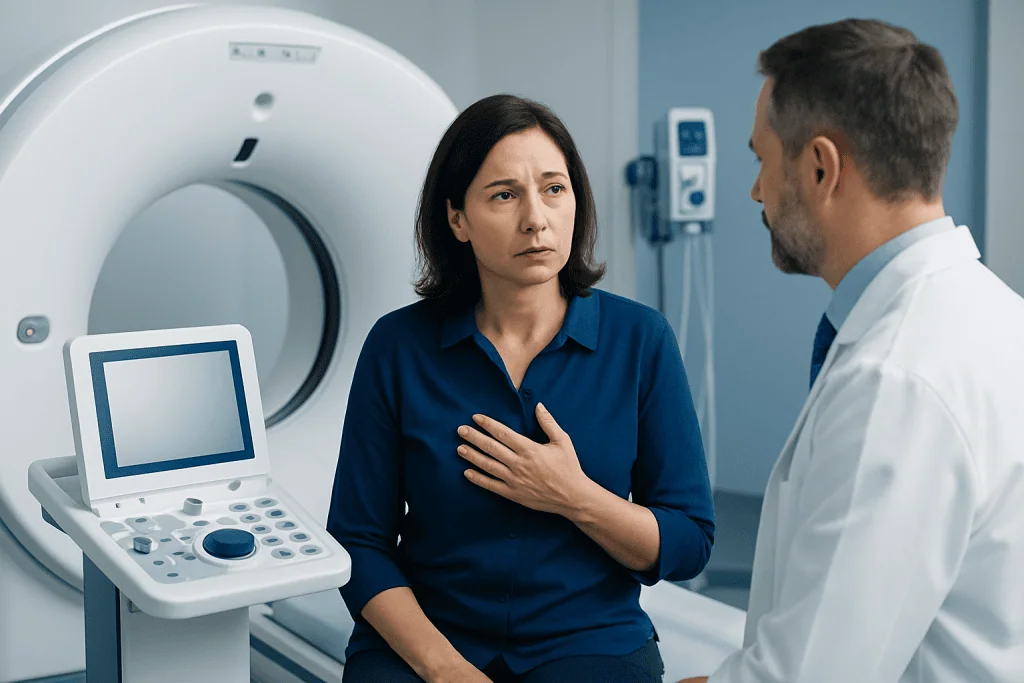
In its early stages, non-small cell lung cancer may not cause noticeable symptoms. Some people learn about it after an imaging test is done for another reason. When symptoms do appear, they can vary depending on the location and size of the tumor and whether the cancer has spread.
Possible symptoms include a persistent cough, coughing up blood, shortness of breath, chest pain, wheezing, hoarseness, and repeated chest infections such as pneumonia. Some people also feel tired, lose weight without trying, or notice a reduced appetite.
If the cancer has spread beyond the lung, symptoms may relate to other parts of the body. For example, bone pain, headaches, weakness, or swelling in the face or neck may occur in some cases. These symptoms are not specific to cancer and can have many causes, but they should be assessed by a doctor, especially if they persist.
- Persistent or changing cough
- Shortness of breath
- Chest discomfort or pain
- Coughing up blood
- Unexplained weight loss or fatigue
Causes and risk factors
Smoking is the leading risk factor for non-small cell lung cancer. This includes current smoking, past smoking, and exposure to secondhand smoke. However, NSCLC can also develop in people who have never smoked, especially certain subtypes such as adenocarcinoma.
Other risk factors include exposure to radon gas, asbestos, air pollution, and some workplace chemicals. A personal or family history of lung cancer may also increase risk in some people. Previous radiation therapy to the chest can be another contributing factor.
NSCLC develops because genetic changes build up in lung cells over time. Some of these changes can be tested in the tumor and may help doctors choose treatment. For example, certain cancers have changes in genes such as EGFR, ALK, ROS1, or others that may respond to targeted therapy.
Stages and how NSCLC is diagnosed
NSCLC is generally staged from stage 0 to stage 4. In stage 0, abnormal cells are found only in the lining of the airways. Stages 1 and 2 are usually limited to the lung or nearby structures. Stage 3 often means the cancer has spread to nearby lymph nodes or tissues in the chest. Stage 4 means it has spread to distant organs, such as the other lung, bones, liver, adrenal glands, or brain.
Diagnosis usually begins with a medical history, physical examination, and imaging tests. These may include chest X-ray, CT scan, PET-CT, and sometimes MRI, especially if doctors need to evaluate the brain or other areas. Imaging helps show the size and location of the tumor and whether it may have spread.
A biopsy is needed to confirm the diagnosis. This means taking a sample of tissue or cells from the lung or another suspicious area. The sample is examined under a microscope to identify the cancer type and subtype. Doctors may also perform molecular testing and biomarker testing to look for gene changes or proteins that can guide treatment selection, including immunotherapy in suitable patients.
Some patients may also need procedures to assess the airways or lymph nodes, such as bronchoscopy or needle biopsy. Lung function tests and blood tests can help determine whether a person is fit for surgery or other treatments. Accurate staging is important because it shapes the overall treatment plan.
Treatment options by stage
Treatment for non-small cell lung cancer depends on the stage, tumor subtype, biomarker results, and the patient’s general health and preferences. In early-stage disease, surgery is often the main treatment if the tumor can be removed safely. The operation may involve removing part of the lung, a lobe, or more rarely the entire lung, along with nearby lymph nodes. Some people may also receive chemotherapy or radiation after surgery to reduce the risk of recurrence.
For patients who cannot have surgery, radiation therapy may be used with curative intent, especially for small localized tumors. In locally advanced disease, treatment often combines chemotherapy and radiation therapy, sometimes followed by immunotherapy depending on the case. In some situations, surgery may still be considered after other treatments.
For advanced or metastatic NSCLC, treatment usually focuses on controlling the cancer, relieving symptoms, and helping people live longer with good quality of life. Options may include chemotherapy, immunotherapy, targeted therapy, or combinations of these. If a tumor has certain genetic changes, smart drugs may be used to block the signals that help cancer cells grow.
Supportive and palliative care are also important at every stage. These approaches can help manage pain, breathlessness, fatigue, nausea, anxiety, and other symptoms during treatment. In specialized centers, patients with complex cases may be evaluated for advanced procedures including lung transplant only in very selected non-cancer situations, though transplant is not a standard treatment for NSCLC itself.
Prevention, self-care, and living with NSCLC
Not all cases of non-small cell lung cancer can be prevented, but risk can be lowered. The most important step is not smoking or quitting smoking if a person currently smokes. Avoiding secondhand smoke and reducing exposure to workplace toxins and radon can also help.
People at high risk for lung cancer may benefit from screening with low-dose CT, based on national guidelines and a doctor’s advice. Screening does not prevent cancer, but it may help detect it earlier, when treatment options are broader. Anyone considering screening should discuss the benefits and possible drawbacks with a qualified healthcare professional.
Living with NSCLC often involves more than cancer treatment alone. Good nutrition, regular physical activity within a person’s ability, adequate sleep, and emotional support can all make a difference. Pulmonary rehabilitation, counseling, and support groups may help patients cope with symptoms, treatment effects, and uncertainty.
Follow-up visits are an important part of care after treatment. Doctors may use imaging and checkups to monitor for recurrence, manage long-term side effects, and address concerns early. For related background, some readers may also wish to learn more about lung cancer in general.
When to see a doctor
A person should see a doctor if they have a cough that does not go away, cough up blood, feel short of breath without a clear reason, or develop chest pain that persists. Unexplained weight loss, repeated chest infections, or ongoing hoarseness also deserve medical attention. These symptoms do not always mean cancer, but they should not be ignored.
People with a history of smoking or significant exposure to lung irritants should be especially mindful of new respiratory symptoms. Those who are eligible for lung cancer screening can ask their doctor whether low-dose CT screening is appropriate. Early evaluation can help identify conditions sooner and may improve treatment options.
If NSCLC is diagnosed, patients often benefit from care in a center where different specialists work together to plan treatment. Acibadem International’s multidisciplinary specialists in JCI-accredited hospitals diagnose and treat non-small cell lung cancer for international patients, with treatment plans based on stage, pathology, and overall health.
Frequently asked questions
What is the difference between non-small cell and small cell lung cancer?
Non-small cell lung cancer and small cell lung cancer are two main categories of lung cancer. NSCLC is more common and usually grows and spreads more slowly, while small cell lung cancer tends to be more aggressive and is treated differently.
What are the main stages of non-small cell lung cancer?
Doctors usually stage NSCLC from 0 to 4. Lower stages mean the cancer is more limited to the lung, while stage 4 means it has spread to distant parts of the body.
Can non-small cell lung cancer be cured?
Some cases, especially when found early, can be treated with the goal of cure. In more advanced stages, treatment often aims to control the cancer, reduce symptoms, and help people live longer and more comfortably.
Is surgery always needed for NSCLC?
No, surgery is not always the right option. It is most often used for early-stage disease when the tumor can be removed safely, but other treatments such as radiation, chemotherapy, targeted therapy, or immunotherapy may be better in other situations.
How do doctors choose the best treatment for NSCLC?
Doctors look at the stage of the cancer, the exact subtype, biomarker test results, and the patient’s general health. The treatment plan is usually tailored by a multidisciplinary team to fit the person’s specific needs.
Can people who never smoked get non-small cell lung cancer?
Yes, people who have never smoked can still develop NSCLC. Other factors such as radon, air pollution, occupational exposures, prior radiation, and certain genetic changes may play a role.
References
- World Health Organization
- National Cancer Institute
- American Cancer Society
- National Comprehensive Cancer Network
- European Society for Medical Oncology
This article is for general information only and is not a substitute for professional medical advice. Please consult a qualified doctor about your individual situation.
Lung Cancer in Turkey — costs, top hospitals & a free quote
JCI-accredited · board-certified surgeons · reply within 24h
Add us as a Preferred Source to see more of our trusted health content across Google Search, AI Overviews and Discover.
Check your numbers in seconds
BMI, calories, due date, blood pressure and 30+ more clinical calculators — free, instant, doctor-reviewed ranges.

Medical Oncology Department
Medical treatment of cancer with chemotherapy, immunotherapy and targeted therapies under a multidisciplinary tumor board.
60 specialists in this unit