Second Opinion Before Technology-Driven Treatment: When It Is Worth Getting

A second opinion can confirm the diagnosis and whether advanced treatment is necessary. Technology itself is not automatically better; outcomes also depend on the right indication and expert use.
Key Takeaways
- A second opinion can confirm the diagnosis and whether advanced treatment is necessary.
- Technology itself is not automatically better; outcomes also depend on the right indication and expert use.
- Second opinions are especially helpful before robotic surgery, radiation, implant-based procedures, and AI-supported treatment plans.
- Patients should ask about benefits, risks, alternatives, expected recovery, and the team’s experience with the technology.
- Seeking another medical opinion is a normal part of careful decision-making and does not usually delay appropriate care.
A second opinion before technology-driven treatment can help confirm whether a proposed test, procedure, or advanced therapy is truly the best fit. It often gives patients more clarity about benefits, limits, alternatives, and the experience of the team delivering the technology.
Overview
A second opinion before technology-driven treatment means asking another qualified doctor or specialist to review a diagnosis and treatment plan that involves advanced tools, devices, or systems. This may include robotic surgery, image-guided procedures, radiation therapy, AI-supported diagnostic tools, implantable devices, or highly specialized minimally invasive techniques. The goal is not to challenge one doctor personally, but to make sure the recommended approach is accurate, appropriate, and clearly understood.
Modern medical technology can offer important benefits. In the right situation, it may improve precision, reduce incision size, shorten recovery time, or help teams plan treatment more carefully. At the same time, a newer or more high-tech option is not always the best option for every person. The value of a treatment depends on the diagnosis, the patient’s overall health, the skill of the team, and whether a simpler or more established treatment could work just as well.
For many patients, a second opinion brings reassurance. Sometimes the second doctor agrees completely with the original plan, which can increase confidence and reduce uncertainty. In other cases, the review may suggest a different interpretation of scan results, another sequence of treatment, or a non-surgical option that had not been fully discussed.
When a Second Opinion Is Worth Getting
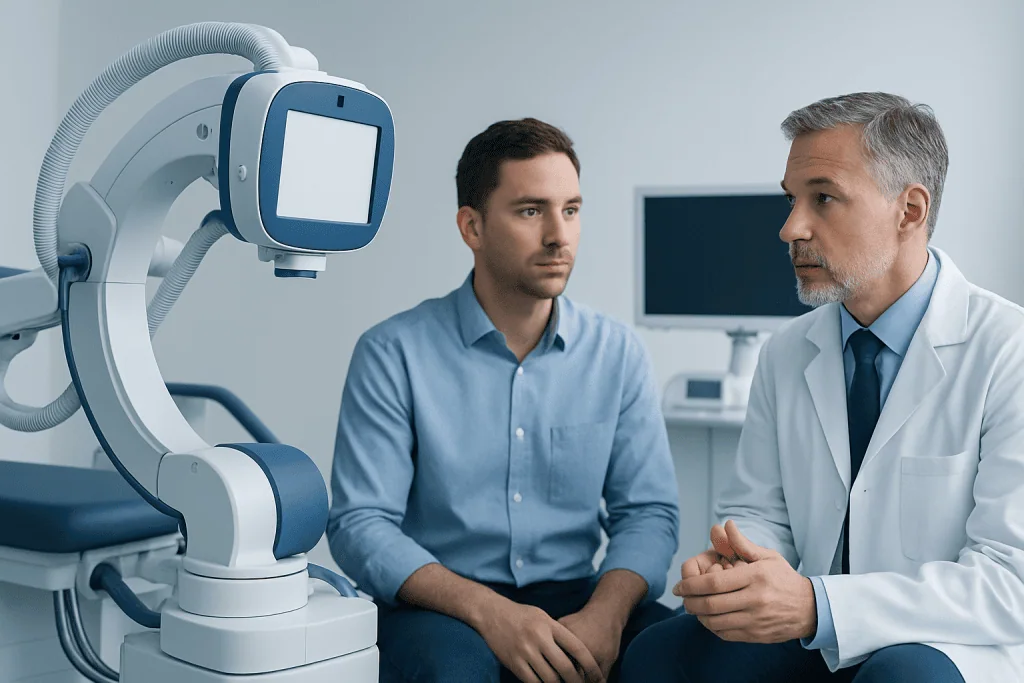
A second opinion is often worth considering when the proposed treatment is expensive, invasive, difficult to reverse, or likely to change quality of life in a major way. It is also helpful when a plan depends heavily on advanced equipment or software that may not be available everywhere, because treatment success may depend on both the technology and the experience of the team using it.
Common situations include recommendations for robotic or image-guided surgery, implantable cardiac or orthopedic devices, advanced radiation techniques, fertility procedures, complex spinal interventions, and cancer treatment plans shaped by molecular testing or AI-assisted review. A person may also want another opinion if they have been told they need urgent surgery but symptoms feel less severe than expected, or if there is uncertainty about the diagnosis itself.
It can also be wise to seek another opinion when the explanation feels rushed, overly technical, or focused mainly on the equipment rather than the person’s goals. If a patient does not fully understand why a technology-based treatment is recommended, what the alternatives are, or what may happen without treatment, a fresh discussion with another specialist can be very valuable.
- Before major surgery or an irreversible procedure
- When a diagnosis is rare, complex, or uncertain
- If several treatment paths are possible
- When advanced technology is presented as the main reason to choose a treatment
- If symptoms continue despite previous care
- When the patient wants more confidence before making a decision
Why Technology-Based Decisions Can Be Complex

Advanced medical technology can improve care, but it also adds layers of complexity. A scan, algorithm, robotic platform, or navigation system may provide more information or support more precise treatment, yet these tools still require expert clinical judgment. Technology does not replace a careful medical history, physical examination, pathology review, or discussion of the patient’s preferences and overall health.
Another important point is that different hospitals may use the same technology in different ways. One center may have extensive experience and a multidisciplinary process for selecting patients, while another may offer the same tool but use it less often. A second opinion helps clarify whether the recommendation reflects strong evidence for that patient’s situation or simply local availability and practice style.
There can also be a natural assumption that newer means better. In reality, some patients benefit most from standard surgery, medication, rehabilitation, watchful waiting, or less invasive treatment. The best decision balances evidence, safety, expected results, possible side effects, recovery, long-term follow-up, and the patient’s personal priorities.
What a Second Opinion Can Help Clarify
A second opinion can help answer several key questions. First, it can confirm whether the diagnosis is correct. This matters because high-tech treatment may be based on imaging findings, biopsy interpretation, or specialist testing that sometimes deserves review. Even a small change in diagnosis can lead to a very different treatment plan.
Second, it can compare all reasonable options. For example, one specialist may recommend a minimally invasive or robotic surgical approach, while another may explain that conventional surgery, medication, rehabilitation, or monitoring would likely offer similar results with less complexity. In some fields, decisions may also involve advanced imaging, interventional procedures, or focused treatments such as radiation therapy.
Third, another doctor can discuss practical details that affect real-life outcomes: expected recovery time, the chance of additional procedures, possible complications, and how often the medical team performs the treatment. For some patients, the second opinion may lead to referral for further evaluation in areas such as comprehensive diagnostic assessment or specialist review of a condition like cancer.
Just as importantly, a second opinion can help a patient feel heard. It creates space to discuss quality of life, work, family responsibilities, fertility, athletic goals, pain control, and long-term follow-up. These factors often matter as much as the technical details.
How to Get a Useful Second Opinion
The most helpful second opinions are organized and evidence-based. Patients should gather their medical records before the visit, including clinic notes, blood tests, pathology reports, imaging reports, and, when possible, the actual scan files on disc or secure digital transfer. Bringing a written timeline of symptoms and a list of current medications can also make the consultation more efficient.
It is often best to seek a second opinion from a specialist with specific expertise in the condition and treatment area, ideally at a center that regularly manages similar cases. In complex decisions, a multidisciplinary review can be especially valuable. This means input from different experts, such as surgeons, radiologists, medical oncologists, radiation oncologists, neurologists, rehabilitation physicians, or other relevant specialists depending on the condition.
During the appointment, patients may wish to ask focused questions:
- Is the diagnosis certain, or are more tests needed?
- Why is this technology-based treatment recommended for this specific case?
- What are the standard alternatives?
- What benefits are realistic, and what are the possible limitations or risks?
- How experienced is the team with this technique?
- What happens if treatment is delayed briefly to make a decision?
These questions can help shift the conversation from the appeal of the technology itself to whether it is the right choice for the individual person.
Possible Outcomes of a Second Opinion
A second opinion may fully support the original recommendation. When that happens, patients often feel more comfortable moving ahead because two independent experts agree on the diagnosis and treatment approach. This added confidence can make the next steps feel clearer and less stressful.
In other cases, the second opinion may offer a different treatment sequence, a less invasive option, or a more cautious approach such as observation and follow-up. Sometimes the review identifies that more testing is needed before a decision can be made. This can be especially important in conditions where symptoms overlap or scans are difficult to interpret.
It is also possible for both opinions to be reasonable but based on different priorities. One doctor may focus on speed, another on preserving function, and another on avoiding unnecessary intervention. When opinions differ, patients can ask what evidence supports each plan and how each option fits their own values. If needed, a third opinion may help resolve remaining uncertainty.
When Not to Delay Care
Although second opinions are often helpful, they should not create unsafe delays in emergencies or clearly time-sensitive situations. Symptoms such as severe chest pain, signs of stroke, major trauma, uncontrolled bleeding, sudden loss of vision, or rapidly worsening breathing require immediate medical attention rather than a delayed review process.
Some non-emergency conditions are still urgent, especially certain infections, rapidly progressive neurological problems, and many suspected or confirmed cancers. In these situations, a second opinion may still be possible, but it should be arranged quickly and in coordination with the treating team. Doctors can often help by identifying which decisions can wait a few days and which should not.
Patients should remember that asking for another opinion is a normal part of good medical care. Most clinicians understand this and can assist with sharing records. Near the end of the process, some patients choose evaluation at centers with broad specialist access; Acibadem International’s multidisciplinary specialists and JCI-accredited hospitals diagnose and treat complex conditions for international patients, including cases where advanced technology is being considered.
Frequently asked questions
Does asking for a second opinion mean the first doctor was wrong?
No. A second opinion is a standard way to confirm a diagnosis or compare treatment options, especially for complex or high-impact decisions. Many doctors welcome it because it helps patients feel informed and comfortable with their care.
Is a second opinion especially important before robotic surgery or other advanced procedures?
It can be very helpful. Advanced procedures may offer benefits for some patients, but they are not automatically the best choice for everyone. Another specialist can explain whether the technology is likely to improve outcomes in that specific situation.
What records should a person bring to a second-opinion appointment?
It is useful to bring clinic notes, test results, pathology reports, imaging reports, and the actual scan images if available. A medication list and a short summary of symptoms and previous treatments can also help the reviewing doctor give a more accurate opinion.
Can a second opinion change the treatment plan?
Yes, sometimes it can. The reviewing doctor may confirm the original recommendation, suggest further testing, propose a different procedure, or recommend non-surgical management. Even when the plan stays the same, the discussion often gives the patient more clarity and confidence.
Will getting a second opinion delay treatment too much?
In many non-emergency situations, a second opinion can be arranged without causing harmful delay. However, urgent or rapidly progressing conditions need prompt medical guidance. The treating doctor can help explain how much time is reasonably available for review.
How can a patient tell whether technology is being recommended for the right reasons?
A good sign is a clear explanation of why the treatment fits the diagnosis, goals, and overall health of the patient. The doctor should also discuss alternatives, expected outcomes, possible risks, and the team’s experience with that technology. If those points are not clear, another opinion may be worthwhile.
References
- World Health Organization
- U.S. National Institutes of Health
- Agency for Healthcare Research and Quality
- American Medical Association
- National Cancer Institute
This article is for general information only and is not a substitute for professional medical advice. Please consult a qualified doctor about your individual situation.
Explore treatments in Turkey — costs, top hospitals & a free quote
JCI-accredited · board-certified surgeons · reply within 24h
Add us as a Preferred Source to see more of our trusted health content across Google Search, AI Overviews and Discover.