

Dental Bone Grafts: When They Are Needed and How Healing Works

Dental bone grafts help restore jawbone volume and strength when natural bone has been lost. They are often needed before dental implants or after tooth extraction to preserve the jaw.
Key Takeaways
- Dental bone grafts help restore jawbone volume and strength when natural bone has been lost.
- They are often needed before dental implants or after tooth extraction to preserve the jaw.
- Healing usually happens gradually over several months as the graft integrates with natural bone.
- Good oral hygiene, avoiding smoking, and following aftercare instructions support better healing.
- A dentist or oral surgeon decides whether a graft is needed based on examination and dental imaging.
Dental bone grafts are procedures used to rebuild or preserve jawbone that has been lost or has become too thin for stable dental treatment. They are commonly recommended before dental implants, after tooth loss, or when gum disease and other problems have weakened the bone.
Overview
Dental bone grafts are procedures that add or support new bone in the jaw where bone volume has been reduced. The goal is to create a stronger foundation for future treatment or to help preserve the natural shape of the jaw. In many cases, a graft is recommended when the bone is too thin, too soft, or too low to securely hold a dental implant.
Bone loss in the jaw can happen for several reasons. A missing tooth leaves the underlying bone without normal chewing stimulation, so the bone may slowly shrink over time. Periodontal disease, injury, infection, or long-term denture use can also contribute to loss of bone structure. When this happens, rebuilding the area may improve both function and long-term oral health.
A dental bone graft does not always mean a major operation. Some grafts are placed at the time of a tooth extraction to preserve the socket, while others are done before or during implant surgery. The procedure is commonly planned as part of dental implant treatment or broader general dentistry care, depending on the person’s needs.
When Dental Bone Grafts Are Needed
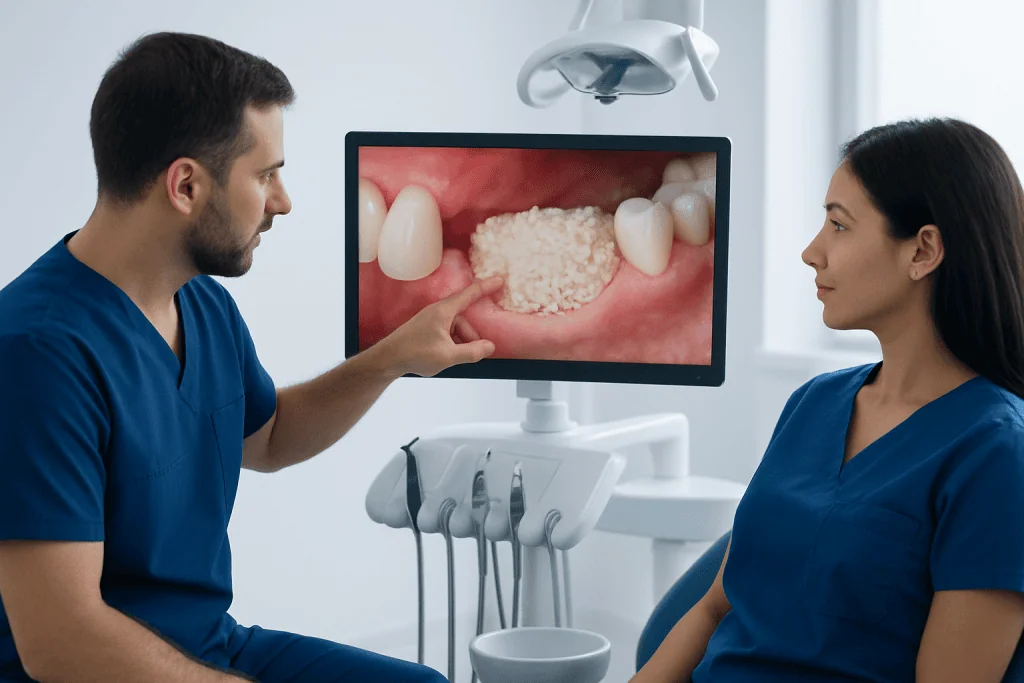
A dentist may recommend a bone graft when there is not enough healthy jawbone to support a replacement tooth. This is especially common before implant placement, because implants need adequate bone around them to remain stable. Without this support, the chance of implant complications can increase.
Bone grafts are also used after tooth extraction to reduce the amount of natural bone shrinkage that may follow. This approach, often called socket preservation, can make future restorations easier and may help maintain the contour of the gums and jaw. In other cases, a person may need a graft because of bone loss caused by advanced gum disease, trauma, cysts, or infection.
Common situations in which a graft may be advised include:
- Preparation for a dental implant when bone is too thin or too short
- Preserving bone after a tooth is removed
- Repairing areas damaged by periodontal disease
- Rebuilding bone after facial or dental trauma
- Supporting sinus lift procedures in the upper jaw
Not every missing tooth requires a graft, and not every graft is the same. The exact plan depends on the location of the missing tooth, the quality of the existing bone, the condition of the gums, and the person’s general health.
Types of Bone Grafts and Materials Used
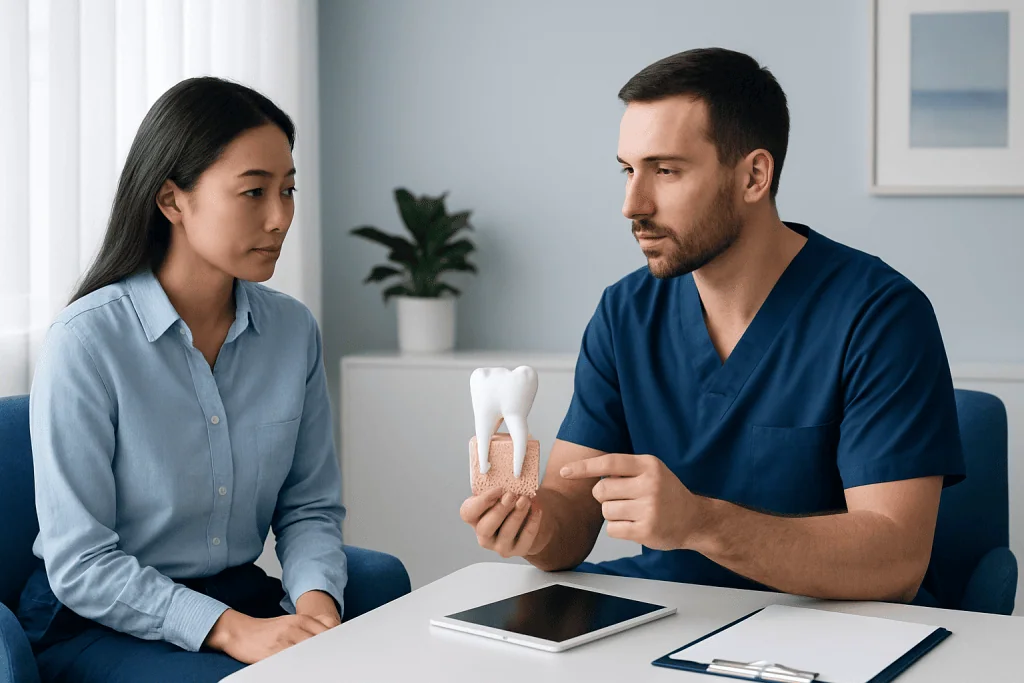
Dental bone grafts can be performed with different materials. Some grafts use the person’s own bone, usually taken from another part of the mouth or, less commonly, another body area. Others use processed donor bone, animal-derived bone material, or synthetic substitutes designed to support new bone growth. The best option depends on the size of the defect, treatment goals, and clinical judgment.
In many cases, the graft material acts as a scaffold. Over time, the body forms new bone around and within this scaffold, gradually replacing or integrating with the material. Some procedures also use a protective membrane to keep the area stable and guide proper healing.
Common graft approaches include:
- Socket preservation: placed after a tooth extraction to help maintain bone shape
- Ridge augmentation: rebuilds width or height of the jaw ridge
- Sinus lift: adds bone below the maxillary sinus in the upper back jaw
- Minor grafting at implant placement: used when only small areas need support
A dentist or oral surgeon explains why a specific type of graft is suitable. In some cases, a person may also learn about the overall procedure through dental bone graft treatment planning before deciding on the next step.
How Diagnosis and Treatment Planning Work
Before recommending a dental bone graft, the dentist begins with a clinical examination and a review of the person’s symptoms, dental history, and goals. The health of the gums, nearby teeth, bite, and any areas of infection are carefully assessed. If implant treatment is being considered, planning also focuses on whether the jaw can safely and predictably support it.
Dental imaging plays an important role. Standard dental X-rays may show the amount of available bone, but three-dimensional scans such as cone beam CT are often helpful for measuring bone width and height more precisely. These images can also reveal sinus anatomy, nerve position, and hidden areas of bone loss that affect treatment decisions.
The dentist also reviews factors that may influence healing, such as smoking, uncontrolled diabetes, certain medications, or active gum disease. Sometimes gum treatment is needed first, especially if bone loss is related to inflammation. For patients with problems such as bleeding gums or visible gum recession, improving gum health may be an important part of the overall plan.
What Happens During the Procedure
Most dental bone grafts are performed under local anesthesia, and some patients may also receive sedation depending on the complexity of the procedure and their comfort needs. The dentist or oral surgeon opens the gum tissue to reach the treatment area, places the graft material where bone support is needed, and may cover it with a membrane before closing the site with stitches.
The exact steps vary. After a tooth extraction, a small graft may be placed directly into the empty socket. In ridge augmentation or sinus lift procedures, more careful shaping and stabilization are often required. If an implant can be placed at the same time, the clinician will decide this based on the amount and quality of remaining bone.
After the procedure, it is normal to have some swelling, mild bleeding or oozing, tenderness, and temporary difficulty chewing in that area. These symptoms usually improve over the first several days. Patients receive instructions about eating, brushing, rinsing, medications, and follow-up appointments to help the site heal as expected.
How Healing Works and What Recovery Is Like
Healing after a dental bone graft is gradual. In the early stage, the body forms a blood clot and begins an inflammatory response that is a normal part of repair. Over the following weeks, new cells move into the area, blood supply develops, and the graft starts to integrate with the surrounding jawbone.
This process takes time because bone remodels slowly. Soft tissues may feel better within days to a couple of weeks, but deeper bone healing often takes several months. The exact timeline depends on the size of the graft, the material used, the location in the mouth, and the person’s general health and oral hygiene.
During recovery, patients are usually advised to:
- Eat soft foods for the recommended period
- Avoid chewing directly on the treated area
- Take medicines exactly as prescribed
- Keep the mouth clean using the dentist’s instructions
- Avoid smoking and tobacco products
- Attend follow-up visits so healing can be checked
Smoking, untreated gum disease, poor oral hygiene, and unnecessary pressure on the graft can slow or disrupt healing. If the graft is being done to support an implant, the dental team usually waits until there is enough solid bone before moving to the next stage of treatment.
Possible Risks, Complications, and Success Factors
Dental bone grafting is a commonly performed procedure, but like any surgical treatment, it has possible risks. These can include infection, prolonged swelling, bleeding, wound opening, graft movement, or failure of the graft to integrate as planned. In upper jaw procedures, sinus-related issues may also be considered during planning and follow-up.
Most people recover without major problems, especially when treatment is carefully planned and aftercare instructions are followed. It is helpful to know that mild discomfort and swelling do not necessarily mean something is wrong. The dental team will explain what is expected and what signs need medical review.
Several factors improve the chance of successful healing:
- Healthy gums and good plaque control
- No active infection at the treatment site
- Careful control of health conditions such as diabetes
- Avoiding smoking and vaping
- Following dietary and hygiene instructions
- Regular review appointments
If a person has severe bone loss or a more complex oral condition, the clinician may discuss a staged treatment plan. This can help rebuild the area safely before moving ahead with final restoration.
Prevention, Self-care, and When to See a Dentist
Not all bone loss can be prevented, but many causes can be reduced with early dental care. Replacing missing teeth in a timely way, treating gum disease, keeping up with professional dental visits, and maintaining good home oral hygiene can help protect jawbone health. Brushing, flossing, and regular cleanings are simple but important steps.
Anyone who loses a tooth should ask about options sooner rather than later. The longer a space remains untreated, the more likely the surrounding bone is to shrink. People considering implants may benefit from a prompt evaluation so the dentist can decide whether preservation or grafting would be useful.
A person should contact a dentist if they notice loose teeth, persistent gum swelling, bad breath, gum recession, trouble chewing, changes in denture fit, or a sunken appearance in areas where teeth are missing. Medical review is also important after a graft if there is worsening pain, fever, heavy bleeding, pus, or swelling that does not improve.
For patients seeking coordinated care, Acibadem International’s multidisciplinary dental specialists and JCI-accredited hospitals diagnose and treat dental bone loss and related procedures for international patients. They may also guide patients who need combined restorative care, including dental implants after successful graft healing.
Frequently asked questions
How long does a dental bone graft take to heal?
Soft tissue recovery often improves within one to two weeks, but the bone itself usually takes several months to mature. The exact healing time depends on the size and type of graft, the area treated, and overall health. A dentist confirms readiness for the next step with follow-up exams and imaging.
Is a dental bone graft always needed before an implant?
No, not every implant requires a bone graft. A graft is only recommended when the jawbone is not strong or large enough to support the implant safely. Imaging helps the dentist decide whether grafting is necessary.
Are dental bone grafts painful?
The procedure is usually done with local anesthesia, so the area is numbed during treatment. Afterward, mild to moderate soreness, swelling, and tenderness are common for a few days. Most discomfort can be managed with the aftercare plan provided by the dentist.
What happens if jawbone loss is not treated?
Untreated jawbone loss can make future tooth replacement more difficult and may affect chewing, gum support, and facial contours over time. In some people, nearby teeth may also become harder to restore properly. Early assessment can help preserve treatment options.
Can a bone graft fail?
Yes, although many grafts heal well, failure can happen if the area becomes infected, the graft moves, or the body does not integrate it properly. Smoking, poor oral hygiene, and uncontrolled health conditions may increase the risk. Follow-up visits are important so any problems can be identified early.
What should someone eat after a dental bone graft?
Soft, non-irritating foods are usually recommended during the early healing period. Very hot, crunchy, hard, or spicy foods may irritate the surgical site, especially in the first days. The dental team gives personalized advice based on the procedure performed.
References
- American Dental Association
- American Association of Oral and Maxillofacial Surgeons
- National Institute of Dental and Craniofacial Research
- European Federation of Periodontology
This article is for general information only and is not a substitute for professional medical advice. Please consult a qualified doctor about your individual situation.
Dental Bone Grafts in Turkey — costs, top hospitals & a free quote
JCI-accredited · board-certified surgeons · reply within 24h
Add us as a Preferred Source to see more of our trusted health content across Google Search, AI Overviews and Discover.

Dental & Oral Health
Full-scope dental care from implants and aesthetics to oral and maxillofacial surgery.
158 specialists in this unitRelated Treatments
More from the Health Library



Related Specialists

Assoc. Prof. Dr. Ferit Bayram
Oral & Dental Health
Assoc. Prof. Dr. Yeliz Çavuşoğlu Yüce
Oral & Dental Health
Assoc. Prof. Dr. Mutlu Keskin
Oral & Dental Health
Prof. Dr. Ülkü Noyan
Oral & Dental Health