Knee Arthroscopy: Who Is a Good Candidate and How Recovery Works

Knee arthroscopy uses a small camera and fine instruments inserted through tiny incisions around the knee. Good candidates often have symptoms linked to specific treatable problems such as some meniscus tears, loose bodies, or inflamed joint lining.
Key Takeaways
- Knee arthroscopy uses a small camera and fine instruments inserted through tiny incisions around the knee.
- Good candidates often have symptoms linked to specific treatable problems such as some meniscus tears, loose bodies, or inflamed joint lining.
- Recovery time depends on what is done during surgery, the person’s overall health, and commitment to rehabilitation.
- Not every painful knee problem benefits from arthroscopy, especially pain caused mainly by advanced arthritis.
- A careful examination, imaging, and discussion of goals help determine whether knee arthroscopy is the right choice.
Knee arthroscopy is a minimally invasive procedure that allows surgeons to look inside the knee joint and treat certain problems through small incisions. It may help selected patients whose pain, swelling, locking, or instability has not improved enough with rest, medication, physical therapy, or other nonsurgical care.
Overview: What Knee Arthroscopy Is
Knee arthroscopy is a surgical procedure that lets an orthopedic surgeon see inside the knee joint using a thin camera called an arthroscope. The camera is inserted through a small incision, and additional tiny incisions allow the surgeon to use delicate instruments to examine or treat structures inside the joint. Because the openings are small, arthroscopy is often described as minimally invasive.
The procedure may be used for both diagnosis and treatment. In many cases, imaging tests such as X-rays or MRI already suggest the problem, and arthroscopy is used to confirm findings and treat them at the same time. Common reasons include certain meniscus tears, cartilage injuries, inflamed synovial tissue, loose fragments in the joint, or ligament-related concerns.
Knee arthroscopy is not the right answer for every type of knee pain. It tends to work best when there is a clearly defined mechanical or structural issue that can be addressed directly. When pain is mainly due to widespread wear-and-tear changes, especially advanced osteoarthritis, other treatment approaches may be more helpful than surgery.
Who Is a Good Candidate for Knee Arthroscopy?
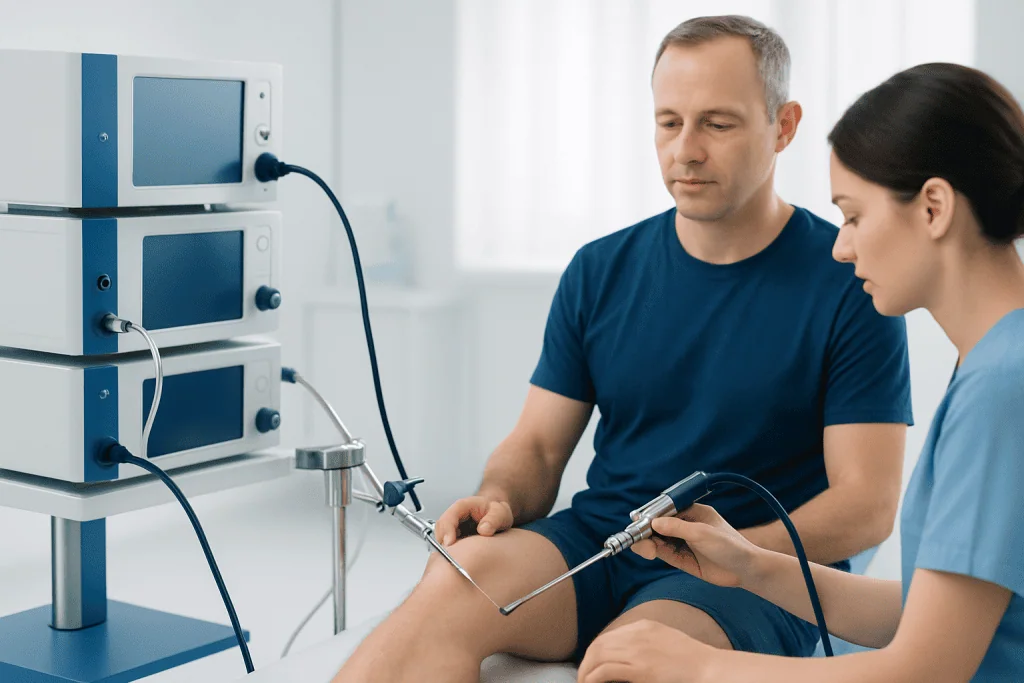
A good candidate for knee arthroscopy usually has ongoing knee symptoms that have not improved enough with nonsurgical treatment. These symptoms may include pain, swelling, catching, locking, a feeling that the knee gives way, or reduced movement. Doctors often consider arthroscopy when symptoms interfere with daily activities, exercise, work, or sports and when there is a specific suspected cause inside the joint.
Examples of conditions that may make arthroscopy appropriate include some meniscus tears, loose bodies floating in the joint, certain cartilage injuries, synovitis, and selected ligament-related injuries. In some situations, arthroscopy is part of treatment planning for more complex knee problems. A patient’s age alone does not determine candidacy; the type of knee problem, activity level, overall health, and treatment goals matter more.
People may be less likely to benefit if knee pain is mainly caused by advanced degenerative arthritis without mechanical symptoms such as locking. In these cases, small-incision surgery may not meaningfully relieve symptoms. The surgeon will also consider factors such as infection risk, circulation problems, smoking, uncontrolled diabetes, obesity, and the ability to participate in rehabilitation afterward.
Doctors generally recommend trying conservative care first when appropriate. This may include activity modification, ice, pain-relieving medicines, supportive bracing, injections in selected cases, and physical therapy and rehabilitation. When these measures do not provide enough relief, arthroscopy may become a reasonable next step.
Symptoms and Knee Problems Arthroscopy May Help Treat

Arthroscopy is often considered when knee symptoms suggest a problem inside the joint rather than pain coming only from overuse or generalized arthritis. Mechanical symptoms are especially important. These can include the knee locking in place, catching during movement, clicking associated with pain, or sudden giving way.
Some of the conditions commonly treated with arthroscopy include:
- Torn meniscus, depending on the tear pattern and location
- Loose pieces of cartilage or bone inside the joint
- Inflamed joint lining, called synovitis
- Cartilage damage in selected areas
- Evaluation and treatment related to ligament injury, including parts of ACL surgery planning or follow-up
Arthroscopy may also be used to investigate symptoms that remain unclear after an examination and imaging, although this is less common now that MRI is widely available. In some cases, the surgeon can trim or repair torn tissue, remove loose fragments, smooth damaged surfaces, or clean inflamed tissue during the same procedure.
It is important to understand that not every MRI finding causes symptoms. Many adults, especially with age, may have degenerative changes that do not require surgery. The best candidates are people whose symptoms, examination findings, and imaging all point to a problem that arthroscopy can realistically correct.
How Doctors Decide: Evaluation and Diagnosis
Before recommending knee arthroscopy, the doctor usually takes a detailed medical history and performs a physical examination. They ask when symptoms started, whether there was a twist or sports injury, what movements cause pain, and whether the knee swells, locks, or feels unstable. The examination helps assess tenderness, range of motion, swelling, ligament stability, and signs of meniscus or cartilage injury.
Imaging is often part of the evaluation. X-rays can show bone alignment, fractures, and arthritis, while MRI is especially useful for soft tissues such as menisci, ligaments, and cartilage. Ultrasound is less commonly used for internal knee structures but may help with some surrounding soft-tissue issues. Blood tests may be needed if infection, inflammatory arthritis, or another medical condition is suspected.
The goal of this workup is to match the patient’s symptoms with a treatable cause. This step is important because the success of knee arthroscopy depends heavily on choosing the right problem to treat. If symptoms come mainly from widespread arthritis, referred pain from the hip or back, or a condition outside the joint, surgery may not provide the expected benefit.
A thoughtful discussion about goals is also part of diagnosis and planning. Some people want to return to sports, while others want to walk with less pain or climb stairs more comfortably. Understanding expectations helps the surgeon explain what arthroscopy can and cannot do, and whether other options, including knee replacement for severe joint damage, should be considered instead.
What Happens During Knee Arthroscopy
Knee arthroscopy is usually performed in an operating room under regional or general anesthesia, depending on the case and the patient’s needs. After the knee is cleaned and prepared, the surgeon makes small incisions around the joint. Sterile fluid is used to gently expand the space inside the knee so the camera can provide a clear view.
The surgeon then inspects the cartilage, menisci, ligaments, and joint lining. If treatment is needed, fine instruments are inserted through another small incision. Depending on the problem, the surgeon may trim a torn meniscus, repair it with sutures, remove loose bodies, treat inflamed tissue, or address a cartilage defect. The exact procedure affects recovery time and restrictions afterward.
At the end of surgery, the instruments are removed and the small cuts are closed with dressings or stitches. Many patients go home the same day. Because arthroscopy is less invasive than open surgery, hospital stays are often shorter and early recovery may feel easier, although the healing process still requires time and care.
Knee Arthroscopy Recovery: What to Expect
Recovery after knee arthroscopy varies from person to person. It depends on what was done during surgery, whether tissue was repaired or simply trimmed, the patient’s baseline strength and mobility, and how closely rehabilitation instructions are followed. A simple procedure may allow a faster return to walking and desk work, while meniscus repair or ligament-related treatment may require a longer, more structured recovery plan.
In the first days after surgery, common recommendations include rest, elevation, icing, and keeping dressings clean and dry as instructed. Some people use crutches temporarily, especially if the surgeon wants to limit weight-bearing. Mild swelling and discomfort are expected, but severe pain, increasing redness, fever, or calf swelling should be reported promptly.
Rehabilitation is a central part of recovery. Exercises usually focus on reducing swelling, restoring range of motion, waking up the quadriceps muscles, and gradually rebuilding strength and balance. As healing progresses, activities become more demanding and may include gait training, cycling, functional exercises, and sport-specific work. For many patients, structured rehabilitation improves confidence and supports a safer return to daily activity.
Timelines differ, but many people resume light activities within days to weeks after simpler procedures. Return to sports, kneeling work, or physically demanding jobs may take significantly longer, especially after meniscus repair or associated ligament treatment. Patients usually recover best when they avoid rushing, attend follow-up visits, and progress according to the surgeon’s plan rather than comparing themselves with others.
Possible Risks, Limitations, and Expected Results
Knee arthroscopy is commonly performed and is generally considered safe, but all surgery carries some risk. Possible complications include infection, bleeding, blood clots, stiffness, swelling that lasts longer than expected, and injury to cartilage, nerves, or blood vessels. Anesthesia also has its own potential risks, which are discussed before the procedure.
Another important limitation is that a technically successful arthroscopy does not always remove all pain. The outcome depends on the diagnosis, the condition of the joint, and whether the treated problem was truly the main source of symptoms. For example, if a person has both a small meniscus tear and significant arthritis, addressing the tear may not completely relieve discomfort.
Many patients do experience improvement in pain, function, or mechanical symptoms when arthroscopy is carefully matched to the right problem. Still, surgeons usually emphasize realistic expectations. The aim may be to reduce locking, improve movement, or help the person return to activity more comfortably rather than to create a “perfect” knee.
Near the end of the treatment journey, patients may benefit from care that involves orthopedic surgeons, radiologists, anesthesiologists, and rehabilitation specialists working together. Acibadem International’s multidisciplinary teams in JCI-accredited hospitals diagnose and treat knee conditions for international patients when specialized assessment and recovery planning are needed.
Self-care and When to See a Doctor
Before surgery, self-care often focuses on reducing strain and preparing the joint for recovery. Helpful steps may include maintaining a healthy weight, avoiding painful twisting motions, using supportive footwear, and strengthening the muscles around the knee with medical guidance. Stopping smoking, if applicable, can also support wound healing and lower complication risk.
After arthroscopy, patients should follow instructions about wound care, bathing, driving, work, and exercise. It is usually wise to increase activity gradually rather than testing the knee too quickly. A balanced diet, adequate hydration, and good sleep can also support healing.
Medical review is important if knee pain persists despite conservative care, if the knee repeatedly swells, locks, or gives way, or if there was a significant sports or twisting injury. After surgery, urgent advice should be sought for fever, worsening redness, drainage from the incision, chest pain, trouble breathing, severe calf pain, or swelling that suddenly increases.
Early assessment can help prevent a minor issue from becoming a larger one. In many cases, prompt diagnosis makes it easier to choose the right treatment, whether that means exercise therapy, medication, injections, arthroscopy, or another orthopedic procedure.
Frequently asked questions
Is knee arthroscopy a major surgery?
Knee arthroscopy is considered minimally invasive because it uses small incisions and a tiny camera rather than a large open cut. However, it is still a real surgical procedure, so it requires proper preparation, anesthesia, and follow-up care.
How long does recovery from knee arthroscopy take?
Recovery depends on the exact procedure performed. Some people recover from simpler arthroscopic procedures within a few weeks, while repairs of tissues such as the meniscus may require several months of rehabilitation.
Can knee arthroscopy treat arthritis?
Knee arthroscopy usually does not help much when pain is caused mainly by advanced osteoarthritis without locking or other mechanical symptoms. A doctor can explain whether other treatments are more suitable for arthritis-related knee pain.
Will I need physical therapy after knee arthroscopy?
Many patients benefit from physical therapy because it helps reduce swelling, improve movement, and rebuild strength. The amount of therapy needed depends on what was treated and the patient’s activity goals.
When can someone walk after knee arthroscopy?
Many people can put some weight on the leg soon after surgery, but this varies by procedure. If tissue is repaired rather than trimmed, the surgeon may recommend crutches or temporary weight-bearing limits to protect healing.
What symptoms suggest someone should ask about knee arthroscopy?
Persistent pain, swelling, catching, locking, or a feeling that the knee gives way may prompt an orthopedic evaluation. Arthroscopy is more likely to help when these symptoms come from a specific treatable problem inside the joint.
References
- American Academy of Orthopaedic Surgeons
- National Institute for Health and Care Excellence
- National Health Service
- OrthoInfo
- Mayo Clinic
This article is for general information only and is not a substitute for professional medical advice. Please consult a qualified doctor about your individual situation.
Arthroscopy in Turkey — costs, top hospitals & a free quote
JCI-accredited · board-certified surgeons · reply within 24h
Add us as a Preferred Source to see more of our trusted health content across Google Search, AI Overviews and Discover.

Orthopedics & Spine
Care for bones, joints and the musculoskeletal system, including joint replacement, sports injuries and trauma.
125 specialists in this unit