What Does a Bone Doctor Treat?

A bone doctor usually refers to an orthopedic doctor or orthopedic surgeon. They treat fractures, arthritis, sports injuries, back pain, tendon problems, and many other musculoskeletal conditions.
Key Takeaways
- A bone doctor usually refers to an orthopedic doctor or orthopedic surgeon.
- They treat fractures, arthritis, sports injuries, back pain, tendon problems, and many other musculoskeletal conditions.
- Diagnosis may involve a physical exam, imaging tests, and sometimes blood tests or joint fluid analysis.
- Many conditions improve with non-surgical treatment such as rest, medication, physical therapy, braces, or injections.
- Surgery is considered when symptoms are severe, function is limited, or conservative treatment does not help.
- Persistent pain, swelling, deformity, weakness, or trouble walking should be assessed by a qualified doctor.
A bone doctor, usually an orthopedic doctor, diagnoses and treats conditions affecting bones, joints, muscles, ligaments, tendons, and the spine. They help people with injuries, pain, movement problems, and long-term musculoskeletal conditions using both non-surgical and surgical care.
Overview: What Is a Bone Doctor?
A bone doctor is commonly an orthopedic doctor, also called an orthopedist or orthopedic surgeon. Despite the name, this specialist does much more than treat bones alone. Orthopedic care focuses on the musculoskeletal system, which includes bones, joints, cartilage, muscles, ligaments, tendons, and the spine.
These doctors evaluate pain, stiffness, injuries, swelling, weakness, and problems with movement. Some see people after sudden injuries such as falls, sports accidents, or fractures. Others manage long-term conditions such as arthritis, overuse injuries, spinal degeneration, or foot and hand problems that affect daily life.
Orthopedic specialists may also have subspecialty training. For example, one doctor may focus on hand and wrist conditions, another on sports medicine, another on spine care, and another on hip or knee replacement. This helps patients receive more targeted care for a specific area of the body.
Importantly, not every musculoskeletal problem requires surgery. Many bone doctors provide non-surgical treatment first and recommend an operation only when it is likely to improve pain, stability, or function.
What Conditions Does a Bone Doctor Treat?
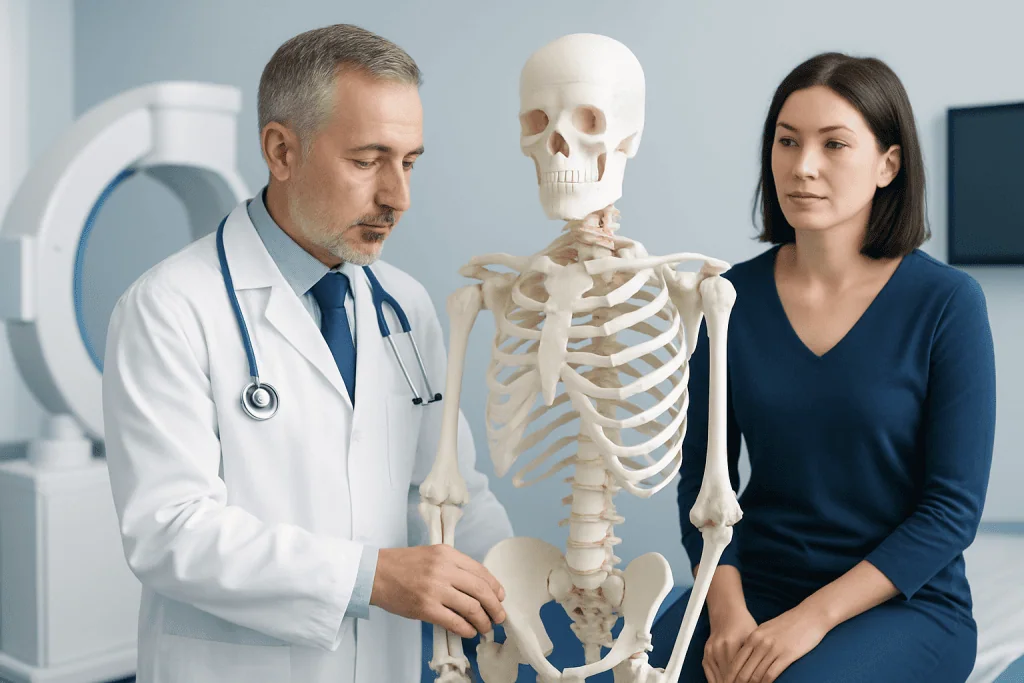
A bone doctor treats a wide range of conditions affecting movement and support of the body. This includes sudden injuries, chronic wear-and-tear problems, inflammatory conditions, and deformities that may be present from birth or develop over time. The goal is to reduce pain, restore function, and help a person move more comfortably and safely.
Common bone and joint problems seen by orthopedic doctors include:
- Broken bones and stress fractures
- Joint pain and osteoarthritis
- Sprains, strains, and ligament tears
- Tendonitis and tendon tears
- Back pain, neck pain, and some spine disorders
- Sports injuries such as meniscus tears or shoulder instability
- Carpal tunnel syndrome and other hand problems
- Foot and ankle conditions, including bunions and Achilles injuries
- Shoulder, hip, and knee problems
- Bone infections, deformities, or certain bone tumors that require specialist assessment
Orthopedic doctors also care for age-related issues. Older adults may develop fragile bones, joint degeneration, and reduced balance, while children may need assessment for growth-related or developmental orthopedic concerns. In some cases, a patient may be referred to another specialist as well, such as a rheumatologist, neurologist, or rehabilitation physician, depending on the cause of symptoms.
Some patients seek a bone doctor because of a known diagnosis, while others come with a symptom such as knee pain or difficulty walking. A careful evaluation helps determine whether the problem is coming from a bone, joint, tendon, muscle, or nerve-related source.
Common Symptoms That May Need Orthopedic Evaluation

People often visit a bone doctor because of pain, swelling, or reduced movement. Symptoms can begin suddenly after an injury or gradually over weeks to months. The pattern of symptoms often gives useful clues about the cause.
Common reasons to see a bone doctor include ongoing joint pain, back or neck pain, limited range of motion, clicking or locking of a joint, and difficulty using an arm or leg normally. Swelling, bruising, instability, or a feeling that a joint may “give way” can suggest injury to ligaments, tendons, or cartilage. Numbness and weakness may also be evaluated, especially when symptoms involve the spine or compression of nerves.
Other warning signs include a visible deformity after an injury, pain that does not improve with rest, repeated sports injuries, or trouble doing everyday tasks such as climbing stairs, standing from a chair, lifting objects, or walking comfortably. In children, limping, refusal to bear weight, or persistent joint pain should be checked promptly.
Not every ache requires specialist care, but symptoms that are severe, persistent, or affecting quality of life deserve medical attention. Early assessment can sometimes prevent a minor problem from becoming a more serious one.
How a Bone Doctor Finds the Cause
Diagnosis usually begins with a medical history and physical examination. The doctor asks when the problem started, whether there was an injury, which activities worsen symptoms, and whether there is swelling, locking, weakness, or numbness. Previous injuries, medical conditions, and daily activity levels are also important.
During the exam, the doctor checks posture, gait, joint alignment, tenderness, swelling, muscle strength, flexibility, and range of motion. They may perform specific movement tests to look for ligament injury, tendon damage, joint instability, or nerve irritation. This step often helps narrow down the likely source of the problem.
Imaging tests are commonly used when needed. X-rays are helpful for fractures, alignment, and arthritis changes. Ultrasound or MRI may be used to assess soft tissues such as ligaments, tendons, cartilage, and muscles. CT scans may be helpful in complex fractures or detailed bone assessment. Some patients may also need blood tests if infection, inflammation, or a metabolic bone condition is suspected.
When joint swelling is present, the doctor may recommend joint fluid analysis. In more complex situations, patients may benefit from coordinated care with imaging specialists, pain specialists, rehabilitation teams, or surgeons. If a procedure is needed, options may range from minimally invasive care to operations such as knee replacement, hip replacement, or scoliosis surgery in carefully selected cases.
Treatment Options a Bone Doctor May Recommend
Treatment depends on the diagnosis, severity of symptoms, age, activity level, and overall health of the patient. In many cases, the first step is conservative care. This may include rest, activity modification, ice or heat, pain-relieving or anti-inflammatory medicines, splints or braces, and physical therapy to improve strength, mobility, and balance.
Injections may sometimes be offered for selected joint or tendon conditions. Rehabilitation plays an important role, especially after injury or surgery, because recovery often depends on restoring function as much as reducing pain. Weight management, supportive footwear, and exercise changes may also be advised to reduce strain on joints.
If symptoms are severe or continue despite non-surgical care, surgery may be considered. Orthopedic surgery can repair fractures, reconstruct ligaments, release compressed nerves, repair torn tendons, or replace damaged joints. A common example is robotic knee replacement for selected patients with advanced knee arthritis, although suitability varies from person to person and should be discussed with a specialist.
Some orthopedic symptoms are linked to common diagnoses such as osteoarthritis or scoliosis. In these cases, treatment often combines symptom relief, lifestyle strategies, and regular follow-up. The best treatment plan is individualized and should be made with a qualified doctor.
Prevention and Self-Care for Bone and Joint Health
Although not every orthopedic problem can be prevented, many can be reduced through healthy habits. Regular exercise helps keep muscles strong, joints mobile, and bones healthier. Activities that improve strength, flexibility, and balance are especially helpful, and they can often be adapted for different ages and fitness levels.
Protecting the body during sports and daily activity also matters. Proper technique, warm-up exercises, supportive footwear, and appropriate protective equipment can lower the risk of injury. Repetitive strain may improve when people take breaks, adjust posture, and use ergonomic tools at work or home.
Bone health also depends on nutrition and lifestyle. A balanced diet that supports calcium and vitamin D needs, avoiding smoking, and limiting excess alcohol can contribute to stronger bones over time. Maintaining a healthy weight may reduce stress on the hips, knees, and spine.
At home, self-care may include short-term rest after minor strain, gentle movement as tolerated, and avoiding activities that clearly worsen pain. However, self-care should not replace medical advice when symptoms are intense, persistent, or related to trauma.
When to See a Doctor
A person should seek medical care if bone, joint, or muscle symptoms do not improve after a reasonable period of rest and basic self-care, or if symptoms interfere with work, sleep, exercise, or normal daily activities. Pain that keeps returning, increasing stiffness, or reduced ability to walk or use a limb are also good reasons to arrange an appointment.
Urgent assessment is important after a major fall or injury, especially if there is severe pain, a visible deformity, inability to bear weight, sudden swelling, or a suspected fracture or dislocation. Fever together with severe joint pain or swelling should also be evaluated promptly, as this may suggest infection or significant inflammation.
People with numbness, weakness, loss of coordination, or new bladder or bowel symptoms along with back pain should seek prompt medical advice. These symptoms can sometimes point to nerve involvement and should not be ignored. Children with persistent limping or unexplained pain also need timely evaluation.
For patients seeking coordinated orthopedic assessment, Acibadem International’s multidisciplinary specialists in JCI-accredited hospitals diagnose and treat bone, joint, and spine conditions for international patients. A professional evaluation can help clarify the cause and guide the safest next steps.
Frequently asked questions
Is a bone doctor the same as an orthopedic doctor?
Yes. In everyday language, a bone doctor usually means an orthopedic doctor or orthopedic surgeon. This specialist treats not only bones, but also joints, muscles, tendons, ligaments, and the spine.
Do bone doctors only perform surgery?
No. Many orthopedic problems are treated without surgery, especially at first. Common non-surgical options include physical therapy, braces, medicines, exercise changes, and injections when appropriate.
Can a bone doctor help with back pain?
Yes. Orthopedic doctors often assess back and neck pain, especially when symptoms involve the spine, movement limitation, or injury. Some may focus specifically on spine care and can advise on imaging, rehabilitation, or surgery if needed.
What is the difference between a bone doctor and a rheumatologist?
A bone doctor mainly treats structural and mechanical problems of the musculoskeletal system, such as fractures, tendon tears, and arthritis affecting function. A rheumatologist focuses more on inflammatory and autoimmune joint and connective tissue diseases. In some cases, both specialists may be involved in care.
When should someone see a bone doctor after an injury?
A person should seek prompt care if there is severe pain, swelling, deformity, inability to move the area properly, or difficulty bearing weight. Even milder injuries may need assessment if pain continues, keeps returning, or prevents normal activity.
Do I need imaging before seeing a bone doctor?
Not always. The doctor may first evaluate symptoms with a history and physical examination, then decide whether imaging is needed. X-rays, MRI, ultrasound, or CT scans are used selectively based on the suspected problem.
References
- American Academy of Orthopaedic Surgeons
- National Institute of Arthritis and Musculoskeletal and Skin Diseases
- MedlinePlus
- NHS
- World Health Organization
This article is for general information only and is not a substitute for professional medical advice. Please consult a qualified doctor about your individual situation.
Joint and spine care in Turkey — expert assessment & treatment
JCI-accredited · board-certified surgeons · reply within 24h
Add us as a Preferred Source to see more of our trusted health content across Google Search, AI Overviews and Discover.

More from the Health Library



Related Specialists

Dr. Cem Tekin Baran
Orthopedic Surgery & Traumatology
Prof. Dr. Yurtkuran Sadıkoğlu
Interventional Radiology
Dr. İhsan Atabay
Gynecology & Obstetrics
Dr. Ecem Sevim Akı
Otorhinolaryngology