Signs of Skin Cancer: Moles, Spots, and Other Changes

A changing mole, a new spot, or a sore that does not heal can be signs of skin cancer. The ABCDE rule can help identify warning signs in pigmented moles and lesions.
Key Takeaways
- A changing mole, a new spot, or a sore that does not heal can be signs of skin cancer.
- The ABCDE rule can help identify warning signs in pigmented moles and lesions.
- Skin cancer may appear as dark, pink, red, pearly, scaly, or flesh-colored changes in the skin.
- Not every unusual spot is cancer, but persistent or changing lesions should be checked by a doctor.
- Sun protection, skin self-checks, and professional skin exams can support early detection.
Signs of skin cancer often include a new growth, a mole that changes, or a patch of skin that looks different from the surrounding area. Knowing what to watch for can help people seek assessment early, when treatment is often simpler and more effective.
Overview
Signs of skin cancer can be subtle at first. A person may notice a mole that starts to look different, a new bump that was not there before, or a sore that crusts, bleeds, or does not fully heal. Skin cancer can develop on sun-exposed areas such as the face, scalp, ears, neck, chest, arms, and legs, but it can also appear in places that receive little sun, including the soles, under the nails, and the genital area.
The most common main types are basal cell carcinoma, squamous cell carcinoma, and melanoma. Each can look different. Basal cell carcinoma often appears as a pearly bump or a sore that keeps returning. Squamous cell carcinoma may look like a rough, scaly patch or a firm red nodule. Melanoma often begins as a changing mole or a new dark spot, but it can also be pink, red, skin-colored, or even located under a nail.
Many skin changes are harmless, including freckles, benign moles, age spots, and irritated rashes. Even so, it is wise to pay attention to any lesion that is new, changing, unusual, or not healing. Early assessment by a qualified doctor can help identify whether a change is harmless or whether it needs further testing.
Common Signs and Symptoms
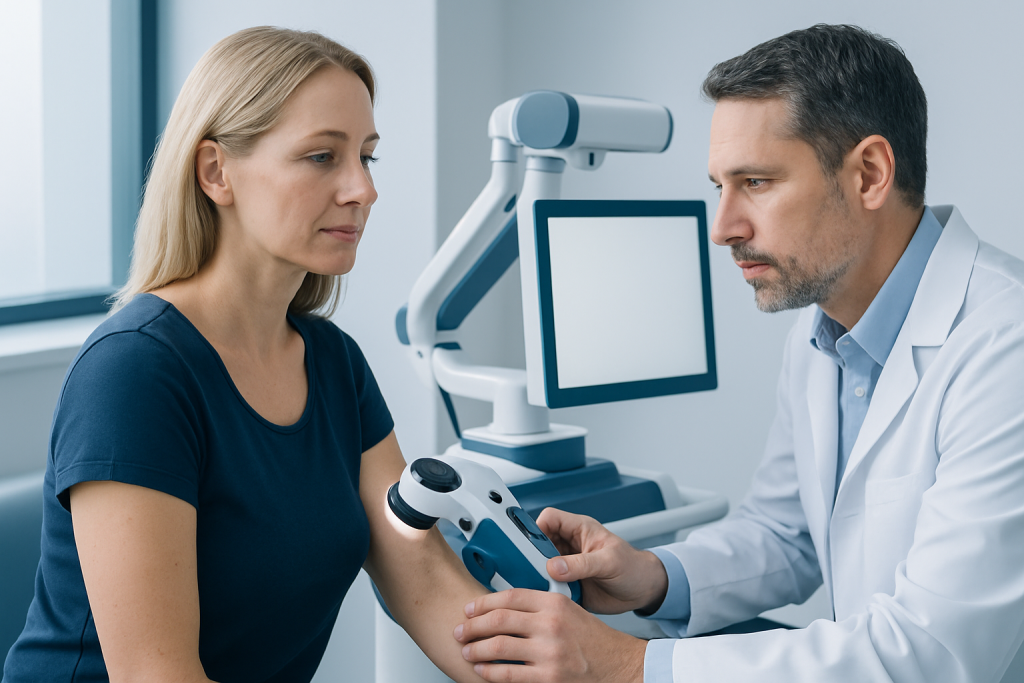
A suspicious lesion may stand out because it looks different from other marks on the skin. Dermatologists sometimes call this the “ugly duckling” sign. If one mole or spot seems unlike the rest in size, shape, color, or texture, it deserves attention. A lesion that enlarges over weeks or months is especially important to have checked.
The ABCDE rule is a helpful guide for pigmented moles and spots:
- A – Asymmetry: one half does not match the other
- B – Border: edges are irregular, blurred, or ragged
- C – Color: more than one shade, such as brown, black, tan, red, white, or blue
- D – Diameter: larger than about 6 mm, although melanomas can be smaller
- E – Evolving: any change in size, shape, color, height, or symptoms
Symptoms are not limited to appearance alone. Some skin cancers itch, sting, feel tender, or bleed easily. Others form a scab that repeatedly falls off and returns. A persistent rough patch, wart-like growth, shiny bump, or open sore can also be a warning sign. People with darker skin tones should know that skin cancer can appear on the palms, soles, nails, and mucous areas, not only on areas exposed to the sun.
Nail changes can also matter. A dark streak under a nail, especially one that widens, extends onto the nearby skin, or appears without injury, should be evaluated. In some cases, skin cancer may look like a bruise that does not grow out with the nail over time.
What Skin Cancer Can Look Like
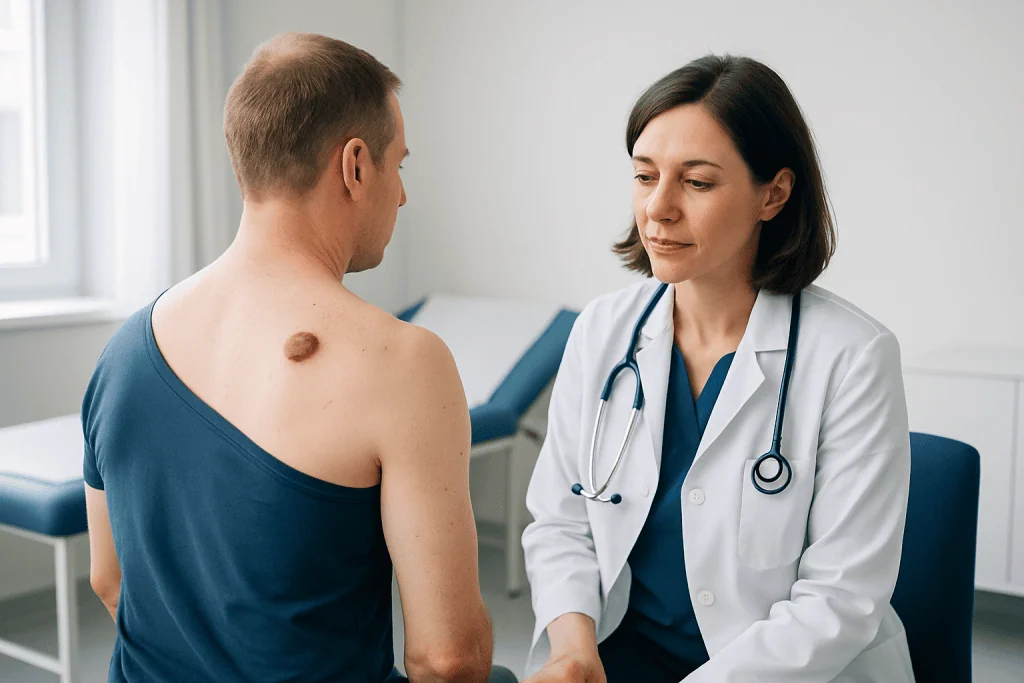
Basal cell carcinoma is the most common skin cancer. It often grows slowly and may look like a pearly or waxy bump, a pink patch, a small shiny nodule with visible blood vessels, or a sore that heals and then returns. Because it can be subtle, people sometimes mistake it for a pimple, scar, or patch of eczema.
Squamous cell carcinoma may appear as a red, scaly patch, a crusted lesion, a firm bump, or a sore that bleeds and does not heal. It can develop from actinic keratosis, a rough sun-damaged patch that may feel easier to detect than to see. These lesions are common on the face, lips, ears, scalp, forearms, and backs of the hands.
Melanoma can arise in an existing mole or as a brand-new spot. It may be dark brown or black, but it can also be pink, red, purple, blue, or colorless. Some melanomas grow outward on the surface, while others grow deeper into the skin. Because melanoma can spread more readily than other common skin cancers, recognizing early warning signs is especially important. Readers who want a general overview of skin cancer may find it helpful to compare these patterns with a professional skin evaluation.
Causes and Risk Factors
Skin cancer develops when skin cells accumulate DNA damage and begin to grow abnormally. Ultraviolet, or UV, radiation from sunlight is a major cause, and tanning beds also increase risk. Repeated sun exposure over time, especially when it causes burning, can damage skin cells and increase the chance of cancer later in life.
Several factors make skin cancer more likely. These include fair skin, light eyes, light or red hair, a history of sunburns, frequent outdoor sun exposure, use of tanning beds, many moles, atypical moles, older age, and a personal or family history of skin cancer. Weakened immune function can also raise risk. However, skin cancer can affect people of any skin tone and any age, so unusual skin changes should never be ignored.
Melanoma risk is often linked with intermittent intense sun exposure and blistering burns, while basal and squamous cell cancers are commonly associated with cumulative lifetime sun exposure. Certain areas, such as the scalp in people with thinning hair and the ears in those who spend time outdoors, may be easy to overlook but are often exposed. If a lesion raises concern for melanoma, prompt specialist evaluation is important.
How Doctors Diagnose Suspicious Skin Changes
Diagnosis usually begins with a medical history and a full skin examination. The doctor asks when the spot first appeared, whether it has changed, and whether it bleeds, itches, or causes pain. They also review past sun exposure, previous skin cancers, medications, immune status, and family history. In many cases, a dermatoscope, a handheld magnifying device, helps the doctor examine a lesion more closely.
If a spot looks suspicious, a skin biopsy is the standard way to confirm the diagnosis. This means removing all or part of the lesion so it can be examined under a microscope by a pathologist. The biopsy type depends on the size, location, and appearance of the lesion. This step is important because many harmless conditions can resemble skin cancer, and treatment planning depends on the exact diagnosis.
When melanoma or another higher-risk cancer is confirmed, additional assessment may be needed to determine the depth of the tumor and whether it has spread. For selected patients, doctors may discuss imaging or a sentinel lymph node procedure as part of staging. In centers with dermatology, pathology, surgery, and oncology working together, diagnostic planning can be more coordinated. When appropriate, treatment may include Mohs surgery or other procedures chosen according to the cancer type and location.
Treatment Options
Treatment depends on the type of skin cancer, its size and depth, where it is located, and the person’s general health. For many early basal cell and squamous cell carcinomas, treatment is highly effective. Common options include surgical removal, curettage and cautery, cryotherapy for selected lesions, topical medicines for certain superficial lesions, and photodynamic therapy in some situations.
Mohs micrographic surgery is often used for skin cancers in cosmetically or functionally sensitive areas, such as the nose, eyelids, ears, lips, or scalp, or for tumors with a higher chance of recurrence. This technique removes cancer layer by layer while preserving as much healthy tissue as possible. More advanced or higher-risk cancers may need wider surgery, radiation therapy, or systemic treatment.
Melanoma treatment usually centers on surgery, especially when found early. If the melanoma is deeper or has spread, care may involve additional surgery, immunotherapy, targeted therapy, or other oncology treatments. Patients diagnosed with basal cell carcinoma or other forms of skin cancer benefit from a treatment plan tailored to the pathology results and the lesion’s location. For selected advanced cancers, care may involve specialists in medical oncology as part of a multidisciplinary approach.
Near the end of the care journey, follow-up remains important. Even after successful treatment, a person who has had one skin cancer has a higher chance of developing another in the future. Regular checkups help monitor healing, detect recurrence, and identify new lesions early.
Prevention and Self-Care
Sun protection is one of the best ways to reduce the risk of skin cancer. Helpful habits include seeking shade when the sun is strongest, wearing protective clothing, using a wide-brimmed hat and UV-blocking sunglasses, and applying a broad-spectrum sunscreen with appropriate SPF as directed on the product label. Tanning beds are best avoided, as they expose the skin to harmful UV radiation.
Regular self-checks can support earlier detection. A person can examine the skin once a month in a well-lit room using a full-length mirror and a hand mirror. It helps to check the scalp, behind the ears, the back, the buttocks, the soles, and between the toes. Taking clear photos can make it easier to notice changes over time.
People at higher risk, such as those with many moles, a history of skin cancer, or strong family history, may benefit from periodic skin exams with a dermatologist. Any care plan should be personalized. For international patients who need coordinated assessment and treatment, Acibadem International’s multidisciplinary specialists in JCI-accredited hospitals provide diagnosis and care for skin cancer.
When to See a Doctor
A doctor should assess any new skin lesion that persists, any mole that changes, or any sore that does not heal within several weeks. Evaluation is also important for spots that bleed repeatedly, become crusted, or develop persistent itching or pain. Prompt assessment does not mean the lesion is definitely cancer, but it does allow a clear diagnosis and timely treatment if needed.
Urgent attention is especially reasonable if a mole shows ABCDE changes, if a lesion grows quickly, or if there is a dark streak under a nail without a clear injury. People who have had skin cancer before should have a lower threshold for getting new changes checked. If there is uncertainty, it is safer to ask a qualified doctor than to wait and watch for too long.
Skin changes can be easy to dismiss, especially if they are small or painless. However, early diagnosis often means simpler treatment and better cosmetic and medical outcomes. A professional skin exam can provide reassurance when a spot is harmless and guidance when it is not.
Frequently asked questions
What are the first signs of skin cancer?
The first signs of skin cancer are often a new spot, a mole that changes, or a sore that does not heal. Some lesions also itch, bleed, crust, or return after seeming to improve. Any persistent or evolving skin change should be checked by a doctor.
How can someone tell if a mole is suspicious?
A suspicious mole may show ABCDE changes: asymmetry, irregular border, multiple colors, larger diameter, or evolving appearance. It may also look noticeably different from a person's other moles. A doctor can decide whether it needs closer examination or biopsy.
Can skin cancer appear without being dark or black?
Yes. Skin cancer is not always dark brown or black. It can look pink, red, pearly, flesh-colored, scaly, or like a sore that does not heal.
Is every changing mole cancer?
No, many changing moles are not cancerous. Hormonal changes, irritation, and benign skin conditions can also affect how a mole looks. Even so, changes should be assessed because appearance alone cannot always give a definite answer.
Where does skin cancer usually develop?
Skin cancer commonly develops on areas that receive a lot of sun, such as the face, ears, scalp, neck, arms, and legs. However, it can also appear on the palms, soles, under the nails, and other less-exposed areas. This is why a full-body skin check is useful.
When should someone see a doctor about a skin spot?
A doctor should be seen if a spot is new and persistent, changes over time, bleeds, crusts, or fails to heal. People with a personal or family history of skin cancer should be especially cautious. Earlier evaluation can help clarify the cause and guide treatment if needed.
References
- World Health Organization
- American Academy of Dermatology
- National Cancer Institute
- American Cancer Society
- National Health Service
This article is for general information only and is not a substitute for professional medical advice. Please consult a qualified doctor about your individual situation.
Skin Cancer in Turkey — costs, top hospitals & a free quote
JCI-accredited · board-certified surgeons · reply within 24h
Add us as a Preferred Source to see more of our trusted health content across Google Search, AI Overviews and Discover.