Kyphoplasty for Spinal Compression Fractures: Benefits, Risks, and Recovery

Kyphoplasty may help relieve pain and stabilize selected vertebral compression fractures. It is most often considered when pain from a recent fracture does not improve enough with rest, bracing, and medication.
Key Takeaways
- Kyphoplasty may help relieve pain and stabilize selected vertebral compression fractures.
- It is most often considered when pain from a recent fracture does not improve enough with rest, bracing, and medication.
- The procedure has benefits and risks, including cement leakage, infection, bleeding, and the possibility of ongoing pain.
- Recovery is usually relatively quick, but long-term care still focuses on treating the underlying cause, especially osteoporosis.
- A doctor can determine whether kyphoplasty, vertebroplasty, or non-surgical treatment is the best option.
Kyphoplasty is a minimally invasive procedure used to treat some painful spinal compression fractures, especially those linked to osteoporosis or certain cancers. It can reduce pain and improve stability, but it is not the right choice for every patient and should be considered after careful medical evaluation.
Overview
Kyphoplasty is a minimally invasive procedure used to treat certain vertebral compression fractures. These fractures happen when one of the bones in the spine, called a vertebra, collapses or becomes compressed. They are common in people with osteoporosis, but they can also occur after trauma or when cancer weakens the bone.
During kyphoplasty, a doctor places a small balloon-like device into the fractured vertebra and gently inflates it to create space. That space is then filled with special bone cement to help stabilize the vertebra. The main goals are to reduce pain, support the bone, and in some cases restore part of the lost vertebral height.
Kyphoplasty is not used for every spinal fracture. Many compression fractures improve with time, pain control, activity modification, and sometimes a brace. The procedure is usually considered when pain is significant, the fracture is relatively recent, and non-surgical treatment has not provided enough relief.
Symptoms of Spinal Compression Fractures
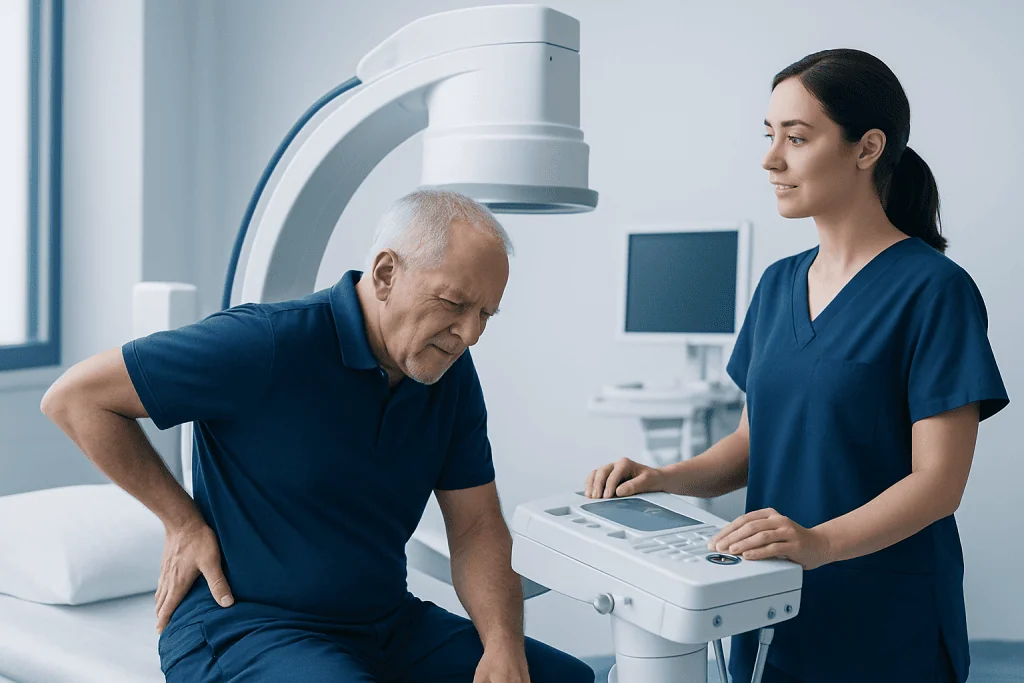
The most common symptom of a spinal compression fracture is sudden or gradually worsening back pain. The pain is often felt in the middle or lower back and may become worse with standing, walking, bending, or lifting. Many people feel some relief when lying down.
Some fractures cause a noticeable change in posture. A person may become less upright over time, develop a rounded back, or seem shorter than before. When several fractures happen over time, these changes can affect balance, breathing comfort, and daily movement.
Not every vertebral compression fracture causes severe symptoms. In some cases, especially with osteoporosis, a fracture may be discovered on imaging done for another reason. However, new back pain after a fall, lifting strain, or even a simple everyday movement deserves medical attention, particularly in older adults.
- Sudden back pain after minor strain or a fall
- Pain that worsens when standing or walking
- Reduced height over time
- Stooped or rounded posture
- Difficulty with routine activities because of pain
Causes and Risk Factors
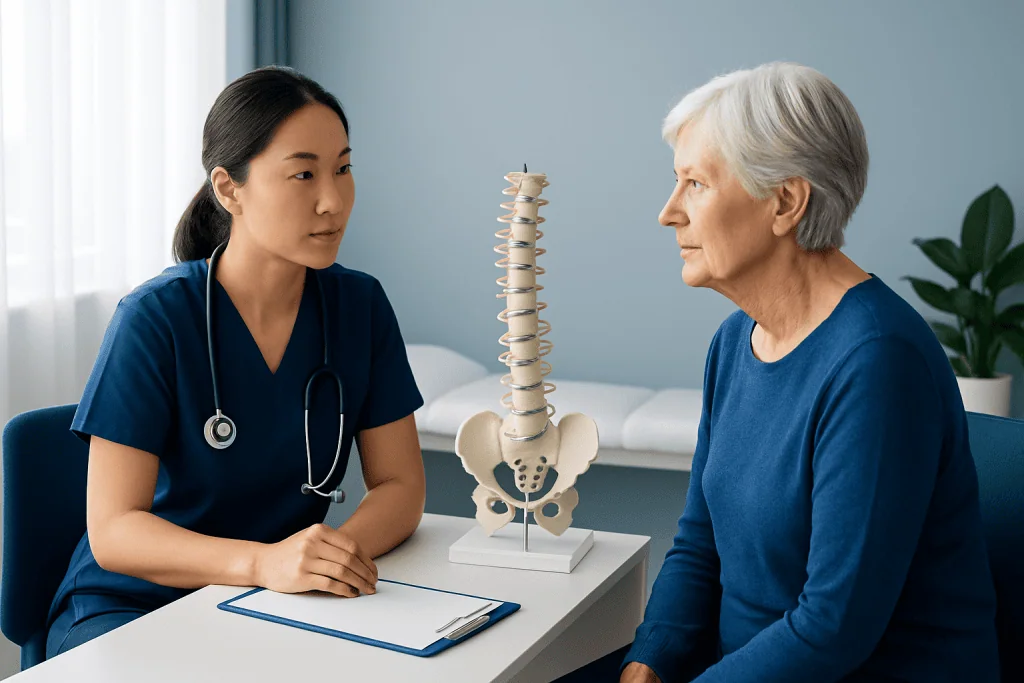
Osteoporosis is the leading cause of spinal compression fractures. In osteoporosis, bones become less dense and more fragile, so even low-impact stress can cause a vertebra to collapse. This is why compression fractures are especially common in older adults, particularly after menopause.
Other causes include trauma, such as a fall or car accident, and cancers that spread to the spine or weaken bone within the vertebra. Less commonly, certain infections or metabolic bone conditions may contribute. The treatment plan depends not only on the fracture itself but also on the reason it happened.
Several factors raise the risk of these fractures. These include older age, a previous fracture, long-term steroid use, low body weight, smoking, limited physical activity, vitamin D deficiency, and a family history of osteoporosis. When doctors consider kyphoplasty, they also evaluate whether the pain truly matches the fractured level seen on imaging and whether the fracture appears recent enough to benefit.
How Doctors Diagnose the Problem
Diagnosis starts with a medical history and physical examination. A doctor asks when the pain began, whether there was a fall or injury, and how the pain affects walking, sleeping, and daily activities. The exam may show tenderness over part of the spine, limited movement, or changes in posture.
Imaging is important because it helps confirm the fracture and estimate how old it is. Plain X-rays can show vertebral collapse, but MRI is often especially useful when doctors need to tell whether a fracture is recent and painful. CT scans may help define the bone structure more clearly in selected cases.
Doctors may also look for the underlying cause. Bone density testing can help diagnose osteoporosis, and blood tests may be used if there is concern about infection, cancer, or another condition affecting bone health. This broader assessment is important because treating the fracture alone is not enough; the reason for the fracture should also be addressed.
When Kyphoplasty May Be Recommended
Kyphoplasty is usually considered for patients with a painful, recent vertebral compression fracture that has not improved enough with conservative treatment. Conservative care may include rest, avoiding heavy strain, pain medicines, physical therapy, and a back brace. If pain remains severe and limits mobility, kyphoplasty may become an option.
The procedure is often most suitable when imaging findings match the area of pain and there is no major spinal instability requiring open surgery. It may also be considered for some fractures related to cancer when stabilization could improve comfort. However, if a fracture is old and no longer actively painful, kyphoplasty may be less likely to help.
Doctors also review situations where the procedure may not be appropriate. These can include active infection, certain bleeding problems, severe compression causing retropulsed bone fragments into the spinal canal, or pain that appears to come from another condition rather than the fracture itself. In selected cases, doctors may compare kyphoplasty with spinal fracture management options or with non-surgical care before making a decision.
Benefits, Risks, and Treatment Alternatives
The main benefit of kyphoplasty is pain relief from a vertebral compression fracture that has not settled with standard care. Many patients also experience better mobility, improved ability to sit or stand, and reduced need for pain medicine. By stabilizing the fractured vertebra, the procedure may help patients return more comfortably to daily activities.
Kyphoplasty is generally less invasive than open spine surgery and is often performed with local anesthesia, sedation, or general anesthesia depending on the case. Still, it has risks. Possible complications include bleeding, infection, allergic reaction, injury to nearby structures, and leakage of bone cement outside the vertebra. In uncommon cases, cement leakage may irritate nerves or travel into blood vessels. Some patients may also continue to have pain after the procedure if the fracture is not the only source of symptoms.
Alternatives include continued non-surgical management, especially if the fracture is expected to heal with time. Another minimally invasive option is vertebroplasty, which also uses bone cement but does not include balloon expansion. If there is nerve compression, major spinal deformity, or instability, more extensive spine surgery may sometimes be needed. The right choice depends on the patient’s symptoms, imaging findings, general health, and the underlying cause of the fracture.
What to Expect During Recovery
Recovery after kyphoplasty is often relatively quick. Many patients go home the same day or after a short hospital stay, depending on their overall health and the reason for the fracture. Mild soreness at the needle insertion site can occur, but this usually settles within a few days.
Doctors typically advise a gradual return to activity. Light walking is often encouraged, while heavy lifting, twisting, and high-impact activity may need to be avoided for a period of time. The exact instructions vary, so it is important to follow the treating doctor’s advice carefully.
Recovery does not end with the procedure itself. Preventing future fractures is a major part of care. This may include evaluation and treatment for osteoporosis, nutrition support, balance training, smoking cessation, and supervised exercise. Some patients may also benefit from physical therapy and rehabilitation to rebuild strength and confidence in movement.
Prevention, Self-care, and When to See a Doctor
The best way to reduce the need for kyphoplasty is to lower the risk of vertebral compression fractures in the first place. Bone health matters at every age, but it is especially important in later life. Adequate calcium and vitamin D, regular weight-bearing exercise, fall prevention, and treatment of osteoporosis can all help protect the spine.
Someone with back pain after a fall, new pain in the mid or lower back, or increasing stooped posture should seek medical assessment. Urgent care is especially important if back pain is accompanied by leg weakness, numbness, difficulty walking, fever, or bowel or bladder changes, because these symptoms can suggest a more serious spinal problem.
People who have already had one compression fracture should ask about long-term prevention. Ongoing follow-up can reduce the risk of future fractures and help maintain mobility and independence. Near the end of the treatment journey, some international patients may choose care at Acibadem International, where multidisciplinary specialists at JCI-accredited hospitals evaluate and treat spinal conditions including selected compression fractures.
Frequently asked questions
Is kyphoplasty a major surgery?
Kyphoplasty is usually considered a minimally invasive procedure rather than major open surgery. It is done through small skin openings using imaging guidance, with the aim of stabilizing a fractured vertebra and reducing pain.
How long does it take to recover from kyphoplasty?
Recovery is often fairly quick, and many people resume light daily activities within a short time. However, full recovery depends on age, overall health, the cause of the fracture, and whether osteoporosis or another underlying condition also needs treatment.
Does kyphoplasty cure osteoporosis?
No, kyphoplasty does not treat the underlying bone thinning of osteoporosis. It may help stabilize a painful fracture, but long-term osteoporosis management is still needed to lower the risk of future fractures.
What is the difference between kyphoplasty and vertebroplasty?
Both procedures use bone cement to stabilize a fractured vertebra. In kyphoplasty, a balloon is first inserted and inflated to create a space before the cement is placed, while vertebroplasty places cement without that balloon step.
Can pain come back after kyphoplasty?
Some patients continue to have pain or develop new pain later on. This may happen if the original pain had more than one cause, if another vertebra fractures, or if there is an underlying spinal condition that also needs treatment.
Who is not a good candidate for kyphoplasty?
Kyphoplasty may not be suitable for everyone. It may be less appropriate in cases of active infection, certain bleeding disorders, old healed fractures, or when symptoms are caused by another problem rather than the compression fracture.
References
- National Institute of Arthritis and Musculoskeletal and Skin Diseases
- American Academy of Orthopaedic Surgeons
- North American Spine Society
- International Osteoporosis Foundation
- National Institute for Health and Care Excellence
This article is for general information only and is not a substitute for professional medical advice. Please consult a qualified doctor about your individual situation.
Fractures in Turkey — costs, top hospitals & a free quote
JCI-accredited · board-certified surgeons · reply within 24h
Add us as a Preferred Source to see more of our trusted health content across Google Search, AI Overviews and Discover.

Orthopedics & Spine
Care for bones, joints and the musculoskeletal system, including joint replacement, sports injuries and trauma.
125 specialists in this unitMore from the Health Library



Related Specialists

Assoc. Prof. Dr. Özgüç Takmaz
Gynecology & Obstetrics
Prof. Dr. Muzaffer Olcay Çizmeli
Interventional Neuroradiology
Prof. Dr. Lütfi Özkan
Radiation Oncology
Prof. Dr. Can Öbek
Urology