Lumbar Disc Replacement vs Spinal Fusion: Which Patients May Benefit?

Lumbar disc replacement aims to relieve pain while preserving movement at the treated spinal level. Spinal fusion joins two or more vertebrae to reduce painful motion and improve spinal stability.
Key Takeaways
- Lumbar disc replacement aims to relieve pain while preserving movement at the treated spinal level.
- Spinal fusion joins two or more vertebrae to reduce painful motion and improve spinal stability.
- Not every patient is a candidate for both procedures; careful imaging and specialist evaluation are essential.
- Disc replacement is often considered for selected patients with one-level disc disease and no major instability.
- Fusion may be more suitable when there is spinal instability, deformity, advanced arthritis, or spondylolisthesis.
- Surgery is usually considered after non-surgical treatments have not provided enough relief.
Lumbar disc replacement and spinal fusion are two surgical options that may help selected patients with chronic low back pain caused by damaged discs. The right approach depends on the source of pain, spinal stability, overall health, and whether preserving motion is appropriate.
Overview: How lumbar disc replacement and spinal fusion differ
Chronic low back pain can have many causes, but in some people it is linked to degeneration of one or more discs in the lumbar spine. When symptoms continue despite structured non-surgical care, surgery may be discussed. Two of the best-known operations are lumbar disc replacement and spinal fusion.
Lumbar disc replacement removes a damaged disc and replaces it with an artificial one. The main goal is to reduce pain while keeping some motion at that level of the spine. Spinal fusion, by contrast, permanently joins two vertebrae so they no longer move against each other. This can reduce pain caused by movement at a damaged or unstable segment.
Neither operation is automatically “better” for every patient. The decision depends on the exact diagnosis, the condition of the facet joints, the number of spinal levels involved, spinal alignment, age, bone quality, activity needs, and the presence of nerve compression or instability. In many cases, the most important question is not which procedure is newer, but which one best matches the patient’s anatomy and symptoms.
Who may benefit from lumbar disc replacement
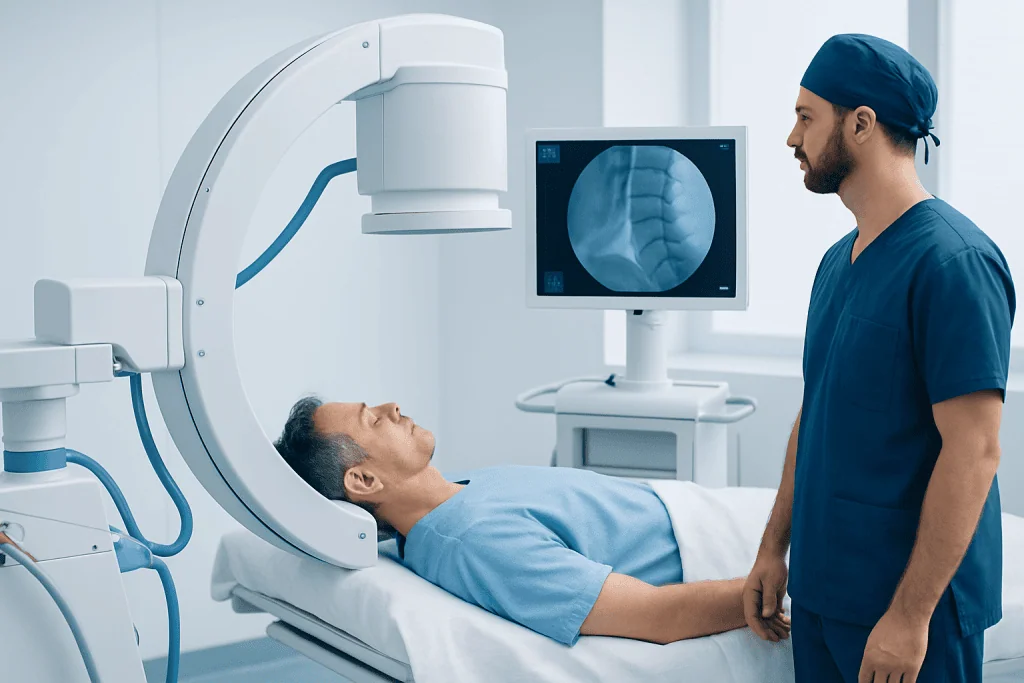
Lumbar disc replacement may benefit carefully selected adults with persistent low back pain linked mainly to one damaged lumbar disc, often after months of non-surgical treatment such as physical therapy, activity modification, and pain management. It is generally considered when the disc itself is believed to be the main pain source and the rest of the spine remains relatively healthy.
This option is often more suitable for people who do not have significant spinal instability, severe facet joint arthritis, marked osteoporosis, or major deformity. Surgeons also look at whether symptoms are mainly mechanical back pain rather than leg pain caused by severe nerve compression. Preserving motion can be appealing for younger or active patients when the anatomy is favorable.
A person may be less likely to benefit from disc replacement if several levels are severely degenerated, if there has been prior major surgery at the same level, or if there are conditions such as scoliosis or significant spondylolisthesis. In selected cases, a specialist may discuss disc replacement surgery as part of an individualized spine treatment plan.
Who may benefit from spinal fusion
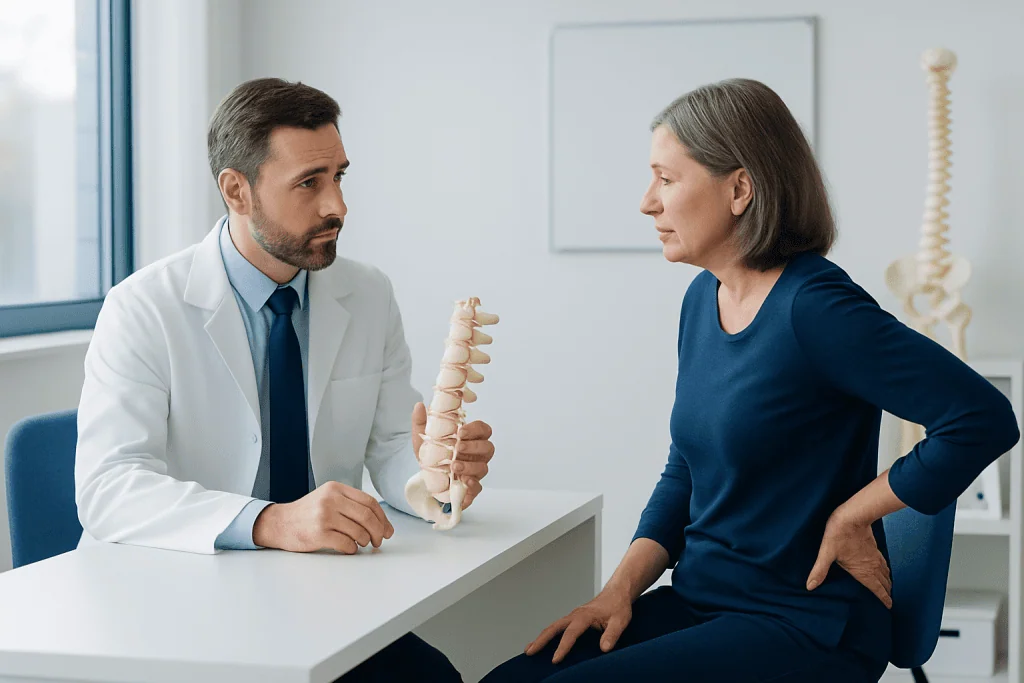
Spinal fusion may be the better choice when pain is associated with abnormal motion, spinal instability, deformity, or structural problems that need stronger support. It is often considered when there is spondylolisthesis, recurrent disc problems, segmental instability, advanced degeneration affecting the joints as well as the disc, or when a decompression procedure would leave the spine less stable.
Fusion can also be appropriate when more than one spinal level is involved, when there is significant arthritis in the facet joints, or when the spine has abnormal alignment that needs correction. In these situations, preserving motion may be less important than creating a stable, balanced spine and reducing painful movement.
Some patients undergoing treatment for nerve-related symptoms from stenosis or disc disease may need fusion along with decompression. Depending on the anatomy, a surgeon may discuss spinal fusion or related procedures after full clinical and imaging assessment. Fusion is not a last resort for everyone, but it is often the more suitable operation when stability is the main issue.
Symptoms and conditions that lead to surgical evaluation
Both procedures are usually considered only after symptoms have lasted for a meaningful period and interfere with daily life. Common symptoms include ongoing low back pain that limits sitting, walking, bending, work duties, sleep, or exercise. Some people also have stiffness, pain with certain movements, or repeated episodes that flare up despite conservative treatment.
Leg symptoms may or may not be present. Pain that travels into the buttock or leg can happen when a disc problem also affects nearby nerves. However, when severe nerve compression is the main issue, the treatment plan may focus first on decompression. Conditions that may be part of the picture include herniated disc and spinal stenosis, although these do not automatically mean either disc replacement or fusion is needed.
Doctors usually recommend surgery only when symptoms match the imaging findings and non-surgical treatments have not brought enough improvement. This is important because MRI changes in the lumbar spine are common, especially with age, and not every abnormal-looking disc is actually the source of pain.
How doctors decide between the two procedures
Choosing between lumbar disc replacement and spinal fusion starts with a careful diagnosis. The evaluation usually includes a detailed medical history, physical examination, and imaging such as X-rays and MRI. Dynamic X-rays may be used to assess movement and instability. In some cases, CT scans or other tests help clarify bone anatomy or prior surgical changes.
The surgeon considers several key questions: Is the pain coming mainly from one disc or from multiple structures? Is the spinal segment stable? Are the facet joints healthy enough for a motion-preserving implant? Is there deformity, osteoporosis, previous abdominal surgery, or another factor that changes the surgical approach? These details help narrow the safest and most effective option.
General health also matters. Smoking, diabetes, obesity, low bone density, and inflammatory conditions can affect healing and outcomes. Some people are better candidates for minimally invasive or standard decompression procedures, while others may need broader stabilization. A multidisciplinary assessment may include rehabilitation specialists, pain physicians, and spine surgeons to ensure that surgery is offered for the right reason.
Benefits, limitations, and recovery considerations
Lumbar disc replacement offers the potential benefit of preserving motion at the treated level. In selected patients, this may help maintain more natural spinal mechanics. It may also reduce stress on nearby levels in some cases, although long-term outcomes can vary and depend heavily on patient selection and surgical technique.
Spinal fusion has a long track record and can be highly effective when painful instability is present. By eliminating motion at a damaged segment, it can provide durable support and symptom relief for the right patient. However, because the treated bones must heal together, recovery and activity progression may be more dependent on bone healing than with disc replacement.
Both surgeries have possible risks, including infection, bleeding, nerve injury, implant-related problems, blood clots, persistent pain, or the need for additional surgery. Recovery differs from person to person, but both usually require a structured rehabilitation plan. Physical therapy, safe movement strategies, and gradual return to work or sport are important after either operation. In some patients, associated procedures such as microdiscectomy or decompression may be part of a broader spine care pathway rather than the final choice between replacement and fusion.
Non-surgical care before surgery is considered
Most patients are encouraged to try non-surgical treatment before considering lumbar disc replacement or spinal fusion, unless there is a more urgent neurological problem. This often includes targeted physical therapy, core strengthening, posture training, anti-inflammatory strategies, and guided activity modification. Weight management and stopping smoking can also improve symptoms and future surgical outcomes.
Other options may include pain management approaches such as supervised medications, selected injections, and short-term support for flare-ups. The aim is not only pain control but also finding out which movements, positions, and treatments help most. Some patients improve enough that surgery is no longer needed.
When conservative treatment does not restore acceptable function, surgery may become a reasonable next step. The best time for surgery is usually when the diagnosis is clear, symptoms are significantly affecting quality of life, and the patient understands the expected benefits and limitations of each procedure.
When to see a doctor and questions to ask
A person should seek medical evaluation for low back pain that lasts for weeks, repeatedly returns, or limits normal daily activities. Medical advice is especially important if pain is accompanied by numbness, weakness, difficulty walking, unexplained weight loss, fever, or bowel or bladder changes. These symptoms do not always mean a serious condition, but they do need prompt assessment.
It can be helpful to ask the surgeon why one procedure is being recommended over the other, what the main pain source appears to be, and whether the goal is motion preservation, decompression, stabilization, or correction of alignment. Patients may also ask about expected recovery, realistic activity levels after surgery, implant longevity, and whether adjacent spinal levels are affected.
For international patients who need specialist assessment, Acibadem International offers multidisciplinary spine evaluation and treatment in JCI-accredited hospitals. A well-informed decision, supported by experienced specialists and clear imaging findings, gives the best chance of choosing the most appropriate treatment for long-term function and comfort.
Frequently asked questions
Is lumbar disc replacement better than spinal fusion?
Not necessarily. Lumbar disc replacement may be a good choice for selected patients with one-level disc-related back pain and a stable spine, while fusion may be better when instability, deformity, or advanced joint degeneration is present. The best option depends on the diagnosis and overall spinal health.
Who is usually not a good candidate for lumbar disc replacement?
People with significant spinal instability, severe facet joint arthritis, osteoporosis, spinal deformity, or disease affecting multiple levels may not be ideal candidates. Prior surgery at the same level or certain anatomical factors can also make disc replacement less suitable. A spine surgeon determines eligibility after imaging and examination.
Does spinal fusion stop all movement in the back?
Fusion stops movement only at the operated spinal level or levels. The rest of the spine still moves, so most patients can continue many normal activities after recovery. However, flexibility may be somewhat reduced depending on how many levels are fused.
How long should non-surgical treatment be tried before surgery?
This varies, but many patients try structured conservative treatment for several weeks to months before surgery is considered. The timeline depends on pain severity, functional limitations, and whether neurological symptoms are present. Urgent symptoms such as progressive weakness or bowel and bladder problems need faster medical attention.
Can these surgeries help leg pain as well as back pain?
They can, especially if leg pain is related to a disc problem or nerve compression that is addressed during surgery. Still, the expected benefit depends on the exact cause of the symptoms. Clear matching between the patient’s symptoms, examination, and imaging usually predicts better outcomes.
What is recovery like after disc replacement or fusion?
Recovery is individualized and depends on the procedure, the number of levels treated, and the patient’s general health. Most people need a gradual return to activity with physical therapy and guidance on lifting, bending, and walking. Fusion recovery may be more influenced by bone healing, while disc replacement recovery focuses on safe movement and rehabilitation.
References
- National Institute of Arthritis and Musculoskeletal and Skin Diseases
- American Academy of Orthopaedic Surgeons
- North American Spine Society
- National Institute for Health and Care Excellence
- MedlinePlus
This article is for general information only and is not a substitute for professional medical advice. Please consult a qualified doctor about your individual situation.
Spinal Fusion in Turkey — costs, top hospitals & a free quote
JCI-accredited · board-certified surgeons · reply within 24h
Add us as a Preferred Source to see more of our trusted health content across Google Search, AI Overviews and Discover.