Cancer Warning Signs by Body Area: Head, Chest, Abdomen, and Skin

Cancer symptoms vary depending on the body area involved. Most warning signs are not caused by cancer, but persistent changes should not be ignored.
Key Takeaways
- Cancer symptoms vary depending on the body area involved.
- Most warning signs are not caused by cancer, but persistent changes should not be ignored.
- Red flags include unexplained lumps, bleeding, weight loss, pain, and changes in skin or bowel habits.
- Diagnosis may involve a physical exam, imaging tests, blood tests, or biopsy.
- Early medical assessment can help identify the cause and guide appropriate treatment.
Cancer warning signs can appear in different parts of the body, including the head, chest, abdomen, and skin. Many symptoms are caused by non-cancerous conditions, but changes that persist, worsen, or seem unusual should be evaluated by a doctor.
Overview
When people think about cancer, they often expect one clear symptom. In reality, cancer can cause a wide range of changes, and these often depend on the part of the body affected. Some signs are easy to notice, such as a new lump or a changing mole, while others are more general, such as unexplained weight loss, unusual tiredness, or pain that does not go away.
It is important to remember that many common symptoms are much more likely to be caused by infections, inflammation, benign growths, hormonal changes, or other non-cancerous conditions. Still, symptoms that persist, return frequently, or gradually worsen deserve medical attention. Paying attention to the body and seeking advice early can help clarify the cause.
This article explains possible cancer warning signs by body area, focusing on the head, chest, abdomen, and skin. It also outlines how doctors assess concerning symptoms and when a prompt medical evaluation is especially important.
General Warning Signs That Can Happen Anywhere
Some symptoms are not tied to one body area and can occur with many different illnesses, including cancer. These signs do not confirm cancer on their own, but they may prompt a doctor to investigate further, especially if they are new, unexplained, or ongoing.
Examples of general warning signs include:
- Unexplained weight loss
- Persistent fatigue that does not improve with rest
- Fever or night sweats without a clear cause
- Loss of appetite
- Ongoing pain that does not resolve
- Unexplained bleeding or bruising
- A lump or swelling anywhere in the body
These symptoms can also be linked to many treatable non-cancerous conditions. The main concern is a pattern of symptoms that lasts for weeks, becomes more noticeable, or appears alongside other unusual body changes.
Head and Neck Warning Signs
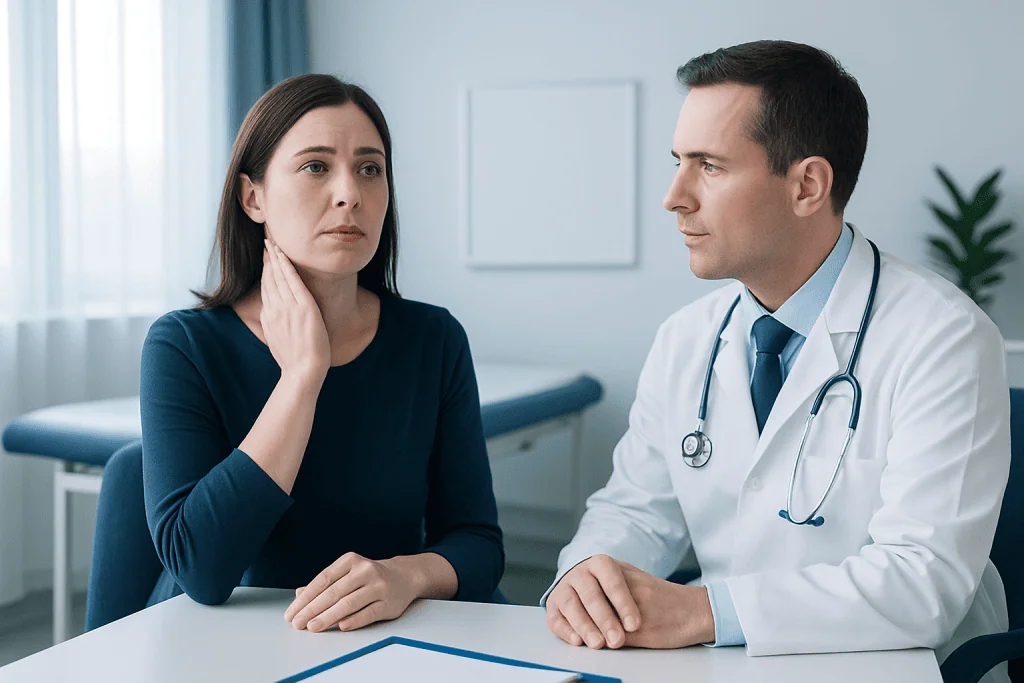
Warning signs in the head and neck area may involve the mouth, throat, voice box, sinuses, thyroid, brain, or nearby lymph nodes. A lump in the neck that does not go away, especially if it grows over time, should be assessed by a doctor. Persistent swollen lymph nodes can follow infections, but they may also need further evaluation if they remain enlarged.
Other symptoms that deserve attention include a sore throat that does not improve, hoarseness lasting more than a few weeks, difficulty swallowing, ongoing mouth ulcers, numbness in part of the face, frequent nosebleeds, or one-sided nasal blockage. White or red patches inside the mouth can also be important, particularly in people who use tobacco or drink alcohol regularly.
Some cancers affecting the brain can cause headaches, seizures, changes in vision, balance problems, weakness, or changes in speech or personality. These symptoms are not specific to cancer and may have many causes, but any new neurological change should be medically evaluated. If concerning findings are present, doctors may use imaging and, when necessary, brain tumor surgery as part of care planning.
Chest Warning Signs
The chest includes the lungs, breasts, esophagus, and nearby structures. A cough that lasts for several weeks, coughing up blood, unexplained shortness of breath, wheezing, or chest pain that persists can all be signs that need evaluation. These symptoms are often caused by infections, asthma, reflux, or other lung and heart conditions, but when they continue, a doctor may recommend further tests.
Changes in the breast are another important area to watch. A new lump, thickening, dimpling of the skin, nipple discharge, nipple inversion, or persistent redness should be assessed, even if there is no pain. Not every breast lump is cancer, but imaging and clinical examination help determine the cause. When breast cancer is diagnosed, treatment may include surgery such as breast cancer surgery.
Some people with cancers in the chest notice difficulty swallowing, a feeling that food is sticking, or unexplained weight loss. Ongoing hoarseness can also relate to conditions in the chest or neck. Persistent symptoms should be discussed with a healthcare professional rather than watched indefinitely at home.
Abdominal and Digestive Warning Signs
The abdomen contains many organs, so symptoms can vary widely. Warning signs may include ongoing abdominal pain, bloating that does not settle, a feeling of fullness after eating small amounts, unexplained nausea, vomiting, or a visible or palpable abdominal mass. While these are commonly linked to digestive issues such as gastritis, irritable bowel symptoms, gallbladder disease, or constipation, they may also need further investigation if they are persistent.
Changes in bowel habits are especially important when they are new and continue over time. These may include ongoing diarrhea, constipation, narrower stools, a feeling of incomplete emptying, or blood in the stool. Black, tar-like stools may suggest bleeding higher in the digestive tract. Persistent indigestion, difficulty swallowing, or recurring heartburn can also require assessment depending on the overall clinical picture.
Other abdominal warning signs include jaundice, which causes yellowing of the skin and eyes, unexplained weight loss, swelling in the abdomen, or blood in the urine. In some cases, doctors may investigate for conditions such as colon cancer or other digestive system cancers. Treatment planning depends on the exact diagnosis and may include surgery such as colon cancer surgery for selected patients.
Skin Warning Signs
The skin can provide visible clues that should not be overlooked. A new mole, a mole that changes in size, shape, or color, or a spot that looks different from others on the body should be checked. One helpful guide is the ABCDE rule for melanoma: asymmetry, irregular border, varied color, diameter that is increasing, and evolution over time.
Other concerning skin changes include a sore that does not heal, a scaly patch that keeps returning, a growth that bleeds easily, or a pearly or waxy bump. Skin cancers may also appear as flat reddish patches or firm nodules. Not all suspicious lesions are serious, but a doctor or dermatologist can decide whether a biopsy is needed.
People with fair skin, heavy sun exposure, frequent sunburns, many moles, or a family history of skin cancer may have a higher risk of certain skin cancers. A skin lesion that changes steadily or behaves differently from surrounding skin should be professionally assessed rather than self-treated for long periods.
How Doctors Diagnose Concerning Symptoms
Diagnosis begins with a careful medical history and physical examination. A doctor will usually ask when the symptom started, whether it is changing, what makes it better or worse, and whether there are associated symptoms such as fever, bleeding, appetite loss, or fatigue. Family history, smoking, alcohol use, occupational exposures, and prior medical conditions may also be relevant.
If a symptom appears concerning, testing may include blood work, ultrasound, X-ray, mammography, CT, MRI, endoscopy, or other targeted imaging. These tests help identify whether there is a structural problem, inflammation, infection, or a suspicious growth. In many situations, imaging alone cannot confirm cancer.
A biopsy is often the key test when cancer is suspected because it allows a tissue sample to be examined under a microscope. If cancer is found, additional tests may be done to determine its type and stage. This information helps the care team discuss the most appropriate treatment options, which may include surgery, systemic treatment, radiation therapy, or a combination of approaches.
Treatment, Prevention, and When to See a Doctor
Treatment depends entirely on the cause of the symptoms. If the problem is not cancer, treatment may involve medication, monitoring, or management of another underlying condition. If cancer is diagnosed, care is tailored to the type, location, stage, and the person’s overall health. Common options include surgery, chemotherapy, immunotherapy, targeted therapy, radiation therapy, or supportive care to relieve symptoms and maintain quality of life.
There is no guaranteed way to prevent cancer, but healthy habits can lower risk. These include avoiding tobacco, limiting alcohol, protecting the skin from ultraviolet exposure, maintaining a healthy weight, staying physically active, and attending recommended screening tests such as mammograms, cervical screening, or colon screening when appropriate. Vaccines such as HPV and hepatitis B vaccines can also help reduce the risk of certain cancers.
A doctor should be consulted if a symptom lasts for several weeks, worsens, keeps returning, or involves a lump, unexplained bleeding, trouble swallowing, blood in stool or urine, a breast change, a changing skin lesion, or unexplained weight loss. Urgent medical care is needed for severe breathing difficulty, significant bleeding, sudden neurological symptoms, or rapidly worsening pain. For international patients needing specialist evaluation, Acibadem International’s multidisciplinary teams in JCI-accredited hospitals diagnose and treat a wide range of cancers with individualized care.
Frequently asked questions
Are cancer warning signs always obvious?
No. Some cancers cause clear local symptoms, such as a lump or a changing mole, while others begin with vague symptoms like fatigue, weight loss, or mild pain. That is why persistent or unusual changes should be discussed with a doctor, even if they seem minor at first.
Does having one warning sign mean a person has cancer?
Not necessarily. Most warning signs have many possible causes, including infections, benign growths, hormonal changes, or inflammatory conditions. A medical evaluation helps determine whether testing is needed and what the most likely cause may be.
How long should a symptom last before it is checked?
There is no single rule for every symptom, but changes that last for several weeks, keep coming back, or steadily worsen should be assessed. Symptoms such as unexplained bleeding, a new lump, blood in the stool, or a changing mole should not be delayed.
What skin changes are most concerning for cancer?
A mole or spot that changes in size, shape, color, or height can be concerning, especially if it looks different from nearby moles. A sore that does not heal, a lesion that bleeds repeatedly, or a new unusual growth should also be checked by a healthcare professional.
Can young people have cancer warning signs too?
Yes. Although cancer becomes more common with age, it can occur in younger adults and, more rarely, in children. Any persistent, unexplained symptom deserves attention regardless of age.
What tests are commonly used to check possible cancer symptoms?
Doctors may use a physical exam, blood tests, ultrasound, X-ray, CT, MRI, mammography, endoscopy, or other imaging depending on the symptom and body area. If something suspicious is found, a biopsy is often needed to confirm whether cancer is present.
References
- World Health Organization
- National Cancer Institute
- American Cancer Society
- National Health Service
- Centers for Disease Control and Prevention
This article is for general information only and is not a substitute for professional medical advice. Please consult a qualified doctor about your individual situation.
Medical weight-loss options in Turkey — costs & eligibility
JCI-accredited · board-certified surgeons · reply within 24h
Add us as a Preferred Source to see more of our trusted health content across Google Search, AI Overviews and Discover.