How Kidney Stones Are Diagnosed: Urine Tests, CT Scans, and Ultrasound

Kidney stone diagnosis often starts with symptoms such as severe side or back pain, blood in the urine, nausea, or urinary urgency. Urine tests can help detect blood, crystals, infection, and substances that raise stone risk.
Key Takeaways
- Kidney stone diagnosis often starts with symptoms such as severe side or back pain, blood in the urine, nausea, or urinary urgency.
- Urine tests can help detect blood, crystals, infection, and substances that raise stone risk.
- CT scans are highly accurate for finding kidney stones, while ultrasound is often preferred in pregnancy and some other situations.
- Blood tests may show signs of infection, dehydration, kidney strain, or mineral imbalances linked to stones.
- Doctors may analyze a passed stone or order a 24-hour urine test to help prevent future stones.
Kidney stone diagnosis usually combines a medical history, physical exam, urine and blood tests, and imaging such as CT scans or ultrasound. The goal is to confirm whether a stone is present, see where it is located, and identify any blockage, infection, or cause that may affect treatment.
Overview of Kidney Stone Diagnosis
Kidney stone diagnosis is the process of confirming whether hard mineral deposits have formed in the kidneys or urinary tract. Because stone symptoms can overlap with other conditions, doctors usually use several tools together rather than relying on one test alone. These may include questions about symptoms, a physical examination, laboratory tests, and imaging.
The main aims of diagnosis are to find out whether a stone is present, how large it is, where it is located, and whether it is blocking urine flow. Doctors also look for complications such as infection or reduced kidney function, because these can require more urgent care.
In many cases, the first clues come from a person’s symptoms. Sudden, intense pain in the side or back, blood in the urine, nausea, vomiting, or pain during urination can all raise concern for stones. Even so, similar symptoms may occur with urinary tract infection, appendicitis, gallbladder disease, or other abdominal and pelvic problems.
A careful diagnosis also helps plan treatment and prevention. Some people pass a small stone on their own, while others may need procedures such as kidney stone treatment or ureteroscopy if the stone is larger, very painful, or causing blockage.
Symptoms That May Lead to Testing
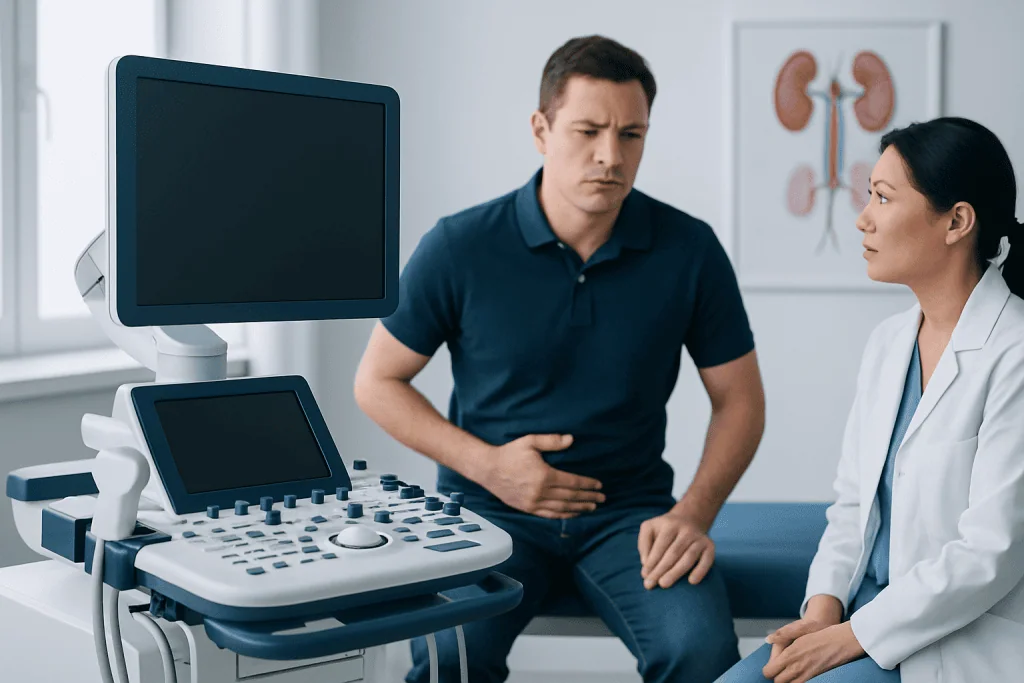
Doctors often begin testing when a person has symptoms that suggest a stone is moving through the urinary tract. The classic symptom is severe, cramping pain that starts in the back or side and may travel toward the lower abdomen or groin. The pain can come in waves and may be difficult to ignore.
Other symptoms can include pink, red, or brown urine, a frequent urge to urinate, burning with urination, nausea, and vomiting. Some people also notice that they pass only small amounts of urine or feel pressure in the bladder area. If a stone is near the bladder, urinary urgency may be more noticeable.
Not every kidney stone causes dramatic pain. Small stones may pass with only mild discomfort, and some stones are found unexpectedly during imaging done for another reason. Larger stones that stay in the kidney may sometimes cause dull aching rather than sudden attacks.
Fever, chills, weakness, or cloudy and foul-smelling urine can point to infection along with a stone. This matters because a blocked urinary tract plus infection can become serious and should be assessed promptly. Doctors may also consider related conditions such as kidney stones or other urinary disorders when reviewing symptoms.
Urine and Blood Tests

Urine tests are a basic part of kidney stone diagnosis. A standard urinalysis can show blood in the urine, which is common with stones, even when it is not visible to the eye. It can also detect crystals, changes in urine acidity, and signs of infection such as white blood cells or bacteria.
If infection is suspected, the doctor may request a urine culture to identify the germ causing it. This can help guide antibiotic treatment when needed. Urine testing may also help suggest what type of stone is more likely, although imaging and stone analysis provide additional information.
Blood tests are often used alongside urine tests. They may check kidney function, signs of inflammation or infection, and levels of minerals or substances linked to stone formation, such as calcium or uric acid. These results can be important both for immediate treatment and for understanding why stones developed.
In people who have repeated stones, a 24-hour urine collection may be recommended after the immediate episode has settled. This test measures the total amount of urine and the levels of calcium, oxalate, uric acid, citrate, sodium, and other substances over a full day. It can help doctors tailor prevention strategies more precisely.
How CT Scans Help Diagnose Kidney Stones
A CT scan is one of the most accurate imaging tests for kidney stone diagnosis. It can usually show the exact location, size, and number of stones anywhere in the urinary tract. CT also helps doctors see whether a stone is causing swelling of the kidney or obstruction of urine flow.
In emergency settings, a non-contrast CT scan is commonly used because it is fast and highly effective for detecting stones. It can also help identify other causes of severe abdominal or flank pain if a stone is not present. This makes it especially useful when the diagnosis is uncertain.
CT is not always the first choice for every patient. Because it uses radiation, doctors may avoid it or use it more selectively in pregnancy, in younger patients, or when repeated scans might be needed. In these situations, ultrasound may be preferred first, depending on symptoms and the clinical picture.
When a procedure is being considered, CT findings can help guide next steps. For example, stone size and location may influence whether watchful waiting is reasonable or whether treatment such as shock wave lithotripsy or another approach is more suitable.
When Ultrasound Is Used
Ultrasound is a common and useful test in kidney stone diagnosis, especially when avoiding radiation is important. It uses sound waves rather than X-rays, so it is often preferred for pregnant patients and may also be chosen as an initial test in children or some adults.
An ultrasound can show stones within the kidney and can also reveal indirect signs of blockage, such as swelling of the kidney. It is painless, does not require radiation, and can often be performed quickly. For many patients, these features make it a reassuring first imaging step.
However, ultrasound may miss very small stones or stones located in certain parts of the ureter, the tube that carries urine from the kidney to the bladder. Because of this, a normal ultrasound does not always completely rule out a stone if symptoms strongly suggest one. In some cases, additional imaging may still be needed.
Doctors interpret ultrasound results together with symptoms, urine findings, and blood tests. If the picture remains unclear, or if severe pain continues, they may recommend further imaging to get a more complete view of the urinary tract.
Other Imaging and Stone Analysis
Although CT and ultrasound are the most discussed tests, other imaging methods may also be used. A plain abdominal X-ray can sometimes show stones that contain calcium, but it is less detailed and may miss many stones. It is more often used in selected cases, such as follow-up for certain known stones.
In some situations, contrast studies or specialized imaging may be ordered to better understand the urinary tract anatomy or to look for complications. The choice depends on the person’s age, symptoms, pregnancy status, kidney function, and whether infection or another condition is suspected.
If a person passes a stone, saving it for analysis can be very helpful. Stone analysis can show whether it is made of calcium oxalate, uric acid, struvite, cystine, or another material. This information can guide long-term prevention and dietary advice.
Doctors may also evaluate for related urinary conditions if symptoms or imaging suggest them. For example, recurrent infections or unusual urinary findings may lead to assessment for other causes, including urinary tract infection or structural problems affecting urine flow.
What Happens After Diagnosis
After kidney stone diagnosis, treatment planning depends on the size and location of the stone, the intensity of symptoms, and whether there is blockage or infection. Small stones often pass on their own with hydration, pain control, and close follow-up. Doctors may also advise straining the urine so the stone can be collected for analysis.
Larger stones, persistent pain, ongoing vomiting, reduced kidney function, or signs of infection may require more active treatment. Options can include medicines to support stone passage in selected cases, or procedures to break up or remove the stone. The best choice varies from person to person.
Follow-up is important even after symptoms improve. A doctor may repeat imaging or urine testing to confirm that the stone has passed and that the urinary tract is no longer blocked. People with repeated stones may need a broader metabolic evaluation to reduce the chance of future episodes.
Near the end of care planning, some patients may benefit from multidisciplinary support, especially if stones recur or coexist with other urologic issues. Acibadem International’s multidisciplinary specialists in JCI-accredited hospitals diagnose and treat kidney stones for international patients, using imaging, laboratory assessment, and individualized urology care.
When to See a Doctor
A person should seek medical care if they have severe side or back pain, visible blood in the urine, repeated vomiting, or pain that does not improve. These symptoms do not always mean a kidney stone, but they do need proper evaluation. Prompt assessment helps confirm the cause and relieve symptoms safely.
Urgent medical attention is especially important if pain is accompanied by fever, chills, confusion, faintness, or difficulty passing urine. These can be warning signs of infection or significant blockage. People with one kidney, chronic kidney disease, pregnancy, or a weakened immune system should also be assessed promptly.
Even after a stone passes, medical follow-up can still be useful. A doctor may review risk factors such as low fluid intake, diet, family history, bowel disease, obesity, or certain medications. This can help prevent future stones and identify any underlying problem that should be treated.
Anyone with repeated stone episodes should discuss a prevention plan with a qualified doctor. This may include hydration goals, dietary changes, urine and blood testing, and, when appropriate, referral to a urologist or nephrologist for ongoing management.
Frequently asked questions
What is the best test for kidney stone diagnosis?
There is not one single best test for every person. A CT scan is often the most accurate imaging test, while ultrasound is frequently used when avoiding radiation is important. Doctors usually combine imaging with urine and blood tests for the clearest diagnosis.
Can a urine test alone confirm a kidney stone?
A urine test can strongly support the diagnosis, but it usually cannot confirm a stone by itself. It may show blood, crystals, or infection, which are common with stones. Imaging is often needed to locate the stone and assess blockage.
Why would a doctor order an ultrasound instead of a CT scan?
Ultrasound does not use radiation, so it is often preferred in pregnancy and may be used first in children or some adults. It can detect stones in the kidney and show signs of obstruction. If results are unclear, a CT scan may still be needed.
Do blood tests help diagnose kidney stones?
Yes, blood tests can provide important supporting information. They may show kidney function changes, infection, dehydration, or high levels of substances such as calcium or uric acid. These findings can also help with prevention after the stone episode.
What should a person do if they think they passed a kidney stone?
If possible, they should try to save the stone and bring it to their doctor for analysis. Stone analysis can help identify the type of stone and guide prevention. Medical follow-up is still useful to confirm that no blockage remains.
When is kidney stone pain an emergency?
Kidney stone pain needs urgent medical attention if it comes with fever, chills, vomiting that prevents drinking, difficulty urinating, or signs of weakness or fainting. These symptoms can suggest infection, dehydration, or obstruction. Prompt treatment is important to protect kidney health.
References
- National Institute of Diabetes and Digestive and Kidney Diseases
- European Association of Urology
- American Urological Association
- National Kidney Foundation
- Mayo Clinic
This article is for general information only and is not a substitute for professional medical advice. Please consult a qualified doctor about your individual situation.
Ultrasound in Turkey — costs, top hospitals & a free quote
JCI-accredited · board-certified surgeons · reply within 24h
Add us as a Preferred Source to see more of our trusted health content across Google Search, AI Overviews and Discover.

Check-up & Preventive Medicine
Comprehensive health screenings designed for early detection and prevention.
3 specialists in this unit