Neuroimmune Disorders: How Diagnosis Is Made Step by Step

Diagnosis begins with a detailed medical history and neurological examination. MRI, blood tests, and spinal fluid analysis often help confirm inflammation or immune activity.
Key Takeaways
- Diagnosis begins with a detailed medical history and neurological examination.
- MRI, blood tests, and spinal fluid analysis often help confirm inflammation or immune activity.
- Doctors also rule out infections, vitamin deficiencies, stroke, and other conditions that can mimic neuroimmune disease.
- The exact tests depend on the symptoms, age, speed of onset, and which part of the nervous system may be affected.
- Early specialist evaluation can help shorten the time to diagnosis and treatment.
Neuroimmune disorders are conditions in which the immune system affects the brain, spinal cord, nerves, or muscles. Diagnosis is usually made in stages, combining symptoms, neurological examination, imaging, blood tests, and sometimes spinal fluid or nerve studies to identify the most likely cause.
Overview: What neuroimmune disorders are
Neuroimmune disorders are a group of conditions in which the immune system mistakenly targets part of the nervous system. This can involve the brain, spinal cord, optic nerves, peripheral nerves, or the connection between nerves and muscles. Well-known examples include multiple sclerosis, autoimmune encephalitis, neuromyelitis optica spectrum disorder, myasthenia gravis, and some inflammatory neuropathies.
Because these disorders can affect different parts of the nervous system, symptoms vary widely. One person may develop blurred vision and limb weakness, while another may have numbness, balance problems, seizures, memory changes, or unusual fatigue. This wide range is one reason diagnosis is not based on a single test.
Instead, doctors usually make the diagnosis step by step. They look for a pattern by combining the patient’s story, the neurological examination, imaging results, laboratory findings, and sometimes specialized procedures. The goal is not only to identify a neuroimmune disorder, but also to determine exactly which type is present and to exclude other causes that may look similar.
Step 1: Medical history and symptom timeline

The first step is a careful medical history. Doctors ask when symptoms began, how quickly they developed, whether they came and went or steadily worsened, and which body functions are affected. A symptom timeline is especially helpful because some neuroimmune disorders cause attacks or relapses, while others progress more gradually.
Important details include vision changes, limb weakness, numbness, pain, bladder or bowel symptoms, imbalance, speech difficulty, swallowing problems, facial weakness, seizures, confusion, personality changes, and severe fatigue. Doctors also ask about recent infections, vaccinations, pregnancy or postpartum changes, other autoimmune diseases, cancer history, and family medical history.
Medicines, supplements, alcohol use, toxin exposure, travel, and previous neurological events can also matter. In many cases, the history already helps narrow down whether the problem is more likely in the brain, spinal cord, peripheral nerves, or neuromuscular junction. This guides which tests are most appropriate next.
Step 2: Neurological examination
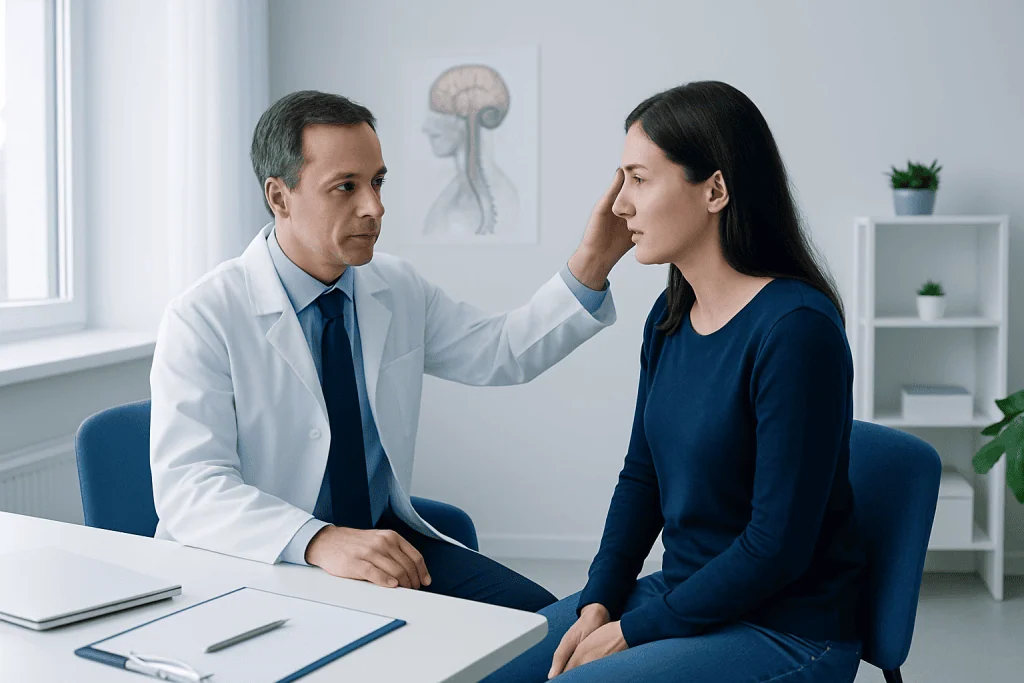
After the history, the doctor performs a neurological examination. This checks how well the nervous system is functioning and can provide clues about where inflammation or immune-related injury may be happening. The examination is usually painless and done in the clinic.
It may include testing strength, muscle tone, reflexes, coordination, sensation, walking, balance, eye movements, speech, memory, and cranial nerve function. For example, brisk reflexes and stiffness can suggest a problem in the brain or spinal cord, while reduced reflexes and sensory loss may point more toward peripheral nerve involvement.
The neurological examination does not usually provide the final diagnosis by itself, but it helps doctors localize the problem. Localization means identifying the most likely part of the nervous system involved. This step is essential because it determines whether the next tests should focus on the brain, spinal cord, optic nerves, peripheral nerves, muscles, or more than one area.
Step 3: MRI and other imaging tests
MRI is one of the most important tools in neuroimmune disorders diagnosis. It produces detailed images of the brain, spinal cord, and sometimes the optic nerves. Doctors use MRI to look for areas of inflammation, demyelination, swelling, scarring, or other structural changes that may support an immune-mediated condition.
Contrast dye may be used during MRI to show whether lesions are currently active. The location and appearance of lesions can help distinguish among different disorders. For example, some patterns are more typical of multiple sclerosis, while others may raise concern for neuromyelitis optica spectrum disorder or autoimmune inflammation of the brain.
Imaging also helps rule out other causes of neurological symptoms, such as stroke, tumor, bleeding, or spinal compression. Depending on the situation, doctors may request additional studies such as CT, vessel imaging, or optical coherence tomography for visual pathway assessment. When MRI findings and symptoms fit together, they strongly guide the next steps in the evaluation.
Step 4: Blood tests and immune markers
Blood tests help doctors look for inflammation, infection, vitamin deficiencies, metabolic problems, and immune system abnormalities. Basic tests may include blood count, electrolytes, liver and kidney function, thyroid function, vitamin B12, and markers of inflammation. These are useful because several non-immune conditions can mimic neuroimmune disease.
More specialized testing may search for autoantibodies linked to certain disorders. Examples include antibodies associated with myasthenia gravis, autoimmune encephalitis, or neuromyelitis optica spectrum disorder. In some situations, doctors also check for antibodies related to connective tissue diseases or other systemic autoimmune illnesses.
Blood tests are helpful, but they must be interpreted carefully. A positive antibody test does not always mean a person has that exact disease, and a negative result does not always exclude it. Doctors combine laboratory findings with symptoms, examination, MRI, and other studies before reaching a conclusion.
When the evaluation points to a specific condition, treatment planning may involve options such as immunotherapy or targeted neurological care, depending on the diagnosis and severity.
Step 5: Spinal fluid, nerve studies, and other specialized tests
If more evidence is needed, doctors may recommend a lumbar puncture, also called a spinal tap. This test collects cerebrospinal fluid, the liquid that surrounds the brain and spinal cord. The sample can be checked for inflammation, immune proteins, infection, and other markers that may support or challenge a suspected diagnosis.
In disorders such as multiple sclerosis, spinal fluid may show oligoclonal bands or other signs of immune activity in the central nervous system. In suspected autoimmune encephalitis, spinal fluid may reveal inflammation or help detect certain antibodies. The test also helps rule out infections, which is especially important before starting immune-suppressing treatment.
When symptoms suggest peripheral nerve or muscle involvement, nerve conduction studies and electromyography may be used. These tests measure how nerves and muscles respond to electrical signals. Evoked potentials, visual testing, EEG, or rarely biopsy may also be considered in selected cases. In complex situations, doctors may use a combination of electromyography studies and advanced imaging to build a more complete picture.
Step 6: Ruling out look-alike conditions
An important part of diagnosis is excluding other disorders that can mimic a neuroimmune disease. Infections, stroke, migraine, brain tumors, vitamin deficiencies, thyroid disease, medication side effects, genetic disorders, and functional neurological symptoms can all resemble immune-related neurological problems in some patients.
Doctors also consider whether symptoms may be related to systemic autoimmune disease, cancer-related immune reactions, or blood vessel inflammation. Sometimes the evaluation must be broadened if the presentation is unusual or if initial test results do not fit together clearly. This is one reason the process can take time.
Reaching the correct diagnosis matters because treatment differs greatly from one condition to another. For instance, a person with autoimmune encephalitis may need urgent immune-directed treatment, while someone with an infection needs a very different approach. A stepwise assessment helps avoid both under-treatment and unnecessary treatment.
Step 7: Confirming the diagnosis and planning care
Once enough clinical and test information has been collected, the neurology team reviews whether the findings meet accepted diagnostic criteria for a specific disorder. In some cases, the diagnosis is clear after the first round of testing. In others, repeat MRI scans, follow-up visits, or additional laboratory studies are needed before the picture becomes definite.
After diagnosis, treatment is tailored to the condition, its severity, and the area of the nervous system involved. Some people may need treatment to control a flare, while others need long-term therapy to reduce future attacks or manage ongoing symptoms. Rehabilitation, vision support, pain management, and mental health care may also be part of the plan.
Depending on the diagnosis, care may include approaches such as plasmapheresis for selected severe immune-mediated attacks, along with other therapies chosen by the specialist team. Near the end of the diagnostic journey, many patients benefit from care in a center with experience in neuroimmunology; Acibadem International’s multidisciplinary specialists and JCI-accredited hospitals diagnose and treat neuroimmune disorders for international patients.
Patients should feel comfortable asking what the leading diagnosis is, which tests were most informative, what alternatives were ruled out, and whether repeat testing is expected. Clear communication helps patients understand the process and take an active role in follow-up care.
When to seek medical attention
Prompt medical evaluation is important when new neurological symptoms appear, especially if they develop over hours to days or interfere with daily activities. Warning signs include sudden weakness, severe imbalance, new numbness, double vision, vision loss, confusion, seizures, trouble speaking, or difficulty swallowing.
Emergency care may be needed for rapid breathing problems, severe drowsiness, inability to walk, sudden major vision loss, or quickly worsening weakness. These symptoms do not always mean a neuroimmune disorder, but they should not be ignored because several urgent conditions can look similar.
Even when symptoms are milder, early assessment can help reduce delays in diagnosis. Keeping a record of when symptoms started, how long they lasted, and whether they improved or relapsed can be useful at the appointment. Anyone with ongoing or unexplained neurological symptoms should speak with a qualified doctor or neurologist.
Frequently asked questions
Can a neuroimmune disorder be diagnosed with one test?
Usually not. Diagnosis is typically based on a combination of symptoms, neurological examination, MRI findings, blood tests, and sometimes spinal fluid or nerve studies. Doctors also need to rule out other conditions that can cause similar symptoms.
Why does diagnosis sometimes take time?
Some neuroimmune disorders are difficult to distinguish from infections, stroke, vitamin deficiencies, or other neurological diseases. In certain cases, doctors need to repeat MRI scans or observe how symptoms evolve over time before they can confirm the diagnosis with confidence.
Is MRI always needed?
MRI is often a key part of the evaluation because it can show inflammation or lesions in the brain and spinal cord. However, not every patient needs the same imaging, and some diagnoses rely more heavily on blood tests, spinal fluid, or nerve studies.
What is a lumbar puncture, and why might it be recommended?
A lumbar puncture collects cerebrospinal fluid from the lower back for laboratory analysis. It can help detect immune activity, inflammation, or infection and may provide important evidence when MRI or blood tests do not give a complete answer.
Do positive antibody tests always confirm a diagnosis?
No. Antibody results must be interpreted in the context of symptoms, examination findings, and other tests. Some antibodies are strongly linked to specific disorders, but a doctor still needs to confirm that the overall clinical picture fits.
Should a person see a specialist in neuroimmunology?
If a neuroimmune disorder is suspected, specialist evaluation can be very helpful. Neuroimmunology teams are experienced in interpreting complex test results, recognizing look-alike conditions, and choosing the most appropriate treatment and follow-up.
References
- National Institute of Neurological Disorders and Stroke
- National Multiple Sclerosis Society
- American Academy of Neurology
- Mayo Clinic
- National Organization for Rare Disorders
This article is for general information only and is not a substitute for professional medical advice. Please consult a qualified doctor about your individual situation.
Joint and spine care in Turkey — expert assessment & treatment
JCI-accredited · board-certified surgeons · reply within 24h
Add us as a Preferred Source to see more of our trusted health content across Google Search, AI Overviews and Discover.

More from the Health Library



Related Specialists

Dr. Adnan Yüksek
Anesthesiology
Prof. Dr. Cihan Aksoy
Physical Medicine & Rehabilitation
Dr. Ayşe İrem İskenderoğlu
Aesthetic Plastic & Reconstructive Surgery
Prof. Dr. Muzaffer Çetingüç
Psychiatry