Is Sleep Medicine Part of Neurology?

Sleep medicine is a multidisciplinary field that includes neurology, pulmonology, psychiatry, ENT, and other specialties. Neurology is especially important when sleep problems involve the brain, nerves, movement, or the sleep-wake cycle.
Key Takeaways
- Sleep medicine is a multidisciplinary field that includes neurology, pulmonology, psychiatry, ENT, and other specialties.
- Neurology is especially important when sleep problems involve the brain, nerves, movement, or the sleep-wake cycle.
- Common neurologic sleep conditions include insomnia, narcolepsy, restless legs syndrome, REM sleep behavior disorder, and some parasomnias.
- Diagnosis may involve a sleep history, physical examination, sleep study, and sometimes brain or nerve-related testing.
- Treatment depends on the cause and may include sleep habit changes, medication, breathing support, or treatment of an underlying neurologic condition.
Sleep medicine is not limited to neurology, but neurology plays an important role in many sleep disorders. Because sleep is controlled by the brain and nervous system, neurologists often help diagnose and treat conditions that affect sleep quality, breathing during sleep, movement in sleep, and daytime alertness.
Overview: Is sleep medicine part of neurology?
Sleep medicine is a medical field focused on diagnosing and treating sleep disorders. It is not exclusively part of neurology, but neurology is one of the main specialties involved in sleep care. This is because sleep is regulated by complex brain networks that control circadian rhythm, alertness, dreaming, muscle tone, breathing patterns, and transitions between sleep stages.
In practice, sleep medicine is multidisciplinary. Depending on the problem, a patient may be assessed by a neurologist, pulmonologist, psychiatrist, ear, nose and throat specialist, pediatrician, or other physician with training in sleep disorders. For example, sleep apnea often overlaps with breathing and airway issues, while narcolepsy, parasomnias, or movement-related sleep disorders may require neurologic expertise.
Neurological sleep medicine is the area where these connections are most visible. It focuses on disorders linked to brain function, nerve signaling, movement during sleep, and disorders of wakefulness. When someone has unexplained daytime sleepiness, unusual behaviors during sleep, or sleep disruption linked to headaches, seizures, Parkinsonian symptoms, or nerve conditions, a neurologic evaluation may be especially helpful.
How the brain and nervous system control sleep
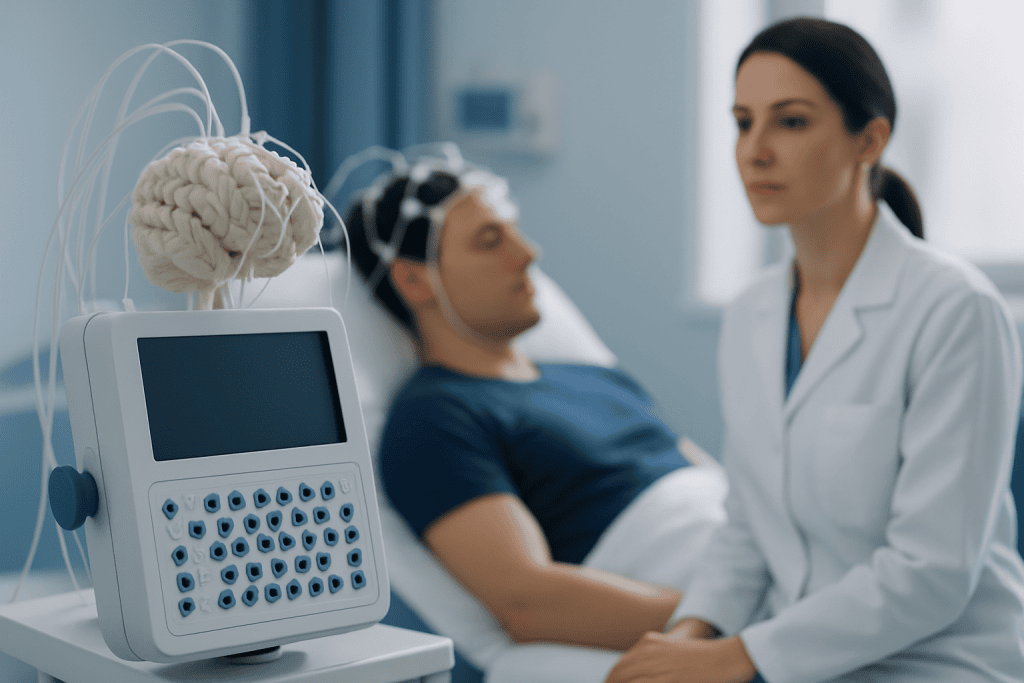
Sleep is an active biological process, not simply a period of rest. The brain organizes sleep into repeating cycles that include non-rapid eye movement (NREM) sleep and rapid eye movement (REM) sleep. Different brain regions help coordinate falling asleep, staying asleep, waking up, muscle relaxation, dreaming, and the timing of sleep across the 24-hour day.
The nervous system also helps regulate breathing, heart rate, movement, and sensory processing during sleep. If these systems are disrupted, a person may experience fragmented sleep, sudden awakenings, abnormal movements, vivid dream enactment, or excessive sleepiness during the day. This is one reason sleep complaints can sometimes be an early sign of a neurologic condition rather than a simple lifestyle issue.
Circadian rhythm, often called the body’s internal clock, also depends on brain pathways that respond to light and environmental cues. When this timing system is misaligned, people may struggle with falling asleep at the right time, waking too early, shift-work sleep problems, or jet lag-related symptoms. These concerns may be managed within sleep medicine and sometimes involve neurologic assessment when symptoms are persistent or complex.
Which sleep disorders are most related to neurology?

Some sleep disorders are strongly connected to neurologic function. These include narcolepsy, idiopathic hypersomnia, restless legs syndrome, periodic limb movement disorder, REM sleep behavior disorder, and many parasomnias such as sleepwalking or confusional arousals. Seizure disorders can also affect sleep, and poor sleep may in turn worsen seizure control in some people.
Insomnia is common and can have many causes, including stress, anxiety, pain, medications, irregular schedules, or underlying medical conditions. Although insomnia is not always neurologic, neurologists may be involved when it occurs alongside headaches, movement symptoms, neurodegenerative disorders, or unexplained daytime cognitive difficulties. In some cases, sleep disruption may overlap with epilepsy or other nervous system conditions.
Sleep-related breathing disorders such as obstructive sleep apnea are often managed by sleep specialists from different backgrounds, including pulmonology and ENT. However, neurologists may still play a role, especially when symptoms overlap with stroke recovery, neuromuscular disease, central sleep apnea, or persistent daytime fatigue. Sleep apnea can also contribute to memory problems, headaches, and reduced concentration.
- Narcolepsy and disorders of excessive daytime sleepiness
- Restless legs syndrome and periodic limb movements
- Parasomnias, including sleepwalking and REM sleep behavior disorder
- Sleep problems linked to seizures, neurodegenerative disease, or nerve disorders
- Selected breathing-related sleep disorders with neurologic features
Symptoms that may suggest a neurologic sleep disorder
Many sleep problems are common, and not every symptom points to a neurologic cause. Still, some patterns deserve closer attention. Excessive daytime sleepiness despite enough time in bed, sudden muscle weakness triggered by emotions, acting out dreams, repeated limb movements, unusual nighttime behaviors, and episodes that resemble seizures can all suggest a disorder involving brain or nerve function.
Other signs include morning headaches, poor concentration, memory difficulties, vivid hallucinations as a person falls asleep or wakes up, and sleep paralysis. In older adults, new dream enactment behaviors can sometimes be particularly important to assess because they may be associated with specific neurologic conditions. Persistent sleep disruption can also worsen mood, balance, reaction time, and overall quality of life.
Symptoms should be viewed in context. A doctor will usually ask about snoring, breathing pauses, medications, caffeine and alcohol use, work schedule, mental health, and any history of neurologic disease. Bed partner observations can be very helpful, especially when a person is unaware of movements, breathing changes, or unusual sleep behaviors.
How sleep disorders are diagnosed
Diagnosis begins with a detailed medical and sleep history. The clinician asks about bedtime routines, sleep duration, waking patterns, naps, daytime functioning, medications, and any symptoms such as snoring, movements, nightmares, or sudden sleep attacks. A physical and neurologic examination may help identify signs of nerve, muscle, movement, or cognitive problems that could be contributing to poor sleep.
When needed, the next step may include a sleep study. This may be an overnight in-laboratory polysomnography or, in selected cases, a home-based test for breathing-related sleep disorders. These studies measure sleep stages, oxygen levels, breathing, heart rhythm, and body movements. In patients with suspected narcolepsy or severe daytime sleepiness, additional daytime testing may be used to evaluate how quickly a person falls asleep and whether REM sleep begins unusually early.
Some patients may also need blood tests, actigraphy, medication review, or neurologic tests such as electroencephalography when seizures are a concern. Brain imaging is not required for most sleep disorders, but it may be recommended if the history suggests an underlying structural or neurologic problem. An accurate diagnosis matters because treatments differ widely depending on the cause.
Treatment options and the role of specialists
Treatment depends on the specific diagnosis. For insomnia, first-line care often includes behavioral approaches such as improving sleep routines and structured therapy for insomnia. For sleep apnea, treatment may include weight management, positional strategies, oral devices, or positive airway pressure support such as sleep apnea treatment. If enlarged tonsils, nasal obstruction, or another airway issue contributes to symptoms, an ENT assessment may also be helpful.
Neurologic sleep disorders may require more specialized care. Restless legs syndrome and periodic limb movements may improve with evaluation of iron status, medication review, and targeted treatment. Narcolepsy and hypersomnia are usually managed with individualized plans that combine lifestyle strategies with medicines when appropriate. Parasomnias and REM sleep behavior disorder are treated by improving safety, identifying triggers, and addressing any related neurologic condition.
Because sleep disorders often overlap with other systems, care is commonly shared across specialties. A patient with headaches may benefit from neurology evaluation, while someone with concerning dream enactment or movement symptoms may need assessment for related movement disorders such as Parkinson's disease. In more complex cases, a coordinated team approach helps connect sleep symptoms with the wider medical picture.
For international patients seeking evaluation, Acibadem International’s multidisciplinary specialists and JCI-accredited hospitals diagnose and treat sleep-related conditions with coordinated input from relevant departments when needed.
Self-care, prevention, and when to seek medical advice
Good sleep habits support almost every treatment plan. Helpful steps include keeping a regular sleep schedule, limiting caffeine late in the day, reducing alcohol close to bedtime, creating a dark and quiet sleep space, and avoiding heavy meals just before sleep. Regular exercise can improve sleep quality, although strenuous activity very late at night may keep some people awake.
Safety matters when unusual sleep behaviors are present. People who sleepwalk or act out dreams may need to remove sharp objects from the bedroom, secure windows, and consider sleeping arrangements that reduce injury risk. It is also important not to start or stop sleep medicines without medical advice, especially if there are breathing problems, neurologic symptoms, or significant daytime drowsiness.
Medical review is important if sleep problems last more than a few weeks, interfere with work or daily life, or are linked to snoring, breathing pauses, chest symptoms, blackouts, abnormal movements, or severe daytime sleepiness. A person should also seek care if they fall asleep unexpectedly, injure themselves during sleep, or develop new neurologic symptoms such as tremor, weakness, balance problems, or memory decline. Early assessment can help clarify whether the problem is primarily behavioral, respiratory, psychiatric, or neurologic.
Frequently asked questions
Is sleep medicine the same as neurology?
No. Sleep medicine is a multidisciplinary field, while neurology is one medical specialty that often contributes to sleep care. Neurology is especially relevant when sleep problems involve the brain, nerves, movement, seizures, or the sleep-wake cycle.
Should a person see a neurologist for sleep problems?
It depends on the symptoms. A neurologist may be helpful for excessive daytime sleepiness, unusual movements during sleep, dream enactment, suspected narcolepsy, seizure-related concerns, or sleep problems linked to neurologic disease. For snoring or suspected sleep apnea, other sleep-trained specialists may also be involved.
What is neurological sleep medicine?
Neurological sleep medicine focuses on sleep disorders that are closely tied to brain and nervous system function. It includes conditions such as narcolepsy, restless legs syndrome, REM sleep behavior disorder, parasomnias, and some cases of insomnia or sleep apnea with neurologic features.
Can sleep problems be a sign of a neurologic condition?
Yes, sometimes they can. Changes in sleep may occur with seizures, movement disorders, neurodegenerative disease, autonomic dysfunction, or other neurologic conditions. That does not mean every sleep complaint is neurologic, but persistent or unusual symptoms should be assessed by a qualified doctor.
How are neurologic sleep disorders tested?
Testing usually starts with a careful sleep and medical history, followed by an examination. Depending on the symptoms, a doctor may recommend an overnight sleep study, daytime sleepiness testing, blood tests, electroencephalography, or other neurologic assessments.
Can sleep disorders be treated successfully?
Many sleep disorders can be improved with the right diagnosis and treatment plan. Treatment may involve sleep habit changes, therapy, breathing support, medicines, or treatment of an underlying medical or neurologic problem. Follow-up is important because symptoms and treatment needs can change over time.
References
- American Academy of Sleep Medicine
- National Institute of Neurological Disorders and Stroke
- National Heart, Lung, and Blood Institute
- American Academy of Neurology
- Mayo Clinic
This article is for general information only and is not a substitute for professional medical advice. Please consult a qualified doctor about your individual situation.
Sleep Medicine in Turkey — costs, top hospitals & a free quote
JCI-accredited · board-certified surgeons · reply within 24h
Add us as a Preferred Source to see more of our trusted health content across Google Search, AI Overviews and Discover.
Check your numbers in seconds
BMI, calories, due date, blood pressure and 30+ more clinical calculators — free, instant, doctor-reviewed ranges.

More from the Health Library



Related Specialists

Tuğçe Doğan
Physical Medicine & Rehabilitation
Dr. Mustafa Şen
Pediatrics
Dr. Sibel Özbek
Pediatrics
Prof. Dr. Şule Arslan
Physical Medicine & Rehabilitation