

How to Prepare for Hospital Discharge in Turkey Before You Leave Your Room

Before you leave your hospital room, confirm five things: each medicine's dose and timing, your activity limits, warning signs that need urgent help, your paperwork, and how you are getting to your hotel or home. Ask for your discharge summary, prescriptions and test results in hand, plus a phone number to call if you feel worse.
Your discharge is confirmed, your bag is half packed, and the nurse says you can leave in an hour. What should you sort out before you walk out of that room? A few practical checks now make the next days much smoother.
This guide helps you organize medications, documents, transport, and follow-up, so you can go back to your hotel, apartment, or home with confidence.
At a glance
- Best time to prepare: Start the day before discharge if possible
- Main priorities: Medicines, instructions, documents, transport, and follow-up
- Who can help: Your nurse, doctor, discharge team, and international patient services
- Important documents: Discharge summary, prescriptions, test results, and fit-to-fly advice if needed
- If language is a concern: Ask for interpreter support before final instructions are given
- Before room exit: Confirm how to get help if symptoms change after discharge
Why discharge planning starts before you stand up to leave
Leaving the hospital is not just the moment you check out of your room. It is the handover between hospital care and your recovery in a hotel, apartment, family home, or on your journey back home. When you prepare before you leave the room, you reduce last-minute confusion and make it easier to rest once you arrive at your next destination.
For international patients, discharge can involve more moving parts than it does at home. You may need translated instructions, a new medication schedule, transport that avoids stairs or long walks, or advice about flying after treatment. If you wait until you are already in the corridor or car, small unanswered questions can become stressful.
At Acibadem International, the care team, ward staff, and international patient services can help you organize these details before discharge is finalized. That support is especially useful if you are managing recovery in an unfamiliar city such as Istanbul or if a companion is helping you with practical tasks.
What to confirm with your doctor or nurse before discharge

Before you leave your room, make sure you understand what is normal in the next few days and what is not. Ask what level of pain, swelling, tiredness, appetite change, or wound appearance is expected, and which symptoms mean you should call immediately or return for urgent review. It is much easier to ask these questions while your care team is still close by.
You should also ask about your activity limits. Find out whether you can walk freely, climb stairs, shower, lift bags, drive, work, or travel by plane. If you have had sedation, anesthesia, surgery, or a procedure affecting movement, digestion, breathing, or balance, practical restrictions may matter as much as medical instructions.
Useful questions include:
- When should I take my next dose of each medicine?
- What symptoms are expected during recovery?
- What warning signs mean I need urgent help?
- When can I eat normally, shower, exercise, or travel?
- Do I need wound care, dressings, or special equipment?
- When and how will my follow-up happen?
If anything is unclear, ask for the explanation again in simple terms. If English is not your preferred language, request interpreter support before the final discharge conversation so you do not have to rely on memory or informal translation later.
Documents you should have in your hand before you leave the room

One of the most helpful discharge steps is checking your paperwork before you physically leave. Once you are in a vehicle or back at your accommodation, missing documents can be frustrating to sort out. Keep everything together in one folder, envelope, or phone photo file, but remember that original paper copies may still be important.
Most patients should leave with a discharge summary, prescription details, and any key test or imaging reports relevant to ongoing care. If another doctor in your home country will continue treatment, these records make the handover smoother and can prevent repeat tests or misunderstandings.
Your document set may include:
- Discharge summary or medical report
- Prescription list with dosing instructions
- Procedure or operation notes, if appropriate
- Laboratory and imaging results
- Wound care or dressing instructions
- Follow-up appointment details
- Fit-to-fly or travel guidance, if needed
- Billing or insurance documents, if relevant
If you are receiving care through Acibadem International, ask the international patient team how records can be shared securely with your doctor back home. Also check whether any reports will be sent later and who to contact if you need an additional copy after you leave Turkey.
Medication, supplies, and what to pack before room exit
Medications are one of the most common sources of confusion after discharge, especially when drug names, packaging, or dosing schedules look unfamiliar. Before you leave, review each medicine one by one. Confirm why you are taking it, the dose, the timing, whether to take it with food, and how many days you should continue.
It also helps to physically separate what you need in the first 24 hours from the rest of your belongings. Keep pain relief, antibiotics if prescribed, dressing items, water, a phone charger, and your discharge papers within easy reach. If you are tired or uncomfortable during transport, you will not want to search through luggage.
Ask whether you need any supplies before going back to your accommodation, such as dressings, compression garments, mobility aids, or special nutrition items. If your hospital pharmacy or nearby pharmacy is involved, confirm opening hours and whether someone should collect medicines before you depart.
Finally, check your usual home medications too. Make sure you know which ones to restart, pause, or avoid. If you are unsure whether a prescription from home interacts with new treatment, ask before discharge rather than guessing later.
Planning the trip from hospital to hotel, apartment, or airport
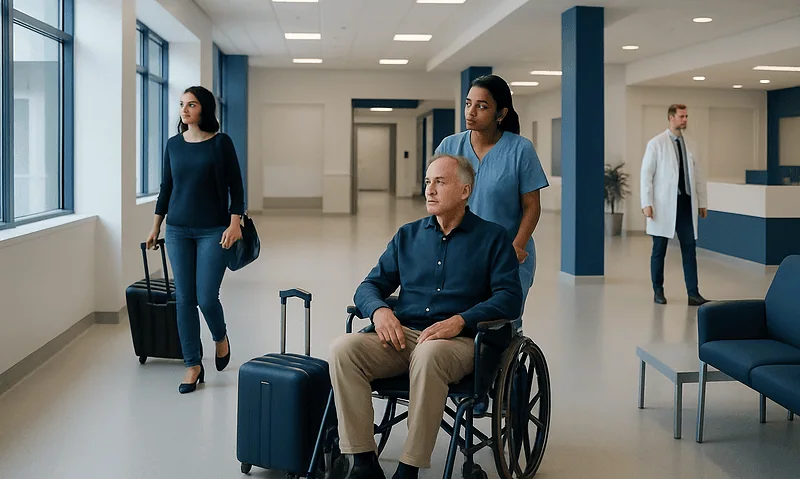
Your discharge is not complete until you know exactly how you are getting from the ward to your next stop. Think through the full route: wheelchair or walking assistance from the room, elevator access, car pickup point, travel time, traffic, and who will help with luggage. After treatment, even a short journey can feel longer than expected.
If you are going to a hotel or apartment, consider whether the room setup supports recovery. You may do better with a private room, easy bathroom access, fewer stairs, a quiet environment, and nearby food or pharmacy options. If you need rest, ask your companion to handle check-in, luggage, and extra purchases while you settle in.
If you are traveling onward by air or long-distance road soon after discharge, ask your doctor whether that plan is safe. Some patients need extra time before flying, hydration reminders, movement during travel, or written advice for airline staff. International patient services at Acibadem International may also help coordinate practical arrangements such as transport timing and accommodation support for overseas patients.
How to set up follow-up and know when to ask for help
Before you leave your room, make sure the next contact point is clear. Some patients need an in-person review, others a dressing check, test result discussion, or remote follow-up. Confirm the date, location, and whether you need to prepare anything such as fasting, photographs of a wound, or a list of symptoms.
You should also know exactly who to contact if you have a problem outside the planned follow-up. Ask for the phone number, department, or international patient contact for post-discharge questions. If you are an international visitor in Turkey, it is particularly important to understand what to do during evenings, weekends, or if your symptoms change while you are at your hotel.
Make sure you can describe urgent warning signs in simple terms. For example, ask what to do if you develop fever, increasing pain, unusual bleeding, breathing difficulty, fainting, vomiting, inability to drink, or wound changes. You do not need to memorize every detail if it is written down, but you should know where to find the instructions quickly.
This is also the right time to ask about the longer-term handover back home. If another doctor will continue your care, check whether you should arrange that appointment before you leave Turkey and which records they are most likely to need.
Step by step
- Ask for your discharge conversation before packing up. Try to speak with your nurse or doctor before you are fully dressed and ready to leave. That gives you time to clarify medicines, restrictions, and warning signs without feeling rushed.
- Review every medication one by one. Do not rely on a general summary such as "take these after meals." Confirm the name, purpose, dose, timing, and duration for each medicine, and ask what to do if you miss a dose or feel side effects.
- Check that all documents are complete. Before you leave the room, make sure you have your discharge summary, prescriptions, test results, and follow-up details together. If you need records in English or for a doctor back home, ask how and when they will be provided.
- Organize your first 24 hours after discharge. Pack the items you will need first in an easy-to-reach bag: medicines, water, phone, charger, tissues, and instructions. If you are going to a hotel or apartment, plan food, rest, and bathroom access before you arrive.
- Confirm transport and physical assistance. Know who is collecting you, where the pickup point is, and whether you need a wheelchair or help with luggage. If walking is difficult, mention it before discharge so support can be arranged safely.
- Save your follow-up and emergency contact details. Put the relevant phone numbers in your mobile before you leave the room. Include your hospital contact, international patient coordinator if you have one, and the details for your next appointment.
- Repeat back the key instructions in your own words. A simple recap helps catch misunderstandings early. You can say, "I will take this medicine tonight, avoid lifting, and call if I get fever or increasing pain" and ask the team to confirm that is correct.
Your checklist
- Discharge summary collected
- Prescriptions reviewed and next dose time understood
- Usual home medicines clarified
- Warning signs and emergency contact details written down
- Follow-up appointment date, place, and format confirmed
- Transport from hospital arranged
- Hotel, apartment, or home setup checked for recovery needs
- Interpreter support used if any instructions were unclear
- Important documents packed separately from main luggage
Key takeaways
- Start discharge planning before you leave your hospital room, not at the exit.
- Make sure you understand medicines, activity limits, and warning signs in clear language.
- Keep discharge papers, prescriptions, and follow-up details together and easy to access.
- Plan transport and your first 24 hours of recovery as carefully as the hospital stay itself.
- If you are visiting Turkey for treatment, use international patient services and interpreter support when needed.
Frequently asked questions
When should I start preparing for hospital discharge in Turkey?
Ideally, start the day before discharge or as soon as the team says you may be leaving soon. That gives you time to ask questions, organize medicines, and plan transport without unnecessary stress.
What documents should I take with me when I leave the hospital?
Most patients should leave with a discharge summary, prescriptions, and key test or imaging results related to ongoing care. You may also need follow-up instructions, wound care guidance, and travel-related medical advice if you are flying soon.
What if I do not fully understand the discharge instructions?
Ask for the information to be repeated in simpler terms and request interpreter support if needed. It is safer to clarify before leaving the room than to guess once you are back at your hotel or home.
Can I fly soon after being discharged from a hospital in Turkey?
That depends on your condition, treatment, and recovery progress. Always ask your doctor whether air travel is appropriate, whether you need to wait, and whether you need written fit-to-fly guidance or extra precautions during the journey.
Who should I contact if I feel unwell after discharge?
Before leaving, ask for the exact contact number and department for post-discharge concerns. If you are being supported through Acibadem International, the international patient team can also help direct you to the right service, especially if you are recovering in Turkey.
Should I arrange my follow-up before I leave the hospital?
Yes, if possible. Confirm whether your follow-up is in person or remote, when it should happen, and what symptoms or updates you should report before then.
What should I keep accessible during the trip from hospital to my accommodation?
Keep your discharge papers, medicines, water, phone, charger, and any immediate comfort items in a small separate bag. That way you do not have to open larger luggage if you feel tired, sore, or need instructions during the journey.
Add us as a Preferred Source to see more of our trusted health content across Google Search, AI Overviews and Discover.

References (2)
- Discharge Planning — MedlinePlus — medlineplus.gov
- CDC Travelers' Health — wwwnc.cdc.gov
More Patient Guides
Returning Home with New Medical Restrictions: A Travel Planning Guide
Returning home with medical restrictions: plan safe travel from Turkey with medical clearance, documents, medication and follow-up support.
8 min read
How to Prepare a Caregiver for Your Recovery at Home
Caregiver preparation for recovery at home helps you plan safe support, medicines, appointments and warning signs after treatment in Turkey.
8 min read
Remote Results Review After Returning Home: When to Book Your Next Check-In
Remote results review after treatment in Turkey helps you plan follow-up safely, understand results and know when to contact your care team.
8 min read
Compression Stockings for Travel After Treatment in Turkey
Compression stockings for travel after treatment in Turkey can support circulation, but use them only as advised by your care team.
8 min read