Childhood Seizures That Keep Returning: When to Evaluate for Pediatric Epilepsy

A single seizure does not always mean a child has epilepsy, but repeated unprovoked seizures should be assessed by a doctor. Seizures in children can look very different, from full-body shaking to brief staring spells or sudden loss of awareness.
Key Takeaways
- A single seizure does not always mean a child has epilepsy, but repeated unprovoked seizures should be assessed by a doctor.
- Seizures in children can look very different, from full-body shaking to brief staring spells or sudden loss of awareness.
- Diagnosis usually involves a detailed history, physical and neurological examination, and tests such as EEG and brain imaging when needed.
- Many children with epilepsy can be treated successfully with medication and ongoing follow-up.
- Urgent medical attention is needed for prolonged seizures, breathing problems, injury, or seizures that happen in clusters.
Repeated seizures in childhood do not always mean epilepsy, but they do need careful medical evaluation. Understanding the patterns, warning signs, and next steps can help families seek the right care early and with confidence.
Overview
Childhood seizures are episodes caused by sudden, abnormal electrical activity in the brain. They can affect movement, awareness, behavior, sensation, or a combination of these. Some seizures are isolated events linked to fever, illness, or temporary triggers, while others recur without a clear immediate cause.
Pediatric epilepsy is generally considered when a child has repeated unprovoked seizures or when a doctor determines there is an ongoing tendency for seizures to happen again. This distinction matters because not every seizure means epilepsy. Careful evaluation helps identify the cause, estimate the risk of future seizures, and guide treatment decisions.
Seizures can begin at any age in childhood, from infancy through adolescence. In some children they are brief and subtle, making them easy to overlook. In others they are more noticeable, with stiffening, rhythmic jerking, or collapse. Because seizure patterns vary widely, parents and caregivers often benefit from learning what to watch for and when specialist assessment is important.
Symptoms and How Seizures May Appear
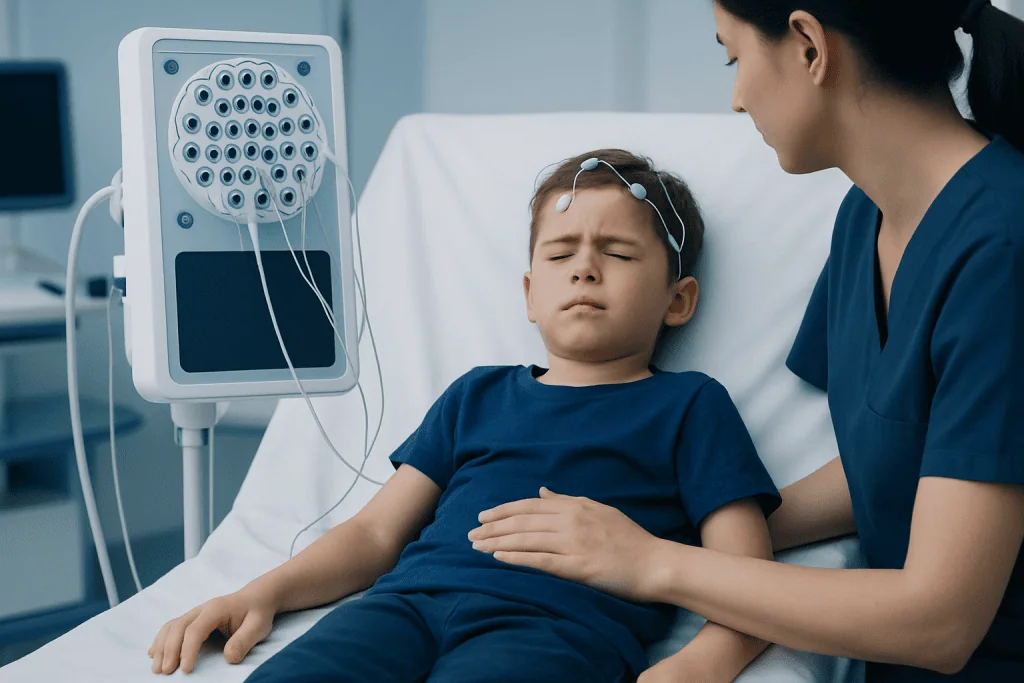
Seizures in children do not all look the same. Some involve full-body shaking and loss of consciousness, but others are much more subtle. A child may suddenly stare, stop responding, make repeated mouth movements, blink rapidly, become confused, or seem to freeze for a few seconds. In some cases, there may be sudden limpness, stiffening, jerking of one arm or one side of the body, or unusual sensations that older children can describe.
After a seizure, a child may feel sleepy, confused, have a headache, or need time to return to normal. This recovery period is often called the post-seizure phase. However, some seizure types are so brief that the child resumes normal activity almost immediately, especially in certain forms of generalized epilepsy.
Possible seizure-related signs include:
- Brief staring spells with loss of awareness
- Sudden body stiffening or rhythmic jerking
- Repetitive lip-smacking, chewing, or hand movements
- Sudden falls or loss of muscle tone
- Episodes of confusion, unresponsiveness, or unusual behavior
- Seizures during sleep
Not every event that resembles a seizure is epilepsy. Fainting, tics, breath-holding spells, migraines, sleep disorders, movement disorders, and some behavioral conditions can cause episodes that look similar. This is one reason why a detailed description of the event is so valuable during evaluation.
Causes and Risk Factors
Pediatric epilepsy has many possible causes. In some children, the reason is related to genetics or the way the brain developed. In others, seizures may follow a brain injury, stroke, infection, lack of oxygen around birth, metabolic disorder, or structural change in the brain. Sometimes no clear cause is found even after thorough testing, which can still be consistent with a valid epilepsy diagnosis.
Risk factors for recurrent seizures can include a family history of epilepsy, developmental differences, previous brain infections, head trauma, or known neurological conditions. Children with certain syndromes may also have a higher risk. In infants and very young children, the medical team may consider a broader range of causes, including genetic and metabolic conditions.
Fever-related seizures deserve special mention. Febrile seizures can occur in some children during a rapid rise in temperature, usually with a viral illness. Most febrile seizures are not the same as epilepsy, especially if they are simple, short, and happen in the expected age range. However, repeated seizures without fever, unusual prolonged febrile seizures, or seizures accompanied by developmental concerns may prompt further specialist review.
Because symptoms can overlap with other neurological conditions, doctors may also consider whether episodes are related to brain tumors, meningitis, or other disorders affecting the brain and nervous system. The goal is not to assume a serious cause, but to evaluate carefully and rule out important possibilities.
When Recurrent Seizures Should Be Evaluated
A child should be evaluated for pediatric epilepsy when seizures happen more than once without an obvious trigger, or when a single event is strongly suspicious for an unprovoked seizure. Assessment is also important if episodes are increasing in frequency, changing in pattern, occurring during sleep, or affecting learning, behavior, safety, or development.
Parents and caregivers should arrange medical review if a child has repeated staring spells, unexplained falls, sudden episodes of confusion, or unusual movements that keep happening. Even if the events are brief, a pattern of recurring episodes deserves attention. Video recordings, when safe to obtain, can be especially helpful because many seizures are not seen directly by a doctor.
Urgent or emergency care is needed when a seizure lasts more than a few minutes, happens one after another without full recovery, causes breathing difficulty, leads to serious injury, or occurs in a child who does not wake or respond as expected afterward. First-time seizures in infants, or seizures accompanied by high fever, stiff neck, severe illness, or persistent weakness also need prompt medical assessment.
Early evaluation can reduce uncertainty and help families understand whether the child needs monitoring, testing, or treatment. It also provides a chance to discuss seizure first aid, school planning, sleep habits, and safety at home and during activities.
How Pediatric Epilepsy Is Diagnosed
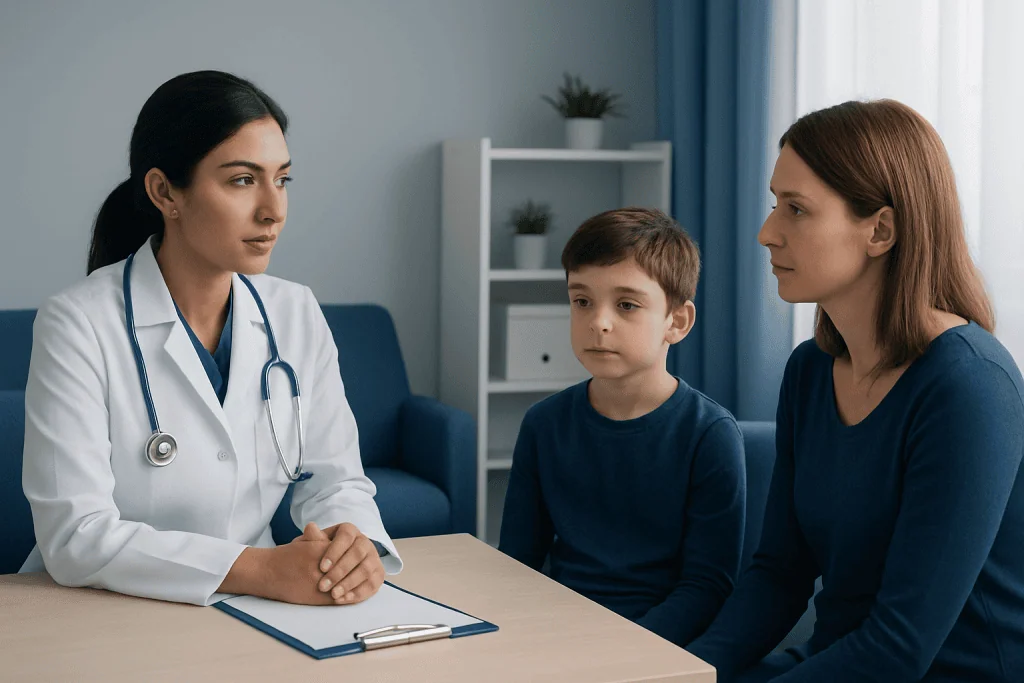
Diagnosis begins with a careful history. The doctor will ask what happened before, during, and after the episode, how long it lasted, whether there was fever or illness, and whether the child has had similar events in the past. Information about birth history, development, family history, medications, and school performance may also help build the full picture.
A physical and neurological examination follows. Depending on the child’s age and symptoms, the doctor may recommend an electroencephalogram, or EEG, which records electrical activity in the brain. EEG can help identify patterns that support an epilepsy diagnosis or suggest a specific seizure syndrome. In some cases, prolonged or video EEG monitoring is used to capture typical episodes and distinguish seizures from other conditions.
Brain imaging, often with MRI, may be recommended when doctors need to look for structural causes. Blood tests can help identify infection, metabolic problems, or other contributing factors. Some children may also need genetic testing, especially if seizures begin early, are difficult to control, or occur alongside developmental differences.
Specialized evaluation can be useful when the diagnosis is uncertain or seizures are complex. Tests may include EEG monitoring and brain MRI as part of a structured assessment. In some situations, referral to a pediatric neurologist or an epilepsy monitoring unit helps clarify the diagnosis and guide next steps.
Treatment Options and Ongoing Care
Treatment depends on the type of seizure, the cause, the child’s age, and how often seizures occur. Anti-seizure medications are usually the first treatment for pediatric epilepsy. The aim is to control seizures with the fewest side effects while supporting the child’s learning, sleep, and daily activities. Families are often advised to keep a seizure diary to track patterns and response to treatment.
Some children respond well to the first medication, while others may need adjustment, a different medicine, or combination therapy. If seizures continue despite treatment, the care team may review the diagnosis, repeat testing, or consider other approaches. For selected children, options may include dietary therapy, implanted devices, or epilepsy surgery after specialist assessment.
Supportive care is also important. Children with epilepsy may need help with school planning, mental well-being, sleep routines, and participation in sports or social activities. Many can lead active lives when seizures are well managed and safety measures are in place. The treatment plan should be reviewed regularly because needs can change as a child grows.
For children with complex or treatment-resistant seizures, advanced options such as epilepsy surgery may be discussed in carefully selected cases. Near the end of the care pathway, families may also seek support from centers such as Acibadem International, where multidisciplinary specialists in JCI-accredited hospitals evaluate and treat pediatric neurological conditions for international patients.
Prevention, Safety, and Self-care for Families
Not all seizures can be prevented, but families can reduce common triggers and improve safety. Regular sleep is important, because sleep deprivation can lower the seizure threshold in some children. Medications should be given exactly as prescribed, and follow-up appointments should not be missed. If a child is old enough, involving them in understanding their condition can support confidence and adherence.
Seizure first aid should be discussed with caregivers, relatives, and school staff. During a seizure, the child should be placed on their side if possible, protected from injury, and not restrained. Nothing should be put in the mouth. The event should be timed, because duration helps doctors decide how urgent the situation is and whether emergency medicine plans are needed.
Helpful daily precautions may include:
- Prioritizing good sleep habits
- Taking medicines consistently
- Supervising swimming and bathing
- Using helmets when appropriate for cycling or similar activities
- Informing school staff and caregivers about seizure first aid
- Keeping a record of seizure timing, symptoms, and possible triggers
Emotional support matters too. Recurrent seizures can be stressful for both the child and the family. Reassurance, clear information, and regular communication with the medical team can help families feel more prepared and less overwhelmed.
When to See a Doctor
A doctor should assess any first seizure, any repeated unexplained spell, or any event that raises concern for loss of awareness, unusual movements, or sudden collapse. Evaluation is especially important if the child has developmental regression, headaches, weakness, changes in behavior, trouble at school, or seizures that occur during sleep.
Emergency help is needed if a seizure lasts longer than a few minutes, if repeated seizures happen without recovery in between, if the child is injured, turns blue, has trouble breathing, or does not return to their usual state afterward. Infants and very young children should be assessed promptly because symptoms can be more difficult to interpret and the causes may differ from those in older children.
Parents do not need to decide on their own whether an event is definitely epilepsy. Their role is to notice patterns, document what they see, and seek professional advice. Early assessment by a qualified doctor gives the child the best chance of timely diagnosis, effective treatment, and safe daily life.
Frequently asked questions
Does one seizure mean a child has epilepsy?
No. A single seizure does not automatically mean pediatric epilepsy. Doctors usually look at whether the seizure was provoked by something like fever or illness, and whether there is an ongoing risk of future unprovoked seizures.
What is the difference between febrile seizures and epilepsy?
Febrile seizures happen in association with fever, usually in younger children, and most are not epilepsy. Epilepsy generally refers to repeated unprovoked seizures or a lasting tendency for seizures to recur.
How can parents tell whether a staring spell is a seizure?
A seizure-related staring spell may involve sudden unresponsiveness, blinking, lip-smacking, or an abrupt pause in activity. Because these episodes can be subtle, a doctor may recommend EEG testing or ask caregivers to record the event if it is safe to do so.
What tests are commonly used to diagnose pediatric epilepsy?
Doctors often begin with a detailed history and neurological examination. Common tests include EEG, and in some children brain MRI, blood tests, or genetic testing depending on age, symptoms, and suspected cause.
Can children with epilepsy live normal, active lives?
Many children with epilepsy can attend school, play, and take part in family life with appropriate treatment and safety planning. The exact level of activity depends on seizure control, the seizure type, and the child’s overall health.
When should a seizure be treated as an emergency?
Emergency care is needed if a seizure lasts more than a few minutes, repeats without recovery, causes breathing problems, or leads to injury. A child who remains unusually drowsy, unresponsive, or weak afterward should also be assessed urgently.
References
- World Health Organization
- International League Against Epilepsy
- American Academy of Pediatrics
- National Institute of Neurological Disorders and Stroke
- Centers for Disease Control and Prevention
This article is for general information only and is not a substitute for professional medical advice. Please consult a qualified doctor about your individual situation.
Pediatric Epilepsy in Turkey — costs, top hospitals & a free quote
JCI-accredited · board-certified surgeons · reply within 24h
Add us as a Preferred Source to see more of our trusted health content across Google Search, AI Overviews and Discover.

Neurology
Diagnosis and treatment of disorders of the brain, spinal cord, nerves and muscles.
51 specialists in this unit