

How to Prepare for Discharge and Your Flight Home After Treatment

Before you fly home, ask your treating team for a clear date when it is safe to fly and any in-flight precautions. Keep your discharge summary, prescriptions, medicine list, passport and insurance details in hand luggage, carry enough medicine for the journey plus delays, arrange airport assistance early, and make sure you know the warning signs and who to contact.
When exactly can you fly? And what should you have in your bag before you leave the ward? These are usually the two questions on your mind once discharge is mentioned.
Going home after treatment is easier when you know exactly what to organize before you leave the hospital and before you fly. This guide helps you plan your discharge, travel day, medicines, paperwork, comfort, and follow-up so you can travel home from Turkey with more confidence.
At a glance
- Best time to plan: Start 24-72 hours before discharge
- Main priorities: Fit to fly advice, medicines, documents, mobility support
- Travel essentials: Discharge summary, prescriptions, passport, insurance details
- Ask before leaving: When to seek urgent help and when follow-up is due
- Useful support: Interpreter, airport assistance, hotel and transfer coordination
Start with a clear discharge plan
Your journey home begins before you leave the hospital. As soon as your team starts discussing discharge, ask for a simple day-by-day plan for the next few days: when you can travel, what support you may need, which medicines to take, and which activities to avoid. This gives you time to arrange transport, packing, rest breaks, and any changes to your flight.
Before discharge, make sure you understand whether your travel home is straightforward or whether you need extra precautions because of pain, reduced mobility, drains, dressings, fatigue, or medication side effects. If you feel unsure, ask your care team to explain instructions in plain language and to write down the key points. If English is not your preferred language, interpreter support can help you and your companion leave with the same understanding.
At Acibadem International, international patient services can help coordinate practical details around discharge, including communication between you, your clinical team, and your travel arrangements. This can be especially helpful if your discharge timing changes or if your airline needs a medical note or special assistance request.
Know when you are fit to fly
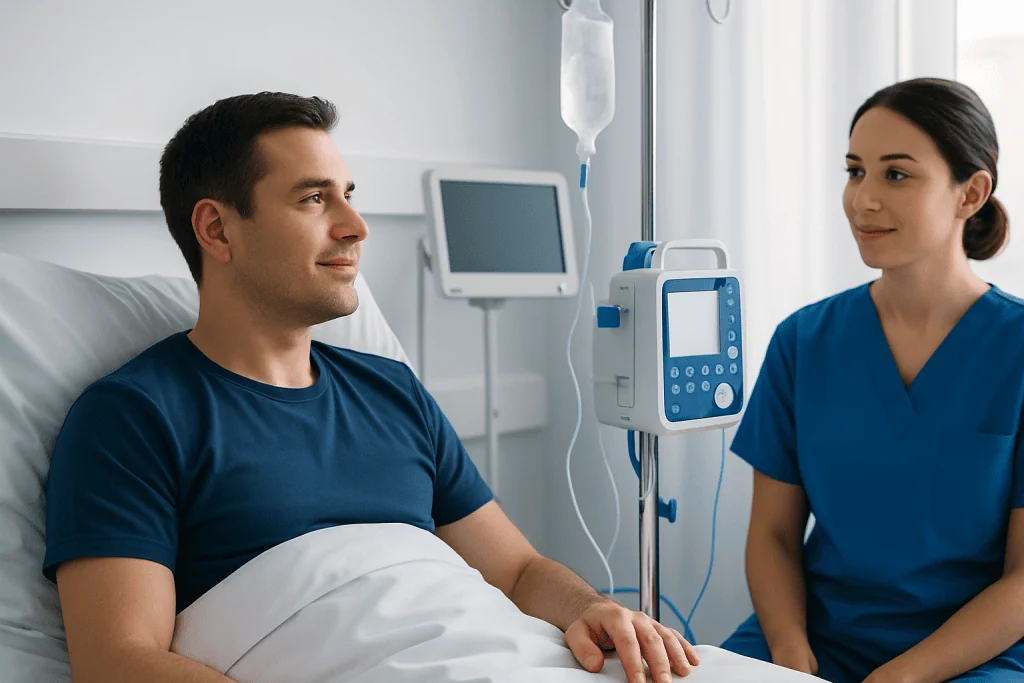
One of the most important questions is not simply when you want to go home, but when your doctor considers it safe for you to fly. The answer depends on your treatment, your recovery speed, pain control, mobility, wound care needs, and any risk of complications such as bleeding, swelling, infection, or blood clots. Ask for specific advice about the earliest recommended flight date and whether a direct flight is better than one with connections.
You should also ask whether you need any in-flight precautions. These may include wearing compression stockings if advised, walking periodically during the flight, doing ankle exercises in your seat, drinking enough water, limiting heavy lifting, or adjusting the timing of your medicines. If you have had recent surgery or another procedure, ask whether cabin pressure, prolonged sitting, or carrying luggage could affect your recovery.
If your airline requires medical clearance, ask for this early. Some passengers also need wheelchair assistance, priority boarding, or help moving through the airport. It is much easier to arrange these before travel day than at the airport itself, so confirm what is medically recommended and what should be requested from the airline.
Prepare your documents, medicines, and supplies
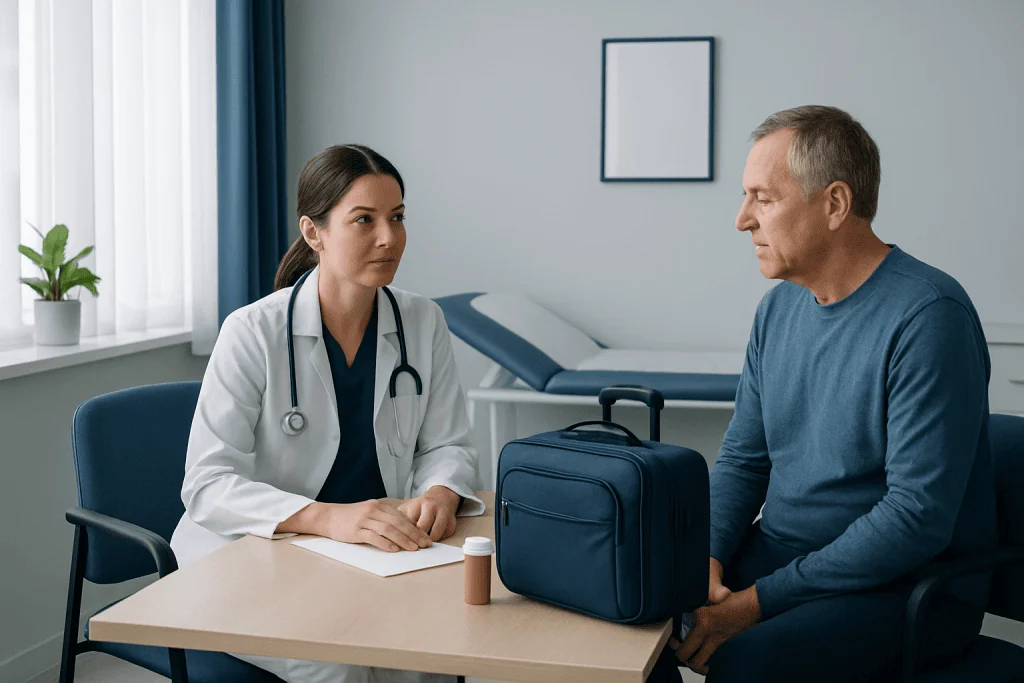
Before you leave the hospital or hotel, keep all important papers together in one easy-to-reach folder. At minimum, this should include your discharge summary, prescriptions, medicine list, recent test or imaging reports if provided, fit-to-fly or medical certificate if needed, passport, flight details, and insurance documents. Carry these in your hand luggage, not in checked baggage.
Check your medicines carefully before departure. Make sure you know each medicine name, why you are taking it, the dose, the timing, and how long to continue it. If you use pain relief, blood thinners, antibiotics, eye drops, injections, or wound products, ask exactly how to store them and what to do if your journey is delayed. Keep medicines in original packaging where possible, and carry enough for travel plus a small extra margin in case of delays.
You may also need practical supplies for the journey home. Depending on your treatment, this could include dressings, compression garments, a neck pillow, snacks that are easy on your stomach, wipes, a refillable water bottle to use after security, or a written schedule for medicines. If you are traveling with a companion, ask them to keep a copy of your key medical information too.
- Discharge summary and prescriptions
- Doctor’s contact or hospital contact details
- Fit-to-fly letter if required
- Enough medicines for the trip and first days at home
- Dressings or care supplies for 2-3 days if advised
Make the travel day physically easier
Travel day can feel much longer after treatment than it would on a normal trip. Try to conserve your energy. If possible, choose a route with fewer connections, allow extra time for airport procedures, and avoid carrying your own luggage. Arrange private transfer or a reliable car to the airport so you are not dealing with unnecessary strain, waiting, or sudden changes in temperature.
Dress for comfort and easy movement. Loose clothing, layers, slip-on shoes, and any medically advised support garments can make the day easier. Keep essential items within easy reach: medicines due during the journey, phone charger, tissues, water, a light snack, and any documents you may be asked to show. If sitting is uncomfortable, ask in advance whether aisle seating or extra legroom is appropriate for your situation.
If you are recovering from treatment at Acibadem International, your patient services team may be able to help coordinate transfers, accommodation timing, and communication around airport assistance. Even when your medical care is complete, practical coordination can reduce stress and help you focus on traveling safely and comfortably.
Plan for the first 48 hours after you land
Your return home is not the end of recovery; it is the next stage of it. Before you fly, think about what you will need in the first two days after arrival. Ideally, someone should meet you at the airport, help with luggage, and stay available in case you are tired, uncomfortable, or need help settling in. If you live alone, consider arranging support in advance.
Set up your home for a quiet first day back. Make sure you have easy access to water, food, prescribed medicines, pillows, phone charger, and a clean place to rest. If stairs are difficult, prepare a sleeping and resting area that minimizes movement. If your doctor has advised wound care, bathing restrictions, dietary adjustments, or limited activity, make sure those practical details are sorted before you arrive.
Follow-up should also be clear before you leave Turkey. Ask when your next review should happen, whether it will be online or with your local doctor, and what information should be shared. Acibadem International commonly supports international patients with records, follow-up coordination, and communication after departure, which can make the handover back home more manageable.
Know the warning signs and who to contact
Many patients worry that they will miss an important symptom once they are no longer near the hospital. The best way to reduce that worry is to ask for a specific list of warning signs before discharge. These may include worsening pain, heavy bleeding, fever, shortness of breath, chest pain, new swelling, drainage from a wound, severe nausea, dizziness, confusion, or difficulty passing urine, depending on your treatment.
Make sure you know which symptoms are expected and which mean you should seek urgent care. Ask two practical questions: who should you contact first, and what should you do if you are already traveling or have already arrived home? Save the relevant phone numbers in your mobile phone and keep them written on paper as well.
If you need urgent attention after landing, seek local emergency care without delay. Your hospital records can help local clinicians understand your recent treatment quickly, so keep your discharge documents accessible. It is always better to ask early than to wait and hope a worrying symptom will pass on its own.
Step by step
- Confirm your discharge date and travel readiness. Ask your doctor and nurse when discharge is likely and whether your current recovery is on track for flying home. If there is any chance of delay, speak to your airline and accommodation provider early so changes are easier to manage.
- Request fit-to-fly and movement advice. Ask whether you are safe to fly on your planned date and what precautions you should take during the journey. Be specific about walking, lifting bags, sitting for long periods, eating, hydration, and any compression or mobility advice.
- Collect your papers before leaving the hospital. Do not leave without your discharge summary, prescriptions, treatment notes, and any certificate needed for the airline or insurer. If something is unclear, ask for it to be explained again before you go.
- Organize medicines and aftercare supplies. Count your medicines and make sure you have enough for travel and the first days at home. Pack dressings, support garments, or other supplies in hand luggage if you may need them on the way.
- Arrange practical travel support. Book airport assistance if walking long distances, standing in queues, or carrying bags will be difficult. Confirm your transfer, check-in timing, and seating arrangements so travel day is as smooth as possible.
- Prepare your home or arrival support. Arrange for someone to meet you, help with transport, and stay nearby if needed. Make sure your home has simple meals, water, medicines, and a comfortable resting space ready.
- Set up follow-up and emergency contacts. Before departure, confirm when and how your follow-up will happen and who should receive your records at home. Save all important numbers, including the hospital contact, your local doctor, and emergency services.
Your checklist
- Discharge summary packed in hand luggage
- Prescriptions and medicine schedule reviewed and understood
- Enough medicine for the journey and first days at home
- Fit-to-fly letter or airline medical paperwork completed if needed
- Airport wheelchair or special assistance arranged if required
- Transfer to the airport confirmed
- Companion or pickup person informed of arrival time
- Follow-up plan and contact numbers saved in your phone
- Warning signs explained before leaving the hospital
Key takeaways
- Ask early whether you are medically fit to fly and what precautions apply to your journey.
- Keep all discharge papers, prescriptions, and medicines in your hand luggage.
- Arrange airport assistance and minimize physical strain on travel day.
- Plan your first 48 hours at home before you leave Turkey.
- Know the warning signs and exactly who to contact if you feel unwell.
Frequently asked questions
How soon can you fly home after treatment?
There is no single answer because it depends on your treatment, your recovery, and your doctor's assessment. Always ask your treating team for a clear recommendation on the earliest safe flight date and any in-flight precautions.
What documents should you carry on the flight home?
You should carry your discharge summary, prescriptions, medicine list, passport, flight details, and any medical certificate or fit-to-fly letter if required. Keep them in hand luggage so they are available if the airline, airport staff, or a doctor needs to see them.
Do you need to tell the airline about your recent treatment?
Sometimes yes, especially if you need wheelchair assistance, extra help boarding, medical equipment, or a fit-to-fly form. Contact the airline as early as possible because different carriers have different medical clearance processes.
How should you manage medicines during travel?
Keep medicines in your hand luggage, ideally in original packaging, and follow the schedule given at discharge. If you are crossing time zones or taking medicines at strict times, ask your care team to help you adapt the timing safely.
What if you feel unwell after landing at home?
If symptoms are severe or urgent, seek local emergency care immediately. For less urgent concerns, contact the hospital team or your local doctor using the follow-up plan you received before leaving.
Can Acibadem International help after discharge?
Yes, international patient services may help with practical coordination such as records, interpreter support, follow-up communication, and travel-related logistics. This can be useful when you are preparing to leave Istanbul or another city in Turkey and want a clearer handover home.
Add us as a Preferred Source to see more of our trusted health content across Google Search, AI Overviews and Discover.

References (1)
- Travelers' Health: Deep Vein Thrombosis and Pulmonary Embolism — wwwnc.cdc.gov
More Patient Guides
Returning Home with New Medical Restrictions: A Travel Planning Guide
Returning home with medical restrictions: plan safe travel from Turkey with medical clearance, documents, medication and follow-up support.
8 min read
How to Prepare a Caregiver for Your Recovery at Home
Caregiver preparation for recovery at home helps you plan safe support, medicines, appointments and warning signs after treatment in Turkey.
8 min read
Remote Results Review After Returning Home: When to Book Your Next Check-In
Remote results review after treatment in Turkey helps you plan follow-up safely, understand results and know when to contact your care team.
8 min read
Compression Stockings for Travel After Treatment in Turkey
Compression stockings for travel after treatment in Turkey can support circulation, but use them only as advised by your care team.
8 min read