Conjunctivitis in Children: When Red Eye Needs a Doctor Visit

Conjunctivitis can be viral, bacterial, allergic, or caused by irritation. Watery discharge is more common with viral conjunctivitis, while thicker pus-like discharge may suggest bacterial infection.
Key Takeaways
- Conjunctivitis can be viral, bacterial, allergic, or caused by irritation.
- Watery discharge is more common with viral conjunctivitis, while thicker pus-like discharge may suggest bacterial infection.
- Eye pain, light sensitivity, eyelid swelling, fever, or vision changes need medical assessment.
- Good hand hygiene helps reduce spread, especially in homes, nurseries, and schools.
- Treatment depends on the cause, so not every child with red eye needs antibiotic drops.
Conjunctivitis in children, often called pink eye, is a common cause of red, irritated eyes. Many cases improve with simple care, but some symptoms suggest a child should be assessed by a doctor promptly.
Overview of conjunctivitis in children
Conjunctivitis is inflammation of the conjunctiva, the thin clear tissue that covers the white part of the eye and lines the inside of the eyelids. In children, it commonly causes redness, watering, irritation, and discharge. Because it is so common, many parents recognize it quickly, but the cause is not always obvious from appearance alone.
People often use the term “pink eye” for conjunctivitis. In children, the most frequent causes are viral infections, bacterial infections, and allergies. Less commonly, the eye becomes red because of irritation from smoke, chlorine, dust, or a foreign body. Each cause can look similar at first, which is why a child’s age, symptoms, and general health are important.
Most cases are mild and settle without lasting problems. Still, a red eye should never be dismissed if a child has significant pain, trouble opening the eye, light sensitivity, reduced vision, or marked swelling. These features are less typical of simple conjunctivitis and may point to another eye problem that needs prompt medical care.
Symptoms and how pink eye may look in children
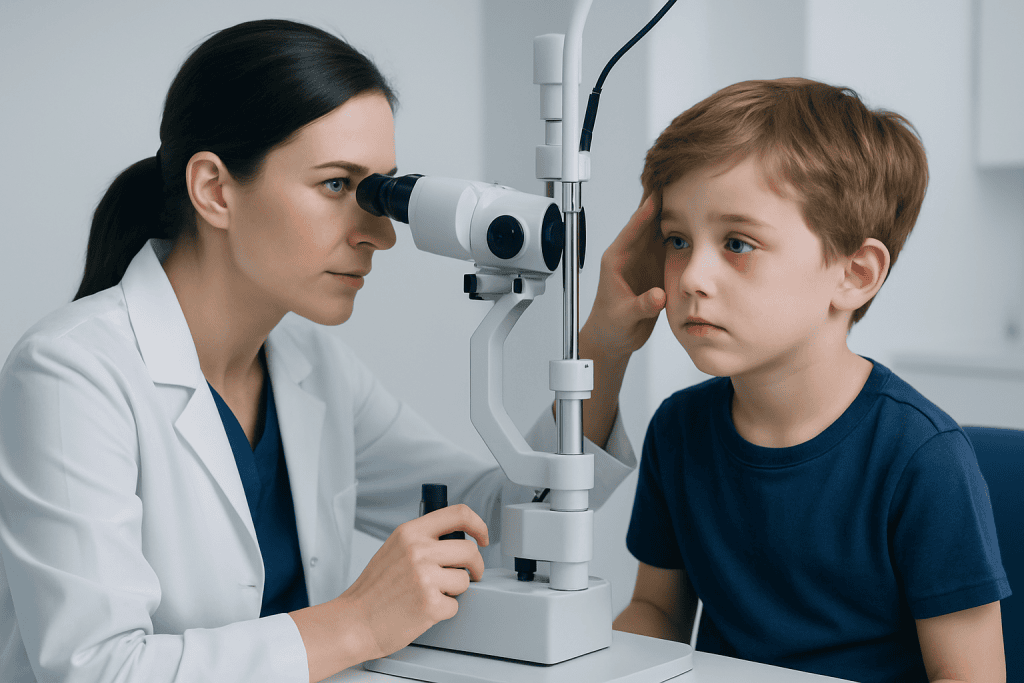
The main symptom of conjunctivitis is redness in one or both eyes. The eye may feel itchy, gritty, or mildly sore, and children may rub it frequently. Babies and younger children may not describe the sensation clearly, so signs such as fussiness, frequent touching of the face, or crusting on the eyelashes after sleep can be helpful clues.
The type of discharge can offer hints, though it does not confirm the cause on its own. Viral conjunctivitis often causes watery eyes and may come with a cold, cough, or sore throat. Bacterial conjunctivitis is more likely to produce thicker yellow or green discharge that can make the eyelids stick together, especially in the morning. Allergic conjunctivitis commonly causes intense itching, watering, and redness in both eyes, often alongside sneezing or a runny nose.
Some children also develop swollen eyelids, a mild burning feeling, or sensitivity to bright light. However, strong pain, significant light sensitivity, a cloudy-looking cornea, or any change in vision is not typical of uncomplicated conjunctivitis. If these occur, the child should be assessed by a doctor promptly.
- Red or pink appearance of the white of the eye
- Watery, sticky, or pus-like discharge
- Crusting on eyelashes or eyelids
- Itching, grittiness, or mild irritation
- Swollen eyelids
- Associated cold or allergy symptoms
Causes and risk factors
Viruses are a very common cause of conjunctivitis in children. These cases often spread easily through close contact, shared towels, unwashed hands, and respiratory droplets. A child may develop red eyes during or shortly after a common cold. Viral conjunctivitis often begins in one eye and then affects the other.
Bacterial conjunctivitis can also spread between children, particularly in daycare centers, schools, and households. It may be more likely when children touch their eyes often, have poor hand hygiene, or already have another upper respiratory infection. In some children, bacteria from the skin or nose can reach the eye and trigger infection.
Allergic conjunctivitis is not contagious. It happens when the eyes react to allergens such as pollen, dust mites, pet dander, or mold. Children with eczema, asthma, or allergic rhinitis may be more likely to develop it. Irritant conjunctivitis, by contrast, can follow exposure to smoke, chlorine from swimming pools, cosmetics, or a small object in the eye.
Some eye conditions can be mistaken for conjunctivitis, including blocked tear ducts in infants, corneal scratches, eyelid inflammation, or more serious infections. Contact lens use in older children and teenagers deserves extra attention because red eye in a contact lens wearer can sometimes be linked to corneal infection rather than simple conjunctivitis.
When a red eye needs a doctor visit
Parents should arrange a medical review if the diagnosis is uncertain, symptoms are worsening, or the child seems unwell. While mild conjunctivitis can often be managed conservatively, it is important not to assume every red eye is harmless. A doctor can help distinguish conjunctivitis from other eye problems that need different treatment.
Prompt medical attention is especially important if a child has moderate to severe eye pain, sensitivity to light, blurred vision, or difficulty keeping the eye open. A very swollen eyelid, fever with facial swelling, an injury to the eye, chemical exposure, or a history of contact lens wear should also lead to urgent assessment. Newborns with eye discharge or redness should always be examined by a healthcare professional.
Children should also be assessed if symptoms last longer than expected, keep returning, or do not improve with the advised treatment. If there is concern about a more complex eye problem, a pediatrician may refer the child for a detailed eye examination or specialist review. This helps protect vision and identify conditions that can resemble simple pink eye.
- Eye pain rather than mild irritation
- Light sensitivity or squinting
- Blurred vision or reduced vision
- Marked swelling around the eye
- Fever, lethargy, or the child appearing generally unwell
- Eye injury, chemical splash, or foreign body
- Red eye in a contact lens wearer
- Any red eye in a newborn
How doctors diagnose conjunctivitis in children
Diagnosis usually begins with a careful history and physical examination. The doctor asks when the redness started, whether one or both eyes are affected, what type of discharge is present, and whether the child has itching, pain, allergy symptoms, fever, or a recent cold. Information about nursery or school outbreaks, contact lens use, and possible exposure to irritants can also be useful.
The eye is then examined for redness pattern, discharge, eyelid swelling, and how the child responds to light. The doctor may check vision in an age-appropriate way and look for signs that suggest something other than routine conjunctivitis. In most straightforward cases, laboratory tests are not necessary.
If symptoms are severe, prolonged, or unusual, further assessment may be needed. A specialist may look more closely at the front of the eye to rule out corneal problems or other causes of red eye. Sometimes children with persistent symptoms may need evaluation for allergy-related eye disease or another condition such as keratitis, which affects the cornea and requires different care.
Treatment options and home care
Treatment depends on the cause. Viral conjunctivitis usually improves on its own with supportive care, such as gently cleaning away discharge, using a clean warm or cool compress, and encouraging the child not to rub the eyes. Bacterial conjunctivitis may be treated with antibiotic eye drops or ointment if a clinician feels they are appropriate. Allergic conjunctivitis is managed by reducing exposure to triggers and, in some cases, using allergy-focused eye treatments recommended by a doctor.
Parents should wash their hands before and after touching the child’s face or using eye medication. Any discharge can be wiped away gently with clean cotton or gauze moistened with sterile water or cooled boiled water, using a fresh piece each time. Shared towels, pillowcases, and eye products should be avoided until symptoms resolve.
Children should not use someone else’s eye drops, and leftover medication from a previous illness should not be restarted without advice. If a doctor prescribes treatment, it is important to use it exactly as directed and complete the course if instructed. If symptoms are not improving, the diagnosis may need to be reviewed, especially to rule out other eye problems such as uveitis or irritation related to a scratch on the eye.
In children with more complex or recurring symptoms, an ophthalmologist may recommend further evaluation and treatment planning. Depending on the findings, this may include specialist ophthalmology care to assess the eye surface, eyelids, tear film, and any underlying condition contributing to repeated episodes.
Prevention, school attendance, and self-care
Simple hygiene measures are the best way to reduce the spread of infectious conjunctivitis. Children should be encouraged to wash their hands often, avoid rubbing their eyes, and not share towels, washcloths, makeup, or pillowcases. Frequently touched surfaces can be cleaned regularly, especially if more than one family member has symptoms.
For allergic conjunctivitis, prevention focuses on limiting exposure to known triggers where possible. During high pollen periods, families may keep windows closed at certain times, rinse a child’s face after outdoor play, and discuss allergy management with a doctor. Avoiding smoke exposure is also helpful because smoke can worsen irritation even when allergy is the main cause.
School and daycare policies vary, and not every child with conjunctivitis needs to stay home. If the child feels well enough to participate and can manage hygiene, attendance may be possible depending on the guidance of the school and the doctor. A child who is unwell, has fever, or cannot avoid close contact and frequent eye touching may need to remain at home until symptoms improve.
Near the end of the care journey, some families may need specialist support if symptoms are persistent, severe, or difficult to diagnose. Acibadem International’s multidisciplinary specialists in JCI-accredited hospitals diagnose and treat eye conditions in children and adults, including cases that need advanced evaluation such as pediatric ophthalmology assessment.
Possible complications and outlook
The outlook for conjunctivitis in children is generally very good. Most children recover fully without any effect on vision. Viral and allergic forms often settle with time and supportive care, while bacterial infections usually improve with appropriate treatment when needed.
Complications are uncommon in straightforward conjunctivitis, but they can occur if the redness is actually due to another condition or if a more serious eye infection is missed. Persistent rubbing may also worsen irritation. This is why symptoms such as pain, marked swelling, or vision changes should always be taken seriously.
Parents do not need to feel alarmed when a child develops a red eye, but they should stay alert to warning signs. Early assessment when symptoms are unusual or severe helps ensure the right diagnosis and protects the child’s comfort and vision.
Frequently asked questions
Is conjunctivitis in children always contagious?
No. Viral and bacterial conjunctivitis can spread from person to person, but allergic conjunctivitis is not contagious. Irritation from smoke, chlorine, or a foreign body is also not contagious.
How can a parent tell if pink eye is viral or bacterial?
It is not always possible to tell at home. Watery discharge and cold symptoms often suggest a viral cause, while thicker yellow or green discharge may suggest bacterial infection. A doctor may be needed if the symptoms are unclear or more severe.
When should a child with red eye see a doctor urgently?
Urgent medical assessment is needed if the child has eye pain, light sensitivity, vision changes, marked swelling, injury, chemical exposure, or wears contact lenses. Newborns with red eye or discharge should also be seen promptly.
Do all children with conjunctivitis need antibiotic drops?
No. Antibiotics do not help viral or allergic conjunctivitis. They may be recommended for some bacterial cases, but treatment should be based on a clinician’s assessment.
Can a child go to school or daycare with conjunctivitis?
Sometimes yes, depending on how the child feels, how well hygiene can be managed, and local school or daycare rules. If the child is unwell, has fever, or is touching the eyes constantly, staying home may be more appropriate.
What is the safest way to clean a child’s sticky eye?
Hands should be washed first, then the discharge can be wiped gently with clean cotton or gauze moistened with sterile water or cooled boiled water. A fresh piece should be used for each wipe, and anything that touches the eye should not be shared.
References
- American Academy of Pediatrics
- American Academy of Ophthalmology
- Centers for Disease Control and Prevention
- National Eye Institute
This article is for general information only and is not a substitute for professional medical advice. Please consult a qualified doctor about your individual situation.
Conjunctivitis in Turkey — costs, top hospitals & a free quote
JCI-accredited · board-certified surgeons · reply within 24h
Add us as a Preferred Source to see more of our trusted health content across Google Search, AI Overviews and Discover.

Ophthalmology
Comprehensive eye care from laser vision correction to retina, cornea and cataract surgery.
75 specialists in this unit