Lab Tests vs Imaging Tests: Which Type of Diagnostic Exam Do You Need?

Lab tests measure substances or cells in samples such as blood, urine, or tissue. Imaging tests show the structure, size, and sometimes function of organs and body parts.
Key Takeaways
- Lab tests measure substances or cells in samples such as blood, urine, or tissue.
- Imaging tests show the structure, size, and sometimes function of organs and body parts.
- Doctors often use both types of tests together to reach a clearer diagnosis.
- The right diagnostic exam depends on symptoms, medical history, age, and the condition being considered.
- Many tests require little preparation, but some may involve fasting, contrast dye, or temporary activity limits.
Lab tests and imaging tests both help doctors diagnose, monitor, and guide treatment, but they answer different medical questions. Lab tests examine samples such as blood or urine, while imaging tests create pictures of organs, bones, or other body structures.
Overview: How Lab Tests and Imaging Tests Differ
When a person has symptoms or needs a routine health check, a doctor may recommend laboratory tests, imaging tests, or both. These exams are designed to gather different kinds of information. Understanding the difference can make the diagnostic process feel more predictable and less overwhelming.
Lab tests analyze samples taken from the body. Common examples include blood tests, urine tests, stool tests, and tissue samples. These tests can show how organs are functioning, whether infection or inflammation may be present, whether hormone levels are balanced, or whether there are signs of anemia, diabetes, kidney disease, or other conditions.
Imaging tests create visual pictures of the inside of the body. Examples include X-rays, ultrasound, CT scans, MRI scans, and mammography. These exams help doctors look at bones, lungs, blood vessels, soft tissues, or internal organs to identify structural changes such as fractures, swelling, tumors, stones, or fluid buildup.
In many cases, one type of test does not replace the other. Instead, they work together. For example, blood tests may suggest a liver problem, while imaging can help show whether the liver is enlarged, inflamed, or blocked. A doctor chooses the test based on the clinical question that needs to be answered.
What Lab Tests Can Show
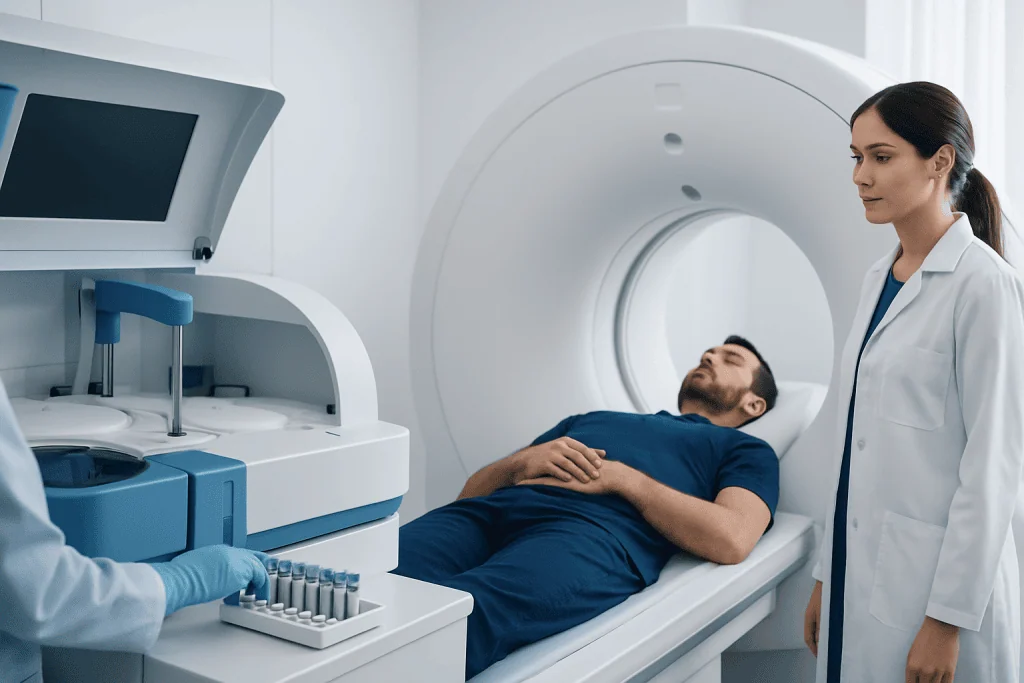
Lab tests are especially helpful when a doctor needs information about body chemistry, infection, immune activity, or how well organs are working. A complete blood count can show red cells, white cells, and platelets. Other blood tests can measure blood sugar, cholesterol, electrolytes, kidney function, liver enzymes, thyroid hormones, or markers of inflammation.
Urine tests can help detect dehydration, infection, kidney problems, or uncontrolled diabetes. Stool tests may help investigate digestive symptoms, bleeding, or certain infections. In some situations, a biopsy or tissue sample is needed to look more closely at abnormal cells under a microscope.
One of the strengths of lab testing is that it can detect changes before they are visible on a scan. For example, abnormal thyroid hormone levels or elevated blood glucose may be identified through bloodwork even when imaging would not be useful. Lab tests are also often used to monitor chronic conditions and to check how well treatment is working over time.
However, lab results usually need interpretation in context. An abnormal value does not always mean a serious illness, and a normal result does not always fully rule one out. Doctors compare the results with symptoms, medical history, physical examination findings, and sometimes other tests before making a diagnosis.
What Imaging Tests Can Show

Imaging tests are useful when a doctor needs to see anatomy or changes in body structure. An X-ray can reveal fractures, lung infections, or certain joint changes. Ultrasound is commonly used to examine the abdomen, pelvis, thyroid, blood flow, or pregnancy because it provides real-time images without radiation.
CT scans combine multiple X-ray images to provide more detailed cross-sectional views. They can be especially helpful in emergencies, trauma, suspected internal bleeding, kidney stones, or some cancers. MRI uses strong magnets and radio waves to show soft tissues in greater detail, making it valuable for the brain, spine, joints, and some internal organs.
Some imaging exams also provide functional information, not just structural detail. For example, echocardiography can show how the heart moves and pumps blood, while some nuclear medicine studies can show how tissues are working. Imaging can therefore help assess both the appearance and behavior of certain organs.
Still, imaging does not directly measure blood chemistry, hormones, or many infections. A scan may show that an organ looks normal even when a blood test suggests reduced function. That is why doctors often combine scans with lab work, especially when symptoms are not explained by one test alone.
How Doctors Decide Which Diagnostic Exam Is Needed
The choice between lab tests and imaging tests depends on the symptoms and the question the doctor is trying to answer. If a person has fatigue, unexplained weight change, or fever, blood and urine tests may be the best first step because they can quickly screen for infection, anemia, thyroid problems, diabetes, or inflammation. If a person has an injury, a new lump, severe abdominal pain, or persistent cough, imaging may be more informative.
Doctors also consider how urgent the situation is. In emergency settings, imaging may be used quickly to identify bleeding, fractures, or blocked organs. In non-urgent situations, basic lab work may be ordered first because it is widely available, relatively simple, and can narrow down possible causes before more specialized imaging is requested.
Age, pregnancy status, medical history, and current medications can also affect the decision. For example, ultrasound is often preferred in pregnancy when appropriate because it does not use ionizing radiation. Kidney function may be checked before some contrast-enhanced scans. If a patient has a pacemaker, metal implant, or claustrophobia, this may influence whether MRI is suitable.
Cost, availability, and the need to avoid unnecessary testing are also part of good medical practice. A careful medical history and physical exam remain important. The goal is not to do every possible test, but to choose the one most likely to provide useful, safe, and timely information.
Common Situations Where Both Are Used Together
Many health concerns are evaluated with both lab and imaging tests because each provides a different piece of the picture. For example, chest pain may require blood tests to look for heart muscle injury and imaging such as a chest X-ray or heart imaging to assess the lungs, heart size, or circulation. Abdominal pain may lead to blood tests for infection or liver function and an ultrasound or CT scan to look for gallstones, appendicitis, or kidney stones.
When doctors are investigating cancer, both approaches are often essential. Imaging can help locate an abnormal mass, estimate its size, and show whether nearby tissues are involved. Lab tests may assess overall health, organ function, tumor-related abnormalities, or readiness for treatment. In some cases, a biopsy is needed to confirm the diagnosis because tissue examination provides details that scans alone cannot.
Chronic conditions also often require a combined approach. A person with suspected thyroid disease may need blood tests first and then an ultrasound if a nodule is found. Someone with back pain may not need imaging immediately, but if symptoms persist or nerve problems appear, scans may be recommended while lab tests help rule out inflammation or infection. This can be relevant in conditions related to herniated disc or other spinal concerns.
Doctors may also use one test to guide the next. An abnormal lab result can trigger imaging, and an imaging finding can lead to bloodwork or tissue sampling. This step-by-step process helps avoid unnecessary exams while improving diagnostic accuracy.
Preparation, Safety, and What to Expect
Most lab tests are quick and minimally invasive. Blood tests usually involve a needle stick, while urine and stool tests require sample collection. Some blood tests require fasting for several hours, and others may need to be taken at a certain time of day. Patients should ask whether medicines, supplements, or recent exercise could affect results.
Imaging preparation varies by test. X-rays and ultrasound often need little preparation, although abdominal ultrasound may require fasting. CT or MRI scans sometimes involve contrast material to improve image detail. If contrast is used, the medical team may ask about allergies, kidney disease, pregnancy, or previous reactions.
Safety is an important part of diagnostic testing. Many imaging tests are very safe, but some use radiation, so doctors try to order them only when medically appropriate. MRI does not use radiation, but it is not suitable for everyone. Children and pregnant patients may need special considerations to limit exposure or choose a safer alternative.
Patients can help the process go smoothly by sharing complete medical information and asking questions about the purpose of the exam. If a doctor recommends advanced studies such as MRI scan, CT scan, ultrasound, or blood tests, understanding what each one is meant to show can make the experience easier and more reassuring.
Benefits, Limits, and Why Results May Need Follow-Up
No single test can answer every medical question. Lab tests are excellent for measuring internal body processes, but they may not show where a problem is located. Imaging can show where an abnormality is, but it may not explain its exact cause. A shadow on a scan, for example, might require bloodwork, repeat imaging, or biopsy to determine whether it is infection, inflammation, or another issue.
False positives and false negatives can happen with both types of tests. A false positive means a result looks abnormal even though there is no significant disease. A false negative means a test appears normal even though a problem is present. This is one reason doctors avoid interpreting test results in isolation.
Follow-up testing does not always mean that something serious has been found. Sometimes a result is borderline, unclear, or needs to be compared over time. Repeating a blood test, ordering another scan, or requesting a specialist opinion can simply be the safest way to reach a reliable conclusion.
For patients seeking coordinated evaluation, Acibadem International’s multidisciplinary specialists and JCI-accredited hospitals diagnose and treat a wide range of conditions for international patients. The most helpful next step is usually to discuss the results carefully with a qualified doctor who can explain what they mean in the context of the individual patient.
When to Ask About Testing
People may benefit from asking a doctor about diagnostic testing when symptoms are new, persistent, worsening, or unexplained. Examples include ongoing fatigue, fever, shortness of breath, chest discomfort, severe headache, abdominal pain, swelling, unexplained weight change, or changes in bowel or bladder habits. Screening tests may also be appropriate even without symptoms, depending on age, sex, family history, and personal risk factors.
It is reasonable for patients to ask why a test is being ordered, what it may show, whether there are alternatives, and how the result could change treatment decisions. Understanding the purpose of the exam can help a patient feel more involved and informed. It can also help set expectations about what the test can and cannot answer.
Urgent medical attention is important when symptoms suggest a possible emergency, such as sudden weakness, trouble speaking, severe chest pain, serious injury, difficulty breathing, or signs of significant bleeding. In those situations, timely imaging, lab tests, or both may be needed quickly. Delay should be avoided if symptoms are severe or rapidly changing.
In routine care, the best testing plan is individualized. A qualified healthcare professional can decide whether lab tests, imaging tests, or another diagnostic exam is the most appropriate next step based on the whole clinical picture.
Frequently asked questions
Are lab tests or imaging tests better?
Neither is universally better because they provide different kinds of information. Lab tests evaluate body fluids or tissues, while imaging tests show body structures and sometimes function. Doctors choose based on the symptom and the medical question that needs to be answered.
Can a blood test replace a scan?
Sometimes a blood test can provide enough information, but not always. Bloodwork can show infection, anemia, hormone imbalance, or organ dysfunction, but it cannot directly show fractures, tumors, or many structural problems. If a doctor needs to see inside the body, imaging may still be necessary.
Why would a doctor order both lab tests and imaging?
Doctors often use both to get a fuller picture. For example, blood tests may show inflammation or organ stress, while imaging can reveal where the problem is located. Using both together can improve diagnostic accuracy and help guide treatment.
Do imaging tests always involve radiation?
No. X-rays and CT scans use ionizing radiation, but ultrasound and MRI do not. The doctor selects the safest suitable test based on the patient’s age, symptoms, pregnancy status, and the area being examined.
Do all lab tests require fasting?
No, many lab tests do not require fasting. Some tests, such as certain glucose or lipid measurements, may require a period without food or drink except water. Patients should follow the preparation instructions given by their healthcare team.
What happens if test results are unclear?
An unclear result does not automatically mean there is a serious problem. The doctor may repeat the test, compare it with previous results, order a different type of exam, or refer the patient to a specialist. This stepwise approach helps improve accuracy and avoid unnecessary treatment.
This article is for general information only and is not a substitute for professional medical advice. Please consult a qualified doctor about your individual situation.
Explore treatments in Turkey — costs, top hospitals & a free quote
JCI-accredited · board-certified surgeons · reply within 24h
Add us as a Preferred Source to see more of our trusted health content across Google Search, AI Overviews and Discover.
Check your numbers in seconds
BMI, calories, due date, blood pressure and 30+ more clinical calculators — free, instant, doctor-reviewed ranges.

More from the Health Library
What Is a CT Scan and When Is It Needed?

Urine Test Results Explained: Infection, Protein, Blood, and Other Common Findings

What Is a Lab Test Panel and Why Are Tests Grouped Together?

Quest Diagnostics Walk-In Visits: What Patients Should Know

Common Reasons Doctors Order Lab Tests: Screening, Diagnosis, and Monitoring