Quest Diagnostics Walk-In Visits: What Patients Should Know

Quest Diagnostics walk-in visits are not guaranteed at every location or for every test. Many lab services are faster and easier when booked in advance, even if walk-ins are accepted.
Key Takeaways
- Quest Diagnostics walk-in visits are not guaranteed at every location or for every test.
- Many lab services are faster and easier when booked in advance, even if walk-ins are accepted.
- Patients should bring identification, insurance information if applicable, and any lab order or requisition from their clinician.
- Some specialized tests may require fasting, timed collection, or scheduled appointments.
- Checking location hours and preparation instructions in advance can help avoid delays.
Quest Diagnostics walk-in visits can be a convenient option for some routine laboratory services, but availability depends on the location, the test needed, and daily demand. Patients usually have the smoothest experience when they confirm local policies, bring the correct documents, and understand which tests may still require an appointment.
Overview
Quest Diagnostics walk-in visits refer to unscheduled arrivals for laboratory testing at a Quest patient service center. For many people, this can be a practical choice when a clinician has ordered routine blood work or other common lab tests and there is no time to book ahead. Walk-in access may be especially useful for busy schedules, last-minute orders, or patients who prefer flexibility.
At the same time, walk-in availability is not always the same from one location to another. Some sites welcome walk-ins during all business hours, while others may limit them to certain time windows or prioritize patients with appointments. Wait times can also vary widely depending on the day, staffing, and the type of test requested.
It is also important to understand that a walk-in visit is different from a full medical consultation. A laboratory patient service center generally collects specimens such as blood, urine, or swabs, but it does not usually replace a doctor’s evaluation. The ordering clinician remains the main source for interpreting results and deciding on next steps.
How Walk-In Visits Usually Work
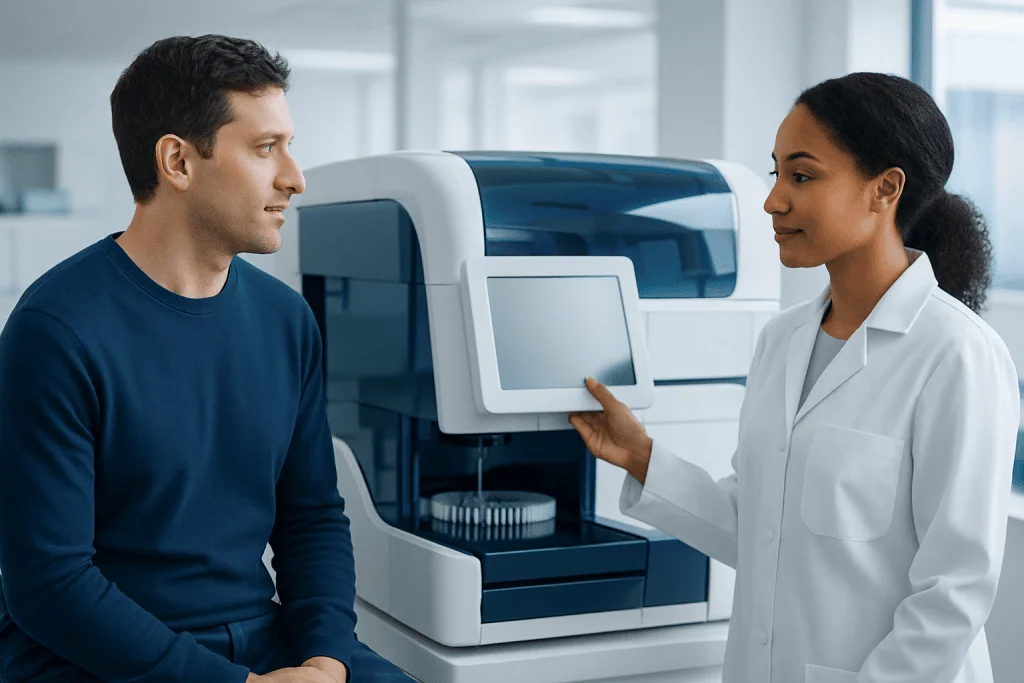
In most cases, a patient arrives at the laboratory location, checks in, and waits for an available staff member. Check-in may happen at a front desk, a kiosk, or through a mobile tool, depending on the facility. The team typically confirms the patient’s identity, reviews the test order, and checks any insurance or billing information before collecting the sample.
Common tests that may be handled during a walk-in visit include standard blood tests, urine tests, and some basic screening panels. However, certain services may have extra requirements. For example, some tests need morning collection, fasting, special containers, or a specific time schedule after taking medication.
Patients may be asked to return later or make an appointment if the requested test needs more preparation than a walk-in visit allows. This is one reason why confirming details in advance can be helpful. A short check before traveling may save time and reduce frustration.
- Check whether the chosen location accepts walk-ins.
- Confirm business hours and any peak times.
- Ask whether the specific test is available there.
- Review any preparation instructions before arrival.
What to Bring to a Walk-In Lab Visit

Being prepared can make a walk-in visit simpler and faster. Most patients should bring a valid photo ID and, if relevant, their insurance card. They should also have the clinician’s laboratory order, requisition number, or electronic test request available. Without the correct order details, the laboratory may not be able to perform the test.
If the visit relates to workplace screening, school forms, or pre-procedure testing, it is useful to bring any supporting documents that explain what is needed. Patients should also know whether they are expected to pay at the time of service, especially if insurance coverage is uncertain or the test was ordered outside a covered network.
Preparation instructions matter as much as paperwork. Some blood tests require fasting for several hours, while others may be affected by supplements, hydration status, or the time of day. Patients should follow the ordering clinician’s guidance carefully and ask questions if anything is unclear.
Which Tests May Need an Appointment Instead
Although many routine services can be completed during Quest Diagnostics walk-in visits, not every test is suitable for unscheduled arrival. Specialized collections, timed tests, and tests that need longer staff attention may require an appointment. Examples can include glucose tolerance testing, certain pediatric draws, fertility-related testing at specific times, and samples that need special handling.
Some specimen collections must follow strict protocols to produce accurate results. A timed hormone test, for instance, may need collection at a precise hour. A test affected by food intake may require the patient to fast properly beforehand. In these situations, a scheduled appointment helps the lab plan equipment, staffing, and timing more effectively.
Patients who are unsure whether a test can be done as a walk-in should check the test instructions or contact the location directly. This is especially important for children, older adults, or people with difficult veins who may benefit from quieter hours or more dedicated appointment time. In some cases, broader diagnostic evaluation may involve a health check-up or additional screening services through a medical center rather than a stand-alone lab visit.
Benefits and Limitations of Walk-In Testing
The main advantage of walk-in testing is convenience. Patients do not always need to wait days for an available appointment, and they may be able to complete lab work soon after seeing a clinician. For routine monitoring, this flexibility can help keep care on schedule.
Another benefit is simplicity. A walk-in visit may suit people who need only a quick blood draw or urine sample and do not require a lengthy discussion or procedure. When the test is straightforward and the location is not busy, the entire process can be efficient.
However, there are limitations. Wait times are often less predictable than with a booked appointment, and some locations may temporarily pause walk-in acceptance during high-demand periods. Patients also need to remember that a lab visit is only one part of diagnosis. Results may need follow-up with a clinician, and abnormal findings sometimes lead to further evaluation such as MRI or CT scan depending on the medical concern.
How to Prepare for a Smoother Experience
Patients can improve the chances of a smooth walk-in visit by planning ahead. It helps to choose a time when the laboratory may be less crowded, such as mid-morning or mid-week, though this can vary by location. Drinking water before many blood draws may make collection easier unless the clinician has given different instructions.
Comfort also matters. Wearing clothing with sleeves that can be rolled up easily may make blood collection quicker. Patients who feel anxious about needles can tell the staff in advance so the process can be handled more calmly. Those who tend to feel lightheaded may want to sit for a few minutes afterward and have a snack available if fasting is not required after the test.
Good communication is important as well. Patients should tell the staff if they are pregnant, have had previous problems during blood draws, have a bleeding disorder, or are taking blood-thinning medication. Sharing this information helps the team provide safer, more personalized care.
When to Seek Medical Advice Instead of Only a Lab Visit
A walk-in laboratory visit is useful for specimen collection, but it is not the right setting for symptoms that need urgent medical attention. Patients with chest pain, severe shortness of breath, fainting, heavy bleeding, signs of stroke, or a rapidly worsening condition should seek emergency care rather than going to a lab for routine testing.
Even for non-emergency concerns, it is best to speak with a qualified clinician before ordering or relying on tests alone. Symptoms such as unexplained weight loss, persistent fever, severe fatigue, or ongoing pain often need a full medical assessment. A lab result by itself may not identify the cause or guide treatment clearly.
After testing, patients should review results with the clinician who ordered them. That professional can explain whether the findings are normal, borderline, or abnormal in the context of the patient’s health history. For international patients who need coordinated testing and follow-up, Acibadem International’s multidisciplinary specialists and JCI-accredited hospitals provide diagnostic and treatment services across a wide range of conditions.
Frequently asked questions
Can patients always use Quest Diagnostics walk-in visits?
Not always. Walk-in availability depends on the individual location, the type of test, and how busy the center is that day. Some sites may accept walk-ins routinely, while others may strongly prefer appointments.
Do all lab tests qualify for a walk-in visit?
No. Many routine blood and urine tests may be possible as a walk-in, but some specialized or timed tests require scheduled appointments. Patients should confirm requirements before they travel to the lab.
What should a patient bring to a walk-in lab appointment?
Most patients should bring a photo ID, insurance card if applicable, and the clinician’s lab order or requisition details. It is also helpful to bring any written instructions about fasting or medication timing.
Is an appointment better than walking in?
In many cases, yes. An appointment can reduce waiting and may be necessary for tests with special timing or preparation needs. Walk-ins can still be convenient for straightforward routine testing when time flexibility is important.
Can a patient eat or drink before a walk-in blood test?
It depends on the test. Some tests require fasting, while others do not. Patients should follow the instructions from their clinician or the laboratory because eating or drinking at the wrong time can affect results.
What happens after the sample is collected?
After collection, the specimen is processed and sent for analysis. Results are usually reported to the ordering clinician, who explains what they mean and whether any follow-up is needed. Patients should contact their doctor if they do not understand the findings.
This article is for general information only and is not a substitute for professional medical advice. Please consult a qualified doctor about your individual situation.
Explore treatments in Turkey — costs, top hospitals & a free quote
JCI-accredited · board-certified surgeons · reply within 24h
Add us as a Preferred Source to see more of our trusted health content across Google Search, AI Overviews and Discover.

More from the Health Library

How to Read Common Blood Test Results Without Panicking

Walk-In Diagnostic Testing: When You Can Skip an Appointment

Lab Tests vs Imaging Tests: Which Type of Diagnostic Exam Do You Need?

Nerve Ultrasound in Neuromuscular Disease: When Imaging Adds Clarity

How Doctors Choose the Right Imaging Test for Symptoms