Aortic Aneurysm: How It Is Found and When Repair Is Advised
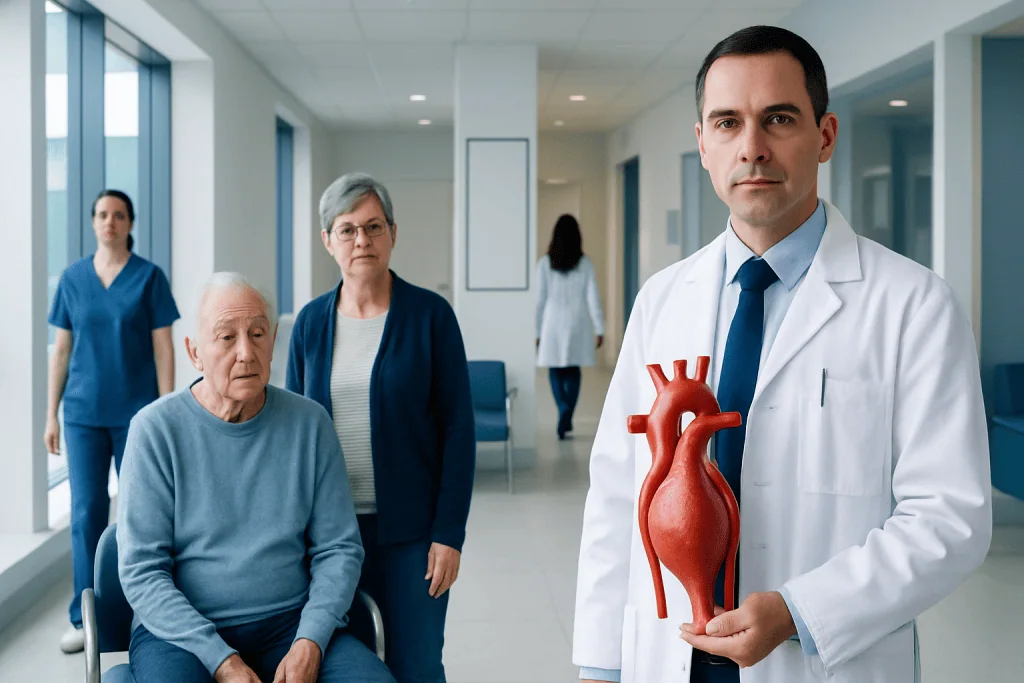
Many aortic aneurysms cause no symptoms and are found incidentally on scans or screening tests. Doctors assess aneurysm size, location, growth over time, and symptoms to judge rupture or dissection risk.
Key Takeaways
- Many aortic aneurysms cause no symptoms and are found incidentally on scans or screening tests.
- Doctors assess aneurysm size, location, growth over time, and symptoms to judge rupture or dissection risk.
- Small, stable aneurysms may be monitored regularly, while larger or symptomatic aneurysms often need repair.
- Treatment may involve open surgery or endovascular repair, depending on the aneurysm and the patient.
- Controlling blood pressure, avoiding smoking, and keeping follow-up appointments are central parts of care.
An aortic aneurysm is a weakened, bulging area in the body’s main artery. It is often found by imaging, and the decision to monitor or repair it depends on its size, location, growth rate, symptoms, and a person’s overall health.
Overview: What an Aortic Aneurysm Is
An aortic aneurysm is an abnormal widening or ballooning in the wall of the aorta, the large artery that carries blood from the heart to the rest of the body. When part of the aortic wall becomes weakened, it can stretch over time. This may happen in the chest, called a thoracic aortic aneurysm, or in the abdomen, called an abdominal aortic aneurysm.
Not every aneurysm is immediately dangerous, and many grow slowly. The main concern is that a larger or fast-growing aneurysm may tear in the inner wall of the aorta, known as a dissection, or rupture completely. These complications are serious, which is why careful diagnosis and follow-up are important even when a person feels well.
This condition is often discussed together with related aortic problems, including aortic dissection and widening of the abdominal aorta. Understanding where the aneurysm is located, how large it is, and whether it is changing over time helps doctors decide whether watchful monitoring or repair is the safer approach.
Symptoms and Warning Signs

Many people with an aortic aneurysm have no symptoms at all. In fact, aneurysms are commonly found during imaging done for another reason, such as a chest CT, abdominal ultrasound, or echocardiogram. This is especially true when the aneurysm is small.
When symptoms do occur, they often depend on where the aneurysm is located. A thoracic aortic aneurysm may cause chest pain, upper back pain, hoarseness, cough, or shortness of breath if it presses on nearby structures. An abdominal aortic aneurysm may cause deep abdominal discomfort, back pain, or a pulsing feeling in the abdomen.
Sudden, severe pain can be a warning sign of dissection or rupture and needs urgent medical attention. Symptoms may include abrupt chest, back, or abdominal pain, fainting, dizziness, weakness, or signs of shock. Although these complications are uncommon in small, stable aneurysms, they are the reason why doctors take changes in symptoms seriously.
Causes and Risk Factors

Aortic aneurysms usually develop because the artery wall weakens over time. Aging, high blood pressure, and atherosclerosis can all contribute to this process. Smoking is one of the most important risk factors, especially for abdominal aortic aneurysm, because it damages blood vessels and increases the chance of aneurysm growth.
Some aneurysms are linked to inherited conditions that affect connective tissue, such as Marfan syndrome, Loeys-Dietz syndrome, or vascular Ehlers-Danlos syndrome. A family history of aortic aneurysm or dissection also raises risk, even when a specific genetic syndrome is not known. In these situations, doctors may recommend screening for close relatives.
Other factors that can play a role include male sex, older age, high cholesterol, and a history of heart or blood vessel disease. Thoracic aneurysms may also be associated with certain valve conditions, especially bicuspid aortic valve. Less commonly, infection or inflammation of the aorta can weaken the vessel wall.
- Smoking or previous smoking
- High blood pressure
- Family history of aneurysm or dissection
- Older age
- Atherosclerosis and high cholesterol
- Inherited connective tissue disorders
How an Aortic Aneurysm Is Found
Doctors often discover an aortic aneurysm through imaging. For the abdomen, ultrasound is commonly used because it is simple, painless, and effective for screening and follow-up. For the chest, echocardiography, CT angiography, or MRI may be used depending on which part of the aorta needs to be assessed and how urgently imaging is needed.
Once an aneurysm is identified, the next step is to measure it accurately and determine its exact location. Imaging also helps show the shape of the aneurysm, whether there are branch vessels involved, and whether there are signs of leak, dissection, or pressure on nearby organs. Repeated scans over time allow the care team to see whether it is stable or enlarging.
Diagnosis is not only about the scan itself. Doctors also review symptoms, blood pressure, family history, smoking history, and any known heart valve or connective tissue problems. Some people may need evaluation for related conditions such as atherosclerosis because overall vascular health affects treatment decisions and long-term risk.
When Repair Is Advised
The decision to repair an aortic aneurysm is based on balancing the risk of the aneurysm against the risk of treatment. In general, repair is more strongly considered when an aneurysm reaches a size associated with higher rupture or dissection risk, when it grows quickly, or when it causes symptoms. The exact size threshold can differ depending on whether the aneurysm is in the chest or abdomen, the person’s body size, and whether there is an inherited aortic disorder.
Symptoms matter because pain or pressure may suggest that the aneurysm is no longer stable. Rapid enlargement on follow-up imaging is another important sign that closer action may be needed. Doctors also lower the threshold for repair in some higher-risk situations, such as a strong family history of dissection, certain genetic syndromes, or associated aortic valve disease.
Because each case is different, repair decisions are best made by a multidisciplinary team that may include cardiology, cardiovascular surgery, vascular surgery, imaging specialists, and anesthesia experts. The goal is to intervene before an emergency occurs, while avoiding unnecessary procedures in aneurysms that are small and low risk.
Treatment Options and Ongoing Monitoring
Small or stable aneurysms are often managed with regular monitoring rather than immediate repair. This usually includes scheduled imaging, strict blood pressure control, cholesterol management when appropriate, and support for smoking cessation. Activity advice is individualized, but many patients are encouraged to stay active while avoiding extreme straining or heavy lifting if advised by their doctor.
When repair is needed, treatment may be performed with open surgery or a minimally invasive endovascular approach, depending on the aneurysm’s location and anatomy. Open repair involves replacing the weakened portion of the aorta with a synthetic graft. Endovascular treatment places a graft inside the artery through blood vessels, which may be suitable for selected abdominal and thoracic aneurysms, including endovascular aneurysm repair.
Some thoracic aneurysms involving the aortic root or valve may require aortic valve surgery or more extensive cardiovascular surgery at the same time. After repair, follow-up remains important because the aorta needs lifelong surveillance, especially after endovascular treatment or in people with inherited aortic disease.
Prevention, Self-care, and When to See a Doctor
Prevention focuses on protecting the blood vessels and reducing avoidable risk factors. Stopping smoking is one of the most effective steps a person can take. Good blood pressure control, heart-healthy eating, regular physical activity, and taking prescribed medicines as directed can all support aortic health and lower the chance of progression.
People with a family history of aortic aneurysm or dissection should tell their doctor, as screening may be appropriate. Men of certain ages with a history of smoking may also be offered abdominal aortic aneurysm screening. Keeping imaging appointments is a key part of self-care, because changes in aneurysm size may happen without noticeable symptoms.
A person should seek prompt medical evaluation for new chest, back, or abdominal pain, fainting, sudden shortness of breath, or any sudden severe symptom. Non-urgent review is also important if there are ongoing symptoms, concerns about blood pressure control, or questions about exercise and daily activity. For international patients who need specialist evaluation, Acibadem International’s multidisciplinary teams in JCI-accredited hospitals diagnose and treat aortic conditions with coordinated care.
Frequently asked questions
Can an aortic aneurysm be found by accident?
Yes. Many aortic aneurysms are discovered incidentally during an ultrasound, CT scan, MRI, or echocardiogram done for another reason. This is common because small aneurysms often do not cause symptoms.
Does every aortic aneurysm need surgery?
No. Many aneurysms can be monitored safely with regular imaging and risk-factor control. Repair is usually considered when the aneurysm is large, growing quickly, causing symptoms, or linked to a higher-risk condition.
What is the difference between thoracic and abdominal aortic aneurysm?
A thoracic aortic aneurysm occurs in the chest portion of the aorta, while an abdominal aortic aneurysm occurs in the section that passes through the abdomen. The location affects symptoms, imaging methods, and the type of repair that may be used.
Can lifestyle changes help if someone has an aortic aneurysm?
Yes. Stopping smoking, controlling blood pressure, following medical advice on exercise, and keeping follow-up appointments are all important. These steps may help slow progression and reduce overall cardiovascular risk.
What tests are commonly used to diagnose an aortic aneurysm?
Common tests include abdominal ultrasound, echocardiography, CT angiography, and MRI. The choice depends on the aneurysm’s location, the need for detail, and whether the situation is routine or urgent.
What symptoms should prompt urgent medical attention?
Sudden severe chest, back, or abdominal pain should be treated as an emergency, especially if it is accompanied by fainting, weakness, dizziness, or shortness of breath. These symptoms can signal dissection or rupture and require immediate care.
References
- American Heart Association
- European Society of Cardiology
- Society for Vascular Surgery
- National Heart, Lung, and Blood Institute
- Centers for Disease Control and Prevention
This article is for general information only and is not a substitute for professional medical advice. Please consult a qualified doctor about your individual situation.
Aortic Aneurysm in Turkey — costs, top hospitals & a free quote
JCI-accredited · board-certified surgeons · reply within 24h
Add us as a Preferred Source to see more of our trusted health content across Google Search, AI Overviews and Discover.
Check your numbers in seconds
BMI, calories, due date, blood pressure and 30+ more clinical calculators — free, instant, doctor-reviewed ranges.

Cardiology Department
Diagnosis and treatment of heart and vascular conditions, from prevention to advanced interventional procedures.
90 specialists in this unitMore from the Health Library



Related Specialists

Prof. Dr. Metin Uzun
Orthopedic Surgery & Traumatology
Dr. Yurdаer Kaynak
Urology
Dr. Özkan Kobak
Psychiatry
Assoc. Prof. Dr. Ahmet Küçükçelebi
Aesthetic Plastic & Reconstructive Surgery