Benign neoplasm: Symptoms, Causes, and Treatment — Complete Patient Guide

A benign neoplasm is not cancer and does not metastasize, but it can still affect nearby tissues or organs. Symptoms depend mainly on the growth's size, type, and location; many benign neoplasms cause no symptoms at all.
Key Takeaways
- A benign neoplasm is not cancer and does not metastasize, but it can still affect nearby tissues or organs.
- Symptoms depend mainly on the growth's size, type, and location; many benign neoplasms cause no symptoms at all.
- Diagnosis may involve a physical exam, imaging, laboratory tests, and sometimes a biopsy to confirm the type of tissue.
- Treatment ranges from observation to medication or surgery, depending on symptoms, growth pattern, and possible complications.
- New, enlarging, painful, or unexplained lumps should be assessed by a qualified doctor.
A benign neoplasm is a noncancerous growth made of abnormal cells that usually stays in one place and does not spread to other parts of the body. Even so, some benign neoplasms can cause symptoms or complications, so medical evaluation helps determine whether monitoring or treatment is the safest approach.
Overview: what a benign neoplasm means
A benign neoplasm is a noncancerous growth that develops when cells multiply more than they should. Unlike malignant tumors, benign neoplasms do not invade distant organs or spread through the body. In many cases, they grow slowly and may be found by chance during an exam or imaging test done for another reason.
Even though a benign neoplasm is not cancer, it is not always harmless. A growth can still press on nerves, blood vessels, glands, or nearby organs. In some locations, such as the brain, bowel, or uterus, even a noncancerous mass may lead to important symptoms and may need treatment.
Benign neoplasms can arise in many tissues, including skin, fat, muscle, bone, glands, and the lining of organs. Common examples include lipomas, fibroids, adenomas, and some polyps. The name often reflects the tissue where the growth begins.
A practical way to understand benign neoplasm is to think of it as a broad medical category rather than a single disease. The outlook depends less on the word “benign” alone and more on where the growth is located, how large it is, whether it is causing symptoms, and whether it changes over time.
Symptoms and how benign neoplasms may present
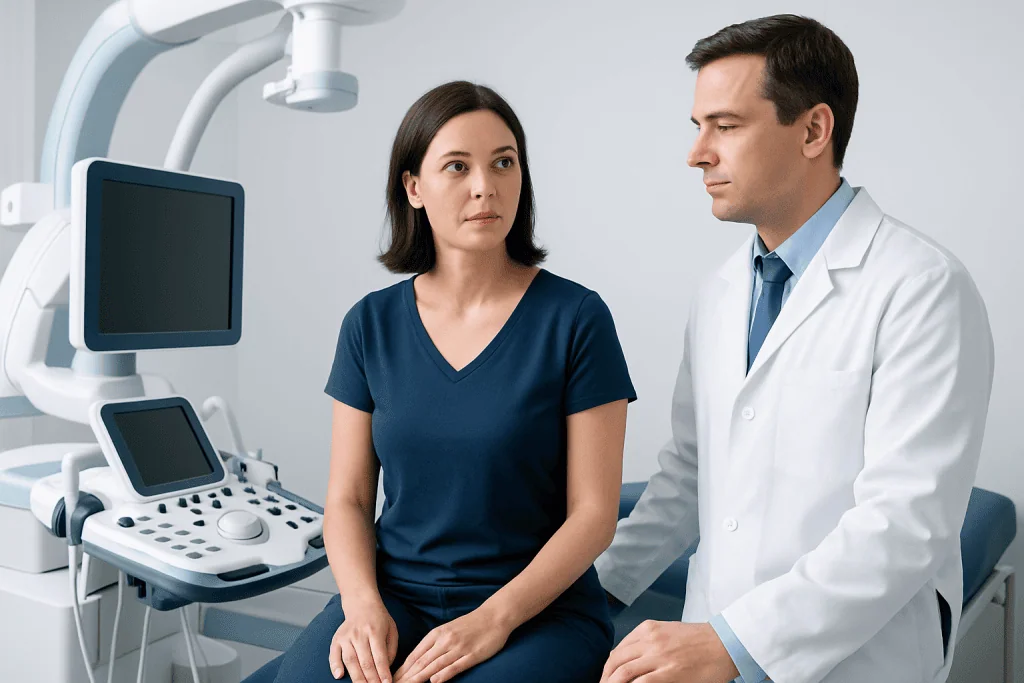
Many benign neoplasms do not cause symptoms, especially when they are small. They may be noticed as a painless lump under the skin, found during a routine screening test, or seen on ultrasound, CT, or MRI imaging performed for unrelated reasons. Because they often grow slowly, symptoms can appear gradually.
When symptoms do occur, they usually result from pressure on surrounding structures or from the function of the tissue involved. A benign neoplasm in soft tissue may feel like a mobile lump. One in the bowel may cause bleeding or changes in bowel habits. A uterine growth may lead to heavy periods or pelvic pressure. A growth in an endocrine gland may affect hormone levels.
Possible symptoms can include:
- A lump, swelling, or visible bump
- Pain, tenderness, or a feeling of pressure
- Numbness, tingling, or weakness if a nerve is compressed
- Headaches, dizziness, or vision changes in certain locations
- Bleeding, discharge, or changes in bowel or urinary habits
- Cosmetic concerns, especially with skin or facial growths
Symptoms alone cannot confirm whether a growth is benign or malignant. A lump that feels soft and harmless may still need evaluation, while some worrying symptoms may turn out to have a benign cause. This is why a medical assessment is the safest way to clarify what is present and whether any follow-up is needed.
Causes and risk factors

In many people, the exact cause of a benign neoplasm is not clear. Cell growth is normally controlled by complex signals in the body, and a benign neoplasm forms when some of those signals become unbalanced. This can happen because of changes in genes within the cells, hormonal influences, chronic irritation, inflammation, or age-related tissue changes.
Risk factors vary by type of growth. Family history can increase the chance of some benign neoplasms. Hormones may play a role in conditions such as uterine fibroids or certain breast and thyroid nodules. Long-term sun exposure is linked to some benign skin lesions. Previous injury or ongoing tissue stress may also contribute in selected cases, although it does not explain most growths.
Some benign neoplasms are associated with inherited syndromes, but these are less common. In other situations, a benign lesion may arise alongside another condition that affects the same organ. For example, a doctor may need to distinguish a harmless polyp from colon cancer or tell a benign breast lump apart from more serious disease.
Importantly, having a benign neoplasm does not mean a person did anything wrong. Lifestyle factors may influence risk for certain types, but many benign growths occur without any obvious preventable cause. The focus is usually on accurate diagnosis, appropriate monitoring, and treatment only when it is likely to help.
How doctors diagnose a benign neoplasm
Diagnosis begins with a medical history and physical examination. A doctor will ask when the growth was first noticed, whether it has changed in size, whether it is painful, and whether there are related symptoms such as bleeding, pressure, or changes in function. Family history and any previous tumors or surgeries can also help guide the evaluation.
Imaging tests are often useful to understand the size, shape, and location of the growth. Ultrasound may be used for superficial lumps, breast findings, thyroid nodules, or pelvic masses. CT or MRI can provide more detail when a growth is deeper or close to important structures. In some settings, mammography, endoscopy, or other targeted tests may be recommended.
A biopsy is sometimes needed to confirm the diagnosis. During a biopsy, a small sample of tissue is removed and examined under a microscope by a pathologist. This is one of the most reliable ways to distinguish a benign neoplasm from a malignant one, especially when imaging alone cannot provide a clear answer.
Doctors may also use blood tests or hormone testing if a gland or endocrine organ is involved. The goal is not only to label the growth but also to understand whether it is stable, whether it may affect organ function, and whether observation or treatment is the safest next step.
Treatment options and when treatment is needed
Not every benign neoplasm requires active treatment. If the growth is small, clearly benign, and not causing symptoms, careful observation may be the best option. This may involve repeat examinations or imaging over time to confirm that it remains stable.
Treatment is more likely to be considered when a benign neoplasm causes pain, bleeding, pressure, cosmetic concerns, or problems with organ function. The specific approach depends on the type and location of the growth. Some can be removed through a minor office procedure, while others may require a planned operation. In selected situations, biopsy is done first to guide decisions about further care.
Surgery is a common treatment when the growth is enlarging, uncertain in nature, or interfering with nearby tissues. The goal is usually complete removal with preservation of normal function whenever possible. For skin or soft-tissue lesions, dermatology care may be appropriate; for organ-based lesions, treatment may involve a surgeon or another specialist. Some benign uterine growths, for example, are managed similarly to uterine fibroids depending on symptoms and reproductive plans.
Medication may help in certain cases, especially if hormones or inflammation are contributing to symptoms. The best treatment plan is individualized. Near the end of the care pathway, some patients may benefit from multidisciplinary assessment; Acibadem International’s specialists in JCI-accredited hospitals diagnose and treat benign and complex growths for international patients when needed.
Monitoring, self-care, and prevention
Because many benign neoplasms are stable over time, monitoring is an important part of care. Follow-up helps detect meaningful changes in size, symptoms, or appearance. A doctor may suggest repeat imaging, repeat examination, or symptom tracking at regular intervals depending on the tissue involved.
Self-care starts with paying attention to the body without becoming overly anxious. It can help to note when a lump was first felt, whether it changes with the menstrual cycle, whether it becomes painful, or whether there are new symptoms such as bleeding or numbness. Taking photos of visible skin lesions or measuring a lump only if advised can make follow-up more accurate.
There is no single guaranteed way to prevent benign neoplasms. General healthy habits may still support overall tissue health and help reduce risk for some conditions. These include sun protection, avoiding tobacco, attending routine screenings, maintaining a healthy weight, and seeking care for persistent symptoms rather than waiting for them to worsen.
People who have had one benign neoplasm are not always more likely to develop another, but some conditions can recur or new growths can appear in the same organ system. Keeping scheduled appointments and sharing any family history or prior biopsy results with a doctor can make future evaluations easier and more precise.
When to seek medical care
Medical care is recommended for any new lump or swelling that does not go away, especially if it continues to grow. A prompt evaluation is also important if a known benign neoplasm starts causing pain, pressure, bleeding, weakness, or changes in normal body function. While most such findings are not emergencies, they should not be ignored.
Urgent assessment may be needed if there is sudden severe pain, rapid enlargement, signs of infection such as redness and fever, or symptoms suggesting pressure on important structures, such as trouble breathing, trouble swallowing, severe headaches, or new neurologic changes. These symptoms do not always mean cancer, but they do need timely review.
It is also wise to seek care when a diagnosis remains uncertain. Some benign neoplasms can resemble other conditions on examination, and some lesions that appear harmless need tests to confirm exactly what they are. Clear diagnosis helps avoid both unnecessary worry and unnecessary treatment.
For complex cases, doctors may involve radiology, pathology, surgery, gynecology, gastroenterology, or other specialties depending on the growth’s location. This team-based approach can be especially helpful when a benign neoplasm is close to vital organs or when preserving appearance and function is a priority.
Frequently asked questions
Is a benign neoplasm the same as cancer?
No. A benign neoplasm is a noncancerous growth, which means it does not spread to distant parts of the body the way cancer can. However, it may still need monitoring or treatment if it causes symptoms or affects nearby organs.
Can a benign neoplasm turn into cancer?
Some benign growths remain harmless for life, while others may have a small potential to change over time depending on their type and location. This is why doctors sometimes recommend follow-up imaging, removal, or biopsy. The risk varies widely, so individualized medical advice is important.
Do all benign neoplasms need surgery?
No. Many benign neoplasms can simply be observed if they are small, stable, and not causing symptoms. Surgery is usually considered when there is pain, growth, pressure on nearby structures, uncertainty about the diagnosis, or a significant cosmetic or functional concern.
How is a benign neoplasm confirmed?
Doctors often begin with a physical examination and imaging tests such as ultrasound, CT, or MRI. In some cases, a biopsy is needed to examine the tissue under a microscope. This helps confirm the exact type of growth and rule out malignancy.
What does a benign neoplasm feel like?
It depends on the type and location. Some feel like a soft or firm lump under the skin, while others cannot be felt at all and are found only on imaging. A benign neoplasm may be painless, but some can cause tenderness or pressure if they press on nearby tissues.
Should a painless lump still be checked by a doctor?
Yes. A painless lump is often benign, but pain alone cannot determine what a growth is. If a lump is new, increasing in size, or unexplained, medical evaluation is the best way to identify it and decide whether follow-up is needed.
This article is for general information only and is not a substitute for professional medical advice. Please consult a qualified doctor about your individual situation.
Explore treatments in Turkey — costs, top hospitals & a free quote
JCI-accredited · board-certified surgeons · reply within 24h
Add us as a Preferred Source to see more of our trusted health content across Google Search, AI Overviews and Discover.

More from the Health Library

Ube Extract: An Evidence-Based Guide for Patients

Right Sided Heart Failure: A Complete Medical Overview

Ssri’s: A Complete Medical Overview

Brachytherapy: A Complete Medical Overview

Versed Drug: A Complete Medical Overview