How Much Does All-on-4 Dental Implants Cost in Turkey? 2026 Prices vs USA, UK & Germany

Published market ranges suggest All-on-4 treatment in Turkey is often less expensive than in the USA, UK, and Germany. A meaningful cost comparison should look beyond the headline price and include diagnostics, temporaries, final teeth, sedation, and follow-up planning.
Key Takeaways
- Published market ranges suggest All-on-4 treatment in Turkey is often less expensive than in the USA, UK, and Germany.
- A meaningful cost comparison should look beyond the headline price and include diagnostics, temporaries, final teeth, sedation, and follow-up planning.
- The final treatment plan may change if bone grafting, sinus lift, tooth extractions, gum treatment, or additional implants are needed.
- Quality, surgeon experience, laboratory standards, and hospital accreditation can affect overall value as much as the initial fee.
- Anyone considering treatment abroad should ask for a personalized written quote after consultation and imaging review.
All-on-4 dental implants cost in Turkey is generally lower than in the USA, UK, and Germany when looking at published market ranges, but there is no single fixed price for every patient. The final quote depends on clinical needs, the implant system used, imaging, temporary and final prostheses, and whether extra procedures are required.
Overview: What does All-on-4 dental implants cost in Turkey mean in practice?
All-on-4 dental implants cost in Turkey is commonly discussed because this full-arch tooth replacement option may be available at lower published market ranges than in several Western countries. In broad terms, international patient guides and clinic advertisements often place Turkey below the USA, UK, and Germany for the same type of treatment, but these figures are only indicative. A patient cannot know the true cost until a dentist or oral surgeon reviews the mouth, jawbone, medical history, and imaging.
All-on-4 refers to a full-arch restoration supported by four implants, usually for the upper jaw, lower jaw, or both. The treatment often includes consultation, imaging, implant surgery, a temporary fixed bridge, healing time, and a final prosthesis. Some people also need extractions, treatment for gum disease, or additional bone-related procedures, which can change the final price.
Because pricing can vary widely between providers and countries, patients should compare like with like. A low starting figure may not include advanced scans, sedation, temporary teeth, the final bridge material, laboratory work, or follow-up visits. Looking at the total treatment pathway is more useful than focusing on a single advertised number.
The table below shows indicative market ranges often seen in public sources for one full arch of All-on-4 treatment. These are not fixed clinic fees and should be treated as rough orientation only.
| Country | Indicative published market range | Approximate difference vs Turkey |
|---|---|---|
| Turkey | About USD 3,000 to 8,000 per arch | Baseline |
| USA | About USD 20,000 to 35,000+ per arch | Roughly 60% to 90% higher than many Turkey ranges |
| UK | About GBP 12,000 to 22,000+ per arch | Often about 50% to 80% higher, depending on case and exchange rate |
| Germany | About EUR 10,000 to 20,000+ per arch | Often about 40% to 75% higher, depending on case and materials |
These comparisons are only directional because exchange rates, clinical complexity, and package contents differ. Final pricing always follows a personal consultation and quote.
What a typical All-on-4 package may include
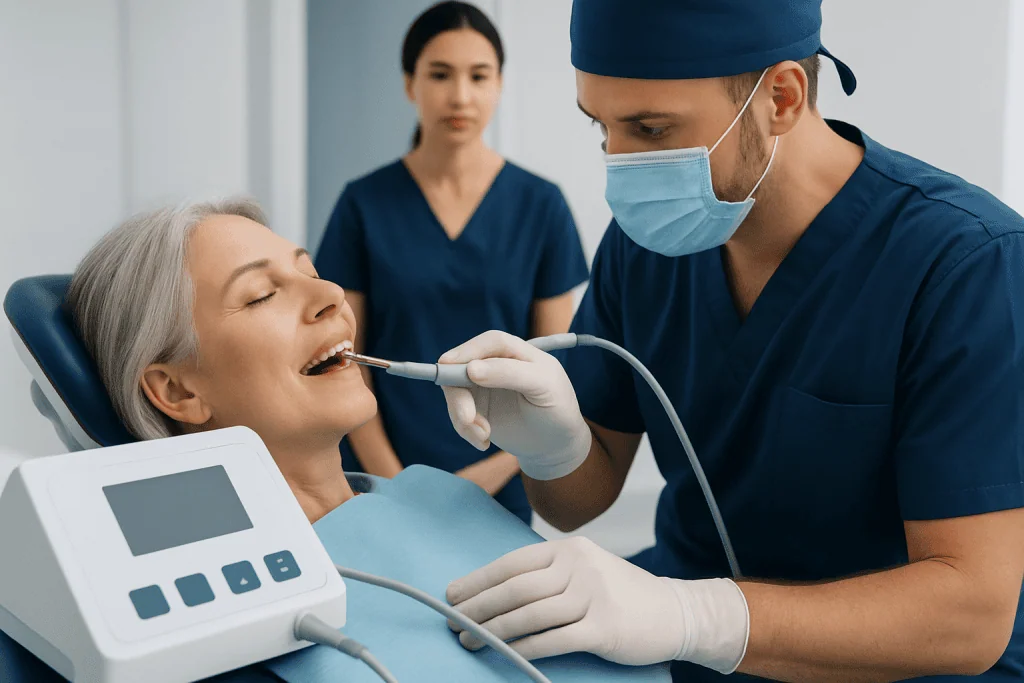
When comparing treatment abroad, one of the most important questions is what the quoted package actually covers. A typical All-on-4 plan may include the first consultation, panoramic X-ray or 3D scan, treatment planning, implant placement, abutments, a temporary fixed prosthesis, and later the final full-arch bridge after healing. Some providers also include medications used around the procedure, airport transfers, or interpreter support, but these travel-related services vary.
It is also important to ask whether the quote is for one arch or both arches. Some people need treatment only in the upper or lower jaw, while others require complete full-mouth rehabilitation. The material used for the final teeth can also affect the total, especially if the bridge is acrylic-based, composite-based, zirconia, or another high-strength option.
Patients should request an itemized estimate in writing. This helps clarify whether the price includes extractions, IV sedation, additional implants if four are not enough, soft tissue treatment, relines or adjustments to temporaries, and the final restoration itself. Without this level of detail, cost comparisons between countries may be misleading.
For readers who want to understand the broader treatment pathway, dental implant treatment usually involves planning, implant placement, healing, and prosthetic restoration over time. Some patients also need evaluation for gum disease before implant surgery, since active infection around the gums can affect the success of treatment.
Why the price can change from one patient to another

Even within the same country, All-on-4 pricing can vary because no two mouths are the same. The condition of the jawbone is one of the biggest factors. If the bone is thin, soft, or uneven, the surgeon may need a different approach, extra planning, or, in some cases, additional procedures. The need for immediate loading versus a more staged plan can also affect complexity and cost.
The number of teeth to remove before implant placement matters as well. A patient with many damaged or infected teeth may need extractions, socket management, and time for the tissues to settle. If there is active inflammation, untreated cavities in remaining teeth, or significant periodontal disease, those issues should be managed as part of safe treatment planning.
Another major factor is the implant brand and prosthesis material. Established implant systems and custom laboratory work may cost more, but they may also offer advantages in planning, prosthetic fit, and long-term maintenance. Digital workflows, guided surgery, and in-house dental laboratories may also influence the total fee.
Finally, the clinical setting affects price. A treatment plan delivered in a hospital-based or highly regulated environment may carry different operating costs than a small private clinic. Patients should not assume that the lowest fee offers the best overall value; careful assessment of safety, aftercare, communication, and prosthetic quality is essential.
Quality and accreditation: how to judge value, not just price
Cost matters, but so do safety and quality standards. For international patients, one useful checkpoint is whether care is delivered in a structured, accredited environment with clear infection control, imaging standards, anesthesia protocols, and multidisciplinary support when needed. This is especially relevant for people with chronic illnesses, anticoagulant use, diabetes, or complex oral conditions.
JCI accreditation is one quality marker that some international patients look for when comparing hospitals. It does not mean every treatment will cost the same or guarantee a specific outcome, but it can indicate that an organization follows recognized standards for patient safety and quality processes. In dental implant care, the experience of the implant surgeon, prosthodontist, and dental laboratory team remains central.
Patients should also ask practical questions: Who places the implants? Who designs the bridge? Is a CBCT scan used? What is the plan if one implant needs to be changed or delayed? How many visits are usually needed, and what aftercare is available once the patient returns home? These questions often reveal more about value than a headline price alone.
Near the end of the decision process, some international patients prefer centers where dental, medical, imaging, and anesthesia services are coordinated. Acibadem International’s multidisciplinary specialists and JCI-accredited hospitals diagnose and treat patients who need advanced dental and implant planning, including implant-based tooth replacement when appropriate.
Diagnosis and consultation before a final quote
A reliable quote starts with proper assessment. This usually includes a medical and dental history, oral examination, bite analysis, and imaging such as a panoramic X-ray or cone-beam CT scan. The clinician looks at bone volume, sinus position, nerve location, gum health, and whether remaining teeth can be saved or should be removed.
During consultation, the team may discuss whether All-on-4 is the best option or whether alternatives such as All-on-6, removable overdentures, or staged implant treatment may suit the case better. This matters because some jaws do not offer ideal support for a four-implant design, and a different plan may provide better long-term function.
Patients should tell the clinician about smoking, diabetes, osteoporosis medicines, immune conditions, and any history of gum disease or grinding. These factors do not automatically rule out implant treatment, but they can influence healing, maintenance needs, and the type of restoration recommended.
A good consultation ends with a clear written plan. This should state what is included, what may be added if clinical findings change, how long treatment is expected to take, and when the final prosthesis is usually delivered. This is the safest basis for comparing Turkey with the USA, UK, or Germany.
Recovery, self-care, and long-term maintenance costs
The initial procedure is only one part of the patient journey. After surgery, the mouth needs time to heal and adapt to the temporary bridge. During this phase, patients are usually advised to follow the aftercare instructions given by their clinical team, which may include a softer diet for a period, careful oral hygiene, and attendance at follow-up visits.
Long-term success depends heavily on maintenance. Full-arch implant restorations still need professional review and cleaning. Patients should ask how often checks are recommended, whether screws or components may need periodic replacement, and what signs could suggest overload, inflammation, or wear of the prosthesis.
It is also wise to think about future maintenance costs when comparing initial prices. A lower upfront fee may not include later adjustments, relining of a temporary prosthesis, repair of worn acrylic teeth, or replacement of a final bridge many years later. Understanding the expected maintenance pathway can make financial planning more realistic.
Daily self-care remains essential even with fixed implant teeth. The dentist may recommend specific brushes, flossing aids, or water-cleaning devices to help clean under the bridge. Good home care can reduce the risk of inflammation around implants and support long-term comfort and function.
When to seek medical care
Anyone considering All-on-4 implants should seek professional dental assessment before booking treatment, especially if there is severe tooth loss, loose dentures, pain when chewing, repeated infections, or difficulty eating. A proper review can confirm whether symptoms are caused by missing teeth alone or by another oral health problem that needs treatment first.
Prompt dental or medical care is also important if there is facial swelling, fever, pus, uncontrolled bleeding, severe gum pain, or a sudden worsening of oral infection. These symptoms need timely evaluation rather than cost-focused planning alone. People with significant medical conditions should also speak to their doctor and dental team before implant surgery.
After implants are placed, patients should contact their clinician if they notice increasing pain after the first days, a loose temporary bridge, a broken prosthesis, persistent bad taste or discharge, or difficulty cleaning under the restoration. Early review can often prevent a smaller issue from becoming a larger one.
For many patients, the best next step is a consultation rather than searching for a single universal price. A detailed examination, scan review, and personalized quote are the most dependable way to understand the likely cost, timeline, and treatment options.
Frequently asked questions
Is All-on-4 in Turkey really cheaper than in the USA, UK, or Germany?
Published market ranges often show lower starting prices in Turkey than in the USA, UK, or Germany for All-on-4 treatment. However, the true comparison depends on what is included in the quote, the implant system, the final bridge material, and whether extra procedures are needed.
What is usually included in an All-on-4 quote?
A quote may include consultation, imaging, implant surgery, abutments, temporary teeth, and the final fixed prosthesis. Some quotes also include extras such as medications, sedation, transfers, or accommodation support, so patients should always ask for an itemized written plan.
Why can two clinics give very different prices for the same treatment?
The price can differ because the case may be planned with different implant brands, prosthesis materials, laboratory standards, imaging methods, or sedation options. One clinic may also include extractions, temporaries, and follow-up care while another lists these separately.
Can the final price change after I arrive for treatment?
It can, especially if the in-person examination or 3D imaging shows bone loss, infection, extra teeth that need removal, or the need for more complex planning. This is why reputable providers usually explain that the final quote follows clinical assessment.
Does a lower price mean lower quality?
Not necessarily, but price alone does not measure quality. Patients should also look at surgeon experience, prosthetic planning, infection control, accreditation, imaging standards, and the clarity of aftercare arrangements.
How long does All-on-4 treatment take if traveling to Turkey?
The first surgical stage may be completed over a short visit, particularly if immediate temporary teeth are planned. The final bridge is often provided after a healing period, so some patients need staged care or a second visit depending on the treatment plan.
References
- American Dental Association
- European Association for Osseointegration
- National Institute for Health and Care Excellence
- World Health Organization
This article is for general information only and is not a substitute for professional medical advice. Please consult a qualified doctor about your individual situation.
Dental Implants in Turkey — costs, top hospitals & a free quote
JCI-accredited · board-certified surgeons · reply within 24h
Add us as a Preferred Source to see more of our trusted health content across Google Search, AI Overviews and Discover.

Dental & Oral Health
Full-scope dental care from implants and aesthetics to oral and maxillofacial surgery.
158 specialists in this unit