Neuroinfectious Disease Testing: Which Symptoms Need Urgent Evaluation?

Brain and nervous system infections can worsen quickly, so early testing matters. Severe headache with fever, neck stiffness, confusion, or seizures needs urgent medical attention.
Key Takeaways
- Brain and nervous system infections can worsen quickly, so early testing matters.
- Severe headache with fever, neck stiffness, confusion, or seizures needs urgent medical attention.
- Testing may include blood tests, brain imaging, lumbar puncture, and other targeted studies.
- Not every headache or fever is a neuroinfection, but certain symptom combinations raise concern.
- Prompt treatment may begin before all test results are back if doctors suspect a serious infection.
Neuroinfectious disease testing helps doctors find infections that affect the brain, spinal cord, meninges, or nerves. Urgent evaluation is especially important when symptoms such as fever, severe headache, confusion, seizures, stiff neck, or new weakness appear together or develop quickly.
Overview
Neuroinfectious disease testing refers to the medical evaluation used to detect infections involving the brain, spinal cord, the tissues around them, or the nerves. These infections may be caused by viruses, bacteria, fungi, parasites, or, less commonly, other organisms. Examples include meningitis, encephalitis, brain abscess, spinal infections, and some nerve infections.
The symptoms can overlap with many other conditions, which is why careful assessment is important. A severe headache may be caused by migraine, but headache with fever, confusion, or stiff neck can suggest something more serious. Likewise, fatigue and body aches often come from common viral illnesses, yet when neurological symptoms appear, doctors consider whether the nervous system could be involved.
Urgent evaluation matters because some neuroinfections can progress within hours to days. Early diagnosis supports early treatment, which may reduce the risk of complications such as persistent weakness, memory problems, seizures, hearing loss, or other long-term neurological effects.
Which Symptoms Need Urgent Evaluation?
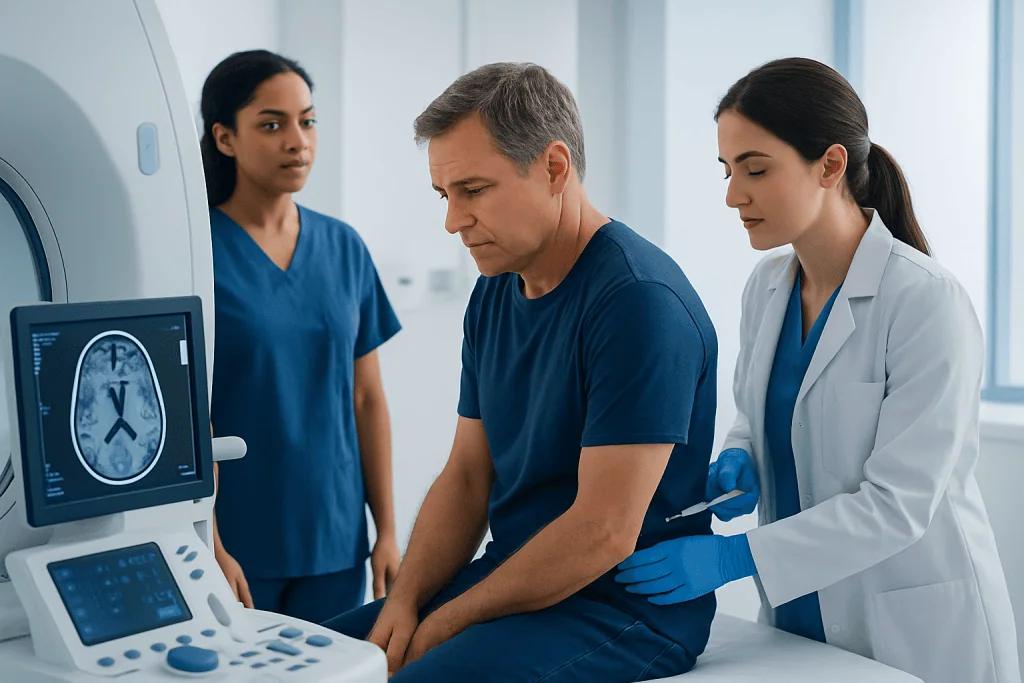
Certain symptoms are warning signs because they may suggest inflammation or infection affecting the central nervous system. A person should seek urgent medical care if there is a severe or unusual headache together with fever, neck stiffness, sensitivity to light, vomiting, confusion, extreme sleepiness, or a rash. These combinations can be seen in serious conditions such as meningitis or encephalitis.
New seizures, fainting, trouble speaking, sudden weakness, numbness, difficulty walking, or loss of balance also need prompt evaluation. These symptoms can occur when infection affects the brain, spinal cord, or peripheral nerves. Symptoms may sometimes resemble stroke or other neurological emergencies, so rapid assessment is essential.
Changes in behavior or thinking should not be ignored, especially if they come on quickly. Urgent warning signs include new confusion, hallucinations, unusual agitation, reduced responsiveness, or a clear change from a person’s normal mental state. In infants, older adults, and people with weakened immune systems, symptoms may be less typical and can include poor feeding, lethargy, falls, or generalized weakness rather than obvious neck stiffness.
- Severe headache with fever
- Stiff neck or pain when bending the neck
- Confusion or altered mental status
- Seizures
- New weakness, numbness, or speech difficulty
- Difficulty walking or loss of coordination
- Persistent vomiting with neurological symptoms
- Marked drowsiness or inability to stay awake
Common Causes and Risk Factors

Viruses are a common cause of nervous system infections. Some viral infections are mild, but others can inflame brain tissue and lead to serious illness. Bacteria can cause rapidly progressing infections such as bacterial meningitis, while fungi and parasites are more likely in certain geographic settings or in people with weakened immune systems. Doctors also consider infections that spread from nearby areas, such as the ears, sinuses, or bloodstream.
Risk factors help doctors decide how urgently to test and what organisms to look for. A weakened immune system, recent neurosurgery, head trauma, certain chronic illnesses, cancer treatment, organ transplant, or the use of immunosuppressive medications can increase risk. Travel history, insect or tick exposure, contact with sick individuals, and animal exposure may also provide important clues.
Age matters as well. Infants, older adults, and pregnant people can have different risks and may present differently. In some situations, doctors also look for conditions that can mimic infection, including autoimmune inflammation, toxic-metabolic problems, or vascular conditions. That is why neuroinfectious disease testing is usually tailored to the person’s symptoms, medical background, and exposure history.
How Doctors Diagnose Neuroinfectious Diseases
Diagnosis begins with a physical and neurological examination. Doctors assess alertness, speech, strength, reflexes, coordination, vision, and signs such as neck stiffness or rash. They also ask when symptoms started, whether they are worsening, and whether there has been recent travel, infection, surgery, tick bites, or immune suppression.
Blood tests are commonly used to look for signs of infection or inflammation and to help identify possible causes. Brain imaging may be needed before certain procedures if there is concern about pressure inside the skull, a mass, bleeding, or major brain swelling. Depending on the symptoms, clinicians may request MRI or CT scanning to look for inflammation, abscess, swelling, stroke-like changes, or other structural problems.
A lumbar puncture, also called a spinal tap, is often one of the most important tests when meningitis or encephalitis is suspected. It allows doctors to examine cerebrospinal fluid for infection, inflammation, and specific organisms. In selected cases, further tests such as electroencephalography, nerve studies, or specialized infectious disease panels may be used. If seizures or unexplained altered awareness occur, EEG testing may help identify abnormal brain activity.
What Testing May Include
The exact testing plan depends on the person’s condition and how urgently they need care. In an emergency setting, doctors often focus first on stabilizing the patient while rapidly collecting key diagnostic information. This may include blood cultures, routine laboratory tests, oxygen monitoring, and imaging if there are focal neurological signs, severe confusion, or concern about raised intracranial pressure.
Cerebrospinal fluid analysis can provide crucial information about whether the cause is more likely bacterial, viral, fungal, or inflammatory. Laboratories may look at cell counts, protein, glucose, cultures, and molecular tests that detect genetic material from infectious organisms. Additional targeted testing may be done if exposure history suggests conditions such as tuberculosis, tick-borne illness, or fungal infection.
Doctors do not always wait for every result before starting treatment. If symptoms strongly suggest a serious infection, treatment may begin immediately while testing is still underway. This approach is common in suspected bacterial meningitis or severe encephalitis, where early therapy can be important for protecting the brain and nervous system.
Treatment Options and Why Speed Matters
Treatment depends on the suspected cause, the severity of illness, and the patient’s overall health. Bacterial infections are treated with antibiotics, while some viral infections may require antiviral medicines. Fungal and parasitic infections need different targeted therapies. In many cases, hospital care is needed so the medical team can monitor neurological status, hydration, breathing, blood pressure, and seizures.
Supportive treatment is also important. This may include fluids, medications to control fever or pain, seizure management, and treatment for brain swelling if present. Some people need intensive care, especially if there is reduced consciousness, breathing difficulty, or unstable vital signs.
Recovery varies widely. Some patients improve fully, while others need rehabilitation for memory changes, weakness, balance problems, or speech difficulties. When complex neurological infection is suspected, evaluation by specialists can help guide treatment decisions. Acibadem International’s multidisciplinary specialists and JCI-accredited hospitals diagnose and treat neuroinfectious conditions for international patients, including advanced imaging and neurological care when appropriate.
Prevention and Self-care
Not all neuroinfectious diseases can be prevented, but several steps can lower risk. Staying up to date with recommended vaccinations is one of the most effective measures for preventing some forms of meningitis and other serious infections. General infection prevention, including hand hygiene and avoiding close contact with people who have contagious illnesses, also helps.
Travel and outdoor exposure may require additional precautions. Depending on destination and season, protection against mosquitoes and ticks can be important. Prompt medical attention for severe sinus, ear, or systemic infections may also reduce the risk of infection spreading to the nervous system in rare cases.
At home, self-care should never replace urgent medical evaluation when red-flag symptoms appear. Rest, fluids, and over-the-counter fever relief may help with common viral illnesses, but they are not enough if a person has severe headache, confusion, stiff neck, seizures, or new weakness. In these situations, the safest step is immediate assessment by a qualified doctor.
When to See a Doctor
A routine medical visit may be appropriate for mild symptoms that are stable and improving, such as an uncomplicated headache or a short-lived viral illness without neurological signs. However, people should not delay care if symptoms are intense, progressing, or linked to changes in thinking, behavior, movement, or consciousness.
Emergency evaluation is recommended for severe headache with fever, neck stiffness, confusion, seizures, fainting, persistent vomiting, sudden weakness, or inability to stay awake. Infants, older adults, pregnant people, and those with weakened immune systems should be assessed promptly even if symptoms seem less dramatic, because their warning signs may be subtle.
Follow-up is also important after the acute illness. A person who has had a suspected or confirmed neuroinfection may need ongoing review for headaches, memory changes, fatigue, hearing problems, mood changes, or recurrent seizures. Continued care helps monitor recovery and address any lasting neurological effects.
Frequently asked questions
What is neuroinfectious disease testing?
Neuroinfectious disease testing is the process doctors use to check for infections affecting the brain, spinal cord, surrounding tissues, or nerves. It may involve blood tests, imaging, lumbar puncture, and other studies based on the symptoms and medical history.
Which symptoms suggest a brain or nervous system infection?
Warning signs include severe headache, fever, stiff neck, confusion, seizures, unusual sleepiness, and new weakness or numbness. These symptoms are especially concerning when they appear suddenly, worsen quickly, or happen together.
Does every headache with fever mean meningitis or encephalitis?
No. Many common illnesses can cause headache and fever, and most are not serious neuroinfections. Still, if headache is severe or comes with neck stiffness, confusion, vomiting, seizure, rash, or sensitivity to light, urgent medical evaluation is important.
Why might a lumbar puncture be needed?
A lumbar puncture allows doctors to examine cerebrospinal fluid, which surrounds the brain and spinal cord. This test can provide essential information about infection, inflammation, and the likely cause, helping guide treatment.
Can treatment start before all test results are back?
Yes. If doctors strongly suspect a serious neuroinfection, they may begin treatment right away while waiting for test results. This is done because some infections can worsen quickly, and early treatment may improve outcomes.
Who is at higher risk for serious neuroinfectious disease?
People with weakened immune systems, infants, older adults, and those who recently had neurosurgery or significant infections may be at higher risk. Travel history, insect exposure, and certain chronic medical conditions can also increase risk.
References
- World Health Organization
- Centers for Disease Control and Prevention
- National Institute of Neurological Disorders and Stroke
- American Academy of Neurology
- Infectious Diseases Society of America
This article is for general information only and is not a substitute for professional medical advice. Please consult a qualified doctor about your individual situation.
Joint and spine care in Turkey — expert assessment & treatment
JCI-accredited · board-certified surgeons · reply within 24h
Add us as a Preferred Source to see more of our trusted health content across Google Search, AI Overviews and Discover.