Moyamoya Disease in Children and Adults: Symptoms, Imaging, and Stroke Prevention

Moyamoya disease causes progressive narrowing of blood vessels that supply the brain. It can affect both children and adults, but symptoms may differ by age.
Key Takeaways
- Moyamoya disease causes progressive narrowing of blood vessels that supply the brain.
- It can affect both children and adults, but symptoms may differ by age.
- Brain imaging is central to diagnosis and helps guide treatment planning.
- Stroke prevention often includes close monitoring, medicines for selected patients, and revascularization surgery.
- Prompt medical assessment is important after any stroke-like symptom, seizure, or sudden neurological change.
Moyamoya disease is a rare condition in which key arteries at the base of the brain become narrowed, reducing blood flow and increasing the risk of stroke. With timely diagnosis, careful imaging, and specialist treatment, many children and adults can lower risks and protect brain function.
Overview of Moyamoya Disease
Moyamoya disease is a rare blood vessel disorder that affects the arteries at the base of the brain, especially the internal carotid arteries and their major branches. Over time, these vessels become progressively narrowed, which limits blood flow to brain tissue. In response, the body forms a network of tiny collateral vessels to try to compensate. On angiography, this delicate network can look like a hazy cloud, which led to the name “moyamoya,” a Japanese term describing a puff of smoke.
The condition can appear in both children and adults. Children more often present with symptoms caused by reduced blood flow, such as transient weakness or strokes. Adults may also have ischemic symptoms, but they can additionally present with bleeding in the brain when fragile collateral vessels rupture. Some people have moyamoya disease on its own, while others have a similar vascular pattern linked to another condition; this is often referred to as moyamoya syndrome.
Because the disease affects blood supply to the brain, early recognition matters. Many symptoms can be subtle at first, including brief episodes of weakness, headaches, or changes in speech or concentration. A specialist evaluation can help clarify whether symptoms are related to moyamoya disease or to other neurological conditions such as stroke.
Symptoms in Children and Adults
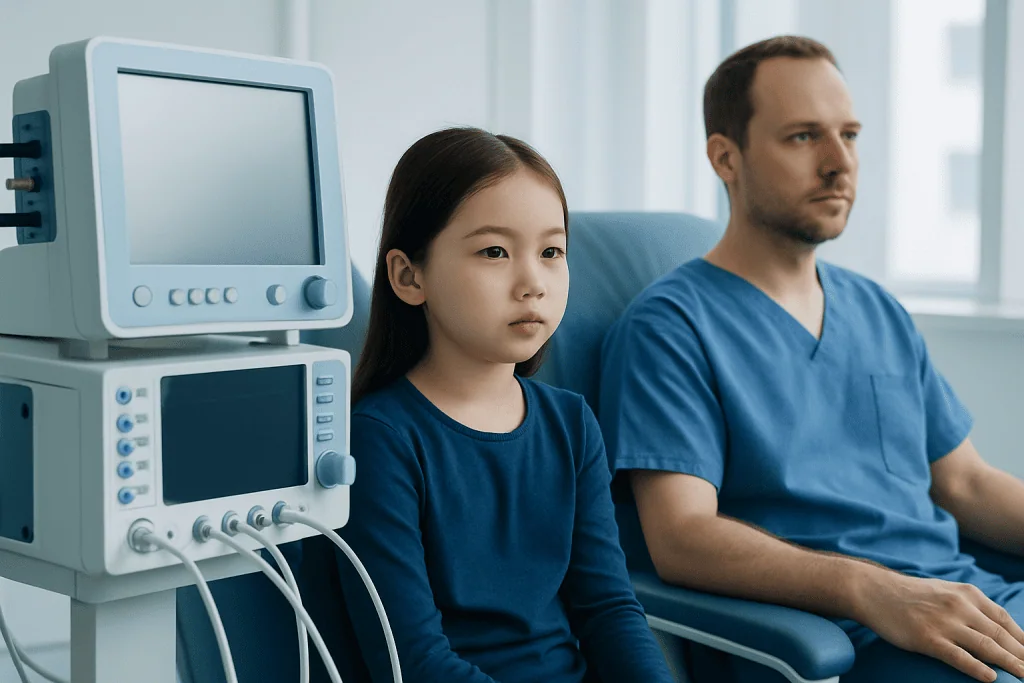
Symptoms depend on age, how much blood flow is reduced, and whether bleeding has occurred. In children, common symptoms include transient ischemic attacks, strokes, weakness on one side of the body, speech difficulty, seizures, headaches, and episodes triggered by crying, fever, dehydration, or heavy exertion. Some children also show learning difficulties, trouble concentrating, or developmental changes related to repeated low blood flow.
Adults may experience similar ischemic symptoms, including sudden numbness, weakness, facial droop, visual disturbance, or trouble speaking. However, adults can also present with intracranial hemorrhage, which may cause a sudden severe headache, vomiting, loss of consciousness, or abrupt neurological deficits. Headaches can occur at any age but are not specific to moyamoya disease.
Symptoms may come and go, especially early in the disease. Even if a person improves quickly after a brief episode, urgent medical attention is still important because temporary symptoms can be a warning sign of an impending stroke. Families and patients should seek emergency care for any sudden neurological change, including weakness, confusion, severe imbalance, or seizures.
- Weakness or numbness, often on one side
- Speech or language difficulty
- Transient ischemic attacks or stroke
- Seizures
- Headaches
- Vision changes or brief loss of vision
- Cognitive or school-performance changes in children
Causes and Risk Factors
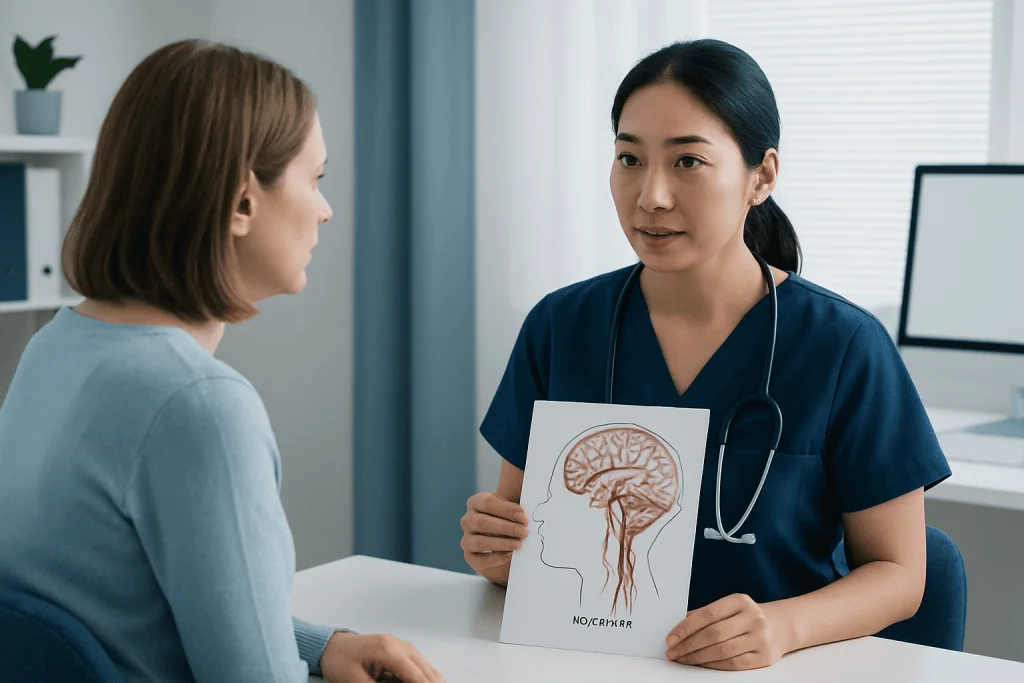
The exact cause of moyamoya disease is not fully understood. Researchers believe genetic and biological factors play an important role, especially because the disease can run in families and is more common in some populations. However, not every person with the condition has a family history, and the pattern can vary widely from one individual to another.
Doctors distinguish between moyamoya disease and moyamoya syndrome. Moyamoya disease refers to the primary condition without an identified associated disorder. Moyamoya syndrome describes the same blood vessel changes when they occur alongside another condition. Examples can include sickle cell disease, Down syndrome, neurofibromatosis type 1, previous cranial radiation, and some autoimmune or vascular disorders.
Risk can also be influenced by age and prior neurological events. The disease has peaks in childhood and adulthood, though it can appear at almost any age. Having symptoms suggestive of poor blood flow to the brain, a family history of moyamoya disease, or another disorder associated with moyamoya syndrome may prompt closer investigation with specialist imaging.
How Imaging Confirms the Diagnosis
Imaging is central to diagnosing moyamoya disease and understanding how advanced it is. Brain MRI can show signs of past strokes, small areas of injury, or changes in blood flow. Magnetic resonance angiography, or MRA, provides a noninvasive look at the arteries in the brain and may reveal narrowing of the major vessels and the development of collateral circulation.
CT angiography can also help visualize the brain’s blood vessels, especially in urgent settings. In many cases, conventional cerebral angiography remains the reference test because it gives the most detailed picture of the arteries and collateral networks. This helps specialists confirm the diagnosis, assess severity, and plan the most appropriate treatment strategy, including whether a procedure or surgery is needed.
Additional tests may evaluate how well blood reaches brain tissue. These can include perfusion MRI, CT perfusion, or other cerebral blood flow studies, depending on the center. Doctors may also order tests to look for associated conditions or to exclude other causes of narrowed brain arteries. In specialized centers, a person may be assessed by teams in neuroradiology and stroke care to build a complete picture before treatment decisions are made.
Treatment Options and Stroke Prevention
The goals of treatment are to reduce the risk of stroke, preserve brain function, and improve blood flow where possible. Management depends on age, symptoms, imaging findings, and whether a person has had ischemic events, bleeding, or both. Specialists often tailor treatment plans carefully because moyamoya disease can behave differently from one patient to another.
Medical treatment may include antiplatelet therapy for selected patients with ischemic symptoms, along with careful control of general stroke risk factors. Supportive measures can also matter, such as avoiding dehydration, maintaining stable blood pressure, and treating fever promptly in children when advised by a doctor. Medicines alone do not reverse the vessel narrowing, so close follow-up is important.
For many symptomatic patients, revascularization surgery is the main treatment used to improve blood supply to the brain. Procedures may be direct, indirect, or combined, depending on age, anatomy, and surgical judgment. These operations create new pathways for blood to reach the brain and are usually planned after thorough imaging review by experts in neurosurgery and interventional neuroradiology. Although surgery can significantly reduce future stroke risk in appropriate candidates, it requires individualized assessment and ongoing postoperative monitoring.
Living With Moyamoya: Self-care and Follow-up
Daily care focuses on protecting brain perfusion and reducing triggers that may worsen symptoms. Patients are often advised to stay well hydrated, avoid extreme exertion unless a doctor says it is safe, and manage illnesses promptly. Children may need school support if they have attention, learning, or recovery needs after neurological events.
Follow-up visits are essential because moyamoya disease can progress over time, and symptoms do not always reflect the full extent of reduced blood flow. Repeat imaging may be recommended to monitor the condition, especially if there are new symptoms or after treatment. Families and patients should keep a record of transient episodes such as brief weakness, speech changes, unusual headaches, or seizures to discuss with the care team.
Rehabilitation can be helpful after stroke or surgery. Depending on a person’s needs, this may include physical therapy, occupational therapy, speech therapy, or neuropsychological support. If concerns about recovery, balance, memory, or daily function arise, specialists in neurology can guide ongoing care. Near the end of the treatment pathway, some international patients seek evaluation at centers such as Acibadem International, where multidisciplinary specialists in JCI-accredited hospitals diagnose and treat complex cerebrovascular conditions.
When to See a Doctor
Any sudden neurological symptom should be treated as urgent. This includes weakness, numbness, trouble speaking, facial droop, severe headache, loss of balance, confusion, fainting, or seizures. Even symptoms that resolve within minutes can signal a transient ischemic attack and deserve emergency assessment.
A doctor should also evaluate recurring headaches with neurological symptoms, repeated fainting-like episodes, unusual movement or sensory changes, or learning and concentration decline in a child with possible transient episodes. People with a family history of moyamoya disease or an associated condition may need specialist assessment if concerning symptoms appear.
After diagnosis, regular follow-up is important even during stable periods. The care team can advise on imaging schedules, stroke prevention, activity, school or work accommodations, and whether surgical treatment should be considered. Early consultation with a qualified neurologist, stroke specialist, or neurosurgeon can help patients understand their options and make informed decisions.
Frequently asked questions
Is moyamoya disease hereditary?
It can be. Some people have a family history, which suggests a genetic contribution, but many patients do not. If more than one family member is affected or symptoms are suspicious, a doctor may discuss whether relatives should be evaluated.
What is the difference between moyamoya disease and moyamoya syndrome?
Moyamoya disease refers to the primary condition in which characteristic vessel narrowing occurs without another identified associated disorder. Moyamoya syndrome describes the same vascular pattern when it occurs along with another condition, such as sickle cell disease, Down syndrome, or prior cranial radiation.
Can moyamoya disease cause stroke in children?
Yes. In children, moyamoya disease often causes reduced blood flow to the brain, which can lead to transient ischemic attacks or strokes. Early diagnosis and specialist treatment are important to help lower this risk.
Which imaging tests are used for moyamoya disease?
Doctors commonly use MRI and MRA to look at brain tissue and blood vessels. CT angiography may also be helpful, especially in urgent situations, while cerebral angiography often provides the most detailed assessment for confirming the diagnosis and planning treatment.
Does everyone with moyamoya disease need surgery?
Not everyone, but many symptomatic patients are evaluated for revascularization surgery because it can improve blood flow and reduce future stroke risk. The decision depends on symptoms, imaging findings, age, overall health, and whether there has been bleeding or ischemic stroke.
Can adults develop moyamoya disease, or is it only a childhood condition?
Adults can develop moyamoya disease as well. While children often present with ischemic symptoms, adults may have either ischemic strokes or bleeding in the brain, so the condition should be considered across age groups.
References
- National Institute of Neurological Disorders and Stroke
- American Stroke Association
- National Organization for Rare Disorders
- European Stroke Organisation
- Radiological Society of North America
This article is for general information only and is not a substitute for professional medical advice. Please consult a qualified doctor about your individual situation.
Explore treatments in Turkey — costs, top hospitals & a free quote
JCI-accredited · board-certified surgeons · reply within 24h
Add us as a Preferred Source to see more of our trusted health content across Google Search, AI Overviews and Discover.