

Building Strength Before Esophageal Cancer Treatment: Nutrition and Swallowing Checks
Key Takeaways
- Difficulty swallowing and unintended weight loss are the two earliest signs of esophageal cancer, which is why nutritional care starts at diagnosis rather than when surgery is scheduled.
- Weight lost through a narrowed esophagus comes disproportionately from muscle, and weaker breathing muscles raise the risk of pneumonia, one of the most serious complications after esophagectomy.
- Care teams use a stepped approach: enriched soft foods first, then oral nutrition supplements, then a stent or feeding tube only when swallowing can no longer sustain weight.
- A jejunostomy tube bypasses the esophagus entirely and is often run overnight so that daytime eating by mouth can continue; some surgeons place one during the operation itself.
- MedlinePlus reports that most people spend 7 to 14 days in hospital after an open esophagectomy, with nothing taken by mouth for the first days while the internal join heals.
- After surgery the stomach becomes part of the food pipe, so small frequent meals, upright positioning and avoiding very sugary foods are typically lifelong adjustments rather than short-term rules.
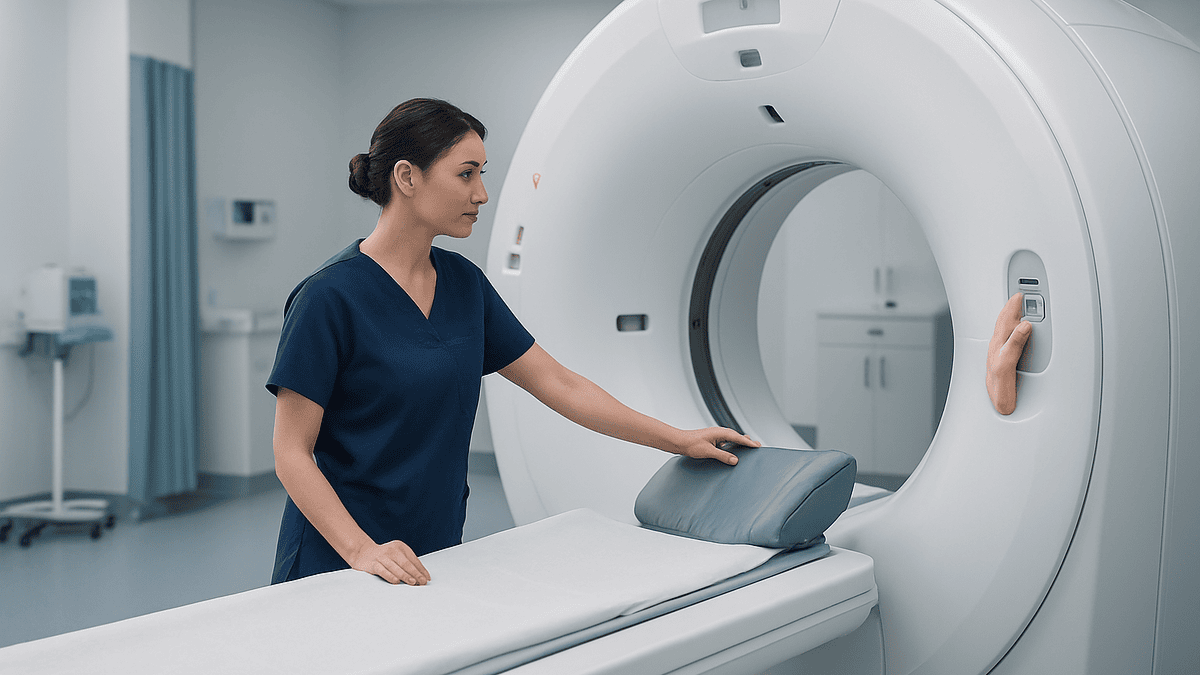
Nutrition before esophageal cancer surgery means keeping weight, muscle and swallowing as stable as possible in the weeks before an esophagectomy. Care teams usually check how well you swallow, track weight, and adjust food texture, protein and calorie intake, sometimes adding supplement drinks or a feeding tube when eating alone is not enough. Gentle exercise and breathing training are often paired with this work. Every plan is individual and set by the treating team.
The first thing many people notice is not pain. It is the bread. A sandwich that used to disappear in five minutes now takes twenty, with a glass of water at the elbow and a quiet habit of chewing longer than anyone else at the table. By the time an endoscopy names the problem, a belt may already sit one notch tighter, and the fridge has quietly filled with soup.
That slow shift matters, because nutrition before esophageal cancer surgery is not a side note to treatment. It is part of the treatment. An esophagectomy, the operation that removes part or all of the esophagus, asks a great deal of the body, and the weeks before it are a window most people did not know they had.
This article walks through what care teams actually check, why swallowing and muscle strength get so much attention, and how the plan tends to change when eating becomes hard. Nothing here replaces the advice of the surgeons, dietitians and speech pathologists who know your case.
What nutrition before esophageal cancer surgery actually involves
Picture the weeks before a major operation as training camp rather than a waiting room. Surgeons often call this approach prehabilitation: preparing the body before surgery so it tolerates the operation and recovers more smoothly. Nutrition is one of its three pillars, alongside physical activity and emotional readiness.
The nutritional side has a simple aim: arrive at the operating room with as much lean muscle, stable weight and functional swallowing as the tumor allows. Achieving that is less simple. Esophageal cancer tends to narrow the tube that food travels through, so appetite, intake and body weight can all fall at once. Chemotherapy or radiation given before surgery adds nausea, taste changes and fatigue on top.
Most programs therefore start with an assessment rather than a menu. A dietitian looks at recent weight change, what a typical day of eating looks like, how long meals take, and whether certain textures cause trouble. A speech-language pathologist, a clinician who specializes in swallowing, may test how safely liquids and solids move from mouth to stomach. Blood tests can flag low protein stores or anemia.
From there, the plan is built in layers. The first layer is usually food itself, adjusted in texture and enriched with protein and calories. If that does not keep weight steady, oral nutrition supplements, which are medically formulated drinks, often come next. When swallowing becomes too unreliable, a feeding tube or a stent may be discussed. The team escalates only as far as the situation requires, and every step is a shared decision.
The point of all this is not to bulk up. It is to stop the quiet losses, the daily few hundred calories that never quite get eaten, from adding up over a two-month treatment plan. Mayo Clinic’s overview of esophageal cancer notes that difficulty swallowing and weight loss without trying are among the earliest signs, which is why the nutritional work usually begins at diagnosis, not after surgery is scheduled.
Why the esophagus makes eating hard before treatment even begins
The esophagus is a muscular tube roughly the length of a forearm that carries food from the throat to the stomach. It works by peristalsis, a coordinated wave of muscle contractions that pushes each swallow downward. A tumor interrupts that system in two ways.
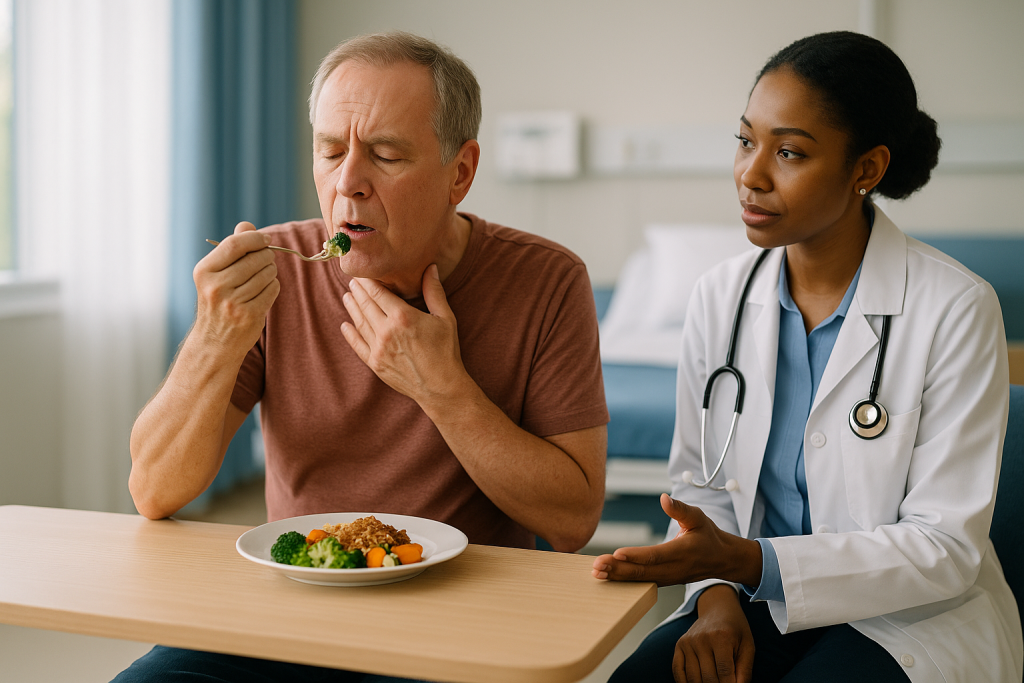
First, it takes up space. As the growth thickens the wall or bulges into the passage, the opening narrows. Doctors call this a stricture, a tightened section of a tube. Dense foods like meat, bread and raw vegetables are the first to catch; softer foods follow; eventually even liquids can feel slow. Difficulty swallowing has a medical name, dysphagia, and it is the most common symptom that brings people to diagnosis.
Second, the tumor disturbs the muscle wave itself. Even where the passage is still fairly open, the segment around the tumor may not contract normally, so food lingers. That lingering is why some people describe a sensation of food sitting behind the breastbone, or feel the need to wash each bite down.
The nutritional consequence is a slow slide rather than a sudden stop. People adapt without noticing. They choose soup over stew, skip the toast, take smaller portions because eating takes so long. Calories drop, protein drops, and muscle follows. The Cleveland Clinic’s patient information on esophageal cancer lists unexplained weight loss alongside swallowing trouble, chest discomfort and hoarseness as the features most often reported.
Understanding the mechanism helps explain why care teams treat swallowing checks and nutrition as one problem, not two. Improving the passage, whether through treatment that shrinks the tumor or a stent that props it open, directly changes what can be eaten. Adjusting what is eaten, in turn, keeps the body strong enough to tolerate the treatment that opens the passage. The two move together.
Who is usually offered prehabilitation for esophagectomy, and who is asked to wait
Prehabilitation for esophagectomy is increasingly built into the pathway for anyone whose treatment plan includes the operation, but the intensity varies with the person and the timeline.
People most likely to be enrolled early share a few features. They have lost noticeable weight since symptoms began. They are scheduled for chemotherapy, radiation or both before surgery, a sequence doctors call neoadjuvant treatment, which usually stretches the pre-operative period into several weeks or months and creates time to build strength. They may have other conditions, such as lung disease, diabetes or heart problems, that raise the stakes of the operation. Older adults and people with reduced muscle mass, a state known as sarcopenia, are also flagged because reserves are thinner.
The group asked to wait, or to follow a lighter program, is smaller. Someone whose tumor is found early and who is eating normally may need little more than a baseline weight check and general advice. Someone whose surgery is scheduled quickly may simply not have a long enough window for structured training, and the team will focus on the essentials: keeping intake steady, correcting anemia or low protein stores if present, and stopping smoking.
A few people are steered away from exercise components for safety reasons: unstable heart symptoms, very low blood counts during chemotherapy, or a bleeding tumor. Nutritional support still applies to them; it is the physical activity that gets adapted or paused.
Surgery itself is not offered to everyone with esophageal cancer. The NHS explains that an esophagectomy is generally considered when the cancer has not spread beyond the esophagus and nearby lymph nodes and when the person is fit enough for a major operation. When those conditions are not met, treatment focuses on controlling the cancer and easing symptoms, and nutritional care shifts toward comfort and quality of life. Deciding which path fits is the job of the multidisciplinary team, which typically includes surgeons, oncologists, radiologists, dietitians and nurses reviewing the case together.
What happens at a swallowing check before esophageal cancer treatment
A swallowing check sounds informal. In practice it is a structured set of observations and tests designed to answer two questions: how much can pass, and how safely.
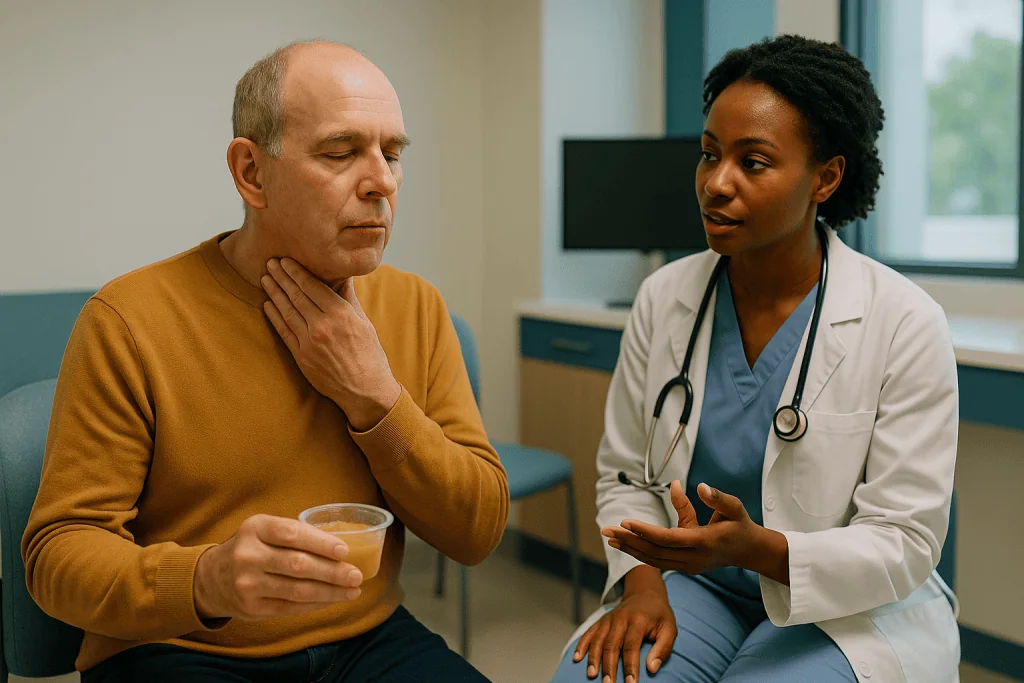
The conversation comes first. Clinicians often use a simple grading scale that runs from eating a normal diet, through managing only soft foods, down to tolerating liquids only, and finally to being unable to swallow saliva. Where you sit on that scale, and how quickly you have moved down it, tells the team a great deal about urgency.
An upper endoscopy is the test most people have already had by this point. A thin flexible camera is passed through the mouth into the esophagus under sedation, allowing the doctor to see the tumor, measure how far the passage has narrowed and take tissue samples. Mayo Clinic describes this as the main way esophageal cancer is diagnosed.
A barium swallow may be added. You drink a chalky liquid that shows up on X-ray, and images track how it moves down. This shows the shape and length of a narrowing, and whether liquid pools above it.
If there is concern that food or drink is slipping toward the lungs rather than the stomach, a speech-language pathologist may perform a modified barium swallow, a video X-ray of the throat while you eat and drink different textures. Aspiration, the medical term for material entering the airway, is a serious risk because it can cause pneumonia, and pneumonia is one of the complications surgeons most want to avoid around an esophagectomy.
Findings from these checks feed straight into the nutrition plan. A long, tight stricture may prompt a discussion about a stent or a feeding tube sooner. Mild narrowing with no aspiration may simply mean softer textures and more time at meals. The checks are also repeated: swallowing can improve as chemotherapy shrinks the tumor, and the diet is loosened as it does.
How to eat with esophageal cancer when swallowing has become difficult
The practical question people ask most is how to eat with esophageal cancer once meals have become a negotiation. Dietitians tend to offer the same handful of strategies, adapted to how narrow the passage is.
Texture is the first lever. Foods are softened, minced or pureed depending on what passes comfortably. Moisture matters as much as softness: gravies, sauces, yogurt and broth help food slide rather than clump. Dry, crumbly or stringy items, such as crusty bread, tough meat, rice and raw leafy vegetables, are the usual culprits for getting stuck.
Meal pattern is the second. Six small eating occasions a day often deliver more total food than three large ones that end in fullness and frustration. Sitting upright during and for a while after eating uses gravity as a helper.
Density is the third. When volume is limited, every mouthful needs to count. Full-fat dairy, nut butters, eggs, oils, and protein powders stirred into soups and smoothies raise calories and protein without adding bulk. This is the opposite of most health advice people have absorbed over a lifetime, and dietitians spend real time explaining why the usual rules are suspended.
Chewing and pacing round out the list: small bites, thorough chewing, and a sip of fluid between mouthfuls. Carbonated drinks ease the sensation of food sitting for some people, though not all.
Two cautions run alongside. If something does lodge and will not shift, forcing more food behind it makes matters worse; the section on when to call your doctor covers this. And any sudden downward step in what you can swallow, for instance soft foods that passed last week now sticking, should be reported rather than quietly worked around. The NHS treatment guidance notes that swallowing problems can be eased with procedures such as stenting when food-based changes are no longer enough, and teams would rather hear early.
Why protein and muscle get so much attention before an esophagectomy
Ask a surgeon what worries them about a patient before an esophagectomy and weight loss will come up quickly, but what they are really describing is muscle loss.
Muscle is the body’s protein reserve. After major surgery, the body enters a catabolic state, meaning it breaks down tissue to fuel healing and immune defense. People who arrive with depleted muscle have less to draw on. That shows up in practical ways: weaker breathing muscles make it harder to cough and clear the lungs, which raises the risk of pneumonia. Weaker legs make it harder to get out of bed early, which raises the risk of blood clots and slows recovery. Poor protein status can slow wound healing, including the internal join where the remaining esophagus is reconnected to the stomach.
Cancer compounds the problem. Tumors can drive a state called cachexia, in which inflammation and altered metabolism cause muscle to waste faster than simple underfeeding would explain. Eating more helps, but it does not fully reverse cachexia on its own, which is one reason exercise is paired with nutrition in prehabilitation.
Dietitians therefore set protein targets higher than for healthy adults of the same size, spread across the day so that each meal or snack supplies some. Precise amounts depend on body weight, kidney function and treatment stage, so they are set individually by the team rather than pulled from a general rule.
Micronutrients get a look too. Iron stores may be low if the tumor has been bleeding slowly. Vitamin B12 and vitamin D are commonly checked. Any correction is prescribed by the clinician based on blood results, not started on the basis of a general recommendation.
Weight itself is measured at each visit because it is the easiest signal to track. A stable line on the chart, even at a lower number than a year ago, is a good sign. A line that keeps falling despite dietary changes is the trigger for the next layer of support.
Feeding tube before esophagectomy: when it comes up and what it involves
The words feeding tube land heavily in a consultation. Understanding what is actually proposed usually softens the shock.
A feeding tube before esophagectomy is considered when the passage has narrowed so far that food and supplement drinks cannot maintain weight, or when aspiration risk makes oral intake unsafe. It is a bridge, not a verdict on how treatment is going.
Two routes are common. A nasogastric or nasojejunal tube is a thin tube passed through the nose, down the esophagus and into the stomach or small intestine. It requires no surgery and can be placed at the bedside, but it must pass the tumor, which is not always possible, and it is uncomfortable for long-term use. A jejunostomy tube, often shortened to J-tube, is placed through the abdominal wall directly into the jejunum, the middle section of the small intestine, in a minor procedure. It bypasses the esophagus entirely and can stay in place for weeks or months. Some surgical teams place a J-tube during the esophagectomy itself so that feeding can start early afterward; MedlinePlus describes this practice in its account of open esophagectomy.
Liquid nutrition formulas are delivered through the tube, often overnight by pump so that daytime is free for eating whatever can be managed by mouth. The two routes run in parallel: people are encouraged to keep swallowing whatever is safe, both for pleasure and to keep the swallowing muscles active.
An alternative for some is an esophageal stent, a flexible mesh tube expanded inside the narrowing during endoscopy to hold it open. Stents restore eating by mouth quickly, but they have their own considerations, including chest discomfort and the possibility of the stent shifting, and some surgeons prefer not to place them in people headed for resection. The choice between tube, stent, or neither is made case by case, weighing tumor position, timeline and the person’s own preferences.
Eating through chemotherapy and radiation before surgery
Most people who have an esophagectomy do not go straight from diagnosis to the operating room. The NHS notes that chemotherapy, sometimes combined with radiotherapy, is commonly given before surgery to shrink the tumor and reduce the chance of the cancer returning. That neoadjuvant phase typically lasts several weeks, and it reshapes the nutritional challenge.
Early in treatment, swallowing may worsen before it improves, because radiation inflames the esophageal lining, a condition called esophagitis. Swallowing can become painful as well as slow. Cool, smooth foods are often tolerated better than hot or acidic ones during this stretch. Later, as the tumor responds, many people find the passage opens and food that had been off the menu becomes possible again. Swallowing checks are repeated to catch that improvement.
Chemotherapy brings its own set of obstacles. Nausea, a metallic or muted sense of taste, mouth soreness and profound tiredness all reduce intake. Dietitians work around them: eating when nausea is lowest, often in the morning; using plastic cutlery when metal tastes intrude; leaning on cold foods when smells trigger queasiness; keeping bland, ready-to-eat options in the house for the days when preparing anything feels impossible.
Hydration deserves its own line. Vomiting or diarrhea during chemotherapy can dehydrate quickly, and dehydration makes fatigue and nausea worse, a loop that shrinks appetite further. Sipping fluids steadily through the day, rather than in large amounts, tends to work better with a narrowed esophagus.
Anti-nausea medicines are routinely prescribed alongside chemotherapy. They work by blocking signals in the gut and brain that trigger vomiting, and the oncology team adjusts them based on how well nausea is controlled. If nausea is preventing you from eating, that is information the team wants, because the fix is often a change in supportive medicine rather than more willpower at the table.
The overall aim through this phase is stability. Holding weight steady during chemotherapy and radiation, even without gaining, is regarded as a strong outcome.
Nutrition support options before esophageal cancer surgery compared
The layers of support described so far are easier to weigh side by side. The table below summarizes the main options care teams draw on. It is a map of what exists, not a recommendation; which layers apply to any one person is decided by the team after assessment.
| Option | What it is | When teams often consider it | Points people ask about |
|---|---|---|---|
| Texture-modified, enriched diet | Soft, minced or pureed foods fortified with protein and calories | First step for almost everyone with swallowing difficulty | Requires guidance on fortifying without adding bulk; textures are loosened as swallowing improves |
| Oral nutrition supplements | Medically formulated drinks or puddings providing balanced nutrients | When meals alone cannot hold weight steady | Taste fatigue is common; dietitians rotate flavors and suggest chilling or blending |
| Esophageal stent | Expandable mesh tube placed by endoscopy to hold the narrowing open | Marked narrowing where rapid return to eating by mouth is the priority | Can cause chest discomfort or reflux; may shift; some surgical teams avoid it before resection |
| Nasal feeding tube | Thin tube via the nose into stomach or small intestine | Short-term support when oral intake is unsafe or insufficient | No surgery needed, but must pass the tumor; uncomfortable over long periods |
| Jejunostomy (J-tube) | Tube placed through the abdominal wall into the small intestine | Longer pre-operative periods, severe narrowing, or planned use after surgery | Bypasses the esophagus entirely; can run overnight to free the day for eating |
| Intravenous (parenteral) nutrition | Nutrients delivered directly into the bloodstream | When the gut cannot be used at all | Reserved for specific situations because of infection and metabolic risks |
One pattern in the table is worth stating plainly: the gut is used whenever it can be. Feeding through the intestine keeps its lining healthy and its immune function active in ways intravenous feeding cannot replicate, which is why parenteral nutrition sits at the bottom of the list rather than as a convenient shortcut. Another pattern is that several options run together. It is common for someone to eat pureed meals by day, drink a supplement mid-afternoon and receive tube feeding overnight during the same week.
Exercise and breathing training: the other half of getting strong
Nutrition supplies the raw material for muscle. Movement tells the body to build it. That is why prehabilitation programs pair the two, and why a dietitian’s plan often comes with a physiotherapist’s plan attached.
The physical side has three components. Aerobic activity, usually brisk walking or stationary cycling, improves how efficiently the heart and lungs deliver oxygen, which matters because an esophagectomy is a long operation under general anesthesia and the recovery involves a lot of getting up and moving. Resistance work, using bands, light weights or body weight, targets the leg and core muscles needed to stand, walk and cough effectively after surgery. Breathing exercises train the muscles of inhalation and teach the deep-breath-and-cough technique that helps keep the lungs clear afterward.
Why so much emphasis on lungs? Because the operation involves the chest. Whether performed through an open incision or with keyhole techniques, an esophagectomy works close to the lungs, and Mayo Clinic lists pneumonia among the recognized complications. Respiratory problems are consistently among the most serious risks after this surgery, so anything that improves lung function beforehand is treated as a priority. Stopping smoking is the single largest change in this category, and teams will help with that directly.
Intensity is tailored. Someone in the middle of chemotherapy on a low-energy day is not asked to match a pre-treatment target; the plan flexes with blood counts, fatigue and appetite. Sessions are kept short and frequent rather than heroic and rare.
The interplay with nutrition is direct. Exercise increases energy needs, so intake targets rise with activity, and protein taken around a session helps the body use it. People who feel too tired to eat and too underfed to move are caught in a loop the team works to break, sometimes by prioritizing intake for a few days before reintroducing activity. The sequence matters less than the fact that both keep going.
Is esophagectomy a major surgery, and what does it change about eating?
Yes. An esophagectomy is among the larger operations in general surgery, and understanding why explains why preparation is taken so seriously.
In the most common approaches, the surgeon removes the section of esophagus containing the tumor along with a margin of healthy tissue and nearby lymph nodes, then pulls the stomach up into the chest and reshapes it into a tube to replace the removed segment. The join between the remaining esophagus and the repositioned stomach is called an anastomosis. Depending on the tumor’s location, incisions may be in the abdomen, the chest, the neck, or a combination. Mayo Clinic notes that the procedure can be done through open incisions or minimally invasive techniques using small cuts and a camera, and that the choice depends on the tumor and the surgeon’s assessment.
Because the stomach becomes part of the food pipe, its role as a reservoir shrinks. After surgery, meals must be smaller and more frequent, often for life. The valve that once kept stomach contents from rising is gone, so reflux, particularly when lying flat, is common; sleeping with the head raised becomes routine. Food can pass into the intestine faster than before, which in some people causes dumping syndrome, a cluster of symptoms including cramping, sweating and light-headedness after eating, especially after sugary foods.
Recognized risks include bleeding, infection, pneumonia, blood clots, leakage at the anastomosis, and later narrowing at the join that may need stretching by endoscopy. Mayo Clinic and MedlinePlus both list these. Leaks and respiratory complications are the ones surgeons watch for most closely in the first days, because they carry the greatest consequences.
Alternatives exist for some tumors. Very early cancers confined to the innermost lining can sometimes be removed by endoscopy alone. When surgery is not appropriate, chemotherapy, radiation or stenting can control the cancer or its symptoms. Weighing those alternatives against surgery is the multidisciplinary team’s task, informed by staging scans, fitness assessment and the person’s own priorities.
Esophagectomy recovery time: what the following weeks usually look like
Esophagectomy recovery time is measured in stages, and the nutritional work done beforehand shapes each one.
The hospital stay comes first. MedlinePlus reports that most people spend 7 to 14 days in hospital after an open esophagectomy, often including a short period in intensive care at the start. During the earliest days nothing is taken by mouth so the anastomosis can begin to heal. Nutrition arrives through a feeding tube, frequently a J-tube placed during the operation, or occasionally intravenously. Physiotherapists have people sitting up and walking within a day or two, and breathing exercises practiced before surgery are put to immediate use.
Around the end of the first week, many teams test the join with a swallow study before allowing sips of water, then clear liquids, then thicker liquids and pureed foods. Progression is slow and deliberate. If a leak is suspected, oral intake is paused while it is managed.
The first weeks at home are dominated by learning to eat differently. Meals become five or six small servings rather than three. Foods that commonly cause trouble in this period include tough meat, bread, raw vegetables, large volumes of liquid with meals, and very sweet items that can trigger dumping symptoms. Dietitians expand the list gradually as the join settles. Tube feeding often continues at home for a period, tapering as oral intake catches up. Weight tends to fall in the early weeks even with good support, which is one reason building reserves beforehand matters.
Full recovery, meaning a return to usual energy and a settled eating pattern, is typically described in months rather than weeks. Mayo Clinic’s patient information indicates that it can take several months to return to normal activities. Fatigue lingers longer than most people expect. Reflux and early fullness often persist and are managed with positioning, meal timing and, where appropriate, medicines chosen by the team.
Every timeline above is a typical range from published patient guidance, not a schedule. Individual recovery depends on the approach used, complications, and how the body was prepared going in.
What people often get wrong about nutrition before esophageal cancer surgery
Some misunderstandings surface so often in clinic that they deserve a direct answer.
Losing weight is fine because I was overweight anyway. Weight lost through a narrowed esophagus is not the same as weight lost through healthy dieting. It comes disproportionately from muscle, not fat, and it happens alongside a cancer that already drives muscle wasting. Surgeons assess nutritional risk by recent unintended loss, not by starting size; a larger person who has dropped a great deal of weight quickly is at real risk.
Sugar feeds the tumor, so I should cut carbohydrates. All cells use glucose, including healthy ones. There is no mainstream evidence that restricting carbohydrates shrinks esophageal tumors, and cutting a major energy source while intake is already limited accelerates weight loss. The dietitian’s goal is more energy, not less.
A feeding tube means treatment is failing. A tube is a delivery route. It is used because the esophagus is temporarily unreliable, which is a mechanical fact about the tumor’s position, not a statement about prognosis. Many people with tubes go on to surgery as planned and have the tube removed afterward.
Supplements and special diets can replace the medical plan. Herbal remedies, high-dose vitamins and restrictive regimens promoted online have not been shown to improve outcomes in esophageal cancer, and some interact with chemotherapy or affect bleeding around surgery. Anything taken beyond food should be disclosed to the team.
If I can still swallow liquids, I am getting enough. Liquids are low in energy per volume unless deliberately fortified. Someone living on tea, juice and thin soup can be swallowing constantly and still losing weight steadily.
Rest is the best preparation. Rest matters, but inactivity accelerates muscle loss. Gentle, regular movement guided by a physiotherapist, paired with adequate protein, is the combination with the strongest rationale.
I should wait until surgery is scheduled to think about food. The window is at diagnosis. By the time a date is set, several weeks of avoidable decline may already have happened.
Questions to ask your care team about eating and swallowing before surgery
Consultations move quickly, and the questions that matter most often surface on the drive home. Writing a short list beforehand, and bringing someone to take notes, helps. The following are the questions dietitians, surgeons and speech pathologists say they are glad to be asked.
- How narrow is my esophagus right now, and how do you expect that to change during chemotherapy or radiation?
- Which textures are safe for me today, and what should prompt me to step down to softer foods?
- What weight are you tracking me against, and how much loss would change the plan?
- Am I showing any signs of aspiration, and is a formal swallowing study needed?
- What are my protein and energy targets, and how do they change on treatment days when I feel unwell?
- Are my iron, vitamin B12, vitamin D or other levels being checked, and will anything need correcting before surgery?
- At what point would you recommend a feeding tube or a stent, and which would you lean toward in my case and why?
- If a tube is placed, will it be used after surgery too, and roughly how long might it stay?
- What exercise is safe for me during treatment, and who will guide it?
- Which of my current medicines or supplements should I stop or discuss before surgery?
- How will eating change permanently after the operation, and when will I meet the dietitian who supports that phase?
- Who do I call, and at what number, if I cannot swallow or start vomiting between appointments?
Two further questions sit slightly outside nutrition but shape it. Ask how the team will support stopping smoking or reducing alcohol, since both affect lung function and healing. And ask whether a prehabilitation program exists locally, what it includes, and how it fits around treatment appointments.
None of these questions has a universal answer. Their value is that they surface the reasoning behind your particular plan and make clear which decisions are still open. The treating team makes the final call on each, but it makes a better call when it knows what you are worried about and what you are willing to do.
When to call your doctor: red-flag signs before and after esophageal cancer treatment
Most of the work described in this article happens at scheduled visits. Some situations should not wait for the next one.
Call the care team the same day, or use the emergency contact you were given, if any of the following occur before surgery:
- Food becomes lodged and does not pass after an hour or two, or you cannot swallow your own saliva. Do not keep eating or drinking to force it down; a blockage may need endoscopic removal.
- You vomit blood or material that looks like coffee grounds, or pass black, tarry stools. These can indicate bleeding from the tumor.
- Coughing, choking or a wet-sounding voice during or after eating, or a new fever with cough and breathlessness. These can signal aspiration and early pneumonia.
- You cannot keep fluids down for more than a day, pass very little urine, or feel dizzy on standing. Dehydration develops fast when the esophagus is narrowed.
- Weight falls quickly over a week or two despite following the plan.
- New or worsening chest or back pain, particularly if a stent is in place.
- Signs of infection around a feeding tube site: spreading redness, warmth, discharge or increasing pain.
After surgery, seek urgent help for fever, a racing heart, worsening breathlessness, chest pain, a sudden increase in drainage from a wound or drain, difficulty swallowing that is getting worse rather than better, or severe abdominal pain. MedlinePlus and Mayo Clinic both flag these as warning signs of complications such as leakage at the anastomosis, pneumonia or blood clots, which need prompt assessment.
Call emergency services immediately for severe difficulty breathing, large-volume vomiting of blood, fainting, or chest pain with sweating or breathlessness.
Between these extremes lies a large gray zone: a bad few days of eating, a supplement you cannot face, a new food that seems to stick. Report those too, at a routine call or by message. Teams adjust plans constantly, and small problems caught early rarely become the emergencies above. Every decision about tests, tubes, stents or the timing of surgery rests with the treating team, and they can only decide well on information they have.
Frequently asked questions
How long does it take to recover from esophageal cancer surgery?
Recovery is usually described in months. MedlinePlus indicates a typical hospital stay of 7 to 14 days after open esophagectomy, often starting in intensive care, and Mayo Clinic notes that returning to normal activities can take several months. Eating is reintroduced slowly, from liquids to pureed foods, and small frequent meals become the norm. Fatigue commonly lasts longer than people expect. Individual timelines vary with the surgical approach, complications and pre-operative fitness.
What foods should I avoid after an esophagectomy?
Foods that commonly cause trouble in the early weeks include tough meat, doughy bread, raw vegetables, dry or crumbly items, large volumes of liquid with meals, and very sweet foods or drinks that can trigger dumping syndrome. Carbonated drinks and late-evening meals may worsen reflux. Dietitians reintroduce foods gradually as the internal join heals, so the list is individual and shrinks over time. Any food that repeatedly sticks should be reported rather than forced.
Is esophagectomy a major surgery?
Yes. It removes part or all of the esophagus and reshapes the stomach into a tube to replace it, working close to the heart and lungs through incisions in the abdomen, chest or neck. Mayo Clinic lists bleeding, infection, pneumonia, blood clots and leakage at the join as recognized risks. Because of its scale, fitness assessment and nutritional preparation beforehand are treated as part of the treatment itself.
What is the most common cause of death after esophagectomy?
Respiratory complications, especially pneumonia, and leakage at the join between the remaining esophagus and the repositioned stomach are consistently the most serious early complications and the ones most often linked to death in surgical reports. Both are listed as risks by Mayo Clinic and MedlinePlus. Pre-operative breathing training, stopping smoking, good nutrition and early mobilization after surgery are all aimed at lowering these particular risks. Exact rates vary widely between studies and populations.
How do you eat with esophageal cancer when food keeps getting stuck?
Softer, moister textures, small bites, thorough chewing and a sip of fluid between mouthfuls help most people. Six small meals usually deliver more than three large ones, and sitting upright uses gravity. Dietitians fortify soft foods with protein and calories so that limited volume still meets needs. If food lodges and does not pass within an hour or two, stop eating and contact your care team, since a blockage may need endoscopic help.
When is a feeding tube before esophagectomy recommended?
A feeding tube is considered when the esophagus has narrowed so far that fortified foods and supplement drinks cannot hold weight steady, or when swallowing is unsafe because of aspiration risk. Options include a nasal tube passed into the stomach or intestine and a jejunostomy tube placed through the abdominal wall. Some surgical teams place a jejunostomy during the operation for feeding afterward. The decision rests with the treating team after assessment.
What does prehabilitation for esophagectomy involve?
Prehabilitation combines nutrition, physical activity and psychological preparation in the weeks before surgery. The nutrition arm tracks weight, adjusts food texture and raises protein and calorie intake. The physical arm includes walking or cycling, resistance work for legs and core, and breathing exercises to protect the lungs. Smoking cessation is a priority. Programs are tailored to treatment stage and energy levels, and paused or adapted when blood counts or symptoms require.
Can I still eat normally during chemotherapy before esophageal surgery?
Many people cannot, at least at first. Radiation can inflame the esophageal lining and make swallowing painful, while chemotherapy brings nausea, taste changes and fatigue. Cool, smooth foods, eating when nausea is lowest and steady sipping of fluids help. As the tumor responds, swallowing often improves and the diet is widened. Anti-nausea medicines are prescribed alongside chemotherapy and adjusted by the oncology team if they are not controlling symptoms.
Why does weight loss matter if I was overweight before diagnosis?
Weight lost through a narrowed esophagus and an active cancer comes largely from muscle rather than fat. Surgeons assess risk by how much unintended weight has been lost recently, not by starting size. Muscle loss weakens breathing and mobility after surgery, raising the risk of pneumonia and slowing recovery. The goal before surgery is to stop the decline and preserve muscle, which is different from any deliberate weight-loss plan.
How is esophagectomy recovery time affected by nutrition before surgery?
People who arrive with better-preserved muscle and stable weight have more reserve for the catabolic period after surgery, when the body breaks down tissue to fuel healing. That reserve supports coughing, early walking and wound healing, all of which are linked to fewer complications. Nutrition cannot promise a particular timeline, and recovery still typically runs to months, but pre-operative preparation is one of the few factors within reach before the operation.
References
- NHS: Oesophageal cancer, treatment
- MedlinePlus: Esophagectomy, open
- Cleveland Clinic: Esophageal cancer
This article is for general information only and is not a substitute for professional medical advice. Please consult a qualified doctor about your individual situation.

More from the Blog

How Lymphoma Treatment Is Planned: Hodgkin Versus Non-Hodgkin and What Subtype Changes
Hodgkin and non-Hodgkin lymphoma are treated differently because they are different diseases under a microscope. Hodgkin lymphoma is usually planned around a small number…
What Robotic Surgery Changes for Kidney Cancer Patients: Incisions, Precision, Recovery
Robotic kidney cancer surgery is keyhole surgery in which the surgeon removes part or all of a kidney using instruments controlled from a console…

When Is Mohs Surgery Chosen Over Standard Excision for Basal Cell Carcinoma?
Mohs surgery is usually chosen over standard excision for basal cell carcinoma when the tumor sits where skin is scarce or cosmetically and functionally…

When Radiation Therapy Is Used Before Surgery, After Surgery or on Its Own
Radiation therapy is used before surgery to shrink a tumor so it can be removed more safely, after surgery to destroy microscopic cancer cells…

Targeted Therapy vs Chemotherapy: Why One Aims at a Mutation and the Other at Dividing Cells
Targeted therapy vs chemotherapy comes down to what each drug aims at. Chemotherapy damages cells that are dividing quickly, which includes cancer cells but…
Fever During Leukemia Treatment: Why It Is Treated as Urgent and What Your Team Does
A fever during leukemia treatment is treated as urgent because chemotherapy and the disease itself lower neutrophils, the white blood cells that fight bacteria,…