

Getting Pregnant with Endometriosis: Your Chances, Treatment Options and IVF
Key Takeaways
- Mayo Clinic estimates that about one-third to one-half of people with endometriosis have difficulty conceiving, which means at least half do not.
- Hormonal endometriosis treatments suppress ovulation, so they relieve pain but do not improve fertility and must be stopped before trying to conceive.
- Laparoscopic removal of lesions can modestly improve natural conception chances, with the clearest benefit in minimal to mild disease and in the year after surgery.
- Removing an endometrioma often lowers ovarian reserve, so surgery before IVF is a genuine trade-off that should be decided with a fertility specialist.
- NHS data show IVF live births per embryo transferred fall from 32 percent under age 35 to 11 percent at 40 to 42, making age a bigger factor than endometriosis stage.
- Pregnancy often eases endometriosis symptoms through sustained high progesterone, but it is not a cure and symptoms commonly return once cycles resume.
Yes, many people with endometriosis get pregnant, often without treatment. The condition does make conception harder for some: about one-third to one-half of those affected have difficulty conceiving, according to Mayo Clinic. Inflammation, scar tissue and ovarian cysts are the usual reasons. Options range from timed trying and laparoscopic surgery to ovarian stimulation and IVF, chosen with a fertility specialist based on age, disease extent and how long you have been trying.
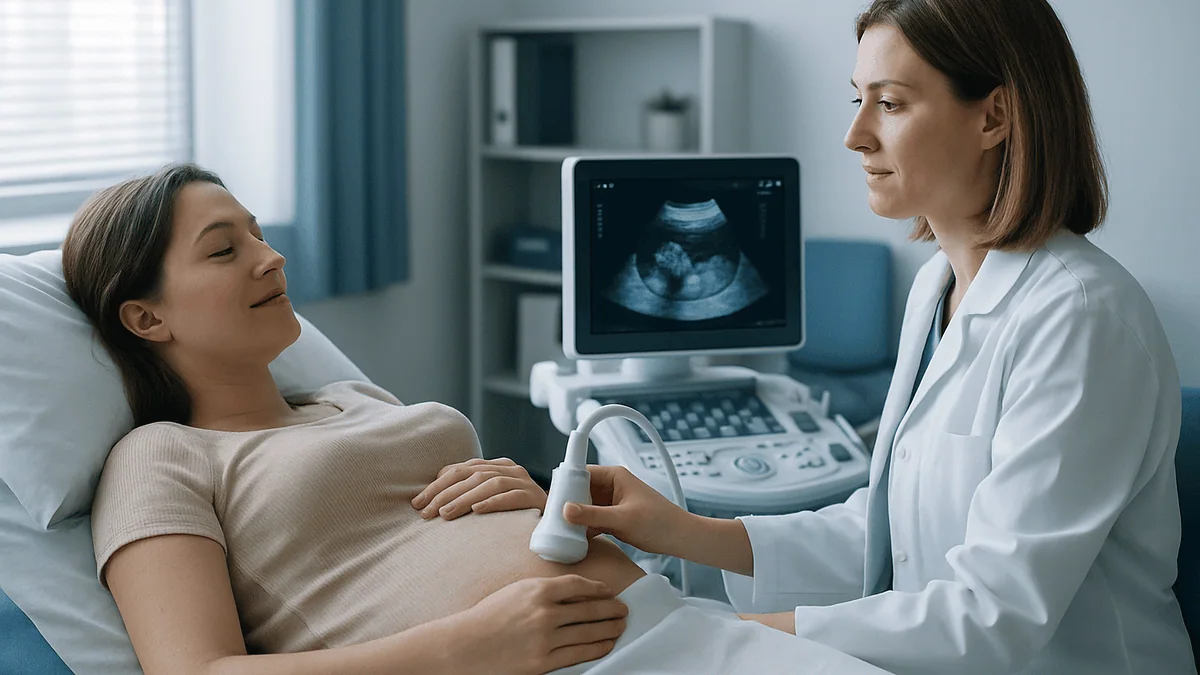
The pelvic ultrasound is over, the gel is wiped away, and the sentence that lands hardest is not the diagnosis. It is the quiet follow-up question: “Does this mean I can’t have children?” Anyone who has heard the word endometriosis in a consulting room knows that pause.
Here is what the evidence actually says. Endometriosis affects roughly 10 percent of women and girls of reproductive age worldwide, about 190 million people, according to the World Health Organization. A large share of them conceive without any help at all. Some need surgery or fertility treatment. A minority face a longer, harder road. The condition sits on a spectrum, and so do the outcomes.
What follows is a plain account of how endometriosis interferes with conception, what the odds look like, which treatments have evidence behind them, and where IVF fits. No miracle protocols, no fear. Just the facts you need to walk back into that consulting room with better questions.
Can you get pregnant with endometriosis? The honest answer
The short version is that endometriosis lowers the odds but rarely closes the door. Plenty of people learn they have the condition only after a pregnancy, sometimes during a cesarean birth, when a surgeon spots lesions on the pelvic lining. Others find out because they have been trying for a year without success and a laparoscopy finally explains why.
Both stories are common because endometriosis is a disease of degrees. Mayo Clinic estimates that about one-third to one-half of women with endometriosis have difficulty getting pregnant. Turn that figure around: at least half do not. The NHS puts it the same way, noting that endometriosis can damage the fallopian tubes or ovaries and lead to fertility problems, but that not everyone with the condition will experience them.
What tips a given person toward one group or the other? Several things matter more than the diagnosis itself. Age is the biggest, because egg quantity and quality decline with time regardless of endometriosis. The location of lesions counts too: patches on the ovaries or around the tubes cause more trouble than small spots on the pelvic wall. Scar tissue, called adhesions, can bind organs together and change how the tube reaches the ovary. Whether a partner has any sperm issues adds another layer.
So the useful question is not “Can I get pregnant?” but “What is my situation, specifically, and what would improve it?” That reframing matters. It moves you from a yes-or-no verdict to a plan, and plans can be adjusted.
Why does endometriosis make it harder to conceive?
Endometriosis is tissue similar to the uterine lining growing where it should not, most often on the ovaries, fallopian tubes and the peritoneum that drapes the pelvis. Each month that tissue responds to hormones much as the uterine lining does, but it has nowhere to go. The result is chronic inflammation, and inflammation is the thread running through most of the fertility problems that follow.
The mechanisms fall into a few groups, and the Cleveland Clinic and Mayo Clinic describe them in similar terms:
- Distorted anatomy. Adhesions can kink or block a fallopian tube, or pull the ovary away from it, so egg and sperm struggle to meet.
- Ovarian damage. Cysts filled with old blood, called endometriomas, can replace healthy ovarian tissue and reduce the pool of remaining eggs.
- An inflamed pelvic environment. Fluid in the pelvis carries higher levels of inflammatory molecules that may impair sperm movement, egg quality and early embryo development.
- Implantation effects. Some research suggests the uterine lining itself may be less receptive in people with endometriosis, though this is the least settled part of the picture.
Notice that only the first two are mechanical. Surgery can fix a blocked tube or remove a cyst, but it cannot switch off inflammation. That is one reason why a spotless post-operative pelvis does not guarantee a pregnancy, and why fertility treatments that bypass the pelvis, such as IVF, work even when disease is extensive.
Pain severity, incidentally, tells you little about fertility. Someone with debilitating periods may conceive easily; someone with almost no symptoms may have tubes sealed shut. The two problems travel together often enough to be linked, but they are not the same problem.
What are the odds of getting pregnant with endometriosis?
People want a number, and the truthful answer is that no single number fits everyone. The figure quoted most often, from Mayo Clinic, is that roughly one in three to one in two women with endometriosis will have trouble conceiving. “Trouble” here means taking longer than expected or needing help, not never conceiving.
For context, the NHS notes that around 84 percent of couples conceive naturally within a year if they have regular unprotected sex every two or three days. Endometriosis pulls that curve downward. The degree depends on the factors already mentioned: age, lesion location, adhesions, cysts and partner factors.
A few patterns are consistent across the guidance from major medical centers:
- Minimal or mild disease, with no tubal involvement, may barely change the odds. Many people in this group conceive on their own within a year or two.
- Moderate disease with adhesions or an endometrioma lengthens the timeline and often prompts earlier referral.
- Severe disease with blocked tubes usually means natural conception is unlikely and IVF becomes the main route.
Age cuts across all of these. A 28-year-old with moderate endometriosis may have better prospects than a 39-year-old with mild disease, simply because time is the strongest single predictor in fertility medicine. This is the reason specialists often advise people with endometriosis not to wait the full year before seeking advice, particularly after 35.
Beware of any website promising a precise personal percentage. Reputable clinicians will give you a range, explain what shapes it, and revise it as tests come back. That caution is a sign of good medicine, not of hedging.
Does the stage of endometriosis predict my fertility?
If you have had a laparoscopy, your report probably assigns a stage from I to IV: minimal, mild, moderate or severe. The staging system, developed by the American Society for Reproductive Medicine and described by both Mayo Clinic and the Cleveland Clinic, scores the number, depth and location of lesions plus the extent of adhesions.
It is tempting to read Stage IV as a verdict. It is not. Staging was built to standardize what surgeons see, not to forecast pregnancies, and it does an imperfect job of the latter. Two people with Stage III disease can have very different fertility if one has open tubes and healthy ovaries and the other has an endometrioma on each side.
Where stage does help:
- It flags tubal and ovarian involvement, which are the features most directly tied to conception.
- It shapes the treatment conversation. Minimal or mild disease may justify a period of trying or ovarian stimulation; severe disease more often points toward IVF.
- It gives surgeons a shared language, so a second opinion can interpret your report accurately.
Where it falls short is pain and inflammation. Deep, painful lesions in the space behind the uterus may score modestly yet cause severe symptoms. Meanwhile, a high stage driven by dense adhesions may produce little pain but plenty of infertility.
So treat the stage as one piece of a picture that also includes your age, ovarian reserve tests, a tubal patency check and a semen analysis for your partner if you have one. Fertility specialists weigh all of these together. A stage on its own should never be the reason to abandon hope, nor to delay seeking advice when the stage is low but the months keep passing.
How long should we try before asking for help?
Standard advice for couples without known problems is to seek help after a year of regular unprotected sex, or after six months if the woman is 35 or older. That guidance, from the NHS and echoed by Mayo Clinic, assumes nothing is already known to be wrong. A confirmed endometriosis diagnosis changes the calculation.
Many specialists suggest an earlier conversation, roughly six months of trying at any age, when endometriosis is already diagnosed, and sooner still if you are over 35, have had pelvic surgery, or know you have an endometrioma. The reasoning is simple. If treatment turns out to be needed, starting it earlier preserves options that shrink with time, particularly the number and quality of eggs.
Asking for help does not commit you to IVF. A first appointment typically involves:
- A detailed history of cycles, pain, previous surgery and pregnancies.
- Blood tests that estimate ovarian reserve and confirm ovulation.
- An ultrasound to look for cysts and check the uterus.
- A tubal patency test, often an X-ray or ultrasound with contrast, to see whether the tubes are open.
- A semen analysis for a male partner, because male factors contribute in a large share of couples regardless of endometriosis.
Armed with those results, a clinician can tell you whether continued trying is reasonable, whether surgery might help, or whether moving to assisted conception makes more sense. Some people leave that first visit reassured and go home to keep trying. Others get a clearer plan. Either way, the appointment buys information, and information is the one resource that does not run out.
Do endometriosis medications help you get pregnant?
This is one of the most common misunderstandings, and it matters because the answer is counterintuitive. The hormonal medications used to control endometriosis symptoms do not improve fertility, and while you are taking them you generally cannot conceive.
The logic follows from how they work. Endometriosis tissue is fed by estrogen and by the monthly hormonal cycle. Medical treatments, whether combined hormonal contraception, progestin-only options, or drugs that suppress the pituitary signals driving the ovaries, all work by damping that cycle. Less estrogen and no ovulation means quieter lesions and less pain. It also means no egg is released, so pregnancy is off the table for the duration.
Mayo Clinic and the NHS make the same point: hormone therapy manages symptoms while you take it, but does not cure the condition, and symptoms often return after stopping. Neither source suggests that a course of medication before trying to conceive raises the chance of natural pregnancy afterward.
There is one narrower context where hormonal suppression appears in fertility care: some IVF protocols use a period of ovarian suppression before stimulation in people with endometriosis. Whether and how to do this is a decision for the treating fertility team, and the evidence on benefit is mixed.
Practical implications:
- If you are on hormonal treatment for endometriosis and want to conceive, talk to your clinician about when and how to stop. Do not simply quit and hope.
- Pain management during a trying-to-conceive window relies more on non-hormonal approaches, planned with your doctor.
- Do not let anyone sell you a “fertility-boosting” hormone course. Such a thing does not exist in mainstream medicine.
The medicines have a real role, just not the role many people expect.
Can laparoscopic surgery improve my chances?
Surgery is where the evidence gets genuinely interesting, and genuinely nuanced. Laparoscopy, keyhole surgery through small abdominal incisions, is both the way endometriosis is definitively diagnosed and the way it is surgically treated. Surgeons either cut lesions out or destroy them with heat, and they can free adhesions and drain or remove cysts in the same operation.
Does it help conception? The NHS states that surgery to remove patches of endometriosis tissue can sometimes improve your chances of getting pregnant. Mayo Clinic describes conservative surgery, removing lesions while preserving the uterus and ovaries, as an option for people who want to become pregnant and also for those with significant pain. The best-studied benefit is in minimal and mild disease, where pooled trial evidence points to a modest increase in natural pregnancy rates after treating visible lesions compared with looking and doing nothing.
Several caveats deserve a place in the conversation with your surgeon:
- Benefit is modest, not transformative, and appears greatest in the first year or so after surgery.
- Every operation carries risks: bleeding, infection, injury to bowel or bladder, and new adhesions forming as the pelvis heals.
- Surgery on the ovaries can remove healthy egg-bearing tissue along with the cyst, which is why ovarian surgery is weighed carefully, especially before IVF.
- Repeat surgeries offer diminishing returns and increasing risk. Most specialists are reluctant to operate twice for fertility alone.
A sensible way to think about it: if you are already having a laparoscopy to confirm the diagnosis, treating what the surgeon finds usually makes sense. Scheduling an operation purely to improve fertility is a closer call that depends on your age, symptoms and whether IVF is on the horizon anyway. That is a decision for you and your treating team, made with the full picture in view.
What about endometriomas and my egg reserve?
An endometrioma is an ovarian cyst lined with endometriosis tissue and filled with thick, dark, old blood, which is why the informal name is a “chocolate cyst.” They are common in moderate and severe disease and they occupy a special place in fertility planning because the ovary is where eggs live.
Two problems arise. First, the cyst itself can crowd out and inflame surrounding ovarian tissue, and research suggests the egg reserve in an affected ovary is often lower than in the other side. Second, treating it is a trade-off. Removing the cyst wall, the technique most likely to prevent recurrence, inevitably takes some healthy ovarian tissue with it. Ovarian reserve markers commonly drop after such surgery.
That creates a real dilemma before IVF. Leaving a large cyst in place can make egg retrieval technically awkward and may raise a small infection risk if the needle passes through it. Removing it may reduce the number of eggs available to collect. There is no universal right answer, and guidance from major centers reflects that ambiguity: decisions are individualized based on cyst size, symptoms, prior surgery and current reserve.
Questions worth raising with your specialist:
- How large is the cyst, and is it growing?
- What does my ovarian reserve look like now, and how might surgery change it?
- Is the cyst causing pain that would justify surgery regardless of fertility?
- Could we proceed to egg collection with the cyst in place?
- If surgery is chosen, who will perform it, and how experienced are they in ovary-sparing technique?
For anyone not yet ready to try for a baby, an endometrioma diagnosis is also a reasonable prompt to discuss egg freezing. Preserving eggs before any ovarian surgery keeps future options open. Whether that step is right for you depends on age, reserve and personal circumstances, and it is another conversation to have with the treating team rather than a decision to make alone.
Which fertility treatments are used for endometriosis?
Fertility treatment for endometriosis follows a ladder, and where you start on it depends on age, disease extent and test results rather than on a fixed sequence. Mayo Clinic groups the options broadly: surgery to remove lesions, medications that stimulate ovulation, intrauterine insemination and in vitro fertilization.
Expectant management, meaning continuing to try naturally with good timing, remains a legitimate option for younger people with minimal or mild disease and open tubes. It costs nothing and carries no risk beyond time, which is precisely the resource that has to be weighed.
Ovarian stimulation with intrauterine insemination, or IUI, is the next rung. Medication encourages the ovaries to mature more than one egg; washed sperm is placed directly in the uterus around ovulation. The approach suits minimal or mild endometriosis when tubes are open and sperm is normal. It does little for people with blocked tubes or extensive adhesions, because it still relies on the pelvis working.
IVF bypasses the pelvis altogether. Eggs are retrieved directly from the ovaries, fertilized in the laboratory, and an embryo is transferred into the uterus. That is why IVF is the treatment of choice for moderate to severe disease, tubal damage, older age, or when other approaches have not worked.
A rough map of who is steered where:
- Under 35, mild disease, open tubes: try naturally for a defined period, then consider stimulation with IUI.
- Any age with tubal blockage or dense adhesions: IVF is usually recommended first.
- Over 35 or with reduced ovarian reserve: many specialists move to IVF sooner to avoid spending months on lower-yield options.
- Endometrioma present: individualized decision about surgery versus proceeding, as discussed above.
Every rung involves risks, costs and emotional load, and each has alternatives. A good clinician will explain why a particular step is being recommended for you, what happens if it fails, and how many attempts are reasonable before changing course.
IVF and endometriosis: what to expect
IVF is the most effective treatment for endometriosis-related infertility because it sidesteps the two mechanical problems, blocked tubes and distorted anatomy, that no medication can undo. The process is the same as for anyone else: ovarian stimulation for roughly two weeks, egg retrieval under sedation, laboratory fertilization, then embryo transfer either fresh or after freezing.
A few endometriosis-specific wrinkles come up. Ovarian reserve may be lower, especially after cyst surgery, so fewer eggs may be collected per cycle. Some clinics use a period of hormonal suppression before stimulation; the evidence on whether this helps is mixed and the decision rests with your team. Adhesions can occasionally make the ovaries harder to reach at retrieval.
What about success? The NHS publishes national IVF birth rates by age using data from the UK regulator. These figures are for all IVF patients, not endometriosis specifically, but they are the most reliable public benchmark for how heavily age weighs on the outcome.
| Age at treatment | Live births per embryo transferred (NHS, 2019 UK data) |
|---|---|
| Under 35 | 32% |
| 35 to 37 | 25% |
| 38 to 39 | 19% |
| 40 to 42 | 11% |
| 43 to 44 | 5% |
| Over 44 | 4% |
Two lessons sit in that table. First, results are per transfer, so cumulative chances over several attempts are higher than any single row. Second, the steepest drop begins around 38, which is why specialists tend to compress the decision timeline for people in their late thirties.
Whether endometriosis itself lowers IVF outcomes beyond the effects of age and egg number is debated. Some studies suggest slightly lower rates in severe disease; others find that once an embryo is transferred, outcomes are comparable. Your clinic should discuss your own expected range rather than quote national averages. Risks of IVF, including ovarian hyperstimulation and multiple pregnancy, apply as they would to anyone, and single embryo transfer is now standard practice in most settings to reduce the latter.
Is it safe to be pregnant with endometriosis?
Yes, for the overwhelming majority of people, pregnancy with endometriosis proceeds normally. This question deserves a clear answer because the fear behind it is real and often unspoken.
Many people notice that endometriosis symptoms ease during pregnancy. The hormonal environment of pregnancy, high in progesterone and free of the monthly cycle, quiets the lesions in much the same way hormonal medication does. Some people feel better than they have in years. The old advice that pregnancy “cures” endometriosis is a myth, though. Mayo Clinic and the NHS both note that symptoms commonly return after birth, and particularly after breastfeeding ends and cycles resume.
On complications, honesty requires a measured statement. Some observational studies have reported modest increases in certain outcomes among people with endometriosis, including ectopic pregnancy, placental problems, preterm birth and cesarean delivery. Absolute increases in these studies are small, findings are not consistent across all of them, and it is difficult to separate the effect of endometriosis from the effects of age, prior surgery and fertility treatment, which travel alongside it. No major guideline currently recommends different routine antenatal care for endometriosis alone.
What this means in practice:
- Tell your maternity team about your diagnosis and any surgery, so it is in your record.
- Report severe or one-sided pelvic pain or bleeding in early pregnancy promptly, since ectopic pregnancy needs urgent assessment.
- Expect standard care unless your history adds other risk factors.
Rarely, endometriosis lesions or scar tissue cause complications during pregnancy or delivery, such as pain from stretched adhesions. These are uncommon and are managed by the obstetric team as they arise.
The bottom line is reassuring: a pregnancy achieved with endometriosis is, in almost every case, a pregnancy that can be carried and delivered like any other.
Can diet, supplements or lifestyle improve fertility with endometriosis?
Type this question into a search engine and you will drown in confident advice: cut dairy, cut gluten, take this powder, avoid that oil. The honest state of the evidence is far thinner than the confidence.
Start with what is solid and applies to fertility in general, as summarized by the NHS and Mayo Clinic:
- Not smoking. Smoking accelerates egg loss and lowers success with both natural conception and IVF.
- Keeping alcohol low or absent while trying, since heavier drinking is associated with reduced fertility.
- Staying in a healthy weight range, because both very low and very high body weight can disrupt ovulation.
- Taking a folic acid supplement before conception, standard advice for anyone planning a pregnancy, to reduce the risk of neural tube defects.
- Regular, moderate physical activity.
Now the endometriosis-specific claims. Anti-inflammatory eating patterns, rich in vegetables, fish and whole grains, are reasonable on general health grounds and some small studies link them to less pain. Evidence that any specific diet raises pregnancy rates in endometriosis is weak and mostly observational. Eliminating whole food groups without a diagnosed intolerance has no proven fertility benefit and can make an already stressful period harder.
Supplements marketed for endometriosis or “egg quality” generally rest on laboratory findings or tiny trials. The NIH Office of Dietary Supplements is a good place to check what is actually known about any product you are considering, and your clinician should know what you are taking, since some supplements interact with fertility medication.
Stress deserves a word. Infertility causes stress; stress does not, on current evidence, cause infertility in any meaningful way. Anyone telling you to “just relax” is misinformed. Support, counseling and rest are worth having because they make the process bearable, not because they are a treatment.
When should you see a doctor about endometriosis and fertility?
Two timelines run in parallel here: the fertility timeline and the symptom timeline. Both deserve attention.
On fertility, arrange an appointment if any of the following applies:
- You have a confirmed endometriosis diagnosis and have been trying for six months or more.
- You are 35 or older and have been trying for six months, regardless of diagnosis.
- You are under 35 and have been trying for a year.
- You have very painful, heavy or irregular periods and are planning a pregnancy, even if you have not started trying, since evaluation can begin early.
- You have a known endometrioma, previous pelvic surgery or a history of pelvic infection.
On symptoms, the NHS advises seeing a GP if you have signs of endometriosis, especially if they are affecting daily life. Pain that keeps you home from work or school, pain with sex, or pain with bowel movements or urination during periods all warrant a conversation.
Some signs need urgent care rather than a routine appointment. Seek same-day medical attention for sudden severe pelvic or abdominal pain, particularly with fainting, vomiting or a rapid heartbeat, which can indicate a ruptured or twisted ovarian cyst. If you are, or might be, pregnant and have one-sided pelvic pain, shoulder-tip pain or vaginal bleeding, treat it as an emergency because these can signal an ectopic pregnancy. Fever with pelvic pain also needs prompt assessment.
When you do see a doctor, bring a symptom diary covering at least two cycles, a list of previous surgeries and their reports if you have them, and a note of how long you have been trying. It saves a visit and gets you to useful tests faster. If you feel dismissed, ask directly for a referral to a gynecologist or fertility specialist. Persistence is not rudeness; it is advocacy for your own care.
Frequently asked questions
What are the odds of getting pregnant with endometriosis?
Most people with endometriosis can conceive, but roughly one-third to one-half experience difficulty, according to Mayo Clinic. Your personal odds depend far more on age, whether your fallopian tubes are open, the presence of ovarian cysts and any partner factors than on the diagnosis itself. A fertility specialist can give a realistic range after basic tests, and that range often improves with the right treatment.
Can I carry a baby if I have endometriosis?
Yes. Once pregnant, the vast majority of people with endometriosis carry and deliver normally. Some observational studies report small increases in complications such as preterm birth or placental problems, but the findings are inconsistent and hard to separate from age and fertility treatment. No major guideline recommends different routine antenatal care for endometriosis alone. Make sure your maternity team knows your history.
Is it hard to get pregnant if I have endometriosis?
It can take longer, but not always. Mild disease that spares the tubes and ovaries may barely change your chances. Moderate or severe disease with adhesions, blocked tubes or endometriomas makes natural conception harder and often leads to a recommendation for surgery or IVF. Because age is the strongest factor, many specialists suggest seeking advice after six months of trying rather than the usual twelve.
Does the stage of endometriosis determine whether I can conceive?
Not on its own. The four-stage system scores what a surgeon sees, and it correlates only loosely with fertility. Stage IV with open tubes and healthy ovaries can carry better prospects than Stage II with an endometrioma on each side. Clinicians combine stage with your age, ovarian reserve results, tubal tests and a semen analysis before advising on treatment.
Will endometriosis medication help me get pregnant?
No. Hormonal treatments for endometriosis work by suppressing the menstrual cycle and ovulation, which quiets lesions and reduces pain but also prevents conception while you take them. They do not raise the chance of natural pregnancy after stopping. If you are on hormonal treatment and want to conceive, discuss the timing of stopping and alternative pain strategies with your prescribing clinician.
Should I have surgery before trying to conceive?
It depends on your situation. The NHS notes that removing endometriosis tissue can sometimes improve your chance of pregnancy, with the clearest evidence in minimal to mild disease. Surgery carries risks, including new adhesions and loss of ovarian tissue if cysts are removed. If IVF is likely anyway, surgery may add little. The decision should be made with a gynecologist or fertility specialist who knows your full picture.
Does pregnancy cure endometriosis?
No, though it often brings relief. The hormonal environment of pregnancy, dominated by progesterone and free of monthly cycling, calms lesions in much the same way hormonal medication does. Mayo Clinic and the NHS both note that symptoms usually return after birth, particularly once periods resume. Pregnancy is a reason to hope for a break from symptoms, not a treatment strategy.
Is IVF the only option for severe endometriosis?
IVF is usually the most effective option when tubes are blocked or adhesions are extensive, because it bypasses the pelvis entirely. It is not always the first step. Some people with severe disease still have open tubes and may try ovarian stimulation first, and surgery occasionally restores anatomy enough for natural conception. A fertility team weighs age, reserve and disease pattern before recommending a path.
Should I remove an endometrioma before IVF?
There is no universal answer. Removing the cyst can make egg retrieval easier and lower infection risk, but it typically reduces ovarian reserve because healthy tissue comes away with the cyst wall. Leaving it may mean collecting eggs around it. Specialists individualize the decision based on cyst size, symptoms, prior surgery and current reserve markers, so ask your team to explain their reasoning for your case.
Can diet or supplements improve fertility with endometriosis?
General fertility advice applies: do not smoke, keep alcohol low, maintain a healthy weight, stay active and take folic acid before conception. Evidence that any specific diet or supplement raises pregnancy rates in endometriosis is weak and mostly observational. Anti-inflammatory eating is reasonable for overall health, but eliminating whole food groups has no proven fertility benefit. Tell your clinician about any supplements you take.
References
- Endometriosis fact sheet – World Health Organization
- Endometriosis – NHS
- Endometriosis – Cleveland Clinic
- IVF – NHS
This article is for general information only and is not a substitute for professional medical advice. Please consult a qualified doctor about your individual situation.

More from the Blog
What Size of Ovarian Cyst Is Dangerous? Centimetres, Millimetres and What They Mean
There is no single size at which an ovarian cyst becomes dangerous. Most cysts are small, fluid-filled and disappear on their own within a…
Pelvic Ultrasound vs Hormone Tests in PCOS: Why Diagnosis Needs More Than One Finding
Neither a pelvic ultrasound nor a blood test can diagnose PCOS on its own. Clinicians use the Rotterdam approach, which requires at least two…
Endometriosis Treatment in Steps: Hormonal Medicine, Pain Care and When Surgery Is Added
Endometriosis treatment options are usually built in steps. Most people start with pain care, often anti-inflammatory medicines, and hormonal medicine that lowers estrogen's effect…
How Fast Ovarian Cysts Grow: Typical Timelines, Warning Signs and When to Treat
Most ovarian cysts are functional cysts that form during a normal menstrual cycle, reach roughly 2 to 5 centimeters, and shrink or disappear within…
What the Robot Actually Changes in a Robotic Hysterectomy: Precision, Incisions and Recovery
In a robotic hysterectomy the robot does not operate on its own. The surgeon sits at a console a few feet from the patient…

Cystectomy vs Oophorectomy: Removing the Cyst or the Ovary and How Surgeons Decide
A cystectomy removes only the cyst and leaves the ovary in place; an oophorectomy removes the whole ovary, sometimes with the fallopian tube. Surgeons…