

How Laparoscopic Endometriosis Surgery Works: Excision, Incisions and How Long It Takes
Key Takeaways
- The World Health Organization estimates endometriosis affects about 10% of reproductive-age women and girls worldwide, roughly 190 million people.
- Laparoscopic endometriosis surgery typically uses three or four abdominal cuts of about 1 to 1.5 cm each, with the camera entering at the navel.
- A diagnostic laparoscopy usually takes 30 to 60 minutes of operating time, while surgery treating extensive disease takes longer and has no single typical duration.
- The NHS puts minor complications of laparoscopy at 1 to 2 per 100 cases and serious complications at about 1 in 1,000.
- Shoulder-tip pain after laparoscopy comes from residual carbon dioxide irritating the diaphragm and usually settles within a few days.
- Removing an ovarian endometrioma can lower the ovary's egg reserve, which is why fertility specialists sometimes advise leaving smaller cysts before IVF.
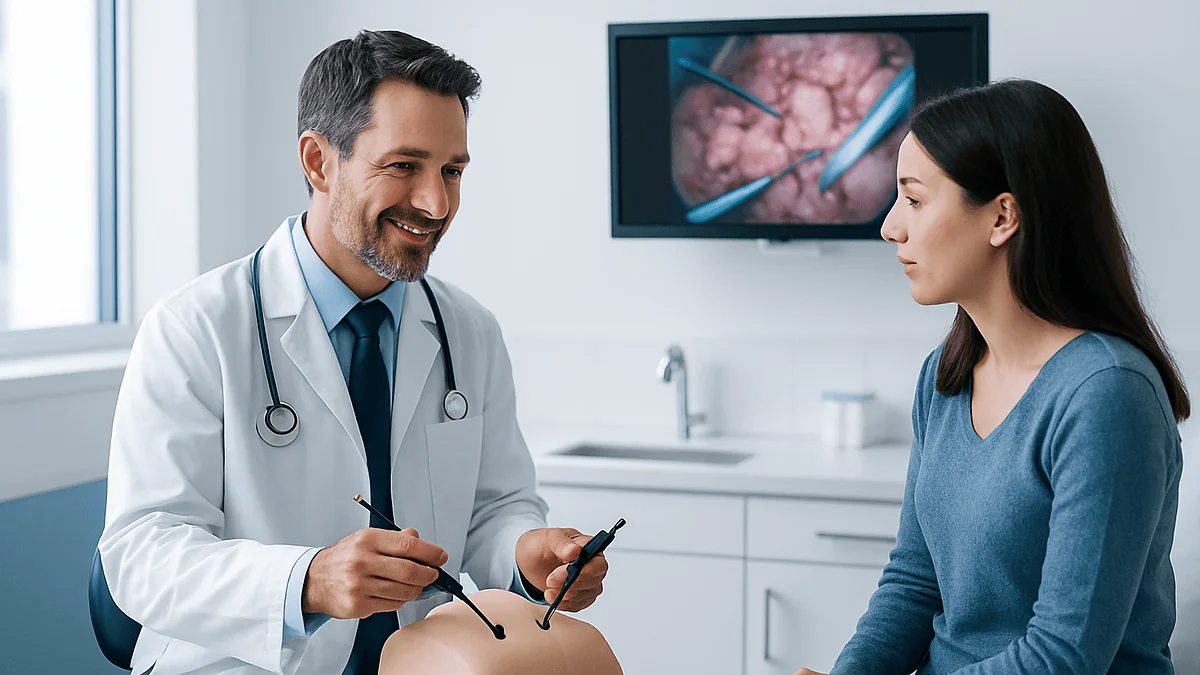
Laparoscopic endometriosis surgery is keyhole surgery under general anesthesia. A surgeon makes a few small abdominal cuts, usually around 1 to 1.5 cm, inflates the abdomen with carbon dioxide, and uses a camera to find endometriosis tissue, then cuts it out (excision) or destroys it (ablation). A diagnostic look takes roughly 30 to 60 minutes; operations treating extensive disease take longer. Most people go home the same day.
The appointment letter says one word she has been Googling for weeks: laparoscopy. She has lived with periods that stop her working, pain during sex she stopped mentioning, and two doctors who told her it was probably normal. Now a gynecologist is proposing to look inside and, if the tissue is there, remove it. She wants to know what the operation actually involves, how many scars she will have, and whether she will be one of the people who feels better afterward.
Laparoscopic endometriosis surgery sits at an awkward crossroads. For many people it is the moment a years-long question finally gets an answer. Yet it is still an operation, with an anesthetic, a recovery period, and an honest chance the disease returns.
This explainer walks through what happens in the operating room, how surgeons decide between cutting tissue out and burning it away, what the first weeks look like, and which claims about the surgery do not survive contact with the evidence.
What is laparoscopic endometriosis surgery, in plain language?
Endometriosis is a condition in which tissue resembling the lining of the uterus grows outside it, most often on the pelvic lining, the ovaries, the bowel surface and the ligaments that hold the uterus in place. The World Health Organization estimates it affects roughly 10% of women and girls of reproductive age worldwide, about 190 million people. That tissue responds to the monthly hormone cycle, bleeds with nowhere to drain, and provokes inflammation and scarring.
Laparoscopy is surgery performed through small cuts using a thin telescope with a camera on its tip, called a laparoscope. Laparoscopic endometriosis surgery simply means using that keyhole approach to see the disease directly and treat it in the same sitting. Surgeons describe this as conservative surgery: the aim is to remove or destroy the abnormal tissue while leaving the uterus and, wherever possible, the ovaries intact.
Why not just use a scan? Ultrasound and MRI have improved and can pick up ovarian cysts filled with old blood, known as endometriomas, and some deeper nodules. Superficial patches on the pelvic lining, however, are often invisible on imaging. The NHS still describes laparoscopy as the only way to be certain of the diagnosis, which is why the operation is often both diagnostic and therapeutic at once.
Two things make this surgery distinctive compared with, say, removing a gallbladder. The disease can hide in several places, so the surgeon inspects the whole pelvis systematically rather than heading for one organ. And it sits close to the bowel, bladder and ureters, the tubes carrying urine from kidney to bladder, which shapes how carefully each patch is handled.
How does the surgery actually work, step by step?
You arrive fasted, meet the anesthetist, and drift off under general anesthesia, a medicine-induced sleep in which you feel nothing and remember nothing. A breathing tube is placed once you are asleep. A small catheter is usually inserted to empty the bladder so it sits flat and out of the way, and a slim instrument may be positioned in the uterus so the surgeon can tilt it to see behind.

The first cut is made at or just inside the navel. Through it, the surgeon introduces carbon dioxide gas to lift the abdominal wall away from the organs, creating a working space. MedlinePlus describes this inflation as the step that lets the team see clearly; without it the pelvis is a collapsed tent. The laparoscope goes in next, projecting a magnified, high-definition image onto screens.
Then comes the survey. The surgeon rotates the camera around the pelvic lining, or peritoneum, checks both ovaries and fallopian tubes, looks into the pouch between the uterus and rectum, and inspects the bladder surface and the pelvic side walls. Endometriosis can look like dark powder-burn spots, clear blisters, red flame-like lesions, white scar plaques, or firm nodules buried in tissue. Cleveland Clinic notes that findings are often graded from stage I (minimal) to stage IV (severe), a system that counts lesions and scar tissue but does not reliably track how much pain a person has.
Treatment follows through one or two additional small cuts lower on the abdomen. Fine instruments cut, grasp, seal blood vessels and free adhesions, the bands of scar tissue that can stick organs together. Cysts are drained and their walls removed. Tissue samples go to the laboratory to confirm the diagnosis under a microscope.
At the end, the gas is released, the instruments withdrawn, and each cut closed with stitches or surgical glue.
Where are the incisions, and how big are they?
Most people picture a single long scar and are relieved to learn otherwise. A typical laparoscopic endometriosis operation uses three or four cuts, each usually 1 to 1.5 cm long according to the NHS, so roughly the width of a fingernail. Larger cuts are occasionally needed to remove a big cyst intact, and the surgeon will mention that possibility beforehand if imaging suggests it.
The camera port sits at the navel, where a scar tucks into the fold and often becomes hard to find within months. The working ports are placed lower, commonly one on each side just inside the hip bones, sometimes with a third in the midline above the pubic bone. Placement varies by surgeon and by where the disease is expected; deep disease behind the uterus may call for slightly different positioning than an ovarian cyst.
Each cut is closed in layers. The deeper layer of muscle sheath is stitched where a port was wide enough to risk a hernia; the skin is closed with dissolving stitches, glue, or small adhesive strips. Dressings usually come off within a couple of days, and dissolving stitches disappear on their own over several weeks.
What people notice afterward is often not the cuts themselves but the sensations around them: pulling when standing up straight, tenderness when a waistband presses, and occasionally a small area of numbness near an incision that fades over time. Bruising around the port sites is common and harmless.
Keeping the wounds clean and dry for the first day or two, then showering normally and patting them dry, is standard advice, but follow the specific instructions from your own team, since closure materials differ. Redness spreading outward from a cut, thick discharge, or a wound that opens is a reason to call rather than wait.
Excision vs ablation endometriosis: what is the difference?
Once the disease is found, the surgeon has two broad ways to deal with each patch. Excision means cutting the lesion out along with a thin margin of surrounding tissue, so that the entire depth of the disease is removed. Ablation means destroying the lesion where it sits, using heat from electrical current or laser, without lifting it away.
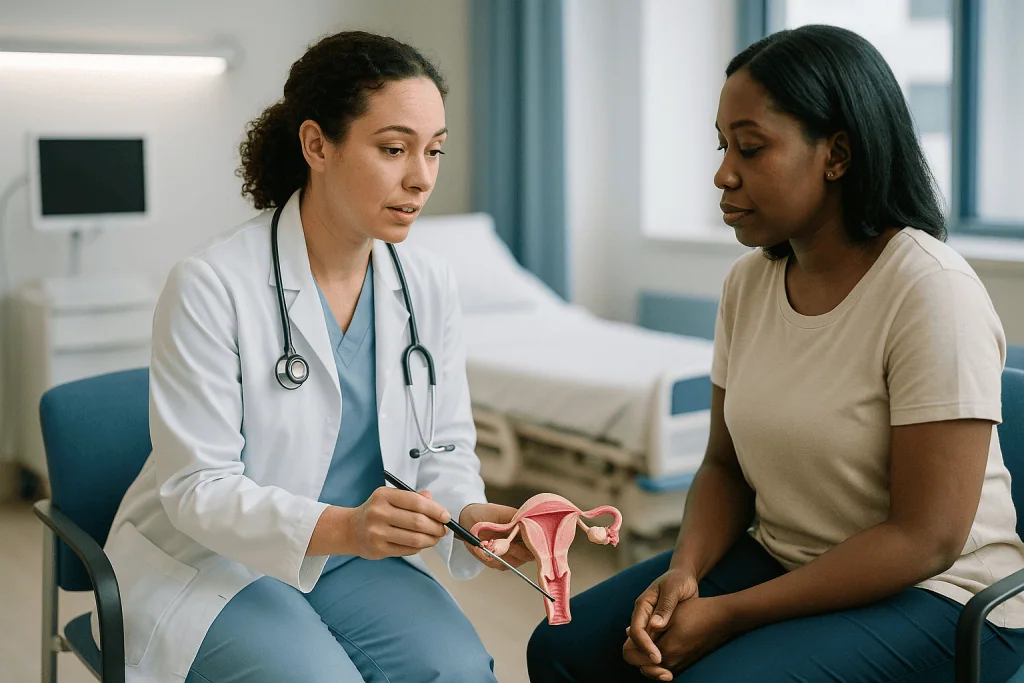
The distinction matters most for deep disease. A lesion that looks like a small surface spot can extend several millimeters into the tissue beneath, like an iceberg. Ablation treats the surface it can see and heat can penetrate; excision follows the lesion down until healthy tissue appears. Excision also yields a specimen for the pathologist, which ablation destroys.
| Feature | Excision | Ablation |
|---|---|---|
| Technique | Lesion cut out with margin | Lesion destroyed in place with heat or laser |
| Tissue for diagnosis | Yes, sent to laboratory | No, tissue is destroyed |
| Suited to | Deep nodules, lesions near bowel, bladder, ureter | Superficial patches on pelvic lining |
| Skill and time | Generally more demanding and longer | Generally quicker |
| Typical concern | Injury to structures beneath when dissecting deeply | Incomplete treatment of deep disease |
Does one work better? The NHS describes both removing and destroying tissue as accepted treatments, and Mayo Clinic frames the goal as removing as much endometriosis as possible while preserving organs. For deep infiltrating endometriosis, lesions penetrating more than a few millimeters into tissue, most specialists favor excision because heat cannot reliably reach the bottom. For scattered superficial disease, the evidence comparing the two on pain relief is limited and mixed, and many surgeons combine methods in the same operation.
The honest answer is that the surgeon’s judgment about where and how deep the disease sits drives the choice, patch by patch.
How long does endometriosis surgery take?
People ask this for practical reasons: who is picking them up, how long their partner waits, whether to arrange childcare for a half day or a whole one. The truthful answer is a range, and the range is wide.
A diagnostic laparoscopy, where the surgeon looks, takes a biopsy and perhaps treats a few surface spots, usually runs about 30 to 60 minutes of operating time according to the NHS. Add the anesthetic induction beforehand, the wake-up period afterward, and time in the recovery area, and the whole episode from leaving the ward to returning stretches considerably beyond the surgery itself.
Operations that treat established disease take longer, and no reputable source quotes a single figure because the work varies so much. Freeing an ovary that is stuck to the pelvic side wall, removing the wall of a large endometrioma, and dissecting a nodule off the bowel or away from a ureter are each meticulous jobs. Surgeons working near the bowel or bladder move slowly on purpose. A colorectal or urology colleague may join for parts of the operation when imaging predicts bowel or bladder involvement, which adds time but is a sign of careful planning rather than trouble.
Your surgeon can usually give an estimate based on the scan findings and the planned procedure. Treat it as a forecast, not a promise. If the operation runs over, the most common reason is that disease turned out more extensive than pictures suggested, and the team chose to treat it fully rather than stop short.
One more timing question comes up constantly: will I stay overnight? The NHS notes that most people having a laparoscopy go home the same day. Longer or more complex operations, bowel surgery, or slow recovery from the anesthetic are the usual reasons for an overnight stay.
Who is usually offered laparoscopic endometriosis surgery, and who is asked to wait?
Surgery is rarely the first step. Guidelines from the NHS and the NIH describe a stepwise approach: pain relief and hormonal treatments first for most people, with surgery considered when those do not help enough, cannot be tolerated, or when fertility is the main concern and hormonal suppression would prevent conception.
People commonly offered laparoscopy include those whose pain persists despite adequate trials of medical treatment; those with an ovarian endometrioma that is large, growing or of uncertain nature on imaging; those with suspected deep disease affecting bowel or bladder function; those trying to conceive whose evaluation points to endometriosis as a contributing factor; and those who want a definite diagnosis before committing to long-term hormonal therapy.
Others are often advised to wait or to try a different route first. Someone whose symptoms are controlled on a hormonal method, and who is not trying to conceive, may gain little from an operation that carries its own risks. Someone with mild symptoms who has not yet tried medical management is usually encouraged to do so. Someone planning IVF with a small endometrioma may be told that removing the cyst could reduce the ovary’s remaining egg supply, and the fertility team may prefer to leave it. A person with heart, lung or clotting conditions that make general anesthesia riskier will have that weighed carefully.
None of these are rigid rules. Endometriosis is a chronic condition, and the WHO points out that treatment should be shaped by the individual’s symptoms, wishes and life stage rather than by disease stage alone. The decision to operate, and what to do when the surgeon gets inside, belongs to a conversation between you and your treating team, ideally with time to think and ask questions before consenting.
How serious is laparoscopic surgery for endometriosis? Risks in proportion
Serious is a relative word. Compared with the open abdominal surgery that preceded it, laparoscopy is gentler: smaller wounds, less blood loss, faster return to daily life. Compared with taking a tablet, it is unmistakably an operation.
The NHS gives useful numbers for laparoscopy in general. Minor complications, such as infection at a wound site, minor bleeding or bruising, and nausea and vomiting after the anesthetic, occur in an estimated 1 to 2 out of every 100 cases. Serious complications occur in about 1 in 1,000 cases and include damage to an organ such as the bowel or bladder, damage to a major blood vessel, a blood clot in the leg or lung, and a reaction to the anesthetic.
Endometriosis surgery has particular features that shift those odds within an individual. Disease that has glued the rectum to the back of the uterus, or that wraps around a ureter, means the surgeon is working millimeters from structures that must not be cut. The more extensive and deeper the disease, the higher the chance of an injury or of needing a larger incision to complete the operation safely. Injury to the bowel can occasionally lead to a second operation or a temporary stoma, an opening on the abdomen for bowel contents; this is uncommon but is discussed beforehand when bowel disease is suspected.
Excising an endometrioma from the ovary involves removing some ovarian tissue with the cyst wall, which can lower the ovary’s reserve of eggs. For someone planning a family, this trade-off deserves an explicit discussion.
Putting it together: for most people, this is a low-risk day-case operation with a small but real chance of complications that rises with the complexity of the disease. Your surgeon’s assessment of your own imaging is the best guide to where you sit on that spectrum.
How painful is an endo laparoscopy?
Nobody feels the operation itself. What people mean is the days afterward, and the answer is that discomfort is expected, usually manageable, and comes from three separate sources that behave differently.
The first is the incisions. Wound pain is typically sharpest in the first 48 hours, feels like a deep bruise, and eases steadily. Coughing, laughing and getting out of bed pull on the cuts; pressing a folded towel against the abdomen when you do these things helps more than people expect.
The second is the gas. Carbon dioxide left behind irritates the diaphragm, the muscle under the lungs, and that irritation is felt as pain in the shoulder or upper back, often the right side, along with bloating. It surprises people who expected only pelvic pain. The NHS notes these gas effects are common and usually settle within a few days; walking and changing position help disperse the gas.
The third is the pelvis itself. Where tissue was removed, there is raw surface that heals over a week or two, and cramping similar to a period is common. Some people also describe a sore throat from the breathing tube, which fades within a day or two.
Pain relief after surgery usually combines simple analgesics with stronger medicine for the first few days if needed; your team will prescribe what suits your history and explain how to use it. Many people find the pain is less than a bad period by day three or four, though everyone’s baseline differs, and someone who has lived with severe chronic pain may need a more tailored plan.
Pain that worsens after initially improving, rather than following the gradual downward curve, is the pattern that should prompt a call.
Laparoscopy for endometriosis recovery time: the first days and weeks
Day zero is mostly sleep, sips of water, a walk to the bathroom, and confirming you can pass urine before going home. Someone should drive you and stay with you that first night, since the anesthetic dulls judgment and coordination for a day.
Days one to three bring the peak of soreness, bloating and shoulder pain described above. Short walks around the home several times a day are the single most useful thing you can do: they move the gas, keep blood flowing in the legs, and help the bowels wake up. Constipation is common after anesthesia and opioid painkillers; fluids, fiber and a stool softener if your team suggests one help. Light vaginal bleeding or spotting is normal for a few days, especially if an instrument was placed in the uterus.
By the end of the first week, most people are moving comfortably around the house and managing without stronger painkillers. The NHS suggests that after a laparoscopy done for diagnosis, normal activities can usually resume within about five days; after laparoscopy used to treat a condition, recovery takes longer and depends on how much was done. Extensive excision, ovarian cystectomy or bowel work commonly means several weeks before you feel fully yourself.
Returning to work depends on the job. Desk-based work is often possible within one to two weeks after treatment surgery; physically demanding work may need longer. Driving is sensible only once you can perform an emergency stop without pain and are off sedating medication, and your insurer may have its own rules. Heavy lifting and vigorous exercise are usually paused for a few weeks to protect the healing muscle layer. Sex can resume once bleeding has stopped and it feels comfortable, though your team may advise waiting longer if work was done in the vagina or on the bowel.
Fatigue often outlasts pain. Feeling wiped out at three o’clock for a couple of weeks is normal, not a sign something is wrong.
Are you more fertile after a laparoscopy?
This is one of the most searched questions about the operation, and it deserves a careful answer rather than a reassuring one.
Endometriosis can affect fertility in several ways: by distorting the anatomy so the fallopian tube cannot pick up an egg, by forming cysts that replace healthy ovarian tissue, and by creating an inflammatory environment in the pelvis that seems less friendly to eggs, sperm and embryos. Removing disease and freeing stuck organs addresses the first two mechanisms directly.
Both the NHS and Mayo Clinic state that surgery to remove endometriosis can improve the chance of pregnancy, and both add the crucial qualifier: there is no guarantee. Systematic reviews suggest a modest improvement in natural conception rates after surgical treatment of minimal to mild disease compared with a look-only laparoscopy, but the absolute gain is measured in a minority of couples, and the effect for moderate and severe disease is less clear. Fertility also depends on age, egg reserve, sperm quality and tubal health, none of which the operation changes.
There is a counterweight. Removing an endometrioma takes some healthy ovarian tissue with it and can lower the ovary’s egg reserve, which is why fertility specialists sometimes advise against cystectomy before IVF, particularly for smaller cysts or when a previous ovarian operation has already been done.
Timing matters too. Any fertility benefit from clearing disease is thought to be greatest in the months after surgery, before lesions have a chance to return, so couples are often advised to try soon afterward or to plan assisted conception promptly rather than wait.
If pregnancy is your priority, ask that a fertility specialist be part of the planning before the operation, not after. The surgical plan for someone hoping to conceive can legitimately differ from the plan for someone seeking pain relief alone.
Does endometriosis come back after surgery, and what happens with hormone treatment afterward?
It can. The NHS is direct that endometriosis may return after surgery, and this is the fact most often left out of optimistic accounts. Endometriosis is a chronic, hormone-responsive condition; surgery removes the lesions present on the day, but it does not switch off whatever process produced them. Microscopic disease invisible to the camera may remain, and new lesions can form.
Reported recurrence varies widely between studies depending on how it is defined: returning pain, a new cyst on ultrasound, or disease seen at a second operation. What the evidence consistently shows is that recurrence rises with time, is more likely with incomplete removal and with severe disease, and is lower in people who use ongoing hormonal suppression afterward and are not trying to conceive.
That is why many surgeons recommend continuing or starting hormonal treatment after the operation. The mechanism is straightforward: combined hormonal contraceptives, progestogen-only methods, the hormonal intrauterine system and drugs that suppress ovarian hormone production all reduce the cyclical stimulation that endometriosis tissue feeds on, either by thinning it or by stopping periods altogether. Mayo Clinic describes hormone therapy as a way to reduce or eliminate pain and slow regrowth, while noting it is not a permanent fix and symptoms may return when treatment stops.
Which method, whether to use one at all, and for how long are decisions for you and your prescribing clinician, weighing side effects, contraceptive needs and plans for pregnancy. Someone trying to conceive will usually skip suppression, since it prevents ovulation.
A second operation is sometimes needed years later. Repeat surgery is generally more difficult because scar tissue from the first procedure obscures the anatomy, which is one reason many specialists aim to do a thorough job the first time rather than a series of small ones.
What people often get wrong about endometriosis excision surgery
The first myth is that surgery ends the condition. It treats the disease present at the time. Because endometriosis is chronic, ongoing management, whether hormonal, surgical or symptom-based, is the realistic frame. Anyone promising otherwise is selling something.
The second is that stage predicts pain. Cleveland Clinic and Johns Hopkins both note that someone with stage I disease can have disabling pain while someone with stage IV disease can have none. Staging counts lesions and adhesions; it does not measure suffering, and it should not be used to decide whose pain is real.
The third is that a hysterectomy is the definitive answer. Removing the uterus treats period pain and problems arising in the uterus itself, but endometriosis by definition sits outside the uterus. Mayo Clinic notes that hysterectomy is no longer considered the most effective approach, and lesions left behind can continue to cause symptoms. It remains an option in specific circumstances, decided case by case.
The fourth is that a normal scan rules endometriosis out. Ultrasound and MRI can miss superficial disease entirely. A clear scan with persistent symptoms is a reason for further discussion, not dismissal.
The fifth is that pregnancy resolves the condition. Symptoms often ease during pregnancy because periods stop, but they commonly return afterward. Pregnancy is not a treatment, and advising someone to have a baby for their endometriosis is both medically unsound and unkind.
The sixth is that excision is always superior to ablation, or vice versa. For deep disease, excision has a clear rationale. For superficial disease, the comparative evidence is thin, and skilled surgeons use both. What matters more than the label is complete treatment of what is found and a surgeon experienced in the kind of disease you have.
The seventh is that recovery is a weekend. For diagnostic laparoscopy that can be roughly true; for extensive excision, plan for weeks.
Questions to ask your care team before laparoscopic endometriosis surgery
Consent conversations are often short and full of unfamiliar words. Arriving with questions written down shifts the balance. These are the ones patients most often wish they had asked.
- Based on my scans and symptoms, where do you expect to find disease, and how extensive do you think it is?
- Will you excise lesions, ablate them, or both, and what guides that choice during the operation?
- If you find disease on the bowel, bladder or ureter, what will you do? Will another specialist be involved, and will that be decided before or during surgery?
- If you find an endometrioma, will you remove it? How will that affect my egg reserve, and does that change if I am hoping to conceive?
- What will you do if the disease is far more extensive than expected? Would you stop and plan a second operation, or continue?
- Roughly how long do you expect the operation to take, and is an overnight stay likely?
- What are the specific risks for me, given my anatomy and any previous surgery?
- How many of these operations, particularly for deep disease, does your team perform?
- What does recovery typically look like for someone with my expected findings, and when can I return to work, exercise and sex?
- Do you recommend hormonal treatment afterward, and what are the options given my plans?
- How will I receive the pathology results, and who follows me up?
- Who do I contact, and how, if something worries me in the first two weeks?
Bring someone with you if you can. People who attend with a partner or friend typically remember more of what was said, and a second set of ears catches the detail that matters weeks later.
When to call your doctor after laparoscopic endometriosis surgery
Most recoveries follow a predictable curve: worst on days one to three, then steadily better. The signs below break that pattern and should prompt a same-day call to your surgical team, or emergency care if severe.
Call urgently if you have pain that is worsening rather than easing, or severe pain not controlled by the medicine you were given. Fever, or feeling shivery and unwell, can signal infection inside the abdomen or at a wound. Persistent vomiting, or an abdomen that becomes increasingly swollen and tense rather than gradually less bloated, can point to a bowel problem. Inability to pass urine, burning on urination, or blood in the urine after the first day deserve prompt attention because the bladder and ureters sit close to where the work was done. Heavy vaginal bleeding, soaking a pad an hour, is not expected.
Wound signs to report include spreading redness, increasing warmth, thick or foul-smelling discharge, or a cut that gapes open.
Seek emergency care immediately for chest pain, sudden breathlessness, coughing up blood, or a calf that becomes swollen, hot and painful; these can indicate a blood clot in the lung or leg, a rare but serious complication that the NHS lists among the reasons to seek urgent help after laparoscopy. Fainting, a racing heart, or feeling cold, clammy and lightheaded can indicate internal bleeding.
Beyond the immediate recovery period, contact your team if pain returns to its pre-surgery pattern, if a new pelvic mass or cyst is suspected, if you develop new bowel or bladder symptoms, or if you are trying to conceive without success within the timeframe your specialist suggested. None of these mean the operation failed, but each is a reason to review the plan together rather than wait for the next routine appointment.
Frequently asked questions
How serious is laparoscopic surgery for endometriosis?
It is a genuine operation under general anesthesia but, for most people, a low-risk day-case one. The NHS estimates minor complications such as wound infection or bruising in 1 to 2 of every 100 laparoscopies and serious complications, including organ or blood vessel injury and clots, in about 1 in 1,000. Risk rises with deep disease near the bowel, bladder or ureters. Your surgeon can place your own case on that spectrum using your imaging.
How long does a laparoscopic endometriosis surgery take?
A diagnostic laparoscopy usually takes around 30 to 60 minutes of operating time, according to the NHS. Surgery that treats established disease takes longer, and no reliable single figure exists because freeing stuck organs, removing cysts and dissecting deep nodules each add time. Anesthetic induction and recovery add to the total. Ask your surgeon for an estimate based on your scans and treat it as a forecast rather than a fixed promise.
How painful is an endo laparoscopy?
You feel nothing during the operation. Afterward, expect bruise-like soreness at the incisions, bloating and shoulder pain from the gas, and period-like cramping in the pelvis, typically peaking in the first two to three days and then easing steadily. Most people manage with prescribed pain relief and short walks. Pain that worsens after initially improving is the pattern that should prompt a call to your surgical team.
Are you more fertile after a laparoscopy?
Possibly, but not guaranteed. The NHS and Mayo Clinic both state that removing endometriosis can improve the chance of pregnancy while stressing there is no guarantee. The benefit appears modest and clearest for minimal to mild disease, and age, egg reserve and sperm quality still matter. Removing an ovarian cyst can reduce egg reserve, so involve a fertility specialist in planning if conception is your priority.
What is endometriosis excision surgery, and how is it different from ablation?
Excision cuts each lesion out with a small margin, reaching its full depth and providing tissue for the pathologist. Ablation destroys the lesion in place with heat or laser, which is quicker but treats only what heat can reach. Excision is generally preferred for deep nodules and disease near the bowel or ureter; for scattered superficial patches, the comparative evidence is limited and many surgeons use both in one operation.
What is the typical laparoscopy for endometriosis recovery time?
It depends on what was done. The NHS suggests normal activities can usually resume within about five days after a diagnostic laparoscopy, while recovery after laparoscopy used to treat a condition takes longer, commonly several weeks for extensive excision or ovarian cyst removal. Desk work is often possible within one to two weeks after treatment surgery; heavy lifting and vigorous exercise are usually paused for a few weeks. Fatigue often outlasts pain.
Will I need to stay overnight after the operation?
Usually not. The NHS notes that most people having a laparoscopy go home the same day, once they are awake, comfortable, able to drink and pass urine, and have someone to take them home and stay with them overnight. An overnight stay is more likely after long or complex operations, when bowel or bladder work was done, or if recovery from the anesthetic is slow.
Does endometriosis come back after laparoscopic surgery?
It can. The NHS states plainly that endometriosis may return after surgery because the condition is chronic and hormone-driven; the operation removes lesions present on the day but does not stop new ones forming. Recurrence rises with time and with incomplete removal, and appears lower in people using ongoing hormonal suppression afterward. Whether to use hormonal treatment after surgery is a decision for you and your prescribing clinician.
Can a scan diagnose endometriosis instead of surgery?
Sometimes, but not reliably for all types. Ultrasound and MRI can identify ovarian endometriomas and some deep nodules, yet superficial patches on the pelvic lining are often invisible on imaging. The NHS describes laparoscopy as the only way to confirm the diagnosis with certainty. A normal scan alongside persistent symptoms is a reason for further discussion with your gynecologist, not a reason to rule the condition out.
Is a hysterectomy a better option than laparoscopic excision?
Not as a general rule. Endometriosis sits outside the uterus by definition, so removing the uterus does not remove lesions elsewhere, and Mayo Clinic notes hysterectomy is no longer considered the most effective approach. It remains an option in specific situations, such as coexisting uterine conditions, and the decision belongs to you and your treating team after weighing fertility, symptoms and the location of your disease.
References
- NHS – Laparoscopy (keyhole surgery)
- NHS – Endometriosis: Treatment
- Cleveland Clinic – Endometriosis
- MedlinePlus – Pelvic laparoscopy
This article is for general information only and is not a substitute for professional medical advice. Please consult a qualified doctor about your individual situation.

More from the Blog

What to Expect After Ovarian Cyst Removal: Pathology Results, Follow-Up and Cycle Changes
After ovarian cyst removal, the cyst wall is sent to a laboratory, and the pathology report usually confirms a benign type such as a…
Ovarian Cysts During Pregnancy: How They Are Monitored and When Treatment Is Considered
An ovarian cyst found during pregnancy is usually a simple, fluid-filled cyst that goes away on its own and is followed with repeat ultrasound…

Preparing for a Hysterectomy: Imaging, Lab Tests, Medicines to Pause and Fasting Rules
Hysterectomy preparation usually includes a pre-operative assessment with blood tests, sometimes an ECG, and imaging such as pelvic ultrasound to plan the operation. Your…

Preparing for Endometriosis Laparoscopy: Fasting, Medicine Review and Fertility Goals
Preparing for an endometriosis laparoscopy usually means three things: following the fasting instructions your anesthesia team gives you (commonly around six hours without food,…
Can You Have a Smear Test on Your Period? What Clinics Advise and When to Rebook
Yes, a smear test (Pap or cervical screening) can usually still be done during a period, and many clinics will go ahead if bleeding…
Living With PCOS: Periodic Glucose, Cholesterol and Hormone Checks Your Doctor Will Plan
Living with PCOS usually means a planned cycle of checks rather than a one-off diagnosis. Doctors typically repeat glucose testing (an HbA1c or oral…