

Preparing for Endometriosis Laparoscopy: Fasting, Medicine Review and Fertility Goals

Key Takeaways
- The World Health Organization estimates endometriosis affects about 10 percent of women and girls of reproductive age, roughly 190 million people worldwide.
- Fasting before a general anesthetic exists to prevent stomach contents being inhaled into the lungs; the NHS describes a typical pattern of about six hours without food and a shorter window for clear fluids, with your own letter taking priority.
- Shoulder-tip pain after laparoscopy comes from carbon dioxide gas irritating the diaphragm and usually settles within a day or two, according to the NHS.
- NHS guidance puts return to normal activities at around five days after a diagnostic laparoscopy and up to about two weeks after minor treatment, with longer recovery after extensive work.
- A long-acting GnRH analogue injection keeps suppressing ovarian hormones for weeks to months after the last dose, so hormone treatment decisions before surgery need to be made early with the prescribing clinician.
- Chest pain, sudden breathlessness or a hot, swollen calf after pelvic surgery are possible signs of a blood clot and warrant emergency assessment rather than a routine call.
Preparing for an endometriosis laparoscopy usually means three things: following the fasting instructions your anesthesia team gives you (commonly around six hours without food, with a shorter window for clear fluids), reviewing every medicine, supplement and hormone treatment with the surgical team before the day, and settling your fertility goals with your surgeon so the plan inside the operating room matches what you want afterward.
The pre-assessment letter sits on the kitchen counter, next to a half-finished to-do list. Somewhere between the line that says “nothing to eat after midnight” and the one that asks you to list every tablet you take, there is a bigger question nobody has written down: what do you want this operation to do for you?
Endometriosis is a condition in which tissue similar to the lining of the womb grows outside it, most often on the ovaries, the pelvic lining and the bowel surface. The World Health Organization estimates it affects roughly 10 percent of women and girls of reproductive age worldwide, around 190 million people. A laparoscopy, keyhole surgery through small cuts in the abdomen, is still the way the diagnosis is confirmed and the main way the tissue is treated surgically.
Good endometriosis surgery preparation is less about a frantic final 24 hours and more about a handful of conversations held in the right order. This guide walks through them: the fasting rules, the medicine review, the fertility discussion, and what the days afterward tend to look like.
What endometriosis surgery preparation actually involves
Most people picture preparation as a single evening of not eating. In practice it is a short sequence that begins weeks earlier, at the pre-operative assessment, and ends when you walk into the anesthetic room.
The first task is clinical: the team needs an accurate picture of your health. That means your full medicine list, any allergies, previous reactions to anesthesia, whether you smoke, and conditions such as asthma, diabetes or a bleeding tendency. The NHS describes this pre-assessment as the point where blood tests, an ECG or other checks may be arranged if your history calls for them. Nothing about it is a formality; the anesthetist builds the day’s plan from it.
The second task is personal: deciding, with your surgeon, what the operation is for. Some laparoscopies are diagnostic, meant to look and take a sample. Others are planned to remove or destroy endometriosis tissue, free organs that have stuck together (adhesions), or drain an ovarian cyst filled with old blood (an endometrioma). Mayo Clinic notes that surgeons generally aim to treat the tissue while preserving the uterus and ovaries, especially when pregnancy is hoped for. Your goals shape how far the surgeon will go.
The third task is practical: who drives you home, who stays with you the first night, and what the house needs so that bending, lifting and reaching are kept to a minimum for a few days.
Thinking of endometriosis surgery preparation as these three threads, clinical, personal and practical, makes the paperwork feel less like a test and more like a plan you helped write.
How a laparoscopy for endometriosis works, step by step
Laparoscopy is surgery performed through small incisions using a thin tube with a camera (the laparoscope). The NHS describes the standard sequence, and knowing it in advance takes some of the mystery out of the morning.
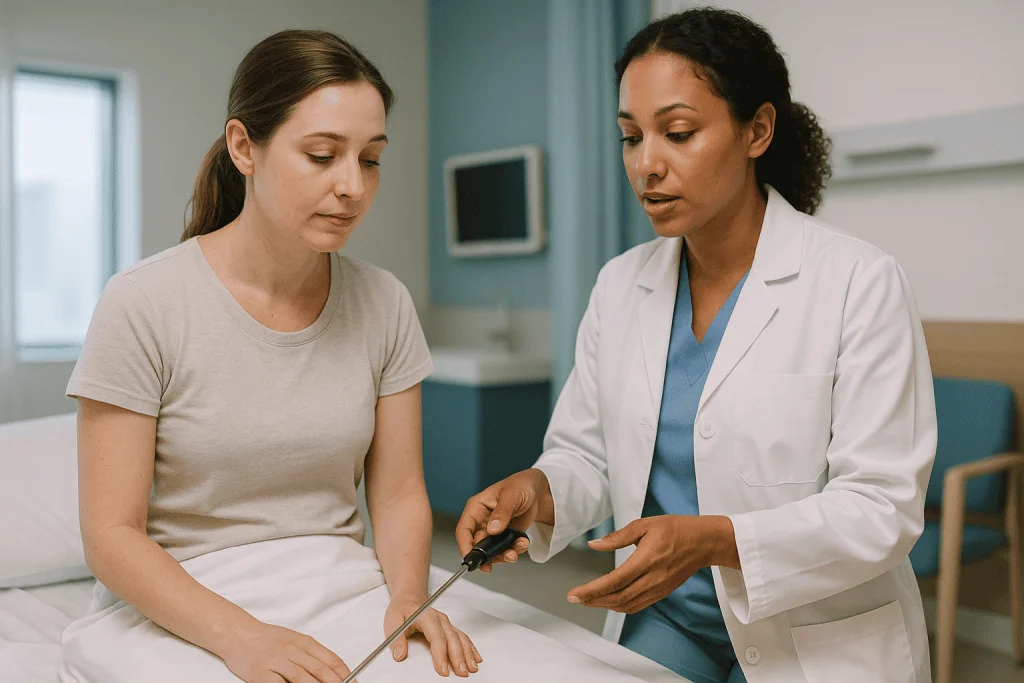
You are given a general anesthetic, so you are asleep throughout. The surgeon makes a small cut, often near the navel and typically 1 to 1.5 cm long according to the NHS, and gently inflates the abdomen with carbon dioxide gas. The gas lifts the abdominal wall away from the organs, creating a working space and a clear view. One or more further small cuts allow slim instruments to pass in.
With the camera projecting onto a screen, the surgeon examines the pelvis: the uterus, both ovaries, the fallopian tubes, the pelvic lining, the bladder surface and the visible bowel. Endometriosis can look like dark spots, clear blisters, scarred white patches or stuck-together surfaces, which is why Mayo Clinic describes laparoscopy, usually with a tissue sample (biopsy), as the way the diagnosis is confirmed.
If treatment is planned and you have agreed to it, the surgeon removes the tissue by cutting it away (excision) or destroys it with heat or laser energy (ablation). Adhesions can be divided and an endometrioma drained or removed. At the end, the gas is released, the instruments withdrawn, and the small cuts closed with stitches or glue.
Most endometriosis laparoscopies are day-case procedures, meaning you go home the same day once you have recovered from the anesthetic, although the NHS notes an overnight stay is sometimes needed depending on what was done and how you feel afterward.
Who is usually offered laparoscopy, and who is asked to wait
Surgery is not the first step for everyone, and that is deliberate rather than dismissive.
The NHS treatment pathway describes a layered approach. Pain relief and hormone treatments that reduce or stop the menstrual cycle are often tried first, because they can control symptoms without an operation. Laparoscopy tends to be offered when symptoms persist despite those measures, when the diagnosis is uncertain and imaging has not settled it, when an endometrioma or a suspected deep deposit is seen on scan, or when endometriosis is thought to be affecting fertility.
Who is usually asked to wait? Several situations lead a team to postpone or reconsider:
- A recent chest infection, cold with fever, or flare of asthma. The NHS advises that being unwell around the time of a general anesthetic raises the risk of breathing complications, so surgery is often rescheduled.
- Uncontrolled blood pressure, poorly controlled diabetes or anemia severe enough to need correction first.
- Pregnancy, or the possibility of it. A pregnancy test on the day is routine.
- Someone who is symptom-free on a hormone treatment and has no fertility plans, for whom the balance of risk and benefit may favor continuing medication for now.
The team will also set out alternatives and risks in plain terms. Alternatives include continuing or changing hormone treatment, pain management support, and for some people watchful monitoring with repeat imaging. The NHS lists the main risks of laparoscopy as infection, bleeding, bruising around the cuts, and, less commonly, injury to the bladder, bowel or blood vessels that may require further surgery. Hearing these is not a warning off; it is how a shared decision is built, and the final call sits with you and the treating team together.
Fasting before laparoscopy: why the empty stomach matters
Of all the pre-operative rules, fasting is the one people most often misunderstand, and the one with the clearest reason behind it.
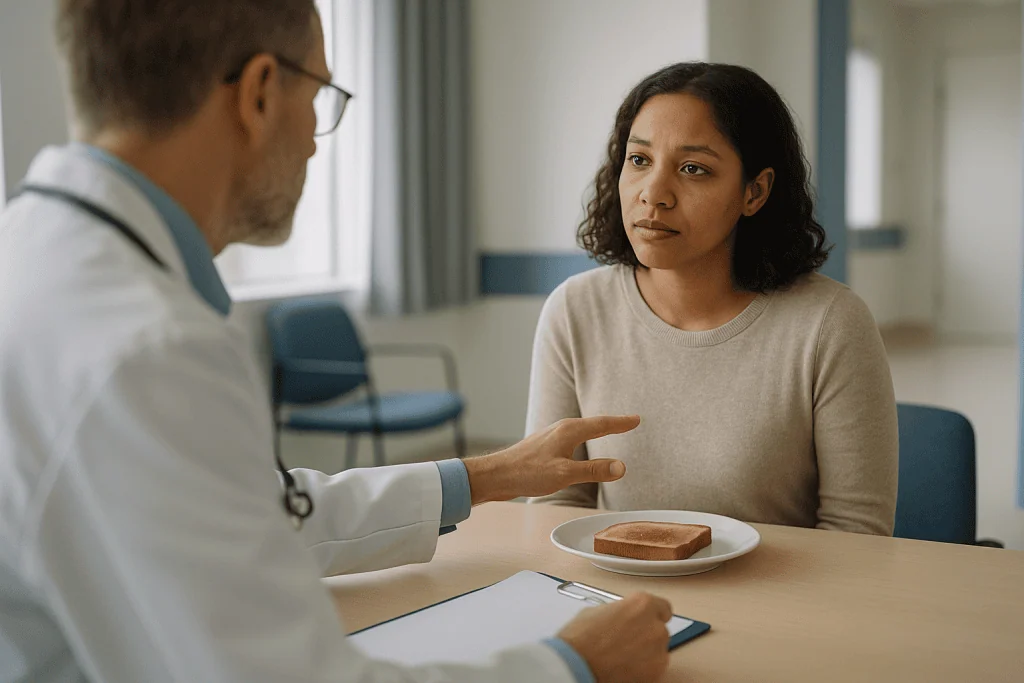
Under a general anesthetic the reflexes that normally protect your airway are switched off. If the stomach contains food or liquid, there is a risk it could come back up and be inhaled into the lungs, a complication called aspiration. The NHS explains that this is why you are asked not to eat or drink for a set period beforehand: an empty stomach makes the anesthetic safer.
The typical pattern described by the NHS is roughly six hours without food and a shorter period, often around two hours, without clear fluids such as water. Milk, juice with pulp and chewing gum count as food for this purpose because they stimulate the stomach. The exact timings printed on your letter take priority over any general figure, including the ones here, because your anesthetist may adjust them for conditions such as diabetes, reflux or pregnancy.
Two practical points soften the experience. First, a small sip of water is usually allowed with any tablets the team has told you to take on the morning of surgery, but only if they have said so. Second, if your admission time is in the afternoon, you may be permitted a light early breakfast; again, the letter will say.
Breaking the fast does not make you a bad patient, but it does usually mean the operation is delayed or rebooked, because the risk is real. Tell the nurse honestly if you ate or drank something after the cut-off. A rescheduled list is an inconvenience; aspiration is not.
The medicine review: what your anesthesia team needs to know
Bring everything. Prescription medicines, over-the-counter pain relievers, inhalers, patches, vitamins, herbal remedies, protein powders, and anything bought online. Write the list or photograph the packaging, because recall under pressure is unreliable.
Why so thorough? Several classes of medicine interact with surgery in ways that matter:
- Medicines that thin the blood, including anticoagulants and antiplatelet drugs, affect how much you bleed and are often paused or bridged under instruction. Some everyday anti-inflammatory pain relievers have a milder effect on platelets; the team decides whether that matters for you.
- Diabetes medicines, including insulin, need adjusting around a fast, because an empty stomach and a usual dose can send blood sugar too low.
- Blood pressure and heart medicines are often continued, sometimes with a sip of water, but a few are held on the morning of surgery.
- Herbal and dietary supplements can affect bleeding, blood sugar or how the body handles anesthetic drugs. The NIH Office of Dietary Supplements notes that supplements can interact with medicines, which is why surgical teams ask about them specifically.
- Hormonal contraception and hormone therapies are discussed because of their effect on clot risk, covered in the next section.
The decision about each item belongs to the prescribing clinician and the anesthetist, not to a blog. Do not stop a prescribed medicine on your own initiative because you read that “you cannot have surgery on it”; some medicines are more dangerous to stop abruptly than to continue. Equally, do not assume something is too minor to mention. The person who asks “do you take anything else at all?” is asking because the answer changes the plan.
Smoking belongs on this list too. The NHS advises stopping before an operation, since smoking increases the risk of chest and wound complications. Even a short smoke-free period helps the lungs.
Hormone treatments and the surgery: pause or continue?
Many people arrive at laparoscopy already on a hormone treatment: a combined contraceptive, a progestogen-only method, a hormonal intrauterine system, or a gonadotrophin-releasing hormone (GnRH) analogue, a medicine that temporarily switches off the ovaries’ production of estrogen. All of these work, broadly, by lowering or steadying the hormonal signals that make endometriosis tissue grow and bleed each cycle. The NHS and Mayo Clinic both describe them as ways to control symptoms rather than remove tissue.
Whether to continue or pause before surgery is a question with no single right answer, and that is worth understanding rather than resenting.
Arguments for continuing include steady symptom control in the weeks before surgery and, with some treatments, lighter or absent periods that make the operating field easier to see. Arguments for pausing include clot risk: estrogen-containing contraceptives raise the baseline risk of a blood clot in the leg or lung, and surgery with reduced mobility adds to it. Some surgeons also prefer to see the pelvis without hormonal suppression so that active disease is visible and can be biopsied.
Timelines matter here. A GnRH analogue given as a long-acting injection keeps working for weeks to months after the last dose, so it cannot simply be “switched off” the night before. A pill stops acting within days. A hormonal coil keeps working while it is in place. Your gynecologist weighs these against your symptoms and your fertility plans.
The practical message is simple: raise it early, at the consultation or pre-assessment, not on the morning of surgery. Ask what the surgeon prefers and why. Then follow the specific instruction you are given, and if you are told to pause something, ask what to expect in the gap and when to restart. The decision rests with the prescribing clinician.
Endometriosis surgery and fertility: deciding your goals before the operation
This is the conversation that most deserves to happen while you are fully awake and dressed, not from a trolley.
Endometriosis can affect fertility in several ways: by scarring or distorting the fallopian tubes, by forming endometriomas on the ovaries, and through inflammation in the pelvis. Mayo Clinic describes surgery to remove the tissue while preserving the uterus and ovaries as an option for people with endometriosis who are trying to become pregnant, and notes that the surgeon will usually discuss what was found and what it may mean for future pregnancy.
Why decide beforehand? Because what the surgeon does inside the pelvis depends on it. Someone hoping to conceive may want the team to be conservative with ovarian tissue, since removing the wall of an endometrioma can reduce the number of eggs that ovary holds. Someone who has completed their family and has severe symptoms may want a more extensive clearance. These are different operations, and the consent form should reflect the one you actually want.
Useful points to settle:
- Whether this laparoscopy is mainly for diagnosis, symptom relief, fertility, or a combination.
- What the surgeon will do if an endometrioma or deep disease is found that was not expected, and whether you want to be woken and asked before anything irreversible is done.
- Whether a dye test to check the tubes are open is planned at the same time.
- How the findings will be documented so a fertility specialist can use them later.
No one can promise that surgery will lead to a pregnancy; the evidence shows it can help some people and not others, and factors such as age and other causes of subfertility weigh heavily. What a clear fertility conversation does guarantee is that the operation is aimed at your goal rather than a generic one.
What not to do before endometriosis surgery
People search this phrase constantly, usually late at night. Here is an honest answer, grounded in what surgical teams actually ask.
Do not eat or drink past the times on your letter. The reason is aspiration risk under anesthesia, explained earlier, and it is the single most common cause of a last-minute cancellation.
Do not stop or start any medicine without instruction. Pausing a prescribed anticoagulant, a steroid or a blood pressure tablet on your own can be more dangerous than the surgery it was meant to simplify. Equally, do not begin a new supplement in the final weeks “to help healing”; several affect bleeding or interact with anesthetic drugs.
Do not smoke in the run-up if you can possibly avoid it. The NHS advises stopping before an operation because it increases chest and wound complications.
Do not drink alcohol heavily in the days before. Alcohol can affect anesthetic requirements, dehydrate you, and interfere with sleep you will want to bank.
Do not wear nail polish, gel nails, jewelry or body lotion on the day. The oxygen monitor clips to a fingernail and reads through the nail, piercings can conduct electrical current from surgical equipment, and lotion interferes with sticky monitoring pads. Contact lenses and make-up usually come off too.
Do not plan to drive yourself home or be alone the first night. General anesthesia impairs judgment and reaction time for about 24 hours even when you feel clear-headed, which is why the NHS asks for a responsible adult to collect you and stay with you.
Do not hide anything from the pre-assessment nurse, including recreational substances, a possible pregnancy, or a cold that started yesterday. Each of those changes the anesthetic plan, and the team has heard all of it before.
What are the must-haves for endometriosis surgery?
Social media lists for this question run to dozens of items. Most of what genuinely helps fits in one bag and one shelf at home.
For the hospital, bring your medicine list and the medicines themselves in their packaging, your admission letter, a phone charger, glasses rather than contact lenses, and loose clothing for the journey home. After laparoscopy the abdomen is bloated with residual gas, so a waistband that sat comfortably that morning may dig in by evening; soft, high-waisted or drawstring trousers and a long top earn their place. Slip-on shoes spare you from bending.
For home, think about the first three days rather than the whole recovery:
- Sanitary pads rather than tampons. Light vaginal bleeding or spotting is common after pelvic laparoscopy, especially if an instrument was placed in the uterus to move it, and teams generally ask you to avoid tampons while the cuts heal.
- A small pillow or folded towel to hold against the abdomen when coughing, laughing or getting out of a chair. Splinting the tummy makes those movements far less sharp.
- Easy, fiber-rich food and plenty of water. Anesthetic drugs and opioid pain relievers slow the bowel, and constipation after abdominal surgery is both common and genuinely uncomfortable.
- A heat pack for shoulder-tip pain, discussed in the next section, and for cramping.
- Pre-prepared meals or someone to cook, since standing at a stove for long is tiring in the first days.
- A notebook or phone note for questions and symptoms, so the follow-up call is efficient.
What you do not need: specialist recovery gadgets, restrictive “anti-inflammatory” diets started the week before, or a stack of new supplements. None of these has mainstream evidence behind it for laparoscopy recovery, and the supplements can complicate anesthesia. The must-haves are mundane because the body does most of the work on its own.
How painful is endometriosis removal surgery?
The honest answer is that laparoscopy is designed to hurt far less than open surgery, and for most people it does, but “keyhole” is not the same as “painless.”
Three kinds of discomfort are typical in the first days, and knowing them apart helps you judge what is normal. The first is soreness at the small incisions, which usually feels like bruising and is worse when you twist or sit up. The second is pelvic cramping, similar to period pain, from the areas where tissue was removed or the uterus was handled. The third, and the one that surprises people most, is shoulder-tip pain. The NHS explains that the carbon dioxide used to inflate the abdomen can irritate the diaphragm, and that irritation is felt in the shoulder; it typically settles within a day or two as the gas is absorbed. Walking around and a warm pack on the shoulder tend to help more than lying flat.
How intense the pain is depends heavily on what was done. A diagnostic look with a biopsy is generally much easier than excision of deep deposits from the bowel surface or division of dense adhesions. Your surgeon can tell you, after the operation, which end of that range you are on.
Pain relief is planned in advance by the anesthetist and prescribed at discharge. Local anesthetic is often injected around the cuts before you wake. The team will explain which pain relievers to take, how to combine them and for how long; that plan is individual, and this article will not second-guess it. What is universal is the advice to take relief regularly in the first couple of days rather than waiting for pain to peak, and to move gently and often, which eases both gas pain and stiffness.
Pain that is worsening after the second or third day rather than easing is not expected and is covered in the red-flag section.
Endometriosis laparoscopy recovery time: the first days and weeks
“How many days should I rest?” has no single figure, because recovery tracks what was done rather than the size of the cuts. The NHS gives useful anchors.
| Type of laparoscopy | Typical return to normal activities (NHS) | What that usually looks like |
|---|---|---|
| Diagnostic laparoscopy, with or without biopsy | Around 5 days | Tired and sore for 2–3 days, light activity after, desk work within the week |
| Laparoscopy with minor treatment, such as removing small deposits or dividing light adhesions | Up to about 2 weeks | Gradual increase in walking; avoid lifting and vigorous exercise until reviewed |
| Extensive excision, endometrioma removal or bowel-surface work | Longer, in some cases toward 12 weeks for full recovery | Fatigue persists; the surgeon sets a personalized timeline |
These ranges come from the NHS laparoscopy guidance and are typical patterns, not promises; your own surgeon’s advice overrides them.
The first 24 hours are mostly about drowsiness, nausea for some, and the gas-related bloating and shoulder pain described earlier. Days two to four bring the bruised, cramping phase and often a low mood dip that is a known effect of anesthesia and disrupted sleep. By the end of the first week most people after a straightforward laparoscopy are walking normally, showering without help and bored enough to want their routine back.
Vaginal bleeding or spotting commonly continues for up to a couple of weeks. Bowel habit may take a few days to settle. Driving is usually possible once you can perform an emergency stop without pain and are no longer taking sedating pain relief, and your team or insurer may have specific guidance.
Return to sex, swimming and heavy exercise is best confirmed at follow-up, since it depends on how the cuts and any internal work are healing. The surgeon will also use that appointment to explain the findings and the longer-term plan, which may include restarting or beginning hormone treatment to reduce the chance of symptoms returning.
What people often get wrong about endometriosis surgery preparation
Myths travel fast in support groups, and some of them cost people sleep or, worse, a cancelled operation. A few deserve straightening out.
“Surgery will end my endometriosis for good.” It can relieve symptoms, confirm the diagnosis and remove tissue, but the condition is chronic and symptoms can return. The NHS and Mayo Clinic both describe surgery as one part of long-term management, often paired with hormone treatment afterward. Going in with that framing avoids a sense of failure later if symptoms recur.
“A small cut means a small operation.” The incisions are small; the work inside may not be. Recovery time follows the internal work, which is why the NHS range stretches from days to weeks.
“I should stop all my medicines a week before, just to be safe.” Some medicines are more hazardous to stop than to continue through surgery. The decision belongs to the prescribing clinician and the anesthetist, individually, item by item.
“A special pre-surgery diet or detox will improve my result.” There is no mainstream evidence that restrictive diets or detox regimens in the weeks before laparoscopy change outcomes. Eating normally and keeping well hydrated until the fasting cut-off is what the guidance actually supports.
“Being on the pill means they cannot operate.” Hormone treatment is a discussion point, not a barrier. Many people have laparoscopy while on it; others are asked to pause. Ask the surgeon early rather than assuming.
“Laparoscopy guarantees a diagnosis.” It is the reference method, and Mayo Clinic notes that biopsy confirms it, but small or atypical deposits can be missed, and a normal-looking pelvis does not always mean no disease. A good surgeon will say so.
The thread running through all of these is the same: the operation works best when expectations are set by evidence rather than by what happened to someone else online.
Questions to ask your care team
A consultation goes faster, and leaves fewer regrets, when the questions are written down. These are the ones that tend to matter most for endometriosis laparoscopy.
About the operation itself:
- Is this laparoscopy planned as diagnostic, as treatment, or both? If you find endometriosis, will you treat it during the same operation?
- Will you excise tissue, use heat or laser energy, or a combination, and what guides that choice in my case?
- If you find something unexpected, such as a large endometrioma or disease on the bowel, what will you do, and is there anything you would wake me to discuss first?
About fertility and the future:
- Given that I do (or do not) hope to become pregnant, how will that change what you do to the ovaries?
- Will you check that my fallopian tubes are open during the procedure?
- What is the plan for hormone treatment after surgery, and when would it start?
About preparation:
- Which of my current medicines, supplements and hormone treatments should I continue, and which should I pause? When exactly?
- What are my fasting times, and can I take anything with a sip of water that morning?
- Should I do anything differently because I have (asthma, diabetes, a clotting history, previous abdominal surgery)?
About recovery:
- Will I go home the same day? Who should I expect to stay with me?
- What pain relief will I be sent home with, and what should I do if it is not enough?
- What is the typical recovery timeline for the operation you expect to do, and when can I drive, work and exercise?
- How and when will I hear the findings, and who do I call if I am worried in the first week?
Bring someone to the appointment if you can. Two sets of ears retain more, and the person who will be looking after you afterward benefits from hearing the plan directly.
When to call your doctor
Most recoveries are uneventful: a few days of soreness, some bloating, a tired week. A small number are not, and the signs are specific enough to learn.
Contact your surgical team or seek urgent care promptly if you notice any of the following in the days and weeks after laparoscopy:
- A fever, chills or feeling generally unwell in a way that is getting worse rather than better.
- Abdominal pain that is increasing after the first two or three days, is severe, or is not controlled by the pain relief you were given.
- Redness, warmth, swelling, pus or an unpleasant smell at any of the incision sites, or a wound that has opened.
- Heavy vaginal bleeding that soaks through a pad an hour, or bleeding that is increasing rather than easing.
- Persistent vomiting, inability to keep fluids down, or a swollen, hard abdomen.
- Burning or difficulty when passing urine, blood in the urine, or being unable to pass urine at all.
- No bowel movement for several days combined with pain, bloating and vomiting.
Call emergency services or go to the nearest emergency department without waiting if you develop chest pain, sudden breathlessness, coughing up blood, or a painful, swollen or hot calf. These can be signs of a blood clot in the leg or lung, a recognized risk after any pelvic surgery, and they need immediate assessment. The NHS lists these among the warning signs that should never be watched at home.
Trust the trend. A symptom that was mild yesterday and is worse today deserves a phone call even if it is not on the list. Your team would far rather hear from you about something that turns out to be normal than miss something that was not. Keep the discharge paperwork with the contact numbers somewhere visible, and make sure the person staying with you knows where it is.
Frequently asked questions
What not to do before endometriosis surgery?
Do not eat or drink after the times on your admission letter, stop or start any medicine without instruction, smoke, drink heavily, wear nail polish or jewelry on the day, or plan to be alone the first night. Each of these has a clinical reason: aspiration risk under anesthesia, bleeding or withdrawal effects from medicines, lung and wound complications from smoking, and impaired judgment for about 24 hours after a general anesthetic.
How painful is endometriosis removal surgery?
Laparoscopy is designed to hurt less than open surgery, but most people have several days of incision soreness, period-like cramping and shoulder-tip pain from the gas used to inflate the abdomen. Intensity depends on what was done; a diagnostic look is generally far easier than extensive excision. Your anesthetist plans pain relief in advance, and pain that worsens after the second or third day rather than easing should be reported.
How many days should I rest after endometriosis surgery?
It depends on what was done inside rather than on the size of the cuts. NHS guidance suggests around five days to return to normal activities after a diagnostic laparoscopy, up to about two weeks after minor treatment, and longer, sometimes toward twelve weeks, after extensive surgery. Gentle walking from day one is encouraged; heavy lifting and vigorous exercise wait until your surgeon reviews you.
What are the must-haves for endometriosis surgery?
Loose high-waisted clothing for post-operative bloating, slip-on shoes, sanitary pads rather than tampons, a small pillow to hold against the abdomen when coughing or standing, a heat pack for shoulder and pelvic discomfort, fiber-rich food and plenty of water to counter constipation, and your complete medicine list. Specialist gadgets, pre-surgery detox diets and new supplements are not needed and the supplements can complicate anesthesia.
How long is fasting before laparoscopy?
The NHS describes a typical pattern of about six hours without food and a shorter window, often around two hours, without clear fluids before a general anesthetic. Your admission letter gives the exact times for you, and those override any general figure, because the anesthetist may adjust them for diabetes, reflux or other conditions. Milk, pulpy juice and chewing gum count as food for fasting purposes.
Should I stop the pill or hormone treatment before endometriosis surgery?
Only if your surgeon or prescribing clinician tells you to. Some teams prefer to continue hormone treatment for symptom control and a clearer operating field; others pause estrogen-containing contraceptives because of clot risk or want to see unsuppressed disease. Long-acting GnRH analogue injections keep working for weeks to months, so this conversation needs to happen early, not the night before.
Can endometriosis surgery improve my chances of pregnancy?
It can help some people, particularly where tubes are distorted or an endometrioma is present, and Mayo Clinic describes fertility-preserving surgery as an option for those trying to conceive. It cannot be promised to work, and age and other causes of subfertility matter a great deal. Settling your fertility goals before surgery ensures the surgeon is conservative with ovarian tissue where that is what you want.
What is endometriosis laparoscopy recovery time for going back to work?
Desk-based work is often possible within about a week after a diagnostic laparoscopy and within roughly two weeks after minor treatment, based on NHS recovery ranges, while physically demanding jobs and extensive surgery take longer. Fatigue is the usual limiting factor rather than wound pain. Your surgeon will give a personalized timeline at discharge or follow-up, and a fit note can cover the expected period.
Why do I have shoulder pain after endometriosis laparoscopy?
The carbon dioxide gas used to inflate the abdomen during laparoscopy can irritate the diaphragm, and that irritation is felt at the tip of the shoulder because the nerves share a pathway. The NHS notes it usually settles within a day or two as the gas is absorbed. Walking around, changing position and a warm pack on the shoulder tend to ease it more than lying flat.
Will I go home the same day after an endometriosis laparoscopy?
Usually, yes. The NHS describes laparoscopy as a procedure most people have as a day case, going home once they have recovered from the anesthetic, passed urine and eaten something. An overnight stay is sometimes needed after more extensive surgery, if pain or nausea is hard to settle, or if the operation finishes late. You will need a responsible adult to collect you and stay the first night.
References
- NHS: Laparoscopy (keyhole surgery)
- NHS: Endometriosis, treatment
- NHS: General anaesthesia
- World Health Organization: Endometriosis fact sheet
This article is for general information only and is not a substitute for professional medical advice. Please consult a qualified doctor about your individual situation.

More from the Blog

What to Expect After Ovarian Cyst Removal: Pathology Results, Follow-Up and Cycle Changes
After ovarian cyst removal, the cyst wall is sent to a laboratory, and the pathology report usually confirms a benign type such as a…
Ovarian Cysts During Pregnancy: How They Are Monitored and When Treatment Is Considered
An ovarian cyst found during pregnancy is usually a simple, fluid-filled cyst that goes away on its own and is followed with repeat ultrasound…

Preparing for a Hysterectomy: Imaging, Lab Tests, Medicines to Pause and Fasting Rules
Hysterectomy preparation usually includes a pre-operative assessment with blood tests, sometimes an ECG, and imaging such as pelvic ultrasound to plan the operation. Your…
How Laparoscopic Endometriosis Surgery Works: Excision, Incisions and How Long It Takes
Laparoscopic endometriosis surgery is keyhole surgery under general anesthesia. A surgeon makes a few small abdominal cuts, usually around 1 to 1.5 cm, inflates…
Can You Have a Smear Test on Your Period? What Clinics Advise and When to Rebook
Yes, a smear test (Pap or cervical screening) can usually still be done during a period, and many clinics will go ahead if bleeding…
Living With PCOS: Periodic Glucose, Cholesterol and Hormone Checks Your Doctor Will Plan
Living with PCOS usually means a planned cycle of checks rather than a one-off diagnosis. Doctors typically repeat glucose testing (an HbA1c or oral…