

Is ILASIK Right for You? Corneal Thickness, Eye Pressure and Contact Lens Breaks
Key Takeaways
- "ILASIK" describes LASIK done with a femtosecond laser flap and wavefront-guided planning; the candidacy thresholds are the same as for any LASIK variant.
- Corneal thickness matters because tissue removal rises with prescription strength, and a residual stromal bed that is too thin risks corneal ectasia years later.
- A topography scan can rule someone out even when vision feels fine, because early keratoconus shows up as asymmetry on the map before it causes symptoms.
- Mayo Clinic advises stopping contact lenses for at least a few weeks before measurements, longer for rigid lenses, because lens-molded corneas produce inaccurate laser plans.
- Cleveland Clinic places typical LASIK ranges around minus 10 to minus 12 diopters for nearsightedness, plus 6 for farsightedness and 6 for astigmatism, subject to corneal thickness.
- Mayo Clinic describes dry eye lasting up to about six months after LASIK and full visual stabilization taking roughly two to three months.
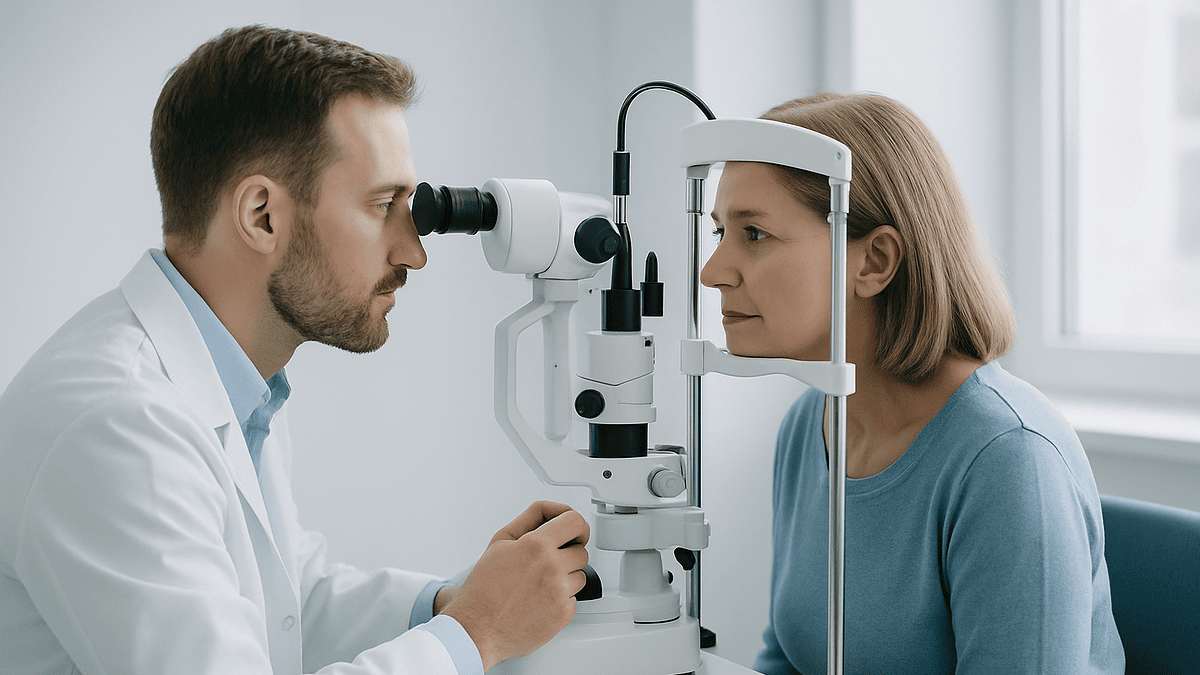
ILASIK candidate requirements generally include being at least 18 with a prescription that has been stable for a year or more, corneas thick and regularly shaped enough to leave a safe margin after reshaping, healthy eye pressure, no active eye disease such as keratoconos or severe dry eye, and a documented break from contact lenses before measurements. A surgeon's full examination, not a checklist, determines suitability.
The glasses are on the nightstand, the contact lens case is on the sink, and somewhere in a drawer there is a spare pair from two prescriptions ago. Every morning starts with a small negotiation about how you will see today. Then a friend mentions laser surgery, sounds cheerful about it, and the question lands: could that be me?
It is a fair question, and the honest answer is rarely a simple yes or no. ILASIK candidate requirements are less about how badly you see and more about the physical facts of your eyes: how thick the clear front window is, whether its curve is regular, what your eye pressure looks like, and whether your cornea has had time to recover from years of lenses pressing on it.
This explainer walks through each of those measurements, what they mean, and why a surgeon may say “yes,” “not yet,” or “a different procedure suits you better.”
What does "ILASIK" actually mean?
Start with the name, because it causes confusion. “ILASIK” is a widely used label for a particular way of doing LASIK rather than a different operation. LASIK itself stands for laser-assisted in situ keratomileusis, a mouthful that simply means reshaping the cornea, the clear dome at the front of the eye, with a laser after lifting a thin hinged flap of tissue.
Two features define the version people search for under this name. First, the flap is created with a femtosecond laser, an ultra-fast laser that makes a precise cut with pulses lasting a quadrillionth of a second, instead of a mechanical blade. Second, the reshaping is planned from a wavefront map, a detailed measurement of how light travels through your individual eye, rather than from your glasses prescription alone. Mayo Clinic describes both approaches as standard variations of modern LASIK.
Why does the label matter for candidacy? It mostly does not. The physical thresholds that decide whether laser vision correction is safe for you apply to every variety: corneal thickness, corneal shape, eye pressure, prescription stability, and general eye health. A femtosecond flap tends to be thinner and more predictable, which can matter for borderline corneas, but it does not remove the need for a safety margin of untouched tissue. Anyone promising that a particular platform makes thin corneas irrelevant is oversimplifying.
Throughout this article, “LASIK” and “ILASIK” are treated as the same procedure for candidacy purposes, because the mainstream evidence base does. What follows is the full picture of what a surgeon measures, why each measurement exists, and what the results usually mean for you.
ILASIK candidate requirements at a glance
Before the detail, here is the shape of the assessment. Every item below is checked during a pre-operative evaluation; none is judged in isolation, and a borderline result in one area often changes how the others are weighed.

| What is assessed | Typical guidance | Why it matters |
|---|---|---|
| Age | At least 18 (Mayo Clinic, NHS) | Eyes and prescriptions are still changing in the teens |
| Prescription stability | Stable for roughly one to two years (Mayo Clinic, NHS) | Reshaping a moving target undercorrects later |
| Corneal thickness | Enough tissue to leave a safe residual bed after treatment | Too thin a remaining cornea can weaken and bulge |
| Corneal shape (topography) | Regular curvature, no keratoconus signs | Irregular corneas can worsen after laser reshaping |
| Eye pressure | Within normal limits, no uncontrolled glaucoma | Surgery briefly raises pressure; thinning alters future readings |
| Tear film | No severe, persistent dry eye | LASIK temporarily reduces tear production (Mayo Clinic) |
| Contact lens break | Stop lenses for at least a few weeks before measurements (Mayo Clinic) | Lenses mold the cornea and distort maps |
| General health | No uncontrolled autoimmune disease, no current pregnancy or breastfeeding | Healing and hormonal shifts affect results |
Notice what is missing from the table: your job, your lifestyle, how much you dislike glasses. Those shape the conversation about whether surgery is worth it to you, but they do not move the safety thresholds. The rest of this article unpacks each row in the order a surgeon typically thinks about them, beginning with what actually happens during the procedure.
How LASIK actually works, step by step
Picture the cornea as a clear contact lens that nature glued permanently to the front of your eye. It does most of the eye’s focusing. If it is a little too steep, light focuses in front of the retina and distant things blur, which is nearsightedness (myopia). If it is too flat, the focus lands behind the retina and near objects blur, which is farsightedness (hyperopia). If it curves more in one direction than another, like the back of a spoon, you have astigmatism.
LASIK changes that curve. According to Mayo Clinic’s description of the procedure, the surgeon first numbs the eye with anesthetic drops and places a small ring that gently holds the eye still. A laser or blade then creates a thin hinged flap in the outer layers of the cornea, which is folded back like the cover of a book. An excimer laser, a cool ultraviolet laser that removes tissue a fraction of a micron at a time without heat damage, then reshapes the exposed middle layer, called the stroma, according to a plan built from your measurements. The flap is laid back into place, where it adheres on its own without stitches.
Mayo Clinic notes the laser work itself usually takes well under a minute per eye, and the whole appointment is measured in minutes rather than hours. You are awake throughout, looking at a target light.
Every one of the candidacy checks discussed later traces back to a step in this sequence. Flap creation needs enough thickness. Tissue removal needs a safe remainder. The holding ring needs an eye that can tolerate a brief pressure rise. The measurement plan needs a cornea in its natural, unmolded shape. Understanding the mechanics makes the requirements feel less like gatekeeping and more like common sense.
Why corneal thickness decides so much
Of all the numbers on your evaluation sheet, corneal thickness is the one surgeons return to most often. The central cornea of a typical adult is a little over half a millimeter thick, roughly five sheets of printer paper. LASIK removes tissue from that stack, and the amount removed rises with the strength of your prescription. Correcting a high degree of nearsightedness takes more tissue than correcting a mild one.
The reason thickness matters is structural. The cornea holds its shape partly because the stroma resists the eye’s internal pressure pushing outward. Leave too little stroma behind and that resistance weakens; over months or years, the cornea can gradually bulge forward, a complication called corneal ectasia. Mayo Clinic lists thin corneas among the factors that make someone a poor candidate, and Cleveland Clinic explains that ectasia resembles keratoconus in its effect on vision.
Surgeons therefore calculate a residual stromal bed, the depth of untouched tissue expected to remain beneath the flap after reshaping, and compare it to a safety threshold. That threshold is set by the surgeon and can vary with the technology used, the flap depth planned, and your corneal shape. Because a femtosecond laser can create a thinner and more uniform flap, some people with moderately thin corneas fall on the acceptable side of the line with one approach and not another. The evaluation, not a general rule, settles it.
Thickness is measured with pachymetry, a painless test using ultrasound or optical scanning. If your reading is borderline, expect the surgeon to weigh it against your prescription strength and your topography rather than making a snap decision. A thin cornea with a mild prescription and a perfectly regular shape is a very different case from a thin cornea with a strong prescription and early irregularity.
Corneal shape: what the topography scan looks for
A cornea can be thick enough yet still unsuitable, because thickness says nothing about shape. Corneal topography maps the surface curvature point by point, producing a color-coded contour map, while tomography adds the back surface and thickness profile. Together they reveal patterns invisible to an ordinary eye exam.
The pattern surgeons most want to rule out is keratoconus, a condition in which the cornea progressively thins and steepens into a cone shape. Cleveland Clinic describes it as typically beginning in the teens or twenties and often affecting both eyes unevenly. Early keratoconus can hide behind a normal-looking prescription, but the map shows telltale asymmetry, such as steepening concentrated in the lower half of the cornea. Laser reshaping on such a cornea removes structural tissue from an already weakening dome, which is why keratoconus or any suspicion of it is a standard reason to decline LASIK entirely, as both Mayo Clinic and Cleveland Clinic note.
Topography also catches something more mundane: a cornea still molded by contact lenses. Rigid lenses in particular flatten the central cornea, producing a map that looks distorted or even mimics disease. This is one reason the contact lens break, covered shortly, is not optional paperwork.
People are sometimes disappointed when a scan, not a symptom, rules them out. Their vision feels fine. But the scan is doing its job precisely by finding what you cannot feel. A surgeon who spots subtle irregularity is protecting you from a complication that may not appear for years. If keratoconus is suspected, the appropriate path is monitoring or treatment of the condition itself, decided with your ophthalmologist, rather than any refractive surgery.
Eye pressure and glaucoma: what the pressure check is really for
Eye pressure, or intraocular pressure, is the fluid pressure inside the eyeball. It is measured at every evaluation, and it connects to LASIK in three distinct ways that are worth separating.
First, the procedure itself. During flap creation the suction ring briefly raises pressure inside the eye well above its normal level. For a healthy eye this lasts seconds and passes without incident. For an eye already damaged by glaucoma, a disease in which raised pressure injures the optic nerve, even a short spike is something the surgeon must weigh. Mayo Clinic lists glaucoma among the conditions that can make LASIK inadvisable, and uncontrolled glaucoma is a common reason to decline.
Second, the aftermath of thinning. Standard pressure-measuring instruments assume a cornea of average thickness. After LASIK the cornea is thinner and slightly flatter, so readings tend to come out lower than the true pressure. That does not create glaucoma, but it can mask it during future eye exams. Anyone who has had LASIK should tell every eye care provider for life, so pressure can be interpreted correctly and other tests such as optic nerve imaging can carry more weight.
Third, the drops used afterward. Corticosteroid eye drops, an anti-inflammatory class routinely prescribed for the first days or weeks, can raise pressure in a minority of people who are steroid responders. Your surgeon monitors for this at follow-up and adjusts the plan; the decision about any drop is theirs, not something to change on your own.
None of this means a pressure reading on the high side automatically rules you out. It means the surgeon will look harder at your optic nerve, your visual field, and your family history before deciding.
Why you are asked to take a contact lens break before the exam
The instruction that frustrates people most is the simplest to explain. Contact lenses rest directly on the cornea, and the cornea is pliable living tissue. Wear a lens for years and it molds the surface the way a ring leaves a groove on a finger. The effect is temporary, but it does not vanish overnight.
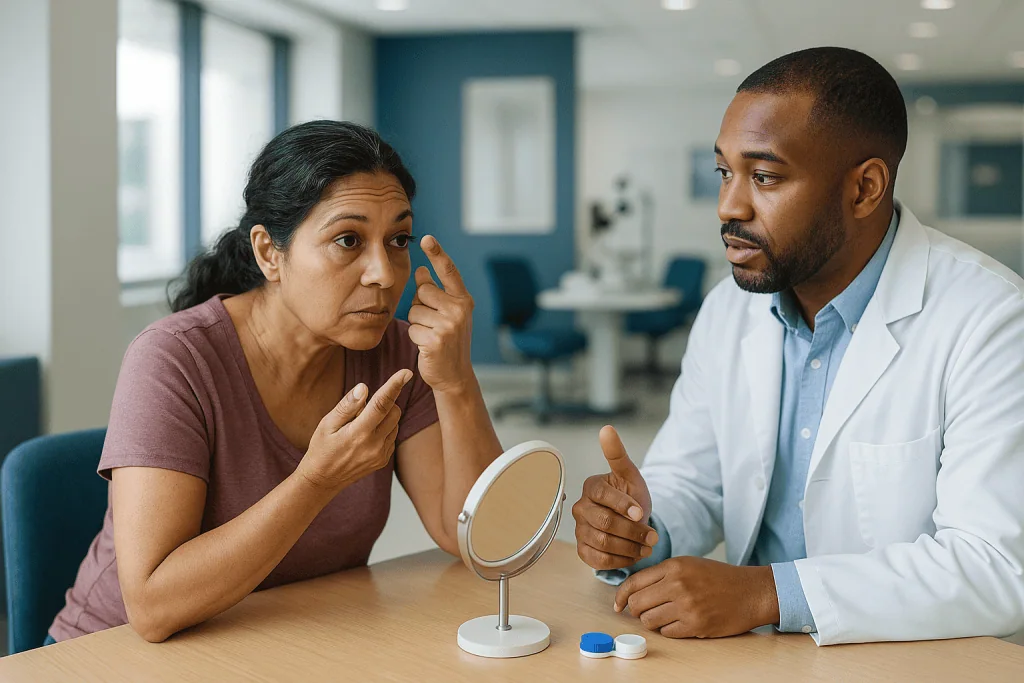
Every measurement that drives your surgical plan, from topography to wavefront mapping to the refraction itself, needs a cornea in its natural shape. Mayo Clinic advises stopping contact lenses completely and wearing glasses only for at least a few weeks before both the evaluation and the surgery, adding that the surgeon will set the exact period based on the type of lens and how long you have worn them. Soft lenses generally need the shortest break. Rigid gas-permeable lenses, which are firmer and mold the cornea more, typically need considerably longer, and some surgeons repeat the scans until two sets taken weeks apart match, confirming the cornea has settled.
Skipping or shortening the break has real consequences. A cornea still flattened by lenses reads as a weaker prescription than you truly have, so the laser plan undercorrects and you end up needing glasses again. Worse, lens-induced warpage can look like keratoconus on a map, leading to an unnecessary refusal, or it can hide genuine irregularity behind a temporarily smoothed surface.
The practical side is manageable. Order or update glasses ahead of time, plan the break around events where you want lenses, and treat the weeks in spectacles as a small investment in the accuracy of a permanent procedure. If your eyes feel irritated or your vision seems different once lenses are out, mention it at the evaluation; that is useful information, not a problem.
LASIK prescription limits: at what point is LASIK no longer an option?
People often ask for a single number that ends the conversation. There isn’t one, but there are ranges. Cleveland Clinic describes LASIK as generally suited to nearsightedness up to roughly minus 10 to minus 12 diopters, farsightedness up to about plus 6, and astigmatism up to about 6 diopters. A diopter is the unit of lens power on your prescription; the further from zero, the stronger the correction.
Those ceilings exist for a physical reason already covered: tissue removal scales with prescription. A prescription near the upper limit removes far more stroma than a mild one, so a person with a strong prescription needs a correspondingly thick, regular cornea to stay within a safe residual bed. At the extremes, the amount of tissue required also flattens the cornea so much that night vision quality can suffer, which is why Mayo Clinic notes that outcomes are less predictable for very high prescriptions and that alternatives may be more appropriate.
So can someone at minus 9 have LASIK? Quite possibly, if the cornea is thick and regular enough and the pupils are not unusually large, but the answer is genuinely individual. Two people with identical minus 9 prescriptions can receive opposite recommendations because one has a generous cornea and the other a thin one. That is not inconsistency; it is the thickness calculation doing exactly what it should.
Farsightedness carries its own wrinkle. Correcting it means steepening rather than flattening the cornea, which tends to be less stable at higher powers and more prone to drifting back. Surgeons often set lower ceilings for hyperopia than the technology’s theoretical maximum. If your prescription sits near any of these limits, expect a frank discussion about lens-based procedures rather than a straight refusal.
What disqualifies you from LASIK, and who is usually asked to wait
Surgeons think in two categories: reasons to decline, and reasons to postpone. Both draw on the same evidence, summarized by Mayo Clinic, NHS and Cleveland Clinic.
Conditions that usually rule out LASIK include keratoconus or a family history strongly suggesting it, corneas too thin to leave a safe residual bed, uncontrolled glaucoma, cataracts that are already affecting vision, active corneal disease or scarring, a history of herpes infection in the eye, and severe persistent dry eye that has not responded to treatment. Uncontrolled autoimmune conditions such as rheumatoid arthritis or lupus, and any state of significant immune suppression, also weigh heavily because they impair healing and raise infection risk. Mayo Clinic further flags unusually large pupils as a risk factor for glare and halos at night.
Then there is the “not yet” list. Being under 18 is a wait, not a refusal. A prescription that changed within the past year is a wait. Pregnancy and breastfeeding are waits, because hormonal shifts can alter corneal shape and prescription temporarily, and because some post-operative drops are avoided during those periods. Recent eye infection or injury, a new medication known to cause dry eye, or a diabetes diagnosis whose blood sugar is not yet steady all fall into the same category.
Diabetes itself is not an automatic barrier; well-controlled diabetes with a healthy retina is often acceptable, while poorly controlled disease is a reason to defer. Similarly, mild dry eye is common in people seeking surgery precisely because contact lenses aggravate it, and it can often be treated before proceeding.
The distinction matters emotionally. Being told to wait a year is very different from being told the procedure is not for you, and asking your surgeon which category you fall into is a reasonable question.
LASIK candidate age and who is usually a good fit
Flip the list around and a picture of the typical candidate emerges. Mayo Clinic and NHS both describe an adult of at least 18 whose prescription has held steady, ideally for a year or more, with NHS guidance suggesting around two years of stability. The eye continues maturing through the late teens and sometimes into the early twenties, so many surgeons prefer to see a couple of unchanged prescriptions in a row rather than simply a birthday.
At the other end of life there is no strict upper age, but two age-related realities shape the conversation. From the mid-forties onward, the lens inside the eye stiffens and near vision declines, a normal change called presbyopia that LASIK on the cornea does not prevent. Mayo Clinic is explicit that people who have LASIK may still need reading glasses as they age. Some surgeons offer monovision, correcting one eye for distance and the other for near, but it suits some people and not others and is usually trialed with contact lenses first. Later still, cataract, a clouding of the natural lens, becomes common, and cataract surgery can correct refractive error at the same time, making laser surgery less attractive.
Beyond age, a good fit usually means general good health, no uncontrolled systemic disease, a healthy tear film, corneas of adequate thickness and regular shape, and a prescription within the ranges described earlier. It also means realistic expectations: an understanding that the goal is reduced dependence on correction, that dry eye and night-vision effects are common early on, and that enhancement or glasses may still be needed later.
None of these describe a perfect person. They describe an eye that the evidence suggests will heal predictably.
If LASIK is not the fit: PRK, SMILE and lens-based options
A “no” to LASIK is frequently a “yes” to something else. NHS guidance groups the options into laser eye surgery and lens surgery, and it helps to understand how each sidesteps a particular LASIK limitation.
PRK, or photorefractive keratectomy, uses the same excimer laser but without a flap. The surface layer of cells is removed and grows back over several days. Because no flap is cut, more stromal depth remains for a given correction, which is why PRK is often considered for moderately thin corneas or for people whose work or sport carries a risk of eye trauma that could dislodge a flap. The trade-off, per Mayo Clinic’s comparison, is a slower and more uncomfortable first week while the surface heals.
SMILE, small incision lenticule extraction, uses a femtosecond laser to cut a thin disc of tissue inside the cornea, then removes it through a small opening. It leaves the front surface more intact and is thought to disturb fewer corneal nerves. It is currently used mainly for nearsightedness with or without astigmatism and does not treat farsightedness.
When the cornea is the problem itself, lens surgery bypasses it. A phakic intraocular lens is an implant placed inside the eye in front of the natural lens, leaving the natural lens in place; it is often considered for prescriptions beyond laser ranges or corneas too thin for any laser approach. Refractive lens exchange replaces the natural lens with an artificial one, the same operation as cataract surgery, and tends to be discussed for people already approaching cataract age.
Every option carries its own risks and suitability criteria, and NHS notes that none is available on the health service for vision correction alone. The choice belongs with your surgeon after the same measurements described here.
LASIK recovery timeline: what the following days and weeks usually look like
Suppose the measurements come back favorable and you proceed. Knowing the typical arc afterward helps you judge what is normal and what is not.
The first hours are hazy. Mayo Clinic describes itching, burning, watering and blurred vision immediately after surgery, with mild discomfort that usually eases with pain relief recommended by the surgeon. Rubbing the eyes is the one thing to avoid absolutely, since the flap is held in place by suction and healing rather than stitches. Many surgeons provide protective shields for sleep in the early days.
Vision typically clears noticeably by the next morning, and Mayo Clinic notes that most people can return to work within a day or two, though driving must wait until the surgeon confirms your vision meets the standard. Over the first week, expect fluctuating sharpness, sensitivity to light, and halos or glare around lights at night. These are expected early effects rather than complications.
Dry eye deserves its own mention. Mayo Clinic explains that LASIK temporarily reduces tear production and that dryness commonly persists for up to about six months while corneal nerves recover. Lubricating drops recommended by your team are the usual approach.
Mayo Clinic also advises avoiding swimming, hot tubs and eye makeup for a period set by the surgeon in the early weeks, and steering clear of contact sports until cleared. Full stabilization of vision takes longer than most people expect: Mayo Clinic puts it at roughly two to three months, and it is only after that point that any discussion of enhancement, a second smaller treatment for residual error, makes sense.
Follow-up visits are typically scheduled within the first day or two, again in the first weeks, and then at intervals through the healing period. Keeping them is part of the treatment, not an optional extra.
What people often get wrong about LASIK candidacy
Myths cluster around this procedure, and several of them steer people wrong in both directions.
“My prescription is too strong, so I’m out.” Not necessarily. The ceiling depends on corneal thickness more than on the number itself, and lens-based options exist for prescriptions beyond laser range.
“My prescription is mild, so I’m automatically a candidate.” Also not necessarily. A mild prescription on a cornea showing early keratoconus is a firmer no than a strong prescription on a thick, regular cornea. Shape can overrule power.
“The newest laser makes corneal thickness irrelevant.” Femtosecond flaps can be thinner and more predictable, which helps borderline cases, but no platform removes the need for a residual stromal bed. Mayo Clinic still lists thin corneas as a disqualifying factor for all LASIK variants.
“LASIK means never wearing glasses again.” Mayo Clinic is direct that reading glasses are still likely with age, because presbyopia arises in the lens inside the eye, not the cornea. Some people also need a mild distance correction years later as the eye changes.
“Dry eye afterward means something went wrong.” Temporary dryness is an expected effect of cutting corneal nerves and, per Mayo Clinic, commonly lasts months. Severe pre-existing dry eye is a different matter and a reason surgeons hesitate beforehand.
“I can wear my contacts until the day before.” The measurements will be wrong. Mayo Clinic’s guidance to stop lenses for at least a few weeks exists because a molded cornea produces an inaccurate plan.
“Being refused means my eyes are unhealthy.” Often it means they are simply thinner or shaped differently than average, with vision that is perfectly healthy in glasses or lenses. A refusal is a safety judgment, not a diagnosis of disease.
Questions to ask your care team
A good evaluation is a two-way conversation. Arrive with questions and you will leave understanding your own eyes far better, whatever the recommendation.
- What is my central corneal thickness, and what residual stromal bed do you plan to leave? How does that compare with the threshold you use?
- Did my topography show any irregularity or asymmetry? Is there anything that suggests keratoconus or a family tendency toward it?
- What were my eye pressure readings, and is there anything about my optic nerve or family history that changes how you weigh them?
- How long should I stay out of contact lenses before my final measurements, given the type I wear, and will you repeat the scans to confirm stability?
- Is my prescription within the range you treat with LASIK, or would you consider PRK, SMILE or a lens-based procedure better for me? Why?
- How do you assess dry eye, and what did my tear film tests show? Would you treat dryness before surgery?
- How large are my pupils in dim light, and does that affect my risk of night-time glare or halos?
- What is the follow-up schedule, and who do I contact out of hours if something worries me?
- Given my age, how should I think about presbyopia and possible reading glasses later? Is monovision something you would trial with contact lenses first?
- If my result is not what we hoped, what are the options, and when would you consider an enhancement?
Notice that the questions ask for your numbers and your surgeon’s reasoning, not for reassurance. A team confident in its assessment will welcome them. If an answer feels rushed or vague, that is information too, and there is no harm in seeking a second evaluation before committing to anything permanent.
When to call your doctor
Whether you are still deciding, have just had the contact lens break start, or are in the weeks after surgery, some signs should never wait for a scheduled appointment.
Before any surgery, contact an eye care professional promptly if you notice a sudden change in vision, a curtain or shadow across part of your visual field, new flashes of light or a shower of floaters, eye pain, marked redness, or discharge. During a contact lens break, significant discomfort or blurring beyond mild adjustment is worth reporting rather than enduring, since it may point to lens-related corneal changes the surgeon needs to know about.
After LASIK, Mayo Clinic advises calling the surgeon immediately for severe or worsening pain, a sudden drop in vision after it had been improving, increasing redness, or any injury to the eye such as a bump or accidental rub that leaves vision changed. These can indicate a displaced flap, infection or inflammation, all of which are treatable when caught early and far harder to correct when delayed. Thick discharge, extreme light sensitivity that intensifies rather than settles, or a feeling that something is under the flap also warrant a same-day call.
Symptoms that usually do not need urgent contact but should be mentioned at your next visit include mild dryness, fluctuating sharpness, and halos around lights in the first weeks; all are expected early effects.
Keep the surgeon’s out-of-hours number somewhere you can find it without your glasses. When in doubt, call. Every decision about your eyes, from whether to proceed to how to respond to a symptom, rests with the treating team who have examined them, and a quick phone call is never the wrong choice.
Frequently asked questions
What disqualifies you from getting LASIK?
Keratoconus or corneas too thin to leave a safe residual bed are the most common firm disqualifiers, followed by uncontrolled glaucoma, vision-affecting cataracts, active corneal disease, a history of herpes eye infection, severe persistent dry eye, and uncontrolled autoimmune disease or immune suppression. Mayo Clinic and Cleveland Clinic list these as conditions that make LASIK inadvisable. Other factors, such as pregnancy or a recently changed prescription, are reasons to wait rather than to decline.
Who isn't a good candidate for LASIK even if their eyes seem healthy?
People whose corneal topography shows irregular or asymmetric curvature, whose corneas measure thin relative to their prescription, whose pupils are unusually large in dim light, or who have a family history of keratoconus may be poor candidates despite normal-feeling vision. These findings appear only on specialized scans. Mayo Clinic also flags people with unrealistic expectations or whose work carries a high risk of eye injury, since a flap can be dislodged by trauma.
At what prescription can you no longer get LASIK?
There is no single cutoff, but Cleveland Clinic describes typical LASIK ranges as nearsightedness up to roughly minus 10 to minus 12 diopters, farsightedness up to about plus 6, and astigmatism up to about 6 diopters. The practical limit for any individual is set by corneal thickness, because stronger prescriptions remove more tissue. Prescriptions beyond laser range are often directed toward phakic intraocular lens implants or refractive lens exchange instead.
Can minus 9 get LASIK?
Often yes, provided the cornea is thick and regularly shaped enough to leave a safe residual stromal bed after the amount of tissue a minus 9 correction requires. Two people with the same prescription can receive different recommendations because their corneas differ. Mayo Clinic notes outcomes are less predictable at high prescriptions, so a surgeon may also discuss PRK, SMILE or lens-based alternatives depending on the measurements.
What is the usual LASIK candidate age?
Mayo Clinic and NHS describe a minimum age of 18, with the prescription stable for at least a year and NHS suggesting around two years. There is no strict upper age limit, but from the mid-forties presbyopia means reading glasses are likely regardless of LASIK, and later in life cataract surgery may be a more logical way to correct vision. Stability of the prescription matters more than the birthday itself.
How long do I have to stop wearing contacts before a LASIK consultation?
Mayo Clinic advises stopping contact lenses completely and wearing glasses only for at least a few weeks before both the evaluation and the surgery, with the exact period set by the surgeon according to lens type and years of wear. Soft lenses generally need the shortest break; rigid gas-permeable lenses mold the cornea more and typically require longer. Some surgeons repeat scans weeks apart to confirm the cornea has returned to its natural shape.
Does LASIK cause glaucoma or affect eye pressure?
LASIK does not cause glaucoma, but it changes how pressure is measured. A thinner post-LASIK cornea makes standard instruments read lower than the true pressure, which can mask glaucoma at future exams. The suction ring also raises pressure briefly during surgery, and corticosteroid drops used afterward can raise pressure in some people. Uncontrolled glaucoma is a reason to decline, and anyone who has had LASIK should tell all future eye care providers.
What is the typical LASIK recovery timeline?
Mayo Clinic describes blurry, itchy, watery eyes on the day of surgery, noticeably clearer vision by the next morning, and a return to work for most people within a day or two once cleared to drive. Halos, glare and fluctuating sharpness are common in the first weeks, dryness commonly lasts up to about six months, and full visual stabilization takes roughly two to three months. Swimming, hot tubs and eye makeup are avoided early on.
Can I have LASIK if I have dry eyes?
Mild dry eye, which is common in contact lens wearers, can often be treated before surgery and does not automatically rule you out. Severe or persistent dry eye that has not responded to treatment is a recognized reason surgeons hesitate, because Mayo Clinic notes LASIK itself temporarily reduces tear production for months. Your surgeon will test your tear film and decide whether treatment first, a different procedure such as PRK or SMILE, or no surgery is the safer path.
Will I still need reading glasses after LASIK?
Probably yes, once you reach your mid-forties or beyond. Mayo Clinic explains that presbyopia, the age-related stiffening of the lens inside the eye, is not prevented by reshaping the cornea, so near vision declines on its usual schedule after LASIK. Some surgeons offer monovision, correcting one eye for distance and the other for near, but it suits some people and not others and is typically trialed with contact lenses before any surgery.
References
- NHS: Laser eye surgery and lens surgery
- Cleveland Clinic: LASIK Eye Surgery
- Cleveland Clinic: Keratoconus
- MedlinePlus: LASIK eye surgery
This article is for general information only and is not a substitute for professional medical advice. Please consult a qualified doctor about your individual situation.

More from the Blog
What Happens During Glaucoma Laser Treatment: Numbing Drops, the Lens and the Pressure Check
During a glaucoma laser treatment procedure, an eye specialist places numbing drops in the eye, rests a small contact lens on the surface to…

LASEK vs PRK: How the Two Surface Laser Techniques Differ and Why Surgeons Pick One
LASEK and PRK are both surface laser procedures that reshape the cornea without cutting a flap; the difference is what happens to the thin…

What Glaucoma Surgery Can and Cannot Do: Protecting the Vision You Still Have
Glaucoma surgery lowers pressure inside the eye to slow or stop further damage to the optic nerve. It cannot restore vision already lost, because…
Intraocular Lens Recovery: Eye Drops, Lifting Limits and When Vision Settles
Most people recover from intraocular lens (IOL) surgery over about 4 to 8 weeks, according to the NHS and Mayo Clinic, though everyday vision…

Local or General Anesthesia for Vitrectomy: What You Feel and How the Choice Is Made
Most vitrectomies in adults are performed under local anesthesia: numbing injections around the eye, usually combined with light intravenous sedation, so you are relaxed,…
Helping a Child Stick With Eye Patching: Practical Support for Amblyopia Treatment
Helping a child with an eye patch for amblyopia works best when patching becomes a predictable, short, engaging routine: same time daily, paired with…