

Preparing for Cryoablation: Fasting, Blood Thinner Adjustments and the Anesthesia Review

Key Takeaways
- Cryoablation kills tissue with a freeze-thaw-freeze cycle that ruptures cells and then collapses the small vessels feeding them, and the ice ball is visible on imaging as it forms.
- For many atrial fibrillation ablations the anticoagulant is deliberately continued, while for most percutaneous tumor freezes it is paused; the two procedures follow opposite rules.
- Warfarin's effect fades over days because the liver must rebuild clotting factors, whereas direct oral anticoagulants clear within hours, which is why pause lengths differ so much.
- Antiplatelet drugs such as aspirin and clopidogrel alter platelets for their entire lifespan of roughly a week to ten days, so any requested pause starts earlier than for newer anticoagulants.
- Fasting exists because sedation dulls the reflexes that keep stomach contents out of the lungs; milk, gum and hard candy all count as food.
- Frozen tissue scars and shrinks over months rather than disappearing, so an early follow-up scan often shows a zone larger than the original target and is read in sequence.
Preparing for cryoablation usually involves three steps set by your treating team: fasting for a defined window before sedation or anesthesia, a planned review of any blood thinners so the freezing needle or catheter can be placed safely, and a pre-procedure anesthesia assessment covering your heart, lungs, allergies and medicines. Follow the written instructions from your own team; general timelines online never replace them.
The envelope arrives about two weeks out. Inside is a checklist with boxes to tick, a phone number for the anesthesia nurse, and a line in bold about the blood thinner you have taken every morning for six years. Suddenly a procedure that sounded straightforward when the specialist described it, a needle, some extreme cold, home the same day, comes with homework.
That homework is the real subject of preparing for cryoablation. The freezing itself lasts minutes and happens while you are sedated. The parts you control happen in the days before: what you eat and when you stop, which medicines pause and which continue, and what you tell the anesthesia team about your breathing, your reflux, your last chest infection.
None of it is complicated. All of it matters, because the most common reasons a cryoablation gets postponed on the day have nothing to do with the tumor or the heart rhythm and everything to do with a missed instruction.
How cryoablation actually works, in plain language
Cryoablation is a procedure that destroys unwanted tissue by freezing it. A thin probe, either a needle passed through the skin or a catheter threaded through a blood vessel, is guided to the target using ultrasound, CT or MRI imaging, or, for heart procedures, X-ray fluoroscopy and electrical mapping. Pressurized gas circulates inside the probe tip and drops the temperature far below freezing. An ice ball forms around the tip, visible on imaging, which is one of the practical advantages: the operator can watch the frozen zone grow and stop when it covers the target with a margin.
Cold kills cells in two ways. Ice crystals form inside and between cells, rupturing membranes. Then, as the tissue thaws, tiny blood vessels that fed the area collapse, starving whatever survived the first hit. Most protocols freeze, thaw and freeze again, because the second cycle is more destructive than the first, according to the Mayo Clinic description of cryoablation for cancer.
Two families of procedure share the name. Percutaneous cryoablation treats small tumors in the kidney, liver, lung, bone or breast, and some benign growths and painful nerves. Cardiac cryoablation, used mainly for atrial fibrillation (an irregular, often fast heart rhythm arising in the upper chambers), freezes small rings of heart muscle so they no longer conduct the stray electrical signals that trigger the arrhythmia. The Mayo Clinic notes that for AF this is often done with a balloon catheter cooled at the openings of the pulmonary veins.
Both versions are minimally invasive, both are usually done as day cases or with a single overnight stay, and both require the same three pillars of preparation: an empty stomach, a safe clotting state and an anesthesia plan.
Who cryoablation is usually for, and who is usually asked to wait
Tumor cryoablation is most often offered when a growth is small, well located and visible on imaging, and when surgery is either unnecessary or riskier than the freeze. Typical candidates include people with a small kidney mass who want to keep as much kidney as possible, people with a limited number of liver or lung tumors who are not surgical candidates because of other illnesses, and people whose cancer has spread to bone and who need pain control. The Mayo Clinic lists these among the common uses.
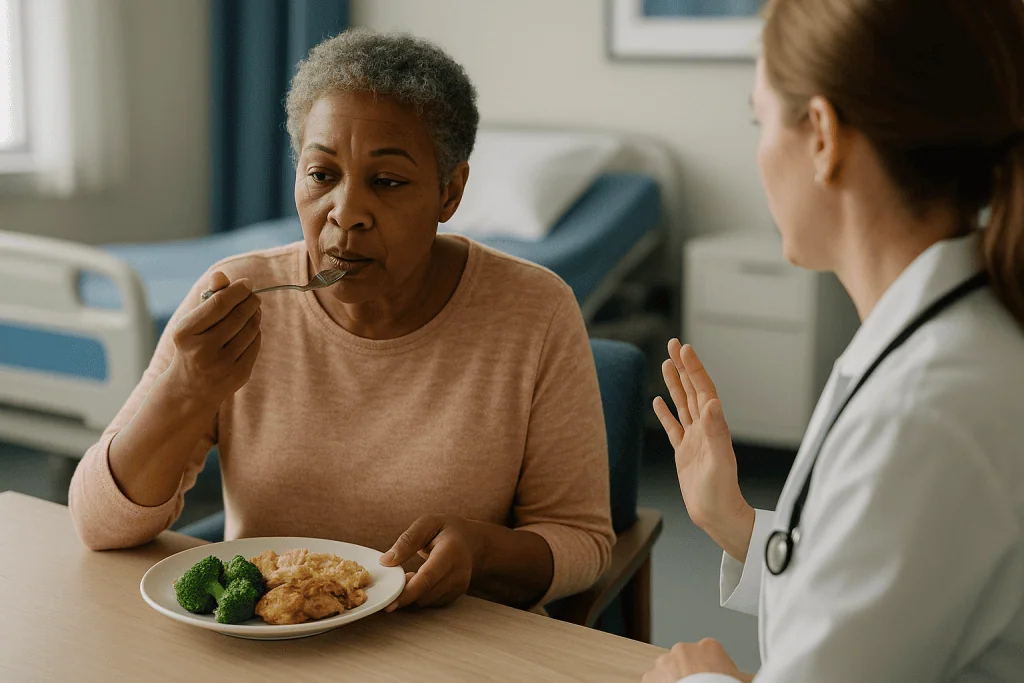
Cardiac cryoablation is usually considered for atrial fibrillation that keeps returning despite rhythm-control medicines, or when those medicines cause side effects that outweigh their benefit. The American Heart Association describes catheter ablation as an option after medicines have not worked well, and the NHS frames it similarly for people with troublesome symptoms.
Who is asked to wait? The list is short but firm. Anyone with an active infection, particularly a chest infection before general anesthesia, is usually rescheduled. Someone whose blood thinner cannot be safely paused because of a very recent clot or a mechanical heart valve may need a bridging plan first, and that takes coordination. Uncontrolled blood sugar or blood pressure on the day, an abnormal potassium or kidney result on the pre-procedure blood test, or a tumor that has grown beyond the size the team planned for can all prompt a delay.
Pregnancy changes the calculation for any imaging-guided procedure. So does severe lung disease when the target is in the lung, since freezing lung tissue carries a risk of air leak, and the anesthesia team may want lung function tests first.
The point of the pre-assessment is precisely to find these issues while there is still time to fix them, rather than in the procedure room.
Preparing for cryoablation starts with the pre-assessment appointment
Most centers schedule a pre-assessment visit or phone call one to three weeks before the procedure. Treat it as the single most useful hour of the whole process. Bring a written list of every medicine, supplement and herbal product you take, with the name and how often you take it, and be honest about the ones you take only sometimes.
Expect blood tests. A full blood count checks your platelets, the cell fragments that plug small bleeds. Clotting tests measure how fast your blood forms a clot, which matters most if you take warfarin. Kidney function guides two decisions: whether you can safely receive the iodine contrast dye used in some CT-guided procedures, and how quickly your body clears certain newer blood thinners. For cardiac procedures, an ECG and often an echocardiogram (an ultrasound of the heart) are standard.
You will also answer questions that sound unrelated: Do you snore? Have you ever had trouble with anesthesia? Any loose teeth, crowns or dentures? Do you get heartburn lying flat? Each one shapes the anesthesia plan, which is why the anesthesia review deserves its own section below.
Practical logistics get settled here too. Sedation means you cannot drive yourself home, and most units insist on a responsible adult staying with you overnight. If you live alone, say so now; the team can arrange a longer observation or an overnight bed rather than cancelling on the day.
Write down the name of the person coordinating your care. When a question comes up at nine in the evening about whether to take a tablet, that number is worth more than any search engine.
Why fasting before cryoablation matters more than people expect
Fasting is not a formality. Under sedation or general anesthesia, the reflexes that normally keep stomach contents out of your windpipe are dulled. If you vomit, or if acidic fluid quietly rises from the stomach, it can enter the lungs. The NHS explains this as the core reason patients are asked not to eat or drink before a general anesthetic; the resulting lung injury, called aspiration, is rare but serious.
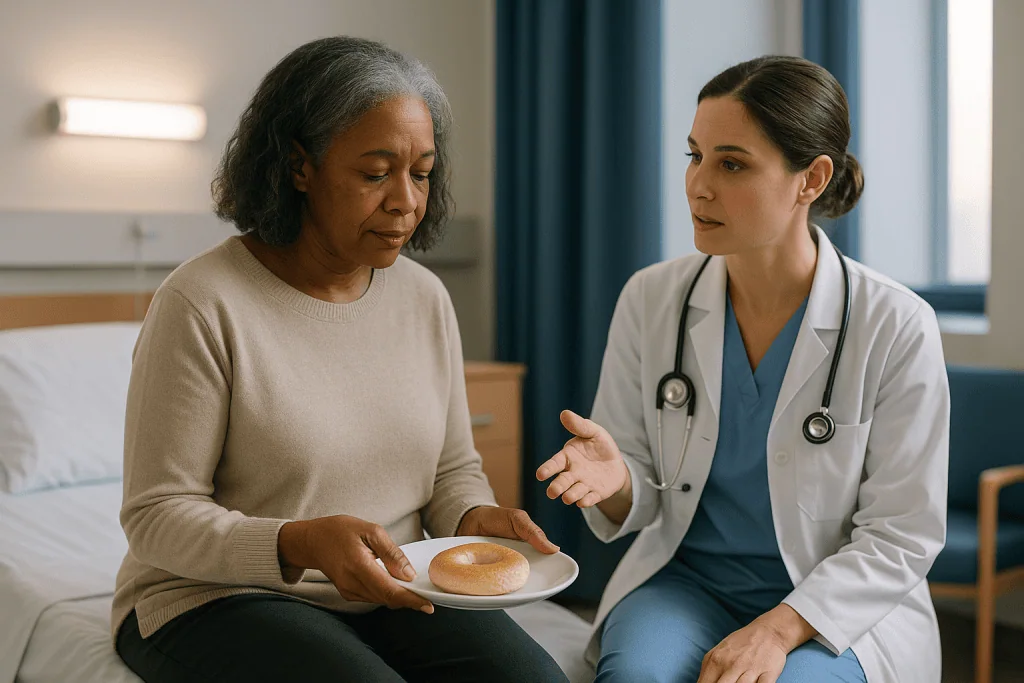
Typical instructions separate solid food from clear fluids. Solids, including milk and milky drinks, empty slowly and are usually stopped roughly six hours before the procedure. Clear fluids such as water, and often black tea or coffee without milk, empty quickly and are commonly allowed until a shorter cut-off set by the anesthesia team. Your own written instructions override any general figure, because the timing shifts with the type of anesthesia, the scheduled slot and conditions such as diabetes or reflux that slow stomach emptying.
Chewing gum and hard candy count. So does a splash of milk in coffee. If you slip up, tell the team the moment you arrive. A delayed start is an inconvenience; an undisclosed breakfast is a genuine risk.
For percutaneous tumor cryoablation done under local anesthetic with light sedation, some centers use shorter fasting windows. For cardiac cryoablation, which often runs two to four hours under deeper sedation or general anesthesia, expect the full protocol. The Mayo Clinic’s cardiac ablation guidance simply states that you will be told when to stop eating and drinking; the exact numbers belong to your team.
Small comfort: fasting does not mean going without your usual morning medicines. Which ones to take with a sip of water is the subject of the next two sections.
Blood thinners before ablation: how anticoagulants work and why timing differs
Anticoagulants are medicines that slow the chemical chain reaction that turns liquid blood into a clot. They protect against strokes and deep vein clots, and they also mean that a needle track through a kidney or a puncture in the groin vein bleeds for longer. The whole question of blood thinner adjustment comes down to balancing those two facts, and the answer is different for each drug class.
Warfarin blocks vitamin K, which the liver needs to make several clotting factors. Because the body has to build new factors from scratch, warfarin’s effect fades over several days rather than hours, which is why it is typically paused earlier and checked with a clotting blood test before the procedure. MedlinePlus notes that warfarin also interacts with many foods and medicines, another reason the timing is individual.
Direct oral anticoagulants, a newer class that includes apixaban, rivaroxaban and dabigatran, block a single clotting factor directly. They start and stop working within hours, so any pause is usually short, often one to two days, and it stretches longer in people with reduced kidney function because the drug leaves the body more slowly.
Here is where cardiac and tumor cryoablation part ways. For atrial fibrillation ablation, many electrophysiology teams keep the anticoagulant going without interruption, because the catheter work inside the left atrium can itself stir up clots and the stroke risk of stopping is judged higher than the bleeding risk of continuing. For a percutaneous kidney or liver freeze, the radiology team more often asks for a pause.
Neither approach is right for everyone. The decision is made by the clinician who prescribed the anticoagulant together with the team doing the procedure, and no article can make it for you.
Antiplatelets, supplements and over-the-counter painkillers
Antiplatelet drugs work differently from anticoagulants. Aspirin and clopidogrel stop platelets from clumping together, and because they alter each platelet permanently, their effect lasts as long as those platelets live, roughly a week to ten days according to MedlinePlus. That is why an antiplatelet pause, when one is requested, tends to start earlier than a pause for a direct oral anticoagulant.
Whether to pause at all is a separate question. Someone taking clopidogrel because of a recent coronary stent is at real risk if it stops; the stent can clot. Low-dose aspirin taken for primary prevention is a very different case. Teams increasingly continue aspirin through many percutaneous procedures. The cardiologist who prescribed the antiplatelet must be in the loop, and the pre-assessment nurse will usually make that call for you.
Over-the-counter anti-inflammatory painkillers such as ibuprofen and naproxen also affect platelets, more briefly. Many centers ask patients to avoid them for a few days beforehand and to use acetaminophen instead if something is needed. Ask rather than assume.
Supplements deserve a plain mention because people forget them. Fish oil, high-dose vitamin E, ginkgo, garlic capsules and ginger have all been reported to increase bleeding tendency to a modest degree; the evidence is mixed, but most anesthesia guidance takes the cautious route and asks for them to be stopped a week or so before. Herbal products can also interact with anesthetic drugs. Bring the bottles or a photo of the labels.
One firm rule underlies all of this: never stop or restart any prescribed medicine on your own because a website suggested it. The bleeding a team can manage; a stroke or heart attack from an unplanned gap is far harder.
The anesthesia review: what the anesthetist is really checking
The anesthesia review is a structured conversation, sometimes by phone, sometimes in a clinic, in which an anesthetist or specialist nurse decides how to keep you comfortable and safe during the freeze. Cryoablation can be done under three broad approaches: local anesthetic with light sedation, deeper sedation where you breathe on your own but remember little, or full general anesthesia with a breathing tube. Which one you get depends on the target, the expected duration and you.
Your airway comes first. Loose teeth, a small jaw, a thick neck, or a history of sleep apnea (pauses in breathing during sleep) all make it harder to keep the airway open under sedation, and the team plans accordingly. If you use a CPAP machine, you will be asked to bring it.
Your lungs come next. A recent cold, asthma that is not well controlled, or a smoking history changes both the anesthetic choice and the risk of a lung freeze causing an air leak. Your heart matters for obvious reasons in cardiac cryoablation, and for tumor procedures because sedation lowers blood pressure.
Then the history: previous anesthetics and how you reacted, any family member who had an unexpected problem under anesthesia, allergies including to contrast dye, latex or antibiotics, and reflux, which brings the fasting rules back into focus.
The NHS describes general anesthesia as very safe for most people, with serious complications uncommon; the review exists to find the exceptions early. Use it to ask what you will feel, whether you will remember anything and how sickness afterwards is prevented. Nausea is one of the most common complaints after any anesthetic, and telling the team you are prone to it lets them plan around it.
Tumor versus cardiac cryoablation: how the preparation differs
The freezing physics are the same. The preparation is not, because the risks sit in different places: bleeding along a needle track for tumor work, clot and puncture complications inside the heart for cardiac work. The table summarizes typical patterns; every row is decided case by case by the treating team.
| Preparation step | Percutaneous tumor cryoablation | Cardiac cryoablation (atrial fibrillation) |
|---|---|---|
| Usual setting | Interventional radiology suite with CT, ultrasound or MRI guidance | Electrophysiology lab with fluoroscopy and electrical mapping |
| Anesthesia | Local anesthetic with sedation is common; general anesthesia for lung, bone or lengthy cases | Deep sedation or general anesthesia, since the procedure often runs several hours |
| Anticoagulant plan | Often paused for a period set by drug type and kidney function | Frequently continued uninterrupted; some teams skip only the morning dose |
| Key pre-tests | Blood count, clotting, kidney function; recent imaging of the target | ECG, echocardiogram, blood tests; sometimes imaging to exclude clot in the heart |
| Fasting | Per anesthesia instructions; may be shorter for local-plus-sedation | Full fasting protocol |
| Typical stay | Day case or one night | Often one night for groin site and rhythm monitoring |
| Main early risks | Bleeding, damage to nearby organs, air leak for lung targets | Bleeding at the groin, heart wall or vessel injury, temporary nerve irritation near the diaphragm |
Two details are worth pulling out. Kidney function appears in both columns because it governs contrast safety and blood thinner clearance. And the anticoagulant row is the one most patients get wrong, assuming a blood thinner is always stopped; for many AF ablations it is deliberately not.
What not to do before cryotherapy or cryoablation: the final 48 hours
Search engines lump cosmetic cryotherapy and medical cryoablation together, but the pre-procedure rules for a medical freeze are stricter and more specific. In the last two days, the useful list is short.
- Do not eat or drink past the cut-off times on your written sheet, and treat gum, mints and milky coffee as food.
- Do not start, stop or double up on any medicine outside the plan agreed at pre-assessment.
- Do not drink alcohol the night before. It dehydrates you, interacts with sedatives and can worsen bleeding.
- Do not smoke on the day; nicotine tightens blood vessels and irritates the airway, and even a short break helps oxygen levels.
- Do not apply lotion, oil or heavy moisturizer to the skin where the needle or catheter will go; it interferes with sterile prep and with the sticky monitoring pads.
- Do not wear jewelry, nail polish on the finger used for the oxygen sensor, or contact lenses into the room.
- Do not arrive with an untreated cough, fever or new symptoms without phoning first.
What should you do? Shower with plain soap the evening before or the morning of. Wear loose, easily removed clothing. Bring your medicine list, your glasses case and your CPAP if you use one. Confirm your ride and your overnight companion. If you take a morning medicine the team has told you to continue, take it with a small sip of water even inside the fasting window; that sip is expected and planned for.
Most of this reads as common sense. Cancellations happen anyway, almost always because of the first two items. Read the sheet twice.
Which medicines usually continue, and which usually pause
Beyond blood thinners, the medicine question that causes the most confusion is everything else. The general principle used by anesthesia teams is simple: continue medicines that keep a condition stable through the stress of a procedure, and pause the few that create specific hazards under anesthesia or fasting.
Blood pressure medicines are commonly continued on the morning of the procedure, with one frequent exception: certain classes that relax blood vessels strongly, including ACE inhibitors and angiotensin receptor blockers, are sometimes held that morning because they can combine with anesthetic drugs to drop blood pressure sharply. Teams vary, so the instruction on your sheet wins.
Heart rhythm medicines are a special case in cardiac cryoablation. Some electrophysiologists ask for them to be paused for a few days so the arrhythmia can be provoked and mapped during the procedure; others keep them going. Do not guess.
Diabetes medicines need real attention because fasting changes the arithmetic. Insulin doses are often adjusted for the fasting morning, and some oral diabetes medicines are held on the day, particularly one class that can cause a dangerous acid build-up when combined with fasting or contrast dye. The prescribing clinician or pre-assessment nurse will give an individual plan; it is never a do-it-yourself decision.
Inhalers, thyroid tablets, anti-seizure medicines, antidepressants and reflux medicines are almost always continued. Steroids taken long term must not be stopped abruptly; the team may in fact give extra cover.
Hormonal contraception and hormone replacement are sometimes discussed before longer procedures because they modestly raise clot risk during periods of reduced mobility. For a day-case cryoablation this rarely leads to a change, but mention them.
The pattern to notice is that almost nothing here is universal. The pre-assessment exists to turn general patterns into your specific list.
How painful is cryoablation, and what the first days usually look like
Cold has a numbing effect, and that shapes the experience. During the freeze itself you are sedated or asleep, so pain in the room is not the issue. Afterwards, most people describe a dull ache or soreness at the needle or catheter site rather than sharp pain. The Mayo Clinic notes that cryoablation generally causes less pain than heat-based ablation, in part because the cold itself acts as an anesthetic on nearby nerves.
Where the ache lands depends on the target. A kidney or liver freeze often brings flank or shoulder-tip discomfort for a few days, the shoulder pain being referred from irritation of the diaphragm. A lung freeze can cause a cough and occasionally streaks of blood in sputum. After cardiac cryoablation, a mild chest ache and some groin bruising are common, and a small number of people notice a hiccup-like sensation or mild breathlessness for a while, related to temporary irritation of the phrenic nerve that drives the diaphragm; this usually settles.
Fatigue is under-discussed. The combination of fasting, sedation and the body’s inflammatory response to a zone of dead tissue leaves many people tired for several days. Low-grade fever in the first two or three days can be part of that response, though a high or persistent fever is a red flag covered later.
Timelines are ranges, not promises. The Mayo Clinic describes most people returning to normal activities within a few days to a week after tumor cryoablation, with the treated area continuing to shrink on follow-up imaging over months. After AF ablation, the Mayo Clinic and NHS both describe a recovery period of a few days to a week or two, with follow-up appointments and possible rhythm monitoring afterwards. Palpitations in the first weeks do not necessarily mean failure; the heart tissue is healing.
What are the disadvantages of cryoablation, and what are the alternatives?
Honest counselling includes the downsides. Cryoablation treats what the ice ball covers and nothing else. For a tumor, that means it works best when the target is small and clearly defined; larger or irregular growths may need several probes, several sessions, or a different approach altogether. Tissue that has been frozen is harder to assess on later scans for a period, and if disease persists at the edge of the treated zone it may take months of follow-up imaging to become clear. The Mayo Clinic lists bleeding, infection, damage to nearby structures and, for lung targets, air leak into the chest cavity among the recognized risks.
For atrial fibrillation, the disadvantage most people are not warned about is that a single ablation does not reliably settle the rhythm for everyone, and some people need a repeat procedure. Specific risks include bleeding at the groin, injury to the vessels or heart wall, stroke, temporary phrenic nerve irritation, and rare damage to the esophagus, which lies just behind the left atrium. The American Heart Association describes these in neutral terms; frequencies vary with the center, the technique and the patient, and a general article cannot give you your own number.
Alternatives exist at every step. For small kidney tumors, options include active surveillance with repeat scans, partial surgical removal, or heat-based ablation using radiofrequency or microwave energy. For liver and lung disease, surgery, heat ablation or radiation are commonly weighed. For atrial fibrillation, the NHS lists medicines to control rate or rhythm, cardioversion (a controlled electrical reset), and radiofrequency catheter ablation as alternatives to cryoablation.
Which is better? The evidence usually shows the options are comparable in broad terms and differ in particulars that depend on anatomy and health. That comparison is exactly what a multidisciplinary team meeting is for.
What people often get wrong about preparing for cryoablation
“It’s just like a cryotherapy facial or an ice bath.” Cosmetic cryotherapy chills skin for seconds; medical cryoablation freezes tissue deep inside the body to well below the point where cells die, under imaging guidance and sedation. The preparation rules are not interchangeable.
“Blood thinners are always stopped.” For many atrial fibrillation ablations, the anticoagulant is continued on purpose. For most percutaneous tumor freezes, it is paused. Assuming one rule for both is the most common and most dangerous error.
“Fasting means no medicines either.” Medicines you have been told to continue are taken with a small sip of water even inside the fasting window. Skipping a blood pressure or heart rhythm tablet can cause more trouble than the sip ever would.
“Clear fluids means anything I can see through.” Apple juice usually qualifies; orange juice with pulp does not. Milk, even a splash, is a solid for fasting purposes. When in doubt, water.
“Because it’s a freeze, there’s no burn risk.” Extreme cold injures skin and nearby organs just as heat does, which is why operators protect the skin and sometimes inject fluid or gas to push bowel or nerves away from the ice ball.
“If the scan a month later still shows something, it failed.” Frozen tissue does not vanish; it scars and shrinks over months, and early scans often show a zone larger than the original target. Follow-up imaging is read in sequence, not in isolation.
“Once I’m home, I’m done.” The groin puncture after cardiac work needs a few days of care, the heart rhythm may wobble for weeks, and the follow-up visit is where the team decides whether medicines change. Recovery is part of the treatment.
Questions to ask your care team before the day
Bring these to the pre-assessment or the consent conversation. Write the answers down; sedation reliably erases anything you hear on the day itself.
- Which type of anesthesia am I having, and who decided that?
- Exactly when do I stop solid food, and when do I stop clear fluids? Which drinks count as clear?
- For each blood thinner and antiplatelet I take: do I stop it, when, and who confirms that with the clinician who prescribed it?
- Which of my other medicines do I take on the morning of the procedure, and which do I hold?
- What are my personal risks, given my anatomy and my other conditions, rather than the general list?
- What alternatives were considered, and why was cryoablation chosen for me?
- How many probes or catheters are planned, and roughly how long will I be in the room?
- Will I need contrast dye, and has my kidney function been checked for it?
- How will pain and nausea be managed afterwards, and what can I take at home?
- When can I drive, lift, bathe, return to work and travel?
- What symptoms should make me call, and what number do I call out of hours?
- When is the follow-up scan or rhythm check, and who explains the result to me?
Two of these carry extra weight. The blood thinner question needs a named person responsible for the answer, because it sits between two teams. And the question about alternatives is not a challenge to the recommendation; it is how you learn the reasoning, which makes the consent genuinely informed. A good team welcomes it.
If English is not your first language or you process information better with someone alongside, ask for an interpreter or bring a companion to the pre-assessment. This is standard practice and costs nothing but a request.
When to call your doctor before or after cryoablation
Before the procedure, phone the team rather than waiting for the day if any of these apply: a new cough, fever or chest infection; a new rash or skin infection near the planned puncture site; a bleeding episode, a fall or a new bruise pattern while your blood thinner is paused; an accidental dose of a medicine you were told to hold; or confusion about the fasting or medicine instructions. None of these is a reason for embarrassment. All of them are easier to manage on the phone than in the procedure room.
After the procedure, most soreness, fatigue and mild fever settle within days. Seek urgent care, by calling emergency services where the symptom is severe, for any of the following red-flag signs:
- Bleeding from the puncture site that does not stop with ten minutes of firm pressure, or a rapidly enlarging, painful swelling at the groin or flank.
- Sudden severe chest pain, sharp pain on breathing, or breathlessness that is new or worsening, which after a lung or heart procedure can signal an air leak, fluid around the heart or a clot.
- Signs of stroke: facial drooping, arm weakness, slurred speech or sudden confusion, especially after a cardiac procedure.
- A fever above roughly 38.5 C (101.3 F) that persists beyond the first two or three days, shaking chills, or increasing redness and pus at the site.
- Difficulty or pain on swallowing, or vomiting blood, in the weeks after an atrial fibrillation ablation.
- Little or no urine, or blood-stained urine that is getting darker rather than lighter, after a kidney freeze.
- A cold, pale, numb or painful leg below a groin puncture.
- A fast, pounding or irregular heartbeat with dizziness or fainting.
Persistent palpitations without those extra features, mild bruising, and a few days of tiredness are common and belong in a routine call to the team rather than an emergency visit. When you are unsure which category a symptom falls into, call. The treating team would rather hear from you early, and every decision about what happens next sits with them.
Frequently asked questions
What not to do before cryotherapy or cryoablation?
Do not eat or drink past the cut-off times on your written instructions, do not start or stop any medicine outside the plan agreed at pre-assessment, and do not drink alcohol the night before. Avoid lotion on the puncture area, smoking on the day, and arriving with an unreported cough or fever. Medical cryoablation follows stricter rules than cosmetic cryotherapy, so use your team’s sheet rather than a general list.
How painful is cryoablation?
Most people describe a dull ache or soreness at the treated site for a few days rather than sharp pain. The freeze itself happens under sedation or anesthesia, and cold has a numbing effect on nearby nerves; the Mayo Clinic notes cryoablation is generally less painful than heat-based ablation. Kidney and liver freezes can cause flank or shoulder-tip discomfort, and cardiac procedures often leave mild chest ache and groin bruising.
Do I have to stop blood thinners before ablation?
Not always, and the answer depends on the procedure and the drug. For many atrial fibrillation cryoablations the anticoagulant is continued without interruption because the stroke risk of stopping is judged higher than the bleeding risk. For most percutaneous tumor freezes a pause is requested, timed to the drug type and your kidney function. Only the prescribing clinician together with the procedure team can make this decision.
How long do I fast before cryoablation?
Solid food is commonly stopped around six hours before sedation or general anesthesia, and clear fluids are allowed until a shorter cut-off set by the anesthesia team, according to general anesthesia guidance such as the NHS. Your own written instructions override any general figure because timing shifts with the anesthetic type, your slot and conditions like diabetes or reflux. Medicines you have been told to continue are taken with a small sip of water.
What are the disadvantages of cryoablation?
It treats only what the ice ball covers, so it suits small, well-defined targets and may need repeat sessions for larger ones. Frozen tissue is harder to assess on early scans, and residual disease at the margin can take months to become clear. Risks include bleeding, infection, injury to nearby organs, air leak for lung targets, and for cardiac work, vessel or heart wall injury, stroke and phrenic nerve irritation.
What is the survival rate for patients treated with cryoablation?
There is no single survival figure, because cryoablation is used for very different conditions, from small kidney tumors to bone pain from spread cancer to atrial fibrillation, which is not a survival question at all. Outcomes depend on the disease, its size and stage, and your overall health. Ask your treating team what the evidence shows for your specific situation; general percentages from the internet are rarely about a case like yours.
What is the typical cryoablation recovery time?
The Mayo Clinic describes most people returning to normal activities within a few days to a week after tumor cryoablation, and a recovery period of a few days to a week or two after cardiac ablation. Fatigue and low-grade fever in the first days are common inflammatory responses. The treated tumor zone keeps shrinking on scans over months, and heart rhythm may be unsettled for several weeks while tissue heals.
Can I take my normal medicines on the morning of cryoablation?
Usually most of them, with a small sip of water even inside the fasting window, but the specifics come from your pre-assessment plan. Blood pressure, thyroid, inhaler, anti-seizure and reflux medicines are typically continued. Some diabetes medicines, certain blood pressure classes and, for cardiac cryoablation, some rhythm medicines are commonly held. Never decide alone; the prescribing clinician and procedure team agree the list.
Will I be awake during cryoablation?
It depends on the target and duration. Many percutaneous tumor freezes use local anesthetic with sedation, so you are drowsy and remember little. Cardiac cryoablation, which often runs several hours, usually uses deep sedation or general anesthesia. The anesthesia review decides this based on your airway, lungs, heart and history, and you can ask what you are likely to feel and remember.
Why do I need someone to stay with me overnight?
Sedative and anesthetic drugs impair judgment, coordination and memory for hours after you feel normal, and a puncture site can bleed after you get home. Most units require a responsible adult to drive you and stay the first night for both reasons. If you live alone, tell the pre-assessment team early so they can arrange longer observation or an overnight bed rather than cancel on the day.
References
This article is for general information only and is not a substitute for professional medical advice. Please consult a qualified doctor about your individual situation.

More from the Blog

Plexr Recovery Day by Day: The Grid of Crusts, Swelling and When Makeup Can Return
Plexr recovery usually follows a predictable arc: a grid of tiny brown carbon crusts forms within hours, swelling peaks around the second or third…

How to Choose Among Non-Surgical Cosmetic Procedures: Matching Concern to Treatment
Choosing among non-surgical cosmetic procedures starts with naming the specific concern rather than the treatment. Lines that appear with expression usually point toward botulinum…

Laser, Injections or Minor Surgery for Scars: Comparing the Main Treatment Routes
No single scar treatment suits every scar. Lasers reshape scar texture, color and surface by delivering controlled heat or light; corticosteroid injections soften and…
After a Suture Suspension Lift: Why Chewing, Massage and Face-Down Sleep Are Limited
After a suture suspension (thread) lift, chewing hard foods, facial massage and face-down sleep are usually limited for roughly the first one to two…

Reconstruction After Burns: How Contractures Form and Why Repairs Are Often Staged
Reconstructive surgery after burns is a planned series of operations that release tight scar tissue (contractures), replace it with grafted or moved skin, and…
Is Microdermabrasion Suitable for Your Skin? Sensitivity, Rosacea and Active Acne Considered
Microdermabrasion generally suits people with calm, intact skin and surface concerns such as dull texture, fine lines, mild sun damage or faint acne marks.…