

Questions to Ask Before Teeth Veneers: Enamel Removal, Repairs and Future Replacement
Key Takeaways
- Conventional porcelain veneers require removing a thin layer of enamel, about half a millimeter according to Cleveland Clinic, and enamel does not regrow, so the tooth will always need covering afterward.
- Cleveland Clinic gives typical lifespans of roughly 10 to 15 years for porcelain veneers and 5 to 7 years for composite, meaning most people should plan for at least one replacement cycle.
- The 4-8-10 rule is an informal cosmetic convention about how many teeth to veneer, not a clinical guideline, and every additional veneer is another tooth prepared and another future replacement.
- Active decay, untreated gum disease and unmanaged night grinding are the most common reasons dentists ask patients to wait, because each undermines the bond or the porcelain itself.
- A veneer that comes off intact can often be cleaned and rebonded, while a large porcelain fracture usually means remaking that one veneer; composite chips are typically patched in a single visit.
- Veneers cannot be whitened once made, so anyone wanting a lighter shade should whiten natural teeth first and have the veneers matched to the result.
Before veneers, ask how much enamel will be removed (a thin layer, often around half a millimeter, that never grows back), whether porcelain or composite suits your bite, how chips are repaired, what happens to the tooth when a veneer fails, how long each material typically lasts, and whether decay, gum disease or grinding need treatment first. Your dentist should answer every one in plain language.
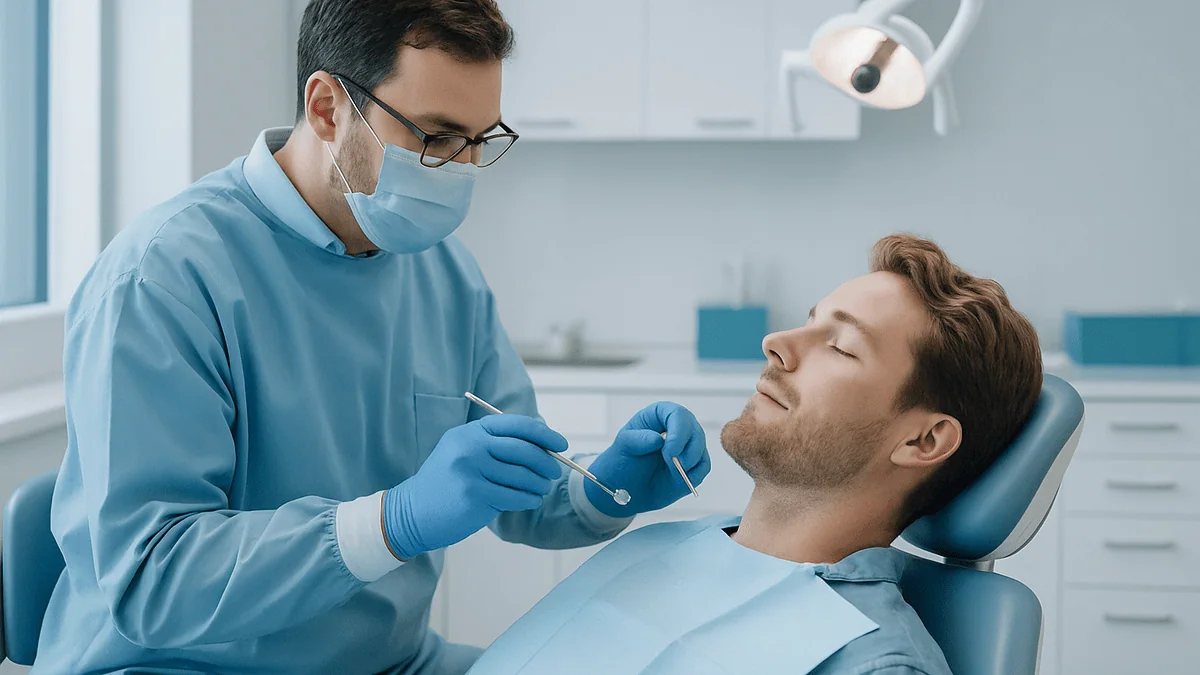
The mock-up looked wonderful. A woman in her forties sat in the chair, held the mirror, and watched a trial smile made of tooth-colored resin cover the two chipped front teeth she had hidden behind a closed-lip grin since college. Then the dentist said the sentence that made her put the mirror down: to keep the veneers on, a sliver of her own enamel would need to come off first, and it would not come back.
That pause is the right instinct. The questions to ask before veneers are rarely about the color or the shape; those are the easy part. The harder, more useful ones concern what is removed, what is repaired, and what happens ten or fifteen years from now when the porcelain needs replacing and the tooth underneath has been trimmed once already.
This explainer works through those questions in the order a careful patient would raise them, with what mainstream dental evidence actually shows.
How do veneers work, and what actually happens in the chair?
A veneer is a thin shell, made of porcelain or a tooth-colored composite resin, that is bonded to the front surface of a tooth to change its color, shape or length. It covers only the visible face of the tooth, unlike a crown, which wraps the whole tooth.
The pathway usually runs across two or three visits for porcelain. At the first, the dentist examines the teeth and gums, takes X-rays where needed, and often takes impressions or a digital scan so a mock-up can be made. Many dentists build a trial smile from temporary resin so you can see the proposed shape in your own mouth before anything permanent happens. This is the moment to be picky.
At the preparation visit, the tooth is shaped. A thin layer of enamel is removed from the front surface so the finished veneer sits flush with the neighboring teeth rather than looking bulky. A new impression or scan goes to a dental laboratory, which fabricates the porcelain over roughly one to two weeks; Cleveland Clinic describes this interval as typical, though schedules vary. You may wear temporary veneers meanwhile.
At the final visit the dentist checks fit and color, etches the tooth surface with a mild acid gel to create a microscopically rough surface, applies a bonding agent, and sets the veneer with a resin cement hardened by a curing light. Excess cement is trimmed and the bite is checked.
Composite veneers can be different: some are sculpted directly onto the tooth in a single appointment, layer by layer, and polished in place. Whichever route is chosen, the principle is the same. Bonding is strongest to enamel, which is why the amount of enamel that remains after preparation matters so much for everything that follows.
Questions to ask before veneers about enamel removal: how much, and why it cannot be undone
Enamel is the hard outer coating of the tooth. It contains no living cells, so once it is removed the body cannot regrow it. That single fact should shape every other question you ask.

For conventional porcelain veneers, dentists typically remove a thin layer from the front of the tooth; Cleveland Clinic gives a figure of about half a millimeter, roughly the thickness of a fingernail. That sounds small, and in one sense it is. In another, it is a permanent change: the tooth will always need to be covered by something afterward, whether a veneer, a repaired veneer, or eventually a crown.
Ask these questions specifically:
- How much enamel do you plan to remove from each tooth, and will it stay within enamel or reach the softer dentin beneath?
- Is a minimal-preparation or no-preparation veneer realistic for my teeth, and what would I trade for that in bulk or appearance?
- Do I have enough enamel to bond to? Worn, eroded or previously filled teeth may not.
Preparation depth matters for two reasons beyond permanence. Bonding to enamel is more predictable than bonding to dentin, so a veneer that sits mostly on enamel tends to hold better. And the closer preparation comes to the pulp, the living tissue at the center of the tooth, the greater the chance of lasting sensitivity or, less commonly, the need for root canal treatment later. Cleveland Clinic and NHS patient information both list sensitivity as a recognized risk; neither presents it as inevitable.
A dentist who can show you the planned preparation on a model or scan, and explain where the margins will sit relative to your gum line, is answering the question properly.
Porcelain or composite veneers: a side-by-side comparison
The material decision sits underneath many of the other questions to ask before veneers, because it changes how much tooth is prepared, how repairs are done and how soon replacement comes up. Neither is universally better; they suit different teeth, budgets of time and expectations.
| Question | Porcelain veneers | Composite resin veneers |
|---|---|---|
| How are they made? | Fabricated in a laboratory from a scan or impression, then bonded | Often sculpted directly on the tooth in one visit, or made indirectly |
| Typical lifespan (Cleveland Clinic) | Around 10 to 15 years with good care | Around 5 to 7 years |
| Stain resistance | High; glazed porcelain resists coffee, tea and tobacco staining | Lower; resin can pick up stain over time |
| Chip repair | Small chips can sometimes be smoothed; larger fractures usually mean replacement of that veneer | Usually repairable in the chair by adding new resin |
| Enamel preparation | Usually required to avoid bulk | Often less, sometimes none |
| Appearance | Translucency that mimics natural enamel well | Good, but generally less lifelike and may dull with polishing loss |
The lifespan figures above come from Cleveland Clinic patient information and represent typical ranges, not guarantees; individual teeth, bite forces and habits move the numbers in both directions. A person who grinds heavily may see either material fail sooner. Someone with a gentle bite and meticulous hygiene may exceed the range.
Notice the trade-off in the repair row. Composite is easier to patch but wears faster; porcelain lasts longer but a significant fracture typically means a new veneer. Ask your dentist which failure pattern they see most in patients with a bite like yours, and how they would handle it. That answer tells you more than any brochure image.
Who veneers are usually for, and who is usually asked to wait
Veneers are a cosmetic and sometimes protective option for teeth that are structurally sound but visually flawed. Common reasons, as described by Cleveland Clinic and MedlinePlus cosmetic dentistry information, include discoloration that does not respond to whitening (often from tetracycline exposure in childhood, fluorosis or trauma), chipped or worn edges, small gaps, and mildly uneven or slightly rotated front teeth.

The ideal candidate has healthy gums, enough enamel to bond to, a stable bite and realistic expectations about what a thin shell can and cannot change. Adults whose teeth have fully matured are the usual group; dentists generally prefer to wait in teenagers because the pulp chamber is still large and the gum line is still settling, which raises both sensitivity risk and the chance the veneer margin becomes visible as the gums mature.
People commonly asked to wait, rather than refused outright, include:
- Anyone with active tooth decay, which must be treated first so the veneer is not bonded over disease.
- People with untreated gum disease; the NIH National Institute of Dental and Craniofacial Research explains that inflamed, bleeding gums are unstable, and margins placed against them will not stay hidden or sealed.
- Heavy grinders or clenchers who have not yet been fitted with a protective night guard or had the habit assessed.
- People planning orthodontic treatment, since moving teeth after veneers complicates both.
- Anyone with large existing fillings on the front of the tooth, where a crown may be the sounder choice.
A wait is not a rejection. It usually means the foundation needs attention so the veneer has a fair chance. A dentist who wants to treat your gums first is protecting your investment, not delaying it.
What disqualifies you from veneers?
Few conditions are absolute barriers, but several make veneers a poor choice until addressed, and a small number make them the wrong tool altogether.
Insufficient enamel is the most important. Teeth heavily worn by grinding or acid erosion, or already trimmed for previous restorations, may not have enough sound surface for a durable bond. In that situation, a crown, which gains its grip from wrapping around the tooth rather than from bonding to a flat face, is often recommended instead.
Severe, unmanaged bruxism is the next. Bruxism is the medical term for grinding or clenching teeth, often during sleep. Mayo Clinic notes that it can fracture teeth and restorations and flatten enamel. Porcelain is strong in compression but brittle in shear, and repeated nighttime grinding is exactly the force pattern that chips it. Most dentists will insist on a custom night guard as a condition of treatment, and some will decline veneers until the grinding is under control.
Significant misalignment or crowding is a different kind of disqualifier. Veneers can disguise a slightly rotated tooth by building out one side, but they cannot correct a crossbite or move teeth. Attempting to camouflage larger problems means removing far more enamel from some teeth than others, which is where sensitivity and nerve trouble follow. Orthodontics first, veneers later (if still wanted), is the more conservative sequence.
Active decay or gum disease, discussed earlier, are temporary rather than permanent barriers. Poor oral hygiene habits that are unlikely to change are a softer concern: veneers do not protect the tooth behind them or the gum line at their edge, and decay can still begin at the margin.
Only your treating team, with X-rays and an examination, can decide which category you fall into. A candid answer here is worth more than an enthusiastic one.
What is the 4 8 10 rule for veneers, and does it matter?
People searching this phrase are usually looking for an official standard. There is none. The so-called 4-8-10 rule is informal shorthand some cosmetic dentists use for how many teeth to veneer so a smile looks consistent: four (the two central and two lateral incisors), eight (adding the canines and first premolars) or ten (extending to the second premolars, which show in a broad smile). It does not appear in NHS, Cleveland Clinic or NIH guidance and carries no clinical authority.
The idea behind it is sound enough. Veneering a single tooth to match its neighbors is hard, because natural enamel has subtle translucency and color variation that a shell of porcelain must imitate. Veneering an even set gives the laboratory control over shade and shape across the whole visible arc. That is the argument for more teeth.
The argument against is the one this entire article keeps returning to: every additional veneer is another tooth with enamel permanently removed, another margin where decay can begin, another unit that will need repair or replacement in its lifetime. Ten veneers is ten future replacements.
Better questions to ask than which number applies to you:
- How many of my teeth show when I smile broadly, and can you photograph that so we see it together?
- Could whitening the untreated teeth let us veneer fewer?
- If we veneer only the front four, how will you match shade to my natural canines, and how will that look as my own teeth age?
A thoughtful dentist will often propose the smallest number that achieves the goal, then explain what would be gained and lost by adding more. Treat any rule of thumb as a starting point for that conversation, not a prescription.
What the first days and weeks after veneers usually look like
The first sensation many people notice is not pain but strangeness. New veneers change how the lips rest and how the tongue sweeps across the teeth, and speech can feel slightly different for a few days while the mouth adjusts. This settles quickly for most people; if a veneer feels bulky or catches on the lip after the first week, that is a fitting issue to raise, not something to live with.
Sensitivity to hot and cold is common in the early period, because a layer of enamel has been removed and the tooth has been etched, dried and bonded. Cleveland Clinic and NHS dental treatment information both describe this as usual and generally short-lived, easing over days to a few weeks as the tooth settles. Persistent, spontaneous or worsening pain is a different matter and is covered in the red-flag section below.
The gums may be tender where the veneer margin sits, particularly if the edge was placed slightly under the gum line. Gentle brushing with a soft brush and daily flossing from the first day help the tissue settle; avoiding the area does the opposite, because plaque collecting at the margin keeps the gum inflamed.
Bite adjustment is often needed. Even a fraction of a millimeter of extra height on one veneer can make the front teeth hit first, which is uncomfortable and can chip porcelain. Most dentists schedule a review within a couple of weeks to check contact points and polish any high spots. Go to it, even if everything feels fine.
Temporary veneers, worn while the laboratory works, are weaker than the final ones and more likely to come loose. Softer foods, cutting rather than biting, and avoiding sticky sweets during that interval is reasonable caution rather than a lifelong rule.
Can I bite an apple with veneers? Chewing, grinding and everyday forces
Yes, most people can, once the veneers are fully bonded and the bite has been checked. Porcelain veneers are designed for normal function, and cutting into an apple, a sandwich or a piece of corn is within that. The honest qualification is that the front teeth are a poor tool for anything hard, and that was true before the veneers too.
What damages veneers is not ordinary food but concentrated, unexpected force: biting a fingernail, tearing open packaging, cracking ice or a hard candy, chewing a pen cap. Porcelain fails in shear, when force twists across its thin edge rather than pressing down on its face. Composite dents and wears rather than shattering, but it too suffers from these habits. Cleveland Clinic lists these behaviors among the main reasons veneers chip early.
Nighttime grinding deserves its own paragraph because you cannot consciously stop it. Mayo Clinic describes sleep bruxism as a sleep-related movement condition in which the jaw muscles generate forces well beyond those of chewing. A custom night guard, a molded plastic tray worn over the teeth during sleep, distributes that force so the porcelain does not take it alone. If your dentist recommends one, treat it as part of the veneers rather than an optional extra.
Contact sports are another force question. A mouthguard is sensible protection for natural teeth and doubly so for veneered ones.
Everyday chewing questions to ask your care team:
- Given my bite, are there specific foods you would have me cut rather than bite?
- Do you see signs of grinding on my teeth now, and should a night guard be part of the plan?
- How will my bite be checked after bonding, and when?
The realistic goal is unselfconscious eating with a few sensible habits, not a list of forbidden foods.
How long do veneers last, and what does future replacement really involve?
Cleveland Clinic patient information gives typical ranges of about 10 to 15 years for porcelain veneers and about 5 to 7 years for composite, with care and bite forces moving individual results either way. Those are averages from clinical experience, not promises, and a veneer is not considered to have failed simply because it reaches those ages; many go longer.
Replacement is the question fewer people ask and more should. When a porcelain veneer needs replacing, the old shell must be removed, usually by carefully grinding it away with a fine bur because the bond to enamel is deliberately strong. Skilled removal aims to stay within the old cement layer, but some additional tooth surface is often lost. The new veneer is then bonded to a tooth that has been prepared twice.
This is why the enamel questions matter so much at the start. A conservative first preparation leaves room for a second cycle. An aggressive one may mean the second restoration has to be a crown, because there is no longer enough enamel to bond a veneer to reliably.
Reasons veneers reach the end of their life, in neutral terms:
- Fracture or chipping from bite forces or habits.
- Debonding, where the veneer comes away intact because the cement bond has failed.
- Decay at the margin, where the veneer meets the tooth, often at the gum line.
- Gum recession exposing the edge of the veneer and a darker line of root or old tooth beneath.
- Color mismatch as natural neighboring teeth yellow with age while porcelain does not.
Ask your dentist to walk you through what a second cycle on your teeth would look like. A clear answer, including the possibility of crowns later in life, is a sign the plan is being made with your fifty-year-old self in mind.
What happens when a veneer chips or comes off: repairs explained
Two very different events get lumped together as a veneer breaking, and they have different fixes.
Debonding is when the whole veneer comes away in one piece, often while eating something sticky or chewy. The porcelain is usually undamaged. If you can find it, keep it dry and safe and bring it to the dentist; in many cases the underlying tooth and the inside of the veneer can be cleaned, re-etched and the same veneer rebonded. The tooth may be sensitive in the meantime because prepared enamel or dentin is exposed, so a prompt appointment matters more than an emergency one.
Chipping is when a piece of the veneer breaks off while the rest stays bonded. The response depends on size and material. A small edge chip in porcelain can sometimes be smoothed and polished, or patched with composite resin as a temporary or medium-term measure; the patch may not match perfectly and can stain differently over time. A larger fracture, or one that exposes the tooth, usually means that single veneer is removed and remade. Composite veneers are generally more forgiving here, since new resin bonds well to old resin and the repair can be done in one visit.
Repairs are a good example of why the answers to your questions before veneers should be recorded. Ask:
- If one veneer chips within the first year, what is your usual approach?
- Do you keep a record of the shade and shape so a single replacement can match the others?
- Will you provide written aftercare so I know what to do if one comes loose while I am away from home?
None of this means veneers are fragile in daily life. It means you should know, before bonding, how a repair conversation would go, rather than discovering it with a piece of porcelain in your hand.
Alternatives to veneers worth asking about first
A good consultation includes at least one option that is not veneers. Several treatments address the same complaints with less or no enamel removal, and the honest questions to ask before veneers include whether any of them would do.
Professional whitening is the first, for discoloration alone. NHS dental treatment information describes tooth whitening as a bleaching process that lightens the existing color of the teeth. It cannot change shape, close gaps or cover chips, and very dark tetracycline staining may respond poorly, but for yellowed or mildly stained teeth it is reversible and removes nothing.
Dental bonding uses the same composite resin as composite veneers but applied to a single chip, edge or small gap rather than the whole tooth face. It usually needs little or no enamel preparation and is repairable. Its limits are the same as composite generally: it wears and stains faster than porcelain.
Orthodontics, whether fixed braces or clear aligners, moves the teeth themselves. For gaps, crowding and rotations, it is the treatment that corrects the underlying problem rather than covering it. It takes longer and does nothing for color, but teeth straightened this way keep all their enamel and may need no restoration at all afterward.
Crowns are the alternative at the other end of the spectrum. They involve more tooth reduction than veneers but are the sounder choice when a tooth is heavily filled, cracked or too worn to hold a veneer.
Enamel microabrasion, a gentle polishing technique for shallow surface stains and fluorosis marks, and simple reshaping of a slightly uneven edge are smaller interventions your dentist can also assess.
The point of asking is not to talk yourself out of veneers. It is to be certain you chose them over the alternatives rather than instead of hearing about them.
What people often get wrong about veneers
Ask anyone who has had veneers what they wish they had known, and the same handful of surprises comes up. Most are correctable myths.
Myth: veneers are like press-on nails and can be taken off later. Conventional porcelain veneers require enamel removal, and enamel does not regrow. Once prepared, the tooth will always need some form of covering. Even minimal-preparation veneers are bonded permanently.
Myth: veneered teeth cannot decay. The veneer covers the front face only. The back, the sides and the margin at the gum line are natural tooth and can decay exactly as before, sometimes more easily where plaque collects at the edge. Brushing and flossing become more important, not less.
Myth: veneers last a lifetime. Cleveland Clinic gives typical ranges of about 10 to 15 years for porcelain and 5 to 7 for composite. Planning for at least one replacement cycle is realistic, not pessimistic.
Myth: veneers can be whitened if they dull. Bleaching agents work on natural enamel and dentin, not on porcelain or set resin. If you want whiter teeth, whiten before the veneers are made so the shade can be matched to the result.
Myth: more veneers is always a better result. The 4-8-10 shorthand is a convention, not a guideline. Every extra veneer is an extra tooth prepared and an extra future replacement.
Myth: sensitivity means something has gone wrong. Short-lived sensitivity to temperature is common and usually settles over days to a few weeks. Persistent or spontaneous pain is what warrants a call.
Myth: a veneer that chips is defective. Habits like nail-biting, ice-chewing and untreated night grinding account for many early chips, which is why a night guard and a few habit changes are part of the plan rather than an afterthought.
Questions to ask before veneers: the checklist for your care team
Bring this list, in your own words, and expect unhurried answers. The quality of the conversation is itself part of the assessment.
About my suitability
- Do I have active decay, gum disease or signs of grinding that should be treated before we start?
- Would whitening, bonding or orthodontics achieve what I want with less enamel removed?
- Are any of my teeth better suited to a crown than a veneer, and why?
About preparation
- How much enamel will be removed from each tooth, and will you stay within enamel?
- Can you show me the planned preparation on a model or scan?
- Where will the margins sit relative to my gum line?
About materials and the laboratory
- Are you recommending porcelain or composite for my teeth, and what would change if I chose the other?
- Can I see a mock-up or trial smile before any tooth is prepared?
- How will the shade be matched to my untreated teeth, and should I whiten first?
About repairs and the long term
- If a veneer chips or comes off, what is your usual approach, and is it different in the first year?
- What is the typical lifespan you see for this material in patients with a bite like mine?
- When these eventually need replacing, what will that involve for the tooth underneath, and could crowns become necessary?
- Will you keep records of shade and shape so a single veneer can be remade to match?
About aftercare
- Should I have a night guard, and will it be custom made?
- What sensitivity is normal, for how long, and what would you want to hear about sooner?
- How often will you want to review the veneers and the gums around them?
Write the answers down. A plan that survives being read back to you a week later is one worth going ahead with.
When to call your doctor or dentist
Mild, brief sensitivity to hot or cold and a few days of gum tenderness are expected after veneers and usually ease on their own. Some signs, though, warrant a call to your dental team rather than waiting for the scheduled review.
Contact your dentist promptly if you notice:
- Pain that is spontaneous, throbbing or wakes you at night, or sensitivity that is worsening after the first two weeks rather than easing; this can indicate the pulp inside the tooth is inflamed.
- A veneer that feels loose, moves when you press it, or has come off entirely; the exposed tooth is vulnerable and the veneer may be rebondable if seen soon.
- A visible chip or crack, especially one with a sharp edge cutting the lip or tongue.
- Gums around a veneer that stay red, swollen or bleed easily beyond the first couple of weeks, or that begin to pull away from the edge of the veneer.
- A persistent bad taste or odor near a veneer margin, which can signal trapped plaque or decay at the edge.
- A bite that feels high or uneven, with one tooth hitting before the others, since this can chip porcelain quickly.
Seek urgent dental or medical care the same day for facial swelling, fever with tooth pain, difficulty swallowing or opening the mouth, or a swelling that is spreading toward the eye or neck. The NIH National Institute of Dental and Craniofacial Research and NHS guidance both describe these as signs of a dental infection that needs prompt assessment, veneers or not.
Every decision about repairing, adjusting or replacing a veneer, and about treating a tooth beneath one, rests with your treating dental team, who can examine the tooth and take X-rays. This article can help you ask better questions; it cannot examine your mouth.
Frequently asked questions
What is the 4 8 10 rule for veneers?
It is informal cosmetic shorthand, not a clinical guideline, for veneering four, eight or ten front teeth so a smile looks uniform. Four covers the central and lateral incisors, eight adds canines and first premolars, ten extends to second premolars. The trade-off is that each extra veneer means more enamel removed and another future replacement. Your dentist should propose the smallest number that meets your goal.
What do people wish they knew before getting veneers?
Most commonly, that the enamel removal is permanent, that veneers cannot be whitened later, that the tooth behind and beside a veneer can still decay, and that a replacement cycle is likely within a couple of decades. Many also wish they had asked about night guards earlier, since grinding is a leading cause of chipped porcelain. Seeing a trial mock-up before preparation is the other frequent regret.
What disqualifies you from veneers?
Too little sound enamel to bond to is the main permanent barrier; heavily worn or filled teeth may need crowns instead. Severe unmanaged grinding, significant misalignment better treated with orthodontics, and teeth that are still maturing in teenagers are other reasons dentists decline or defer. Active decay and gum disease are temporary barriers that are treated first. Only an examination with X-rays can decide.
Can I bite an apple with veneers?
Yes, for most people, once the veneers are fully bonded and the bite has been checked. Veneers are designed for normal eating. What chips them is concentrated force such as biting nails, tearing packaging, cracking ice or hard candy, and night grinding. If your dentist notes grinding wear, a custom night guard protects the porcelain while you sleep.
How much enamel is removed for veneers?
Cleveland Clinic describes about half a millimeter from the front surface of the tooth for conventional porcelain veneers, roughly a fingernail’s thickness. Composite and minimal-preparation veneers may need less or none, at some cost in bulk. Because enamel does not regrow, ask your dentist to show the planned depth on a model and to confirm whether it stays within enamel.
How long do veneers last before replacement?
Cleveland Clinic gives typical ranges of about 10 to 15 years for porcelain and 5 to 7 years for composite, with bite forces, habits and hygiene moving individual results either way. These are averages, not guarantees. Replacement involves grinding off the old veneer, which can remove a little more tooth, so a conservative first preparation leaves room for a second cycle.
Can a chipped veneer be repaired instead of replaced?
Often, depending on size and material. Small porcelain edge chips can sometimes be polished or patched with composite resin, though the patch may stain differently. Larger porcelain fractures usually require remaking that veneer. Composite veneers are generally repaired in the chair by adding new resin. A veneer that comes off whole can frequently be cleaned and rebonded if brought to the dentist promptly.
Do veneers ruin your natural teeth?
They permanently change them, which is different from ruining them. Enamel removed for preparation does not return, so the tooth will always need a covering. The tooth remains alive and functional, and the veneer protects the front surface. Risks such as lasting sensitivity or, less commonly, pulp damage are higher when preparation is deep, which is why asking about depth matters.
What questions should I ask a dentist about veneers at the consultation?
Ask how much enamel will be removed and whether it stays within enamel, whether porcelain or composite suits your bite, how chips and debonding are handled, what replacement will mean for the tooth later, whether decay, gum disease or grinding need treatment first, and whether a mock-up can be made before preparation. Also ask which alternatives were considered and why veneers were chosen.
Should I whiten my teeth before getting veneers?
If you want a lighter overall shade, yes, and your dentist will usually suggest whitening first. Porcelain and set composite do not respond to bleaching, so the veneers are matched to whatever shade your natural teeth are when the color is chosen. Whitening afterward would lighten the untreated teeth but leave the veneers unchanged, creating a mismatch.
References
- Cleveland Clinic: Dental Veneers
- MedlinePlus: Cosmetic Dentistry
- NIH National Institute of Dental and Craniofacial Research: Periodontal (Gum) Disease
This article is for general information only and is not a substitute for professional medical advice. Please consult a qualified doctor about your individual situation.

More from the Blog

How Long Does Wisdom Teeth Removal Take? In the Chair and in Recovery
Wisdom teeth removal usually takes 20 to 60 minutes of actual surgery. A single, fully erupted tooth can come out in a few minutes,…
Does Everyone Have Wisdom Teeth? The Evolution Happening in Your Jaw
No. While most adults develop four wisdom teeth, research suggests that between 5% and 37% of people, depending on ancestry, never form one or…

After Gum Recession Treatment: Normal Tenderness vs Bleeding or Swelling to Report
After gum recession treatment, a dull ache, mild puffiness, slight oozing in the first day and a pale or whitish look to the graft…

Preparing for Restorative Dental Treatment: Medications, Diabetes and Past Anesthesia
Preparing for restorative dental treatment such as fillings, crowns, root canal work or implants mostly means sharing information: a complete list of your medicines…

What You Can and Cannot Eat with Braces: Safe Foods, Risky Foods and Practical Swaps
With braces, avoid foods that are hard, sticky, chewy or need biting into: whole apples, corn on the cob, popcorn, nuts, hard candy, caramel,…
How Bleeding Gums Are Treated at the Dentist: From Gum Measurements to Deep Cleaning
Dentists treat bleeding gums by first measuring the space between gum and tooth with a thin probe, then removing the plaque and hardened tartar…