

Questions to Ask Your Dermatologist or Oncologist Before Skin Cancer Treatment
Key Takeaways
- A pathology report's five load-bearing items are cancer type, subtype, depth (Breslow thickness for melanoma), margin status and, for melanoma, ulceration and mitotic rate.
- Under NHS guidance, suspected melanoma or squamous cell carcinoma triggers an urgent referral to be seen within 2 weeks, while suspected basal cell carcinoma is usually referred routinely because it grows slowly.
- Mohs micrographic surgery removes cancer in thin layers and checks each under the microscope the same day, which is why it is often chosen for facial, recurrent or ill-defined tumors.
- Immune checkpoint inhibitors block proteins such as PD-1 and CTLA-4 that act as brakes on immune cells, which is also why their side effects can affect the bowel, skin, liver, lungs and hormone glands.
- Scraping, freezing and heat-based treatments produce no sample for the pathologist, so they are reserved for low-risk lesions whose diagnosis is already settled.
- The WHO classifies UV-emitting tanning devices as carcinogenic to humans, and a 'base tan' offers no meaningful protection against further sun damage.
Before skin cancer treatment, ask your dermatologist or oncologist what type and stage of skin cancer you have, what the pathology report says, which treatment options fit your case and why, what each involves, the likely scar and recovery time, how recurrence will be monitored, and whether a second opinion or multidisciplinary review is appropriate. Bring written questions and a companion; final decisions rest with your treating team.
Nina had waited three weeks for the appointment, rehearsed what she would say, and then watched the whole visit go by in eleven minutes. The dermatologist was kind, the diagnosis was explained, a date for surgery was offered. Only in the parking lot did the real questions arrive, all at once, with nobody left to answer them.
That gap is where this guide lives. Knowing which questions to ask a dermatologist about skin cancer, and which to save for an oncologist if one joins your care, turns a short appointment into a working conversation. It also makes the decision that follows feel like yours.
None of what follows replaces your treating team. Think of it as the notebook you wish you had taken in with you: the words your clinicians will use, the forks in the road they are weighing, and the specific things worth asking before anyone picks up a scalpel.
What actually happens between a suspicious spot and a treatment plan?
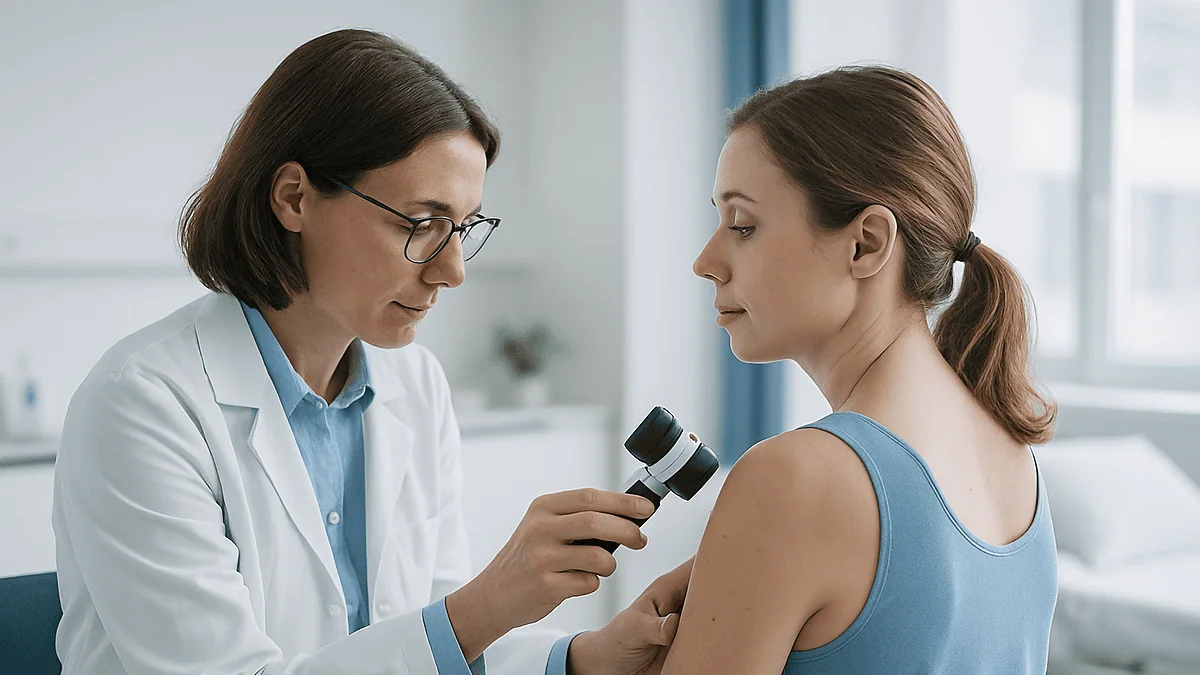
The route is more orderly than it feels from the inside. A dermatologist, a physician who specializes in diseases of the skin, hair and nails, examines the spot, often through a dermatoscope, a handheld magnifier with polarized light that reveals pigment patterns the naked eye misses. If the spot looks suspicious, the next step is almost always a biopsy: removing all or part of the lesion under local anesthetic so a pathologist can study it under a microscope.
The pathologist’s written report is the hinge of everything that follows. It names the cancer type, describes how deep it goes and whether the edges of the sample are free of cancer cells. For most basal cell and squamous cell carcinomas, the two common non-melanoma types, that report is enough for the dermatologist to propose treatment on the spot. For melanoma, the more serious cancer that begins in pigment-producing cells, the report may trigger staging, which means working out how far the cancer has spread, and a referral to an oncologist, a physician who specializes in treating cancer.
Some cases are discussed at a multidisciplinary meeting, sometimes called a tumor board, where dermatologists, surgeons, oncologists, pathologists and radiologists review the findings together. You will not be in the room, but you can ask whether your case went there and what was decided.
Only then comes the conversation about options. Treatment might be a simple excision in the office, a specialized surgery that checks the edges while you wait, radiation, a prescription cream, or for advanced melanoma, medicines that act on the immune system. Each step is a chance to ask a question, and the earlier you ask, the more room there is to adjust the plan.
Questions to ask your dermatologist about skin cancer biopsy results and the pathology report
Ask for a copy of the pathology report, then ask your dermatologist to walk you through it line by line. Most reports read like a different language, but five items carry most of the weight.
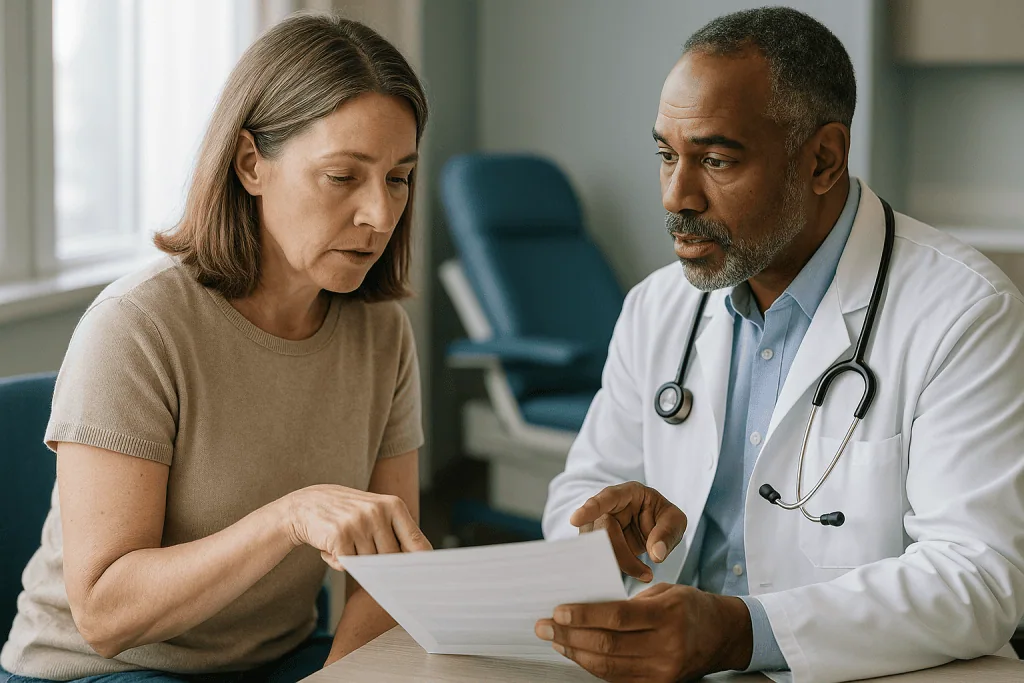
First, the type. Basal cell carcinoma grows slowly and rarely spreads to distant organs; squamous cell carcinoma is more likely to spread if neglected; melanoma can spread early, which is why it is handled with more urgency. Second, the subtype, because a ‘nodular’ basal cell carcinoma and an ‘infiltrative’ one behave differently and may call for different surgery. Third, the depth. For melanoma this is the Breslow thickness, the distance in millimeters from the skin surface to the deepest cancer cell, and it is one of the strongest predictors of how the cancer may behave. Fourth, the margins, meaning whether cancer cells reach the cut edge of the sample. A biopsy with involved margins does not mean something went wrong; a biopsy is a sample, not a treatment. Fifth, for melanoma, ulceration and mitotic rate, which describe whether the surface has broken down and how quickly cells are dividing.
Useful questions sound like this: Was the whole lesion removed or just a piece? Does the depth change which treatment you would recommend? Is any part of this report uncertain, and would a second pathologist’s review help? Did the report mention features that raise or lower the risk?
If a word on the report is not explained to your satisfaction, say so. Clinicians read these documents daily and can forget which terms are new to the person across the desk; most are glad to be asked.
How early can skin cancer be detected, and what do early skin cancer signs look like?
Earlier than most people assume. Skin is the one organ you can inspect without equipment, and many skin cancers are found when they are still only a few millimeters across. Dermatologists can also pick up actinic keratoses, rough, scaly patches caused by years of sun exposure that are considered precancerous because a small proportion progress to squamous cell carcinoma. Treating those is prevention in the most literal sense.
What clinicians look for depends on the type. Basal cell carcinoma often appears as a pearly or waxy bump, a flat flesh-colored or brown scar-like patch, or a sore that heals and reopens. Squamous cell carcinoma tends to be a firm red nodule or a flat, scaly, crusted lesion. For melanoma, dermatologists use the ABCDE framework: asymmetry, irregular border, more than one color, diameter larger than a pencil eraser, and evolution, meaning any change in size, shape, color or sensation. That last letter matters most. A spot that is changing deserves a professional look even if it fails every other letter.
These descriptions are not a tool for diagnosing yourself at the bathroom mirror. Plenty of harmless growths mimic cancer and plenty of cancers look ordinary; melanoma can appear on skin that never sees the sun, under a nail, or in people with deep skin tones, where it is often found later. The point of knowing the patterns is to lower your threshold for asking.
A good question for your dermatologist is how your particular lesion was found, what made it suspicious, and whether anything else on your skin should be watched or photographed for comparison at future visits.
What is the 2 week rule for skin cancer?
The phrase comes from the UK. Under NHS guidance, a general practitioner who suspects melanoma or squamous cell carcinoma makes an urgent suspected-cancer referral, and the patient should be seen by a specialist within 2 weeks. The rule exists because for these cancers, time to diagnosis affects how deep the lesion is when it is removed, and depth drives the rest of the pathway. Suspected basal cell carcinoma is usually referred on a routine rather than urgent basis, which surprises people until they learn how slowly it tends to grow.
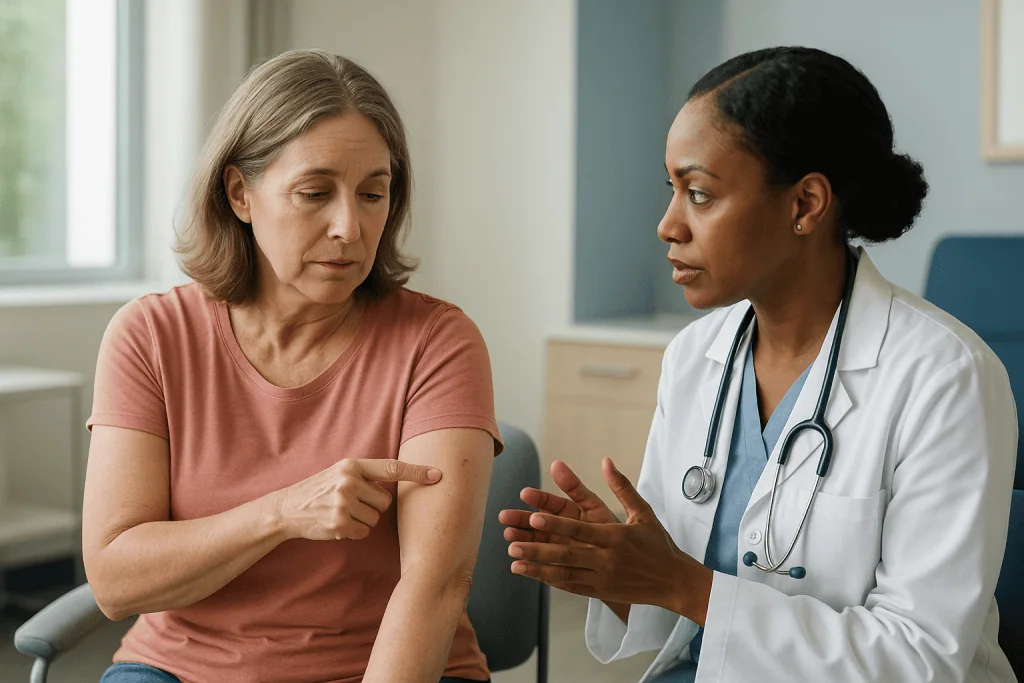
The United States has no single national equivalent, but the logic travels. If you are told a spot is ‘probably fine’ yet it keeps changing, or if a referral to a dermatologist seems to be taking months, it is reasonable to ask your primary care clinician whether the appointment can be expedited and what the practice considers an acceptable wait for a suspicious lesion.
Two weeks is a target for being seen, not a measure of how fast the cancer is moving. Being a few days past a target is not a reason to panic; being many weeks past it with a changing lesion is a reason to call.
Questions worth asking at this stage: Is this referral marked urgent? Who do I contact if I have not heard back? Should I photograph the spot in the meantime so change can be documented? Would a teledermatology review, where a photograph is assessed remotely, speed things up?
The rule is a good reminder that the fastest part of skin cancer care is often the part you can influence: picking up the phone.
Which specialist do I need: dermatologist, surgeon or oncologist?
Most skin cancers never leave the dermatologist’s office. Basal cell and smaller squamous cell carcinomas are typically diagnosed and treated by the same clinician, sometimes on the same day. The cast grows as the case grows.
A Mohs surgeon is a dermatologist with additional fellowship training in Mohs micrographic surgery, a technique that removes the cancer in thin layers and examines each layer under the microscope before taking the next. A surgical oncologist or plastic surgeon may be involved when a tumor is large, sits near the eye, nose or ear, or when reconstruction after removal is complex. For melanoma that has spread to lymph nodes, the small bean-shaped filters of the immune system, a surgical oncologist usually performs the node surgery.
A medical oncologist prescribes systemic treatments, medicines that travel through the whole body, such as immunotherapy and targeted therapy for advanced melanoma or, less commonly, advanced squamous cell or Merkel cell carcinoma. A radiation oncologist plans radiation therapy, which is sometimes chosen when surgery is not practical or as an addition after surgery.
Ask who is leading your care and who coordinates between these people. A single named contact, often a nurse navigator or specialist nurse, saves hours of confusion. Ask, too, whether your case qualifies for a multidisciplinary review and whether you should meet an oncologist before surgery rather than after, since the order of treatments sometimes matters.
If you want a second opinion, ask for one plainly. Reviewing a pathology slide or a treatment plan is routine, and a confident team will not be offended; many will offer to arrange it.
Who is usually offered treatment right away, and who is asked to wait?
Melanoma, invasive squamous cell carcinoma, and any tumor near a critical structure such as the eyelid or lip tend to move quickly through the system. Waiting, when it happens, is usually deliberate rather than neglectful, and understanding the reason is a fair question.
Some waits are for information. A melanoma above a certain thickness may prompt a sentinel lymph node biopsy, a procedure that identifies and removes the first lymph node the cancer would drain to, and surgeons often prefer to do that at the same time as the wider excision rather than in separate operations. Imaging, blood tests or genetic testing of the tumor may be ordered first so the team can choose between surgery, drug treatment or both.
Some waits are for the body. People taking blood thinners, those with uncontrolled diabetes, an active skin infection near the site, or a recent heart event may be asked to hold off while those issues are stabilized. Pregnancy changes the conversation about certain medicines and imaging but rarely prevents a straightforward excision.
And some waits are choices. A slow-growing basal cell carcinoma in a person who is frail or living with another serious illness is sometimes managed with active monitoring instead of surgery, because the tumor is unlikely to cause harm within that person’s expected lifetime. That decision belongs to the patient and the team together.
Questions to put on the table: Why this timing? What happens if we wait, and what happens if we move faster? Is anything about my medical history changing the plan? If I am being asked to watch and wait, what exactly are we watching for?
What are the main treatment options for skin cancer?
The menu is longer than most people expect, and the right item depends on cancer type, size, location, depth and your overall health. The table is a map, not a recommendation; your team will explain which paths apply to you.
| Approach | What it involves | Usually considered for | One question to ask |
|---|---|---|---|
| Standard surgical excision | Cancer plus a rim of normal skin removed with a scalpel, stitched closed, sample sent to pathology | Most basal cell, squamous cell and melanoma | How wide will the margin be, and what if it is not clear? |
| Mohs micrographic surgery | Removed in thin layers, each checked under the microscope the same day until no cancer remains | Facial, recurrent or ill-defined non-melanoma cancers | Will reconstruction happen the same day, and who does it? |
| Scraping and electrodesiccation | Tumor scraped away and the base sealed with electric heat | Small, low-risk, superficial lesions on trunk or limbs | Why is a pathology-checked margin not needed here? |
| Cryotherapy | Liquid nitrogen freezes and destroys abnormal cells | Actinic keratoses, some very superficial cancers | How will we know it has worked? |
| Topical medicines | Prescription creams that trigger a local immune response or block cell division | Superficial basal cell carcinoma, actinic keratoses | What skin reaction is expected, and when should I call? |
| Photodynamic therapy | A light-sensitizing agent applied, then activated by a lamp | Actinic keratoses, some superficial basal cell carcinoma | How do I protect the area from light afterward? |
| Radiation therapy | Targeted X-rays over several sessions | When surgery is impractical; after surgery for high-risk tumors | What are the short- and long-term skin effects? |
| Immunotherapy and targeted therapy | Infused or oral medicines that release immune brakes or block mutated growth signals | Advanced or high-risk melanoma; some advanced squamous cell | Which side effects need urgent attention? |
A few points help you read the map. Excision and Mohs both aim for clear margins, but Mohs checks them in real time, which is why it is often chosen for the face and for recurrent tumors. The destructive methods, scraping, freezing and heat, produce no sample for the pathologist, so they are reserved for lesions whose diagnosis is already settled and whose risk is low. Topical and light-based treatments are generally limited to very superficial cancers and precancers. Systemic medicines are mainly for melanoma that has spread or carries a high risk of doing so. Whichever option is raised, ask what the alternative would have been and why it was set aside.
Questions for a melanoma oncologist about staging, immunotherapy and targeted therapy
If you are meeting an oncologist, the conversation shifts from the spot to the whole body. Start with the stage. Melanoma staging runs from stage 0, confined to the top layer of skin, to stage IV, spread to distant organs, and it combines Breslow thickness, ulceration, lymph node involvement and distant spread. Ask what stage you are, what each component contributed, and whether any pending test could still change it.
Ask about the sentinel lymph node biopsy if it has been mentioned: why it is or is not being offered, what a positive result would mean for treatment, and what the surgical risks are, including lymphedema, the swelling that can follow lymph node removal.
Two families of medicines dominate modern melanoma care, and it helps to understand their mechanisms. Immune checkpoint inhibitors are antibodies that block proteins such as PD-1 or CTLA-4, which normally act as brakes on immune cells; releasing those brakes lets the immune system recognize and attack melanoma. Because the brakes also protect healthy tissue, side effects can involve the bowel, skin, liver, lungs or hormone glands, and some emerge months into treatment. Targeted therapy applies when the tumor carries a specific mutation, most often in a gene called BRAF; inhibitors of BRAF and a partner protein called MEK block the growth signal that mutation switches on. The oncologist will have tested the tumor for that mutation, so ask for the result.
Then ask about intent. Is treatment being offered after surgery to lower the chance of return, called adjuvant therapy, to shrink a tumor before surgery, called neoadjuvant, or to control disease that has already spread? Ask how long treatment typically continues, how response will be measured, and whether a clinical trial is open to you. Decisions about starting, pausing or changing any of these medicines sit with your oncologist, but the questions are yours to ask.
What should I ask about scars, margins and the chance it comes back?
People often feel awkward asking about appearance when the subject is cancer. Don’t. Where a scar falls, how long it will be and whether a skin graft or flap is needed are legitimate medical questions, and the answers influence which technique your surgeon chooses.
Ask how large the final wound is likely to be compared with the visible spot. Skin cancers frequently extend beyond what can be seen, and the margin, the rim of apparently normal skin removed around the tumor, adds to the size. Ask whether the wound will be closed in a straight line, with a flap of neighboring skin moved over, or with a graft taken from elsewhere, and what each means for healing time and final appearance. On the face, ask whether a Mohs surgeon or a reconstructive surgeon will handle closure.
Recurrence means the same cancer returning at or near the original site; a new primary is a separate cancer appearing elsewhere. Both are possible after any skin cancer, and having had one raises the likelihood of another, which is why follow-up skin checks continue for years. Ask what recurrence would look like at your particular site, how often you will be examined, and whether you should check the scar yourself between visits.
Ask, too, what happens if the pathology after surgery shows margins that are not clear. The usual options are a further excision, Mohs surgery, radiation or, occasionally, close observation, and it is far easier to hear those options in advance than in a follow-up phone call.
Finally, ask whether anything you do, from sun protection to stopping smoking, changes the odds of healing well and staying well.
What do the days and weeks after skin cancer treatment usually look like?
For an office excision or Mohs surgery, you walk out the same day with a dressing and a sheet of instructions. The first couple of days are about keeping the dressing dry and intact and expecting some oozing and bruising. Pain is usually modest and managed with the over-the-counter options your team suggests; ask which ones they prefer, since some increase bleeding.
Stitches on the face typically come out sooner than those on the back or legs, where skin is under more tension; your team will set the removal date or tell you if the stitches dissolve. Expect to be asked to avoid heavy lifting, bending and vigorous exercise for a period to protect the wound; the exact restriction depends on the site and closure.
The pathology from the surgical specimen, as opposed to the biopsy, takes time. The NHS notes that results generally arrive within a few weeks, and a clear report confirms the margins were free of cancer. Ask how you will be told and by whom.
Scars mature slowly. A scar that looks red and raised at one month usually softens and fades over the following year, and your team may suggest silicone products or massage once the wound has closed. Protecting the scar from sun matters because new skin pigments unevenly.
For radiation, skin reactions resembling sunburn tend to peak toward the end of a course and settle over weeks. For immunotherapy or targeted therapy, the first weeks are about learning which side effects to report and when; your oncology team will give you a direct phone line for exactly that purpose, and using it early is never an overreaction.
Can you go in the sun if you have skin cancer?
Yes, with care, and most dermatologists would rather you walk outdoors protected than hide indoors and lose the exercise and mood benefits. What changes after a diagnosis is how systematically you shield your skin, because the ultraviolet exposure that caused one cancer can cause another, and a healing wound or scar is particularly vulnerable to pigment change.
The CDC’s advice is straightforward: seek shade, especially between 10 a.m. and 4 p.m. when ultraviolet rays are strongest; wear clothing that covers arms and legs, a wide-brimmed hat and sunglasses that block UVA and UVB; and apply broad-spectrum sunscreen with SPF 15 or higher, reapplying at least every 2 hours and after swimming or sweating. Many dermatologists suggest a higher SPF for people with a history of skin cancer; ask yours what they recommend for you.
Two situations call for extra caution. A fresh surgical wound should be kept covered rather than sunscreened until your team says the skin has closed. And some treatments make skin more sensitive to light: photodynamic therapy requires strict avoidance of bright light for a defined period after the session, and certain targeted therapies and antibiotics can cause exaggerated sunburn. Ask whether anything you are taking has that effect.
Vitamin D comes up often. Sunlight does help the body make it, but a skin cancer diagnosis is not a reason to sunbathe for vitamin D; dietary sources and supplements can cover the need, and your clinician can check your level if there is concern.
Tanning beds are a different matter entirely. The WHO classifies ultraviolet-emitting tanning devices as carcinogenic to humans, in the same category as tobacco smoke, and there is no safe version.
What people often get wrong about skin cancer treatment
The most persistent myth is that a basal cell carcinoma is ‘not really cancer.’ It is cancer; it is simply one that rarely spreads to distant organs. Left alone it keeps growing locally, and a lesion that could have been removed with a small excision can, years later, require far more extensive surgery. Slow is not the same as harmless.
Another belief, that cutting into a tumor makes it spread, keeps some people from agreeing to a biopsy. Mainstream evidence does not support it for skin cancer; biopsy is the standard first step precisely because knowing what a lesion is beats guessing.
Many assume skin cancer is a fair-skinned problem. People with deep skin tones develop skin cancer less often, but when they do, melanoma is more frequently found on palms, soles or under nails and is often diagnosed later, which is why the ABCDE conversation applies to everyone.
Then there is the idea that a melanoma must be a dark mole. Some are pink, red or skin-colored, a type called amelanotic melanoma, and a changing spot of any color deserves a look.
Unproven remedies deserve a direct word. Caustic pastes sold online as ‘black salve’ and similar products have no reliable evidence of treating skin cancer and have caused serious burns and disfigurement while the underlying tumor continued to grow. If you are tempted by anything outside your team’s plan, raise it with them rather than trying it quietly.
Finally, a ‘base tan’ does not protect against sun damage, and tanning beds are not a safer alternative to sunlight. Both add to the ultraviolet dose that caused the problem in the first place.
Questions to ask your dermatologist or skin cancer care team before you say yes
Bring the list on paper or your phone, and bring a second pair of ears if you can; people reliably remember less of a medical conversation than they think. Ask whether you may record the discussion if that helps. Then work through the questions that matter most to you, not all of them. A good conversation covers eight to ten well-chosen questions better than it covers thirty.
- What exact type and, if relevant, stage of skin cancer do I have, and how confident is the diagnosis?
- Which treatments are reasonable for me, and why are you recommending this one over the others?
- What will the procedure involve on the day, and what will the wound and scar most likely look like?
- What are the risks and side effects, common and rare, and which ones should make me call you?
- What would happen if I chose to wait or to do nothing for now?
- Will my case be reviewed by a multidisciplinary team, and can I have a second opinion?
- How and when will I receive results, and who is my single point of contact?
- How will we check for recurrence or new skin cancers, and for how long?
- Does anything in my medical history or current medicines change the plan?
- Is there a clinical trial that applies to my situation?
Two more are easy to forget. Ask what the team wants you to do between now and treatment, whether that is photographing the lesion, stopping smoking or arranging someone to drive you home. And ask how they prefer to be contacted with the questions that will inevitably occur to you in the parking lot. Writing the answers down during the visit, or asking for them in a letter, closes the loop that most appointments leave open.
When to call your doctor
Most skin cancer treatment is uneventful, but a short list of warning signs should prompt a same-day call to your care team, or emergency care if the team cannot be reached.
After a biopsy or surgery, call for bleeding that soaks through the dressing and does not stop with the firm, continuous pressure your team described; redness that spreads outward from the wound, increasing warmth, pus or a foul smell; a fever; pain that worsens after the second day rather than easing; or wound edges that open. New numbness, weakness or drooping near the site, particularly on the face, also needs prompt review.
During immunotherapy or targeted therapy, report persistent diarrhea or abdominal pain, shortness of breath or a new cough, a widespread rash or blistering, yellowing of the skin or eyes, severe headache, confusion, extreme fatigue or any symptom your team listed on your alert card. Immune-related effects can escalate quickly and are far easier to manage when caught early.
Between visits, call about a lump, color change or new growth at or near the scar; a mole or spot anywhere that is changing in size, shape, color or texture, bleeding, itching or failing to heal; or a lump in the neck, armpit or groin, which is where skin cancers that spread often appear first.
Seek emergency care without waiting for a call back if you have difficulty breathing, chest pain, heavy bleeding that will not stop, or sudden confusion. You know your body and your scar better than anyone who sees it for ten minutes a year; if something feels wrong, that feeling is itself a reason to make the call.
Frequently asked questions
How early can skin cancer be detected?
Often while a lesion is only a few millimeters wide. Skin cancers are visible on the surface, so a trained examination, sometimes with a dermatoscope, can identify suspicious changes before they grow deep. Dermatologists also treat precancerous actinic keratoses before they become squamous cell carcinoma. The limiting factor is usually how quickly a changing spot is brought to a clinician, not the technology available.
What does early skin cancer look like?
There is no single appearance, which is why professional examination matters. Basal cell carcinoma often shows as a pearly bump or a sore that heals and reopens; squamous cell carcinoma as a firm or scaly red patch; melanoma as a spot that is asymmetric, irregular, multicolored, larger than a pencil eraser or, above all, changing. Any new or changing spot deserves a clinician’s look rather than self-diagnosis.
How does the 2 week rule skin cancer referral work in practice?
In the NHS, a GP who suspects melanoma or squamous cell carcinoma makes an urgent referral and the patient should see a specialist within 2 weeks. Suspected basal cell carcinoma is usually referred routinely because it grows slowly. Outside the UK there is no identical rule, but you can ask your primary care clinician to expedite a referral for a changing lesion and whom to contact if the appointment is delayed.
Can you go in the sun if you have skin cancer?
Yes, with consistent protection. Seek shade between 10 a.m. and 4 p.m., wear covering clothing, a wide-brimmed hat and UV-blocking sunglasses, and use broad-spectrum sunscreen of SPF 15 or higher, reapplied at least every 2 hours. Keep fresh surgical wounds covered until your team confirms the skin has closed, and ask whether any medicine you take increases light sensitivity. Tanning beds should be avoided entirely.
Which skin cancer biopsy questions matter most?
Ask whether the whole lesion or only part was sampled, what the exact type and subtype are, how deep the cancer extends, whether the margins of the sample contain cancer cells, and whether any features in the report raise or lower risk. Ask also whether the result changes which treatment is recommended and whether a second pathology review would be useful. Request a printed copy of the report.
Should I see an oncologist for basal cell carcinoma?
Usually not. Most basal cell carcinomas are diagnosed and treated entirely by a dermatologist, often with excision or Mohs surgery. An oncologist is generally involved only when a tumor is very large, has invaded deeply, has recurred repeatedly or, rarely, has spread, in which case radiation or systemic medicines may be discussed. If you are unsure whether your case warrants that referral, ask your dermatologist directly.
Is it rude to ask for a second opinion before skin cancer surgery?
No. Second opinions on pathology slides and treatment plans are routine in cancer care, and many teams will arrange one for you. A second pathologist may confirm the diagnosis or refine the subtype, and a second surgeon or oncologist may propose the same plan or a reasonable alternative. Ask whether waiting for that opinion would affect the timing of your treatment.
What should I bring to my first appointment after a skin cancer diagnosis?
Bring a written list of questions, a complete list of your medicines and supplements including blood thinners, any photographs showing how the spot has changed, your personal and family history of skin cancer, and, if possible, a companion to take notes. Ask for copies of your pathology report and any letters so you can reread them calmly at home.
What happens if my margins are not clear after surgery?
It means cancer cells reached the edge of the removed tissue, so some may remain. Your team will usually discuss a further excision, Mohs surgery to check the edges in real time, radiation therapy, or occasionally close observation for a low-risk tumor. The right option depends on the cancer type, location and your health, and the decision is made with you by the treating team.
How often will I need skin checks after treatment?
Schedules vary with cancer type, stage and your personal risk, so ask your team for your specific plan. People who have had one skin cancer are more likely to develop another, so follow-up examinations typically continue for years and are often more frequent in the first period after treatment, especially for melanoma. Monthly self-checks between visits are commonly encouraged, with instructions on what to report.
References
- NHS: Melanoma skin cancer
- NHS: Non-melanoma skin cancer
- CDC: Sun safety
- WHO: Ultraviolet radiation fact sheet
This article is for general information only and is not a substitute for professional medical advice. Please consult a qualified doctor about your individual situation.

More from the Blog
Esophagectomy for Esophageal Cancer: What Happens in the Operating Room and After
An esophagectomy removes part or most of the esophagus, usually along with nearby lymph nodes, and rebuilds the swallowing tube by pulling the stomach…
Surveillance or Chemotherapy After Testicular Cancer Surgery: How the Choice Is Made
After an orchiectomy for stage I testicular cancer, teams choose between active surveillance and adjuvant chemotherapy by weighing the tumor type (seminoma or nonseminoma),…
Who Is Eligible for CAR-T Cell Therapy? Prior Treatments, Cancer Type and Fitness Checks
Eligibility for CAR T-cell therapy rests on three things: a cancer type and target protein the approved treatments are designed for (currently certain B-cell…
What Is Normal After Brachytherapy: Soreness, Bruising and Urinary Irritation vs When to Call
After brachytherapy, mild to moderate soreness and bruising between the legs, a pink tinge to the urine for a few days, and weeks to…
How Hormone Therapy for Prostate Cancer Is Given and What the First Months Feel Like
Hormone therapy for prostate cancer lowers testosterone, the hormone most prostate cancers need to grow, or blocks its action on cancer cells. It is…
Life After Cervical Cancer Treatment: Pelvic Health, Intimacy and Ongoing Support
Life after cervical cancer treatment usually means a long stretch of scheduled check-ups, gradual physical recovery, and managing changes to the pelvis, bladder, bowel,…