

Stroke Recovery Exercises: What It Means, What to Expect and When to See a Specialist
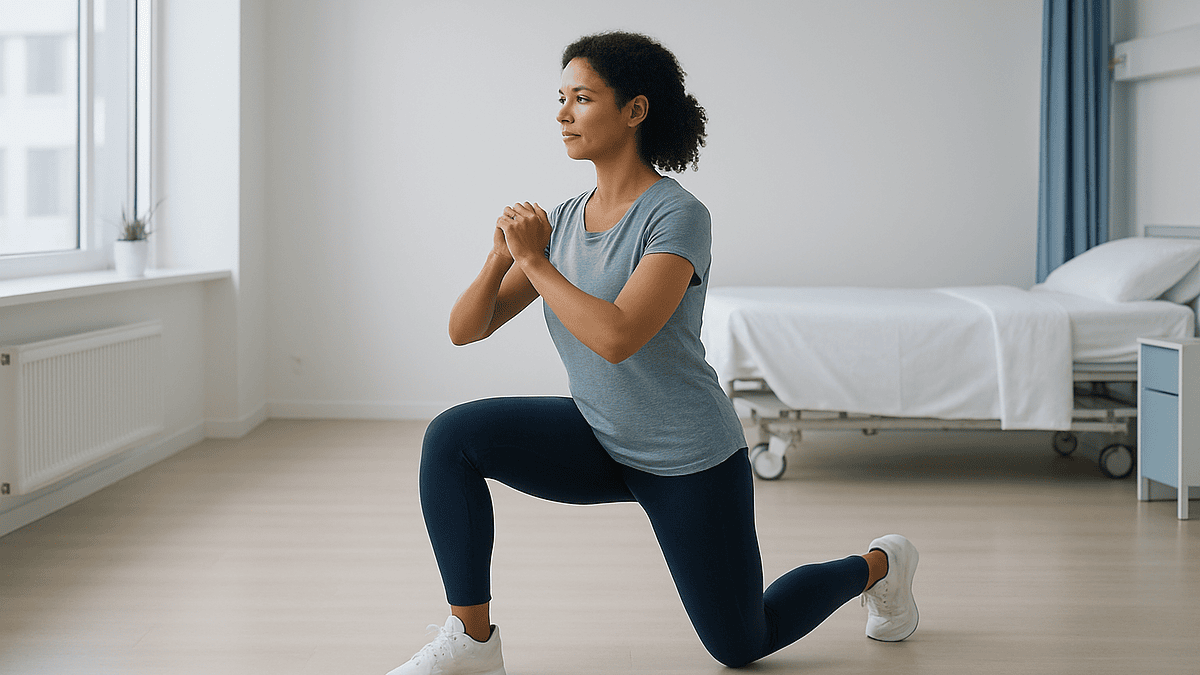
Key Takeaways
- Rehabilitation typically begins 24 to 48 hours after a stroke, but intensive, high-dose mobilization within the first 24 hours is not recommended because trial evidence linked it to worse outcomes.
- The fastest recovery occurs in the first three months, yet meaningful gains in hand function, walking and speech can continue past six months and into the second year with structured practice.
- Task-specific repetition, such as reaching for real objects or practicing sit-to-stands, drives brain rewiring more effectively than isolated strengthening of individual muscles.
- Guideline-level fitness advice for stroke survivors calls for 20 to 60 minutes of moderate aerobic activity on 3 to 5 days a week plus strength work on 2 to 3 days, adapted by a clinician.
- Depression affects roughly one in three stroke survivors and quietly reduces participation in every other kind of rehabilitation, so screening and treatment are part of recovery, not separate from it.
- A transient ischemic attack or minor stroke carries a high risk of a full stroke in the following days and requires urgent assessment even when symptoms have fully resolved.
Stroke recovery exercises are repetitive, task-focused movements guided by a rehabilitation team to help the brain rewire around damaged tissue. Most gains come in the first three to six months, but slower improvement can continue for years. A typical plan blends arm and hand practice, walking and balance work, gentle aerobic activity and speech or thinking tasks, adjusted to each person's deficits and medical stability.
A retired schoolteacher once described the first week after her stroke as learning to hold a coffee cup with a hand that belonged to someone else. The fingers were there. The strength, mostly, was there. What had vanished was the quiet conversation between brain and hand that the rest of us never notice.
That conversation is exactly what rehabilitation tries to rebuild, and it does so with something almost disappointingly ordinary: practice. Reaching for a cup, again. Standing from a chair, again. Saying the word, again. Hundreds of repetitions, day after day, coax surviving brain cells into taking over jobs they never did before.
The internet is full of exercise lists for stroke survivors, some helpful and some wildly overpromising. This guide takes a different approach. It explains what the evidence shows about how recovery unfolds, which kinds of exercise carry the strongest support, where the science is still thin, and when a symptom needs a specialist rather than another set of repetitions.
What does stroke recovery exercise actually mean?
Strip away the jargon and stroke recovery exercise is deliberate movement or mental practice designed to restore function the stroke took away. That sounds like ordinary fitness, but the goal is different. A gym workout builds muscle and stamina. Rehabilitation exercise is aimed at the brain, using the body as the tool.
Consider what happens in a stroke. Blood flow to part of the brain is cut off by a clot, or a vessel bleeds, and the affected cells die within minutes. Those cells do not grow back. Recovery instead depends on neighboring regions and the opposite hemisphere gradually learning to handle the lost tasks, a process called neuroplasticity. Repetition is the signal that tells the brain which connections deserve strengthening.
So a stroke exercise program looks less like a fitness class and more like an apprenticeship. It includes:
- Physical therapy for walking, balance, transfers and leg strength
- Occupational therapy for arm and hand use in daily tasks such as dressing and cooking
- Speech and language therapy for talking, understanding, reading and swallowing
- Cognitive practice for attention, memory and planning
- Fitness training to rebuild the stamina that weeks in bed erode
The Mayo Clinic notes that this work can begin as early as 24 to 48 hours after the stroke, once a person is medically stable, and may continue for months or years depending on the deficits involved. The mix changes over time, but the principle stays constant: practice the thing you want to get back, and practice it a lot.
What is the typical recovery process after a stroke?
Recovery rarely moves in a straight line, yet it does follow a recognizable shape. Johns Hopkins Medicine describes the first three months as the window of fastest change, when the brain’s swelling settles and spontaneous recovery combines with therapy to produce visible weekly progress. Many people who will walk again take their first supported steps during this stretch.
Between three and six months, gains continue but the pace slows, and this is where discouragement often sets in. The temptation is to read a slower curve as a stopped one. Johns Hopkins is careful on this point: improvement after six months is still possible, just harder won and more dependent on continued, structured practice.
Where recovery happens matters too. The American Heart Association’s rehabilitation guideline recommends that people who qualify for an inpatient rehabilitation facility receive care there rather than in a skilled nursing setting, because the intensity of therapy is higher and outcomes tend to be better. From there, most people move to outpatient or home-based programs.
A realistic arc for someone with moderate weakness might look like this: hospital care and early mobilization in week one, inpatient rehabilitation for two to four weeks, outpatient therapy several times a week for a few months, then a self-directed home program with periodic check-ins. Timelines vary enormously with stroke size, location and a person’s health before the event, which is why any calendar should be treated as a sketch, not a promise.
What are the most common physical symptoms after a stroke?
The symptoms a person carries out of the hospital depend on which part of the brain was injured, but a handful of patterns recur so often that rehabilitation teams plan around them.
Weakness on one side of the body, called hemiparesis, is the most familiar. Because each hemisphere controls the opposite side, a stroke in the left brain typically weakens the right arm and leg. The face may droop on that side as well. Weakness often comes with altered sensation: numbness, tingling or a strange sense that the limb is heavier or further away than it is.
Spasticity frequently appears in the weeks after a stroke. Muscles that were floppy at first become tight and resistant to stretch, pulling the elbow into a bend or the foot downward. The NHS lists this among the common complications that therapy and, when needed, medical treatment address together.
Balance problems and a slower, asymmetric walk follow from leg weakness and disrupted coordination. Fatigue, distinct from ordinary tiredness, affects many survivors and can undercut even a well-designed program. Swallowing difficulty, or dysphagia, is common early on and carries a risk of food or liquid entering the lungs, which is why swallow assessments happen before the first meal.
Less visible symptoms shape exercise just as much. Aphasia interferes with speaking or understanding. Visual field loss or neglect, where a person fails to attend to one side of space, makes safe movement harder. Shoulder pain on the weak side is a frequent, preventable problem when a heavy arm hangs unsupported.
How soon should exercise start after a stroke?
Sooner than most families expect, and with more nuance than the phrase early mobilization suggests.
Guidance from the Mayo Clinic puts the start of rehabilitation at roughly 24 to 48 hours after the stroke, as soon as the medical team confirms a person is stable. In practice this means sitting up at the edge of the bed, transferring to a chair, and beginning gentle range-of-motion work for the weak limbs. The point is to prevent the fast decline that comes with immobility: stiff joints, pressure injuries, clots in the legs and a body that forgets how to be upright.
There is a ceiling on how aggressive early activity should be. The American Heart Association’s guideline advises against high-dose, very early mobilization within the first 24 hours, based on trial evidence that intensive out-of-bed activity in that window reduced the odds of a good outcome. The brain is vulnerable in the first day; blood flow to the injured area is still settling. Gentle, frequent movement is encouraged. Marathon sessions are not.
After that first day, the guiding idea shifts to safe intensity. Inpatient rehabilitation programs typically deliver several hours of therapy a day, five or more days a week, split among physical, occupational and speech disciplines. That volume is deliberate. The brain’s heightened plasticity in the early weeks rewards practice, and the guideline emphasizes that the amount of task-specific repetition is one of the few variables people can actually control.
Why repetition beats intensity: neuroplasticity explained
Ask a therapist why a patient is reaching for the same plastic cup for the thirtieth time and the answer is neuroplasticity, a word that gets used loosely but describes something concrete.
When a movement is attempted repeatedly, the neurons involved fire together, and connections between them strengthen. Surviving brain tissue near the damaged region, and mirror regions in the opposite hemisphere, gradually take on the lost job. Imaging studies of stroke survivors show maps of hand control shifting and expanding over months of training. The change is physical, not motivational.
Two features of practice appear to matter most, and the American Heart Association’s rehabilitation guideline builds its recommendations around them. The first is task specificity. Practicing the actual activity, such as buttoning a shirt, transfers better than isolated strengthening of the finger muscles. The second is volume. More repetitions, spread across days, produce more change than occasional heroic sessions.
This is why a good home program can feel repetitive to the point of tedium. It is also why the myth of the single miracle exercise falls apart. No individual movement is magic; the pattern of frequent, meaningful, slightly challenging practice is what drives the rewiring.
Challenge deserves a word of its own. Tasks that are too easy generate little signal for change; tasks that are impossible generate frustration and compensation, where a person learns to do everything with the strong side. The skilled part of rehabilitation lies in finding the narrow band where a movement is difficult but achievable, then nudging that band forward every week.
Which arm and hand exercises help after a stroke?
The arm is often the slowest part of the body to recover, partly because hand control demands more brain real estate than walking does and partly because it is so easy to let the strong hand take over. Occupational therapists fight that tendency from the first week.
Early on, when the arm has little or no active movement, exercises are passive and assisted. A therapist or caregiver moves the shoulder, elbow and wrist through their full range to keep joints supple, and the weak arm is positioned and supported to prevent the shoulder from being pulled out of its socket by gravity. Weight bearing through the open hand on a table begins to wake up sensation.
As movement returns, practice becomes task-based. Typical activities include:
- Sliding a towel across a table in circles, then figure eights
- Reaching for objects at different heights and distances
- Picking up coins, buttons or clothespins to train grip and release
- Pouring water between cups, stacking blocks, turning pages
- Bilateral tasks that use both hands together, such as folding laundry
Two structured approaches earn specific mention in the American Heart Association’s guideline. Constraint-induced movement therapy restrains the strong hand for set periods so the weak one is forced to work, and is considered reasonable for people who already have some wrist and finger movement. Mirror therapy, where a person watches the reflection of the strong hand moving while attempting the same motion with the weak one, is also judged reasonable as an add-on. Neither is a shortcut. Both work by increasing the number of meaningful attempts the weak arm makes each day.
What leg, balance and walking exercises are used?
Walking is the goal most survivors name first, and physical therapy is organized around getting there safely. The sequence usually runs from trunk control, to standing, to stepping, to walking in the messy real world of curbs and crowds.
Trunk control comes before everything else. Sitting unsupported at the edge of a bed and reaching in different directions rebuilds the core stability that upright movement depends on. From there, sit-to-stand practice is the workhorse of early rehab. Rising from a chair loads the weak leg, trains the hips and knees, and directly transfers to getting off the toilet, out of a car and up from the sofa.
Standing balance work follows: shifting weight side to side, standing with feet together, then with one foot ahead of the other, eventually on a foam pad or with eyes closed under supervision. Stepping drills such as tapping a foot onto a low step, marching in place at a counter, and side-stepping along a rail build the components of gait.
Walking itself is practiced as a task, often with a therapist’s hands guiding the pelvis, sometimes with a treadmill and body-weight support harness, sometimes with a brace that holds the foot up so the toes stop catching. The American Heart Association’s guideline supports intensive, repetitive walking practice, including treadmill and overground training, for people with mobility deficits.
Falls are the shadow over all of this. Weakness, altered sensation and impaired attention combine to make the first months at home a high-risk period, which is why balance training and home safety checks sit alongside strengthening rather than after it.
Is aerobic exercise safe after a stroke, and how much?
Safe, encouraged and underused. Weeks in a hospital bed sap cardiovascular fitness, and many survivors were not especially active before the stroke. The American Heart Association’s scientific statement on physical activity after stroke, published in the journal Stroke, argues that fitness training belongs in every rehabilitation plan because it improves walking endurance, lowers the risk of another stroke and supports mood.
The statement offers a framework that clinicians adapt to each individual, summarized below. Every figure here comes from that document and should be personalized by a rehabilitation team, especially for anyone with heart disease or unstable blood pressure.
| Component | Frequency | Duration and intensity | Examples |
|---|---|---|---|
| Aerobic | 3 to 5 days a week | 20 to 60 minutes; moderate effort, roughly 40 to 70 percent of heart rate reserve, or a perceived exertion of somewhat hard | Walking, recumbent cycling, seated stepping, arm ergometer |
| Strength | 2 to 3 days a week | 1 to 3 sets of 10 to 15 repetitions covering 8 to 10 major muscle groups | Resistance bands, light weights, body-weight sit-to-stands |
| Flexibility | 2 to 3 days a week | Hold stretches 10 to 30 seconds | Calf, hamstring, chest and wrist stretches |
| Balance and coordination | 2 to 3 days a week | As tolerated, supervised at first | Weight shifts, tandem stance, tai chi |
Two cautions. Sessions may need to start at five or ten minutes and build gradually, particularly when fatigue is severe. Any chest pain, unusual breathlessness, dizziness or a sudden headache during exercise is a reason to stop and call the care team, not push through.
Do brain exercises and speech practice really work?
Here the honest answer is: some of it, for some people, with clearer evidence for specific skills than for general brain training.
Speech and language therapy has the strongest footing. For aphasia, the American Heart Association’s guideline recommends structured therapy focused on the actual communication tasks a person struggles with, and notes that greater intensity is associated with greater gains. Practice includes naming pictures, completing sentences, reading aloud, conversational scripts and, increasingly, supervised computer-based drills between sessions. Progress is often slow and can continue well beyond the first year.
Swallowing therapy is another well-supported area. Exercises that strengthen the tongue and throat muscles, along with posture changes and texture modifications, are standard care for dysphagia and reduce the risk of aspiration.
Cognitive rehabilitation for attention, memory and executive function is recommended in the same guideline, but the evidence for commercial brain-training apps that promise broad improvement is weak. Training tends to improve the trained task and transfers poorly to unrelated skills. That does not make cognitive practice useless. It means the most useful practice looks like real life: following a recipe, managing a calendar, planning a shopping trip, holding a conversation in a noisy room.
Mood belongs in this conversation. Depression follows stroke in roughly one in three survivors, according to the guideline, and it quietly erodes participation in every other kind of exercise. Screening for it is part of good rehabilitation, and treating it is not a detour from recovery but a condition for it.
What should you do after a mild stroke or TIA?
The word mild is one of the most dangerous in stroke care, because it invites people to relax at exactly the moment they should act.
A transient ischemic attack, or TIA, produces stroke symptoms that resolve within minutes to hours. A minor stroke leaves small deficits that may be easy to shrug off. Both are warnings. The NHS is blunt that a TIA signals a high risk of a full stroke, particularly in the days that follow, and that anyone who has had one needs urgent assessment even if they feel fine.
Exercise after a mild event has two aims. The first is to find and fix the subtle problems that a quick hospital stay can miss: a hand that fatigues when writing, a foot that scuffs when tired, words that come slower at the end of the day. A short course of outpatient therapy often makes a real difference here, and people are frequently surprised by what a formal assessment picks up.
The second aim is prevention. Regular physical activity lowers blood pressure, improves blood sugar control and cholesterol, and helps with weight, all of which reduce the chance of another event. The aerobic and strength framework outlined earlier applies fully after a mild stroke, often with fewer restrictions.
Medicines matter as well. Most people leave the hospital on treatments that reduce clotting risk and control blood pressure or cholesterol; these work continuously in the background and are usually lifelong. Decisions about which ones, and any adjustments, belong to the prescribing clinician, but showing up for follow-up appointments and reporting side effects honestly is a form of recovery work too.
Can you be healthy after a stroke?
Yes, and many people end up healthier in measurable ways than they were before, because the stroke forces attention onto risks that were quietly accumulating for years.
The distinction worth drawing is between recovery and health. Some deficits never fully resolve; a person may always walk with a brace or type with one hand. That is not the same as being unwell. Health after stroke means a stable brain, a heart and blood vessels under good control, enough fitness to do what matters, and a life that still contains the people and activities that give it meaning.
The evidence points to a few levers with outsized payoff. Blood pressure control is the single largest, since hypertension is the leading modifiable risk factor for stroke. Regular aerobic activity, as laid out in the American Heart Association’s physical activity statement, improves cardiovascular fitness and reduces recurrence risk. Not smoking, limiting alcohol, and eating a pattern rich in vegetables, fruit, whole grains, legumes and fish round out the list. None of these is exotic. All of them are hard to sustain without structure and support.
Fatigue and mood shape health as much as physiology does. Post-stroke fatigue can persist for months and does not respond to simple rest; graded activity, good sleep hygiene and pacing tend to help more than lying down. Social connection, whether through a stroke support group or simply resuming a weekly card game, correlates with better long-term participation.
Ask survivors five years out and many describe a life that is different, sometimes harder, and yet genuinely good. That outcome is common enough to be worth planning for from the first week.
Which stroke recovery myths get in the way?
Three beliefs come up again and again in rehabilitation clinics, and each one costs people progress.
The first is the six-month wall: the idea that whatever has not returned by half a year is gone for good. Johns Hopkins Medicine’s recovery timeline explicitly rejects this. Improvement after six months is slower and requires more deliberate practice, but the brain does not stop adapting on a schedule. People regain hand function, speech and walking ability well into the second year and beyond, especially when they keep training.
The second is that pain signals progress. Stretching a tight muscle to discomfort is sometimes necessary, but sharp joint pain, particularly in the shoulder of the weak arm, is a warning sign of injury rather than a badge of effort. Shoulder pain after stroke is common and largely preventable with careful positioning and handling; pushing through it makes it worse and can halt arm rehabilitation entirely.
The third is that rest heals. Rest was the default advice for stroke a generation ago, and the science has moved decisively the other way. Immobility weakens muscles, stiffens joints, thins bone, raises clot risk and deprives the brain of the movement signals it needs to rewire. Sleep is essential; days spent in a recliner are not the same thing.
A fourth deserves a mention: the gadget myth. Robotic gloves, electrical stimulation devices and apps can be useful adjuncts within a supervised program, and some have supportive evidence. None replaces the volume of ordinary, effortful, task-specific practice that drives recovery. If a product promises otherwise, the promise is the problem.
How do you build a home exercise routine that lasts?
The transition from supervised therapy to self-directed practice is where many recoveries stall, not for lack of effort but for lack of design. A few principles from rehabilitation practice help a home program survive contact with real life.
Tie exercises to existing habits. Sit-to-stands before every meal, wrist stretches during the evening news, a balance drill while the kettle boils. Habits anchored to routines outlast willpower.
Aim for many short bouts rather than one long block. Ten minutes of arm practice three times a day produces more repetitions, and less fatigue, than a single exhausting half hour. Frequency is the lever the evidence favors.
Track something visible. A tally of repetitions, a stopwatch on standing balance, a video of walking taken once a month. Slow progress is invisible day to day and obvious over eight weeks, and seeing it is what sustains motivation.
Keep the challenge honest. When a task becomes easy, make it harder: a smaller object, a longer reach, a softer surface, a faster pace. A program that never changes stops producing change.
Involve a partner without letting them take over. Caregivers can cue, count and spot for safety. They should not do the movement for the person unless a therapist has specifically taught assisted technique.
Schedule check-ins. Even after formal therapy ends, a review every few months lets a specialist adjust the plan, catch new problems such as emerging spasticity, and reset goals. The NHS describes recovery as a long-term process supported by community rehabilitation and follow-up rather than a fixed course that simply finishes.
When should you see a specialist about stroke recovery?
Two different questions hide inside this one: when to seek routine specialist input, and when to seek emergency care.
Routine referral to a rehabilitation specialist, physiotherapist, occupational therapist or speech and language therapist is warranted whenever recovery plateaus for several weeks despite practice, when a new problem appears such as increasing muscle tightness or shoulder pain, when falls or near-falls become more frequent, when swallowing changes, or when mood, sleep or fatigue begin to undermine daily participation. None of these is an emergency. All of them respond better to early attention than late.
Emergency care is different. Any sudden return or worsening of stroke symptoms should be treated as a new stroke until proven otherwise. The CDC’s FAST checklist covers the essentials: face drooping on one side, arm weakness or numbness, speech that is slurred or strange, and time, meaning call emergency services immediately. Other red flags include sudden confusion, sudden trouble seeing in one or both eyes, sudden loss of balance or coordination, and a severe headache with no known cause. Treatments that can limit brain damage are time-dependent, and the window is measured in hours.
During exercise specifically, stop and seek urgent advice for chest pain or pressure, breathlessness out of proportion to effort, a racing or irregular heartbeat, fainting or near-fainting, or a headache that builds quickly.
A final word for caregivers. You will often notice changes before the person does, especially subtle ones in speech or attention. Trust that observation and raise it with the care team. Recovery goes better when the people closest to it feel entitled to ask.
Frequently asked questions
What is the typical recovery process after a stroke?
Recovery usually starts in the hospital within a day or two, moves to inpatient or outpatient rehabilitation for weeks to months, then continues as a home program with periodic specialist review. The most rapid improvement happens in the first three months, gains slow between three and six months, and slower progress remains possible for years. The exact path depends on the size and location of the stroke and a person’s health beforehand.
What are the most common physical symptoms after a stroke?
One-sided weakness of the arm, leg and face is the most common, often accompanied by numbness or altered sensation. Muscle tightness called spasticity frequently develops over the following weeks. Balance problems, an uneven walk, fatigue, swallowing difficulty and shoulder pain on the weak side are also common. Less visible effects such as speech difficulty, vision loss on one side and reduced attention to one side of space shape rehabilitation just as much.
Can you be healthy after a stroke?
Yes. Many survivors live long, active lives, and some become measurably healthier because the stroke prompts serious attention to blood pressure, fitness, diet and smoking. Health after stroke does not require full recovery of every function; it means a stable brain, well-controlled cardiovascular risk, enough fitness for daily life and continued social connection. Regular aerobic and strength exercise, as recommended by cardiovascular guidelines, is central to that outcome.
What should I do after a mild stroke?
Treat it as a serious warning. Attend every follow-up appointment, take prescribed medicines as directed by your clinician, and ask for a formal rehabilitation assessment even if you feel recovered, because subtle deficits in the hand, foot or speech are easily missed. Begin a regular exercise routine to lower blood pressure and vascular risk, stop smoking if you smoke, and learn the FAST warning signs so a recurrence is recognized within minutes.
How many hours a day should a stroke patient do exercises?
Inpatient rehabilitation programs typically deliver several hours of therapy daily across physical, occupational and speech disciplines, five or more days a week. At home, the evidence favors frequent short sessions over one long block: for example, two or three ten-minute bouts of arm practice plus a daily walk or cycling session. The total that a person can tolerate depends on fatigue, medical stability and stage of recovery, so the plan should be set with a therapist.
Can a stroke survivor still improve after one year?
Yes, although progress after the first year is slower and depends heavily on continued, structured practice. Rehabilitation guidance from Johns Hopkins Medicine is explicit that improvement remains possible well beyond six months. People regain hand function, walking endurance and language skills in the second year and later, particularly when they increase the challenge of their exercises over time and periodically return to a specialist to refresh the program.
Is walking good for stroke recovery?
Walking is one of the most valuable exercises after a stroke because it trains balance, leg strength, coordination and cardiovascular fitness at the same time, and it directly transfers to everyday independence. Rehabilitation guidelines support intensive, repetitive walking practice, including treadmill training with support when needed. Start at a distance and pace that feel safe, use any prescribed brace or aid, and build up gradually, ideally with a therapist checking technique early on.
What exercises help regain hand movement after a stroke?
Task-based practice works best: sliding a towel across a table, reaching for objects at different heights, picking up coins or clothespins, pouring water between cups and using both hands together to fold laundry. When the arm has little movement, assisted range-of-motion and weight bearing through the open hand keep joints supple and stimulate sensation. Constraint-induced movement therapy and mirror therapy are structured methods a therapist may add for people with some wrist and finger movement.
Why is my shoulder painful after a stroke, and should I keep exercising?
Shoulder pain on the weak side is common after stroke, often because weakened muscles let the arm hang and strain the joint, or because the arm is moved or lifted incorrectly. It should not be pushed through. Stop any movement that causes sharp pain, support the arm when sitting and standing, and ask a therapist to review positioning, handling and exercise technique. Untreated shoulder pain can bring arm rehabilitation to a halt.
When should a stroke survivor call emergency services during recovery?
Immediately for any sudden face drooping, arm weakness, slurred or confused speech, sudden vision loss, sudden severe headache, or sudden loss of balance, even if symptoms fade within minutes. These may signal a new stroke, and treatment is time-critical. During exercise, chest pain, disproportionate breathlessness, an irregular racing heartbeat, fainting or a rapidly building headache also warrant stopping and seeking urgent medical advice.
References
- AHA/ASA Physical Activity and Exercise Recommendations for Stroke Survivors (PubMed)
- NHS: Stroke: Recovery
- CDC: Stroke Signs and Symptoms
This article is for general information only and is not a substitute for professional medical advice. Please consult a qualified doctor about your individual situation.

More from the Blog

Before Your First Vestibular Rehabilitation Visit: Symptom Diary, Hearing Tests and Medicines
Before a vestibular rehabilitation first appointment, most teams ask for three things: a short symptom diary recording when dizziness happens, how long it lasts…
Skin Checks and Pressure Relief After Spinal Cord Injury Rehabilitation: A Daily Routine
Pressure sore prevention after spinal cord injury rests on a daily routine: inspect skin over bony areas at least once or twice a day,…
What a Pulmonary Rehabilitation Session Involves: Exercise, Breathing Training and Education
Pulmonary rehabilitation is a supervised program for people with chronic lung disease that combines exercise training, breathing techniques and education. A typical session includes…
Daily Life After Vision Rehabilitation: Practicing Contrast Strategies and Orientation Skills
Living with low vision after rehabilitation works best when contrast and orientation skills become daily habits: use dark-on-light or light-on-dark pairings for food, stairs,…
Shockwave Therapy for Plantar Fasciitis: What the Trials Show
Shockwave therapy shows moderate evidence of benefit for chronic plantar fasciitis. Randomized trials and meta-analyses find it relieves heel pain better than sham treatment…
Inside a Bobath Treatment Session: Guided Handling, Positioning and Task Practice
A Bobath therapy session is a hands-on neurological rehabilitation appointment, usually with a physiotherapist or occupational therapist, in which the therapist guides your movement,…