

Swollen Lower Legs: Causes from the Knee Down
Key Takeaways
- Swelling in both legs usually reflects a body-wide cause such as vein disease, heart, kidney or liver strain, or a medicine, while sudden one-sided swelling raises concern for a clot or infection and needs same-day assessment.
- Chronic venous insufficiency, leaky one-way valves in the leg veins, is the most common reason adult legs swell by evening and deflate overnight.
- The CDC estimates that as many as 900,000 Americans are affected by venous blood clots each year, and a DVT can begin as painless swelling in one calf.
- No drink reduces leg swelling; cutting dietary sodium, elevating the legs above heart level, and walking regularly are what mainstream evidence actually supports.
- Rusty-brown skin discoloration above the ankle signals long-standing vein disease and is worth evaluating before it progresses to a slow-healing leg ulcer.
- Leg swelling paired with breathlessness, chest pain, or one hot red leg is an emergency, not a symptom to monitor from the couch.
Swelling from the knee down usually means fluid is pooling in the tissues because the veins, lymph vessels, heart, kidneys, or liver are not moving fluid efficiently. Common causes include chronic venous insufficiency, long periods of sitting or standing, certain medicines, and pregnancy. Sudden swelling in one leg, especially with pain, warmth, or redness, can signal a blood clot and needs urgent medical evaluation.
By six in the evening, your socks have carved a deep ring above each ankle, and pressing a fingertip into your shin leaves a dent that lingers like a thumbprint in dough. In the morning the legs look almost normal again. Then the cycle repeats.
That daily rhythm is one of the most common stories in primary care, and it is also one of the most misunderstood. Some people shrug it off for years; others panic over swelling that turns out to be a long day on their feet. The truth sits in the details: which leg, how fast, what else came with it.
The lower leg is where the body’s plumbing gets tested hardest, so it is where trouble shows up first. Reading those clues correctly, calmly and early, is what this guide is for.
Why does swelling show up from the knee down first?
Fluid obeys gravity. Every minute, tiny blood vessels called capillaries leak a small amount of plasma into the surrounding tissue; the veins and lymphatic vessels are supposed to collect it and haul it back uphill toward the heart. When you stand, the column of blood pressing down on your ankle veins is at its tallest, so the ankles and shins are where any weakness in that return system appears first, according to Mayo Clinic.
The system has a clever assist: the calf muscles. Each time they contract, they squeeze the deep veins like a hand wringing a sponge, pushing blood upward past one-way valves. Clinicians sometimes call the calf the body’s second heart. Sit still for hours, and that pump idles; fluid quietly accumulates from the ankle up.
A simple home observation helps: press firmly on the shin for several seconds. If a dimple stays behind, that is pitting edema, meaning free fluid in the tissue. Swelling that does not pit, or skin that feels thickened and woody, points to a different set of causes, which we will get to. Neither finding is a diagnosis, but each narrows the search considerably.
One leg or both? The first question every clinician asks
Before any blood test or scan, the pattern of swelling does most of the diagnostic work. Swelling in both legs generally reflects something body-wide: fluid balance, vein function, a medicine, or an organ under strain. Swelling in one leg points to a local problem in that limb, and when it arrives suddenly, it deserves prompt attention, as MedlinePlus notes.
| Pattern | More likely causes | Typical clues |
|---|---|---|
| Both legs, gradual | Venous insufficiency, heart, kidney or liver strain, medicines, long sitting or standing, pregnancy | Worse by evening, improves overnight, pits with pressure |
| One leg, sudden | Deep vein thrombosis, cellulitis, ruptured Baker’s cyst, injury | Pain, warmth, redness, tightness in the calf |
| One leg, gradual | Lymphedema, damage from an old clot, pressure on pelvic veins | Foot and toes involved, skin thickening, little overnight change |
| Both legs, rapid onset | Uncommon; needs prompt medical review | Often with breathlessness or sudden weight gain |
Timing matters as much as sides. Swelling that has crept in over months tells a different story than a calf that ballooned over a weekend. Take note of both before your appointment; it genuinely speeds things up.
The most common culprit: tired vein valves
If lower-leg swelling had a single headline cause in adults, it would be chronic venous insufficiency. The leg veins contain delicate one-way valves that keep blood moving toward the heart. With age, pregnancy, weight gain, prior clots, or simply an unlucky draw of genetics, those valves can stop closing properly. Blood then slides backward and pools, raising pressure in the lower leg and pushing fluid out into the tissue, as Cleveland Clinic explains.
The pattern is distinctive. Legs feel heavy and achy late in the day, swelling peaks in the evening, and mornings bring relief because lying flat all night lets gravity work for you instead of against you. Varicose veins often, but not always, keep it company.
Over years, the constant pressure changes the skin itself. Red blood cells leak into the tissue and break down, staining the skin above the ankle a rusty brown. The skin may itch, dry out, or harden. This is worth taking seriously: long-standing venous disease is the leading path to venous leg ulcers, slow-healing open sores near the ankle. Caught earlier, the trajectory is far easier to change with movement, elevation, and properly fitted compression, so brown discoloration is a reason to book an appointment, not to buy thicker socks.
Could it be my heart? What heart-related swelling looks like
The fear behind many swollen-leg searches is heart failure, so let’s be precise about it. When the heart pumps less effectively, blood backs up in the veins and pressure rises all the way down to the ankles; the kidneys, sensing reduced flow, respond by holding on to sodium and water, which adds to the load. The result is swelling in both feet, ankles, and lower legs that pits with pressure, as described by the American Heart Association.
Here is the key: heart-related swelling rarely travels alone. The American Heart Association lists its usual companions as shortness of breath during activity or when lying flat, waking at night breathless, a persistent cough or wheeze, fatigue out of proportion to effort, and rapid weight gain from retained fluid. Some people notice they need an extra pillow to sleep comfortably, or that shoes stopped fitting over a matter of days.
Swollen ankles with none of those features are statistically far more likely to be a vein or lifestyle issue. But the combination of new leg swelling plus breathlessness or sudden weight gain is a message to contact a clinician promptly, not to wait for the next routine visit. Fluid overload responds much better to early evaluation than to late rescue.
What organ failure causes leg swelling? Kidneys and liver, explained
People often ask this question bluntly, so here is the blunt answer: three organ systems can cause it, the heart (covered above), the kidneys, and the liver. Each does it through a different mechanism, and each usually leaves other fingerprints.
The kidneys manage the body’s salt and water budget. When they are struggling, sodium accumulates, and water follows sodium the way a shadow follows a lamppost. Kidney disease can also let a protein called albumin escape into the urine. Albumin normally acts like a sponge inside blood vessels, holding water in the bloodstream; lose enough of it and fluid seeps into the tissues, classically causing puffiness around the eyes in the morning as well as swollen legs by evening, notes Mayo Clinic.
The liver manufactures that albumin in the first place. Advanced liver disease cuts production and also raises pressure in the veins draining the gut, so fluid tends to collect in the abdomen (ascites) as well as the legs. Yellowing of the eyes or skin, easy bruising, and a swollen belly alongside swollen legs point in this direction.
None of this can be sorted out by guesswork at home, and it does not need to be. A basic panel of blood and urine tests, ordered at an ordinary appointment, checks all three systems quickly and reliably.
Why would one leg swell below the knee? Rule out a blood clot first
When a single leg swells over hours or days, the diagnosis that must be excluded before any other is deep vein thrombosis (DVT), a blood clot in one of the deep veins of the leg. The clot dams the vein, pressure builds downstream, and the calf or whole lower leg swells, often with aching, warmth, tenderness, or a reddish or discolored hue. Some DVTs, though, cause swelling with surprisingly little pain.
The stakes are real. A piece of the clot can break free and travel to the lungs, causing a pulmonary embolism, which can be life-threatening. The CDC estimates that as many as 900,000 people in the United States are affected by these venous clots each year, and many had warning signs in a leg first.
Risk rises after surgery, during and after hospital stays, with long-haul travel, during pregnancy and the weeks after delivery, with some hormone-containing medicines, with cancer, and with prolonged immobility. But clots also occur in people with no obvious risk factor at all.
The practical rule is simple and worth memorizing: new, unexplained swelling of one leg is a same-day medical question. An ultrasound scan of the leg veins is quick, painless, and definitive, and if a clot is found, treatment decisions belong with the clinician who sees your full picture.
Cellulitis: when swelling is actually an infection
Bacteria do not need much of an invitation. A cracked heel, athlete’s foot between the toes, an insect bite, or a scratch can let skin bacteria into the deeper tissue, where they cause cellulitis, an infection that makes one lower leg swollen, red, hot, and tender, sometimes with fever and chills, as MedlinePlus describes.
Cellulitis and DVT can look confusingly similar from across the room; both favor one leg. A few features tilt toward infection: skin that is distinctly hot and intensely red with a spreading edge, fever, and a visible entry point such as a wound or fungal cracking between the toes. Clinicians sometimes trace the red border with a pen to see whether it is advancing. Tilting toward a clot: swelling and tightness that outweigh the redness, and calf pain that deepens with walking.
Here is the honest complication: the two can coexist, and examination alone is not always enough to separate them, which is why same-day assessment matters. Cellulitis is treatable, but it moves; delay lets it spread and, uncommonly, reach the bloodstream.
People with long-standing swelling face a double bind worth knowing about. Chronically swollen, stretched skin is easier for bacteria to breach, and each bout of cellulitis can damage lymphatic vessels further, worsening the swelling that invited the infection. Meticulous skin care, moisturizing dry areas and treating fungal foot infections early, breaks that loop.
Lymphedema: when the drainage system itself is blocked
Veins carry most fluid home, but the lymphatic system handles the protein-rich remainder, a slow, low-pressure network of vessels that is easy to overlook until it fails. When lymphatic drainage is damaged or overwhelmed, the result is lymphedema: persistent swelling that behaves differently from ordinary fluid retention.
The distinctions are useful. Lymphedema tends to involve the foot and toes, sometimes producing a squared-off look to the toes, and the skin over them may become too thick to pinch into a fold. Early on it may pit like ordinary edema; over time the tissue becomes firmer and the swelling stops improving much overnight. It is often one-sided, or clearly worse on one side.
Causes divide into two camps. Some people are born with underdeveloped lymphatic vessels, and swelling can appear in adolescence or adulthood seemingly out of nowhere. More often the system is damaged along the way, by surgery or radiation therapy involving lymph nodes, by recurrent cellulitis, by severe long-standing venous disease, or by obesity placing sustained load on lymphatic return.
Lymphedema is a long-term condition rather than a quick fix, but it is far from unmanageable. Trained lymphedema therapists use specialized massage-like drainage techniques, tailored compression, exercise, and skin care to reduce volume and prevent infections. The earlier that starts, the better it works, so persistent one-sided swelling that never fully settles deserves a proper diagnosis rather than resignation.
Can my medicines be causing swollen ankles?
Quietly, yes, and this cause is missed all the time because the swelling can begin weeks or months after a prescription starts, long after anyone connects the two. The NHS lists medicines among the everyday causes of lower-leg oedema.
Several groups are known for it, each through its own mechanism. Some widely used blood pressure medicines work by relaxing the walls of small arteries; that same relaxation raises pressure in the capillaries downstream, nudging fluid into the ankles. Steroid medicines and certain hormone-containing therapies encourage the kidneys to retain sodium and water. Some medicines used in diabetes promote fluid retention as a side effect. And common anti-inflammatory pain relievers can blunt the kidneys’ ability to shed salt, an effect that grows more noticeable with age or existing kidney strain.
Two important cautions. First, ankle swelling from these medicines is usually a nuisance rather than a danger, but only a clinician can judge that in context; the same swelling can occasionally mask or mimic something that matters. Second, never stop a prescribed medicine on your own because of puffy ankles. Abruptly stopping blood pressure or heart medicines carries real risk. Instead, bring a complete list of everything you take, including over-the-counter pain relievers and supplements, to your appointment. Often a simple adjustment or substitution, made by the prescriber, solves the problem entirely.
The everyday causes: sitting, standing, heat, travel, and pregnancy
Not all swelling signals disease. The NHS lists a set of thoroughly ordinary triggers: sitting or standing in one position too long, hot weather, eating a lot of salty food, carrying extra weight, and pregnancy.
The mechanics are the same in each case, gravity plus an idle calf pump. A desk worker who sits from nine to five, an assembly-line worker who stands in place, and a passenger on a long flight are all running the same experiment: hours of low muscle activity while fluid drifts downward. Heat compounds it by dilating blood vessels near the skin. A salty restaurant meal adds retained water on top.
Pregnancy deserves its own note. Swollen ankles are extremely common, especially in the third trimester, because blood volume expands and the growing uterus presses on pelvic veins. Gradual, symmetric swelling that eases with rest and elevation is expected. But sudden swelling, particularly involving the face or hands, or accompanied by headache or visual changes, needs urgent review, because it can signal preeclampsia, a blood pressure condition of pregnancy.
The reassuring test for everyday swelling is reversibility. If your legs are noticeably better after a night in bed, worse after a long haul in a chair, and free of pain, redness, breathlessness, or one-sidedness, a benign mechanical cause is likely, and the fixes in the self-care section below genuinely work.
Is it the knee itself? Joint swelling versus leg swelling
Search results blur these together, but a swollen knee and a swollen lower leg are different problems. Knee swelling, an effusion, means fluid inside or around the joint capsule itself: the knee looks puffy and rounded, feels tight or stiff, and may resist full bending. Common causes include injury to ligaments or cartilage, gout, various forms of arthritis, and overuse, as Mayo Clinic and other mainstream sources describe. The shin and ankle below can look entirely normal.
Leg swelling, by contrast, lives in the soft tissue from the knee down, ankle rings from socks, a shin that pits, a foot that no longer fits its shoe, while the knee joint itself moves freely.
There is one elegant crossover worth knowing. A Baker’s cyst is a fluid-filled pouch that forms behind the knee, usually alongside arthritis or a cartilage problem. If it ruptures, fluid tracks down into the calf, producing sudden one-sided calf swelling and pain that mimics a DVT almost perfectly. Even experienced clinicians cannot reliably tell the two apart by examination; an ultrasound settles it. That is one more reason sudden one-leg swelling earns a same-day medical opinion rather than a home diagnosis, the imitators of a blood clot are treated very differently from the real thing, and guessing wrong in either direction has costs.
What to drink to stop leg swelling? The honest answer
This is one of the most-searched questions on the topic, so it deserves a straight reply: no beverage reliably reduces leg swelling, and anything marketed as a detox or drainage drink is selling hope, not physiology.
What the evidence actually supports is subtler and cheaper. The most useful dietary lever is sodium, not fluid. Salt holds water in the body, so cutting back on salty processed foods, cured meats, canned soups, and restaurant meals can reduce fluid retention, a point made by both Cleveland Clinic and Mayo Clinic in their edema guidance. Reading labels does more for your ankles than any tea ever will.
Plain water is fine, and there is no need to restrict it on your own; counterintuitively, normal hydration does not worsen edema in most people, and fluid restriction is only appropriate when a clinician specifically advises it for a condition such as heart failure. Alcohol, on the other hand, promotes fluid retention and dehydration in sequence and can leave legs puffier the next day.
You may read that certain drinks act as mild diuretics. The effect is trivial for meaningful edema, and self-treating swelling with diuretic anything, drink or supplement, without knowing the cause can be genuinely counterproductive. Find the cause first; the fluid follows.
How to reduce swelling from the knee down at home
Once serious causes are off the table, or while you wait for an appointment for gradual, painless swelling, a handful of unglamorous measures do most of the work. They all exploit the same physics that caused the problem.
- Elevate properly. Feet on a footstool barely counts. To drain fluid, the lower legs need to be above the level of the heart, lying down with legs on pillows, several times a day, per Mayo Clinic guidance.
- Move the calf pump. Walking is the single best medicine for vein-related swelling. Desk-bound? Ankle circles and heel-toe raises while seated keep the pump ticking between walks.
- Consider compression, with one caveat. Graduated compression stockings squeeze hardest at the ankle and less going up, pushing fluid the right direction. They help many people with venous swelling, but anyone with poor arterial circulation, diabetes-related foot problems, or numbness should be assessed before using them, since compression on a leg with poor blood supply can cause harm.
- Guard the skin. Swollen skin cracks and infects easily. Moisturize dry areas, treat fungal problems between the toes, and inspect regularly.
- Trim the sodium. As above, it is the dietary change that actually moves the needle.
Give these measures a fair trial, but not an indefinite one. The NHS advises seeing a clinician if swelling has not improved after a few days of self-care at home.
When to see a doctor about swollen lower legs, and when to go now
Most lower-leg swelling can wait for a routine appointment. Some cannot, and the dividing lines are clear enough to memorize.
Seek emergency care immediately if leg swelling comes with chest pain, breathlessness, coughing up blood, fainting, or a racing heart; these can signal a clot that has traveled to the lungs, warns the CDC. The same urgency applies to a leg that is swollen, cold, and pale, or to swelling in pregnancy that arrives suddenly or involves the face and hands.
Get seen the same day for new swelling in one leg, particularly with pain, warmth, redness, or tightness in the calf, whether the eventual answer is a clot, cellulitis, or a ruptured Baker’s cyst, all three are same-day problems. Fever with a red, hot leg belongs in this category too.
Book a routine appointment for swelling in both legs that has persisted or recurred despite elevation, movement, and less salt; for swelling accompanied by fatigue, reduced urine output, or unexplained weight gain; for skin that is discoloring brown above the ankles; and for any swelling that simply worries you. The NHS suggests medical review when home measures have not helped within a few days.
One principle overrides every list: sudden is more urgent than gradual, and one-sided is more urgent than symmetric. When in doubt, call, describing the pattern over the phone often gets you triaged correctly in under a minute.
What tests will the doctor do for leg swelling?
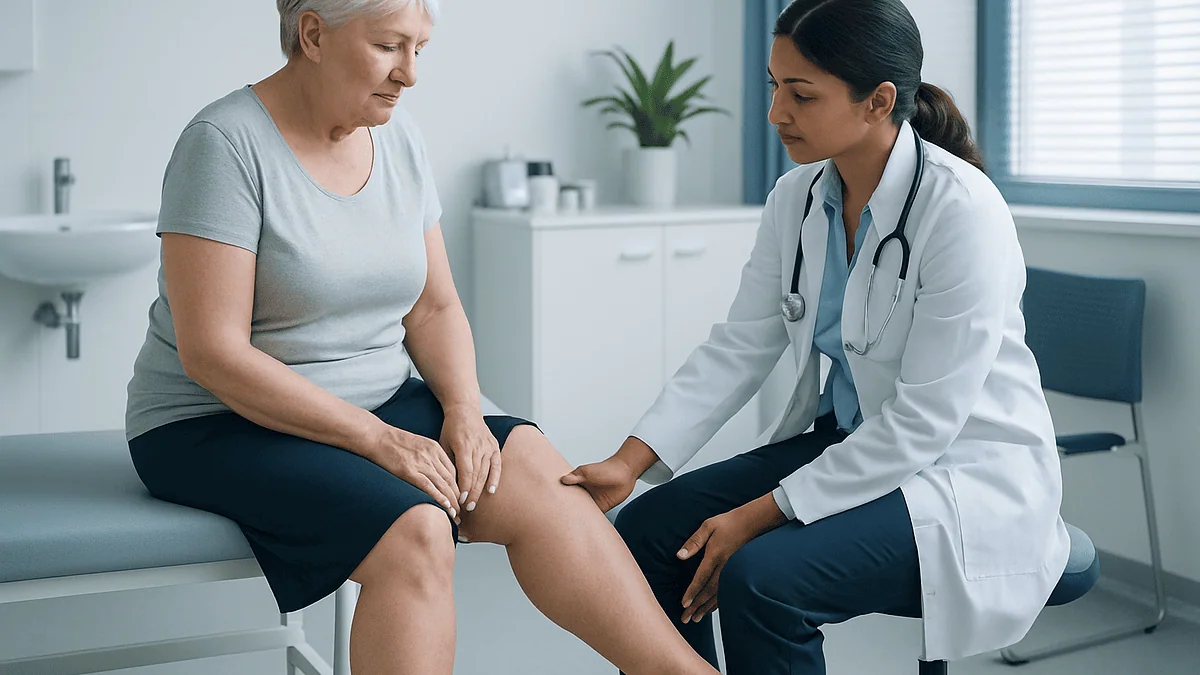
Knowing what to expect takes the dread out of the appointment, and the workup for swollen legs is refreshingly logical. It starts with questions: one leg or both, how fast, what medicines you take, whether you snore or wake breathless, how far you can walk. Then a focused exam, pressing the shins to check for pitting, inspecting the skin, feeling pulses, listening to heart and lungs, and comparing calf measurements.
From there, tests are chosen to check the usual suspects, as outlined by MedlinePlus:
- Blood tests assess kidney function, liver function, albumin levels, and sometimes a marker released when the heart is under strain. A clot-related blood marker may be checked when DVT is possible but unlikely.
- Urine testing looks for protein leaking through the kidneys, a quick, painless window into a major cause.
- Ultrasound of the leg veins is the standard test when a clot is suspected, and a different ultrasound technique can grade how well vein valves are working.
- An echocardiogram, an ultrasound of the heart, evaluates pumping function if heart failure is on the list.
- Additional imaging is reserved for specific questions, such as a suspected Baker’s cyst or a blockage higher in the pelvis.
Most people need only a fraction of this list. The pattern you describe, which is why noticing it matters, usually points the clinician to one or two targeted tests rather than a fishing expedition, and many answers arrive within days.
Frequently asked questions
How do I get rid of swollen legs from the knee down?
Start by identifying the cause with a clinician, because treatment differs completely between vein disease, heart or kidney issues, medicines, and clots. For everyday gravity-related swelling, elevate your legs above heart level several times daily, walk regularly to activate the calf muscle pump, reduce salty foods, and ask whether graduated compression stockings suit you. If swelling has not improved after a few days of these measures, the NHS advises seeing a doctor.
What can I drink to stop leg swelling?
Nothing you drink will reliably reduce leg swelling, and detox or drainage beverages have no credible evidence behind them. The dietary change that actually helps is eating less sodium, since salt holds water in the body. Drink water normally unless a clinician has advised a fluid limit for a specific condition, and go easy on alcohol, which promotes fluid retention. Persistent swelling needs a cause found, not a beverage.
What organ failure causes leg swelling?
Three organ systems can cause it: the heart, the kidneys, and the liver. A weakened heart lets blood back up into the leg veins; struggling kidneys retain sodium and water and may leak albumin into the urine; advanced liver disease reduces albumin production and raises abdominal vein pressure. Each usually brings other signs, such as breathlessness, foamy urine, or a swollen belly. Simple blood and urine tests check all three.
Why would only one leg swell below the knee?
Sudden swelling in one leg should be treated as a possible deep vein thrombosis until proven otherwise, especially with calf pain, warmth, or discoloration, and warrants same-day medical review. Other one-sided causes include cellulitis (a skin infection, usually red and hot), a ruptured Baker’s cyst behind the knee, injury, and lymphedema, which develops gradually and often involves the foot and toes. An ultrasound usually settles the question quickly.
Is walking good for swollen lower legs?
Yes, for most causes it is one of the best things you can do. Each calf muscle contraction squeezes the deep veins and pushes blood upward past one-way valves, which is why clinicians call the calf the second heart. Walking counters the pooling caused by sitting, standing, and vein valve weakness. The exception is a suspected blood clot or acute injury, where you should be assessed before exercising the leg.
Why do my legs swell when I sit all day?
Sitting parks the calf muscle pump that normally pushes blood up out of your legs, so gravity wins and fluid seeps into the tissue around your ankles and shins. Bent hips and knees also slightly kink the veins draining the legs. The fix is mechanical: stand and walk briefly at regular intervals, do seated heel raises and ankle circles, and elevate your legs above heart level when you get home.
Does salt really cause leg swelling?
It contributes meaningfully. Sodium holds water in the body, so a salty diet increases the total fluid your tissues carry, and gravity delivers a share of it to your ankles. Mayo Clinic and Cleveland Clinic both list reducing dietary sodium among the most effective self-care steps for edema. Most sodium comes from processed and restaurant food rather than the salt shaker, so label-reading matters more than skipping a pinch while cooking.
When is leg swelling an emergency?
Go to emergency care if swelling comes with chest pain, breathlessness, coughing up blood, fainting, or a racing heartbeat, which can indicate a clot in the lungs. Same-day care is needed for sudden swelling in one leg, a leg that is hot, red, and tender, fever with leg redness, a cold pale leg, or sudden swelling in pregnancy involving the face or hands. Gradual, painless, both-leg swelling can wait for a routine appointment.
Do compression socks help, and are they safe for everyone?
Graduated compression stockings help many people with vein-related swelling by squeezing hardest at the ankle and progressively less up the leg, pushing fluid toward the heart. They are not safe for everyone: people with poor arterial circulation, diabetes-related foot disease, or reduced sensation should be assessed first, because compressing a leg with an inadequate blood supply can cause harm. Fit matters too, so get measured rather than guessing a size.
Why is the skin on my swollen lower legs turning brown?
Brown or rust-colored staining above the ankles usually signals long-standing venous insufficiency. High pressure in failing leg veins forces red blood cells out into the tissue, where they break down and deposit iron pigment in the skin. It is a marker of chronic disease rather than an emergency, but it deserves evaluation, because the same process can eventually lead to hardened skin and slow-healing venous ulcers. Earlier treatment changes that trajectory.
References
- MedlinePlus: Foot, Leg, and Ankle Swelling
- Cleveland Clinic: Edema
- CDC: About Venous Thromboembolism (Blood Clots)
This article is for general information only and is not a substitute for professional medical advice. Please consult a qualified doctor about your individual situation.

More from the Blog

How Do Cardiac MRI and PET-CT Find Active Inflammation in Cardiac Sarcoidosis?
Cardiac MRI and PET-CT detect cardiac sarcoidosis in complementary ways. MRI uses a gadolinium-based contrast agent to reveal scar and tissue swelling in the…

Before Cardiac Rehabilitation Starts: The Stress Test, ECG and Fitness Assessment Explained
A cardiac rehab assessment before starting usually combines a resting electrocardiogram (ECG), an exercise stress test or a walking test, blood pressure and blood…

Why a Dental Check and a Chest CT Come Before Robotic Heart Surgery
A dental check before heart valve surgery looks for gum infection, abscesses and loose or decayed teeth, because bacteria from the mouth can enter…

Stents vs Bypass Surgery for Coronary Artery Disease: How the Heart Team Chooses
Stents and bypass surgery both restore blood flow to a heart starved by narrowed coronary arteries, but they suit different patterns of disease. Stents…
How Serious Is a Leaking Heart Valve, and Can It Be Fixed Without Surgery?
A leaking heart valve, or regurgitation, ranges from a trivial finding that never causes trouble to a serious condition that strains the heart over…
Preparing for a Stent Procedure: Fasting, Kidney Checks and the Medicines Your Team Reviews
Preparing for a stent procedure usually means three things: not eating for several hours beforehand, a blood test to check how well your kidneys…