

Who Is a Candidate for Plexr Eyelid Tightening and Why Isotretinoin Use Changes the Plan
Key Takeaways
- Plasma eyelid tightening works by vaporizing pinpoint spots of surface skin, which contracts the area immediately and stimulates fibroblasts to build collagen over the following weeks; it does not remove fat or lift the brow.
- The most suitable candidates have mild to moderate eyelid skin laxity, healthy skin around the eyes, no significant dry eye and realistic expectations of a modest change.
- Isotretinoin shrinks oil glands and dries skin and eyes for weeks to months after a course ends, which is why MedlinePlus and the NHS advise avoiding waxing, dermabrasion and laser procedures for at least six months after stopping.
- A specialist consensus review indexed on PubMed found insufficient evidence to delay many superficial procedures after isotretinoin, but kept a caution for fully ablative work; plasma sublimation was not specifically studied.
- People with medium to dark skin tones face a higher chance of post-inflammatory hyperpigmentation after any heat-based eyelid treatment, and a test patch or an alternative method is often proposed.
- Any change in vision, an eye that will not fully close, spreading redness or increasing pain after plasma treatment warrants same-day contact with the treating team or urgent eye assessment.
Plasma eyelid tightening, often searched as Plexr, usually suits adults with mild to moderate loose skin on the upper or lower eyelids, realistic expectations and no active skin disease around the eyes. Recent isotretinoin use changes the plan because the medicine alters oil glands, skin dryness and possibly wound healing; most clinicians defer treatment for a period after the course ends, and the timing decision rests with the treating team.
Maya keeps tilting her phone. In every selfie the upper lid seems to fold a little lower than it did five years ago, and eyeliner disappears into the crease by lunchtime. She has read about a pen-shaped device that tightens eyelid skin without a scalpel, and she likes the sound of it. There is one complication: she finished a course of isotretinoin for stubborn acne four months ago, and a friend told her that rules out anything cosmetic for a year.
The friend is half right, which is the most confusing kind of right. Questions about plexr eyelid candidates come up constantly, and the honest answers are more textured than a yes or a no. Some people are well suited to plasma tightening. Others are asked to wait, and isotretinoin sits near the top of the wait list for reasons that are part biology and part history.
This explainer walks through what the device actually does to skin, who tends to benefit, who is usually deferred, and why a medicine you took for your face months ago still shapes the conversation about your eyelids today.
How a plasma fibroblast eyelid lift actually works
Plasma, in this context, is not the fluid part of blood. It is ionized gas: a tiny electrical arc that forms between the tip of a handheld device and the skin surface without the two touching. Plexr is one brand of such a device; several exist, and this article describes the technique in general terms rather than endorsing any product.
When the arc meets skin, it heats a pinpoint of tissue so quickly that the outermost layer turns straight to vapor. That process is called sublimation, meaning a solid becomes gas without passing through a liquid stage. Each spot leaves a small brown dot of carbonized tissue roughly the size of a pen tip. A practitioner places dozens of these dots in a grid or a lattice across the loose eyelid skin, often in a pattern that follows the natural fold.
Two things then happen. The immediate effect is mechanical: the treated points contract, and because the arc does not reach deep, the surrounding skin is pulled slightly tighter, a little like shrink-wrap warmed by a hair dryer. The slower effect is biological. Controlled injury to the upper dermis triggers fibroblasts, the cells that manufacture collagen and elastin, to lay down fresh structural protein over the following weeks. That is why the marketing phrase plasma fibroblast lift has stuck, even though fibroblasts are simply doing their ordinary repair job.
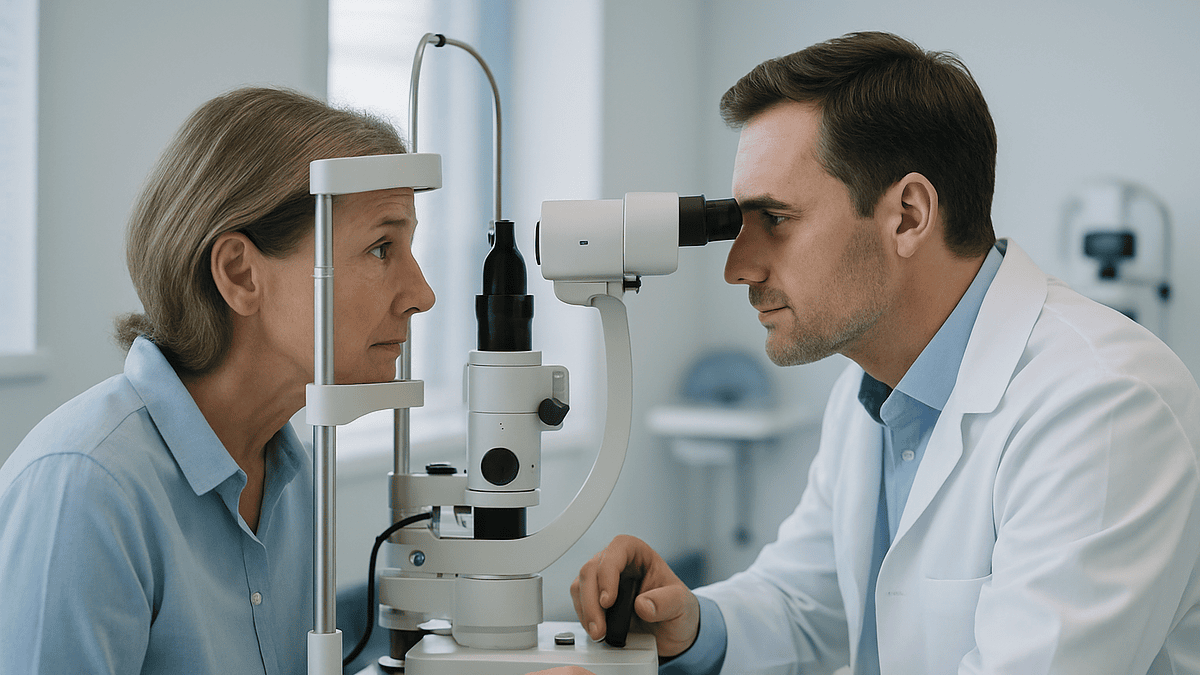
What the device does not do matters just as much. It does not remove skin, reposition fat pads or lift a heavy brow. The eyelid is a layered structure: skin, a thin muscle sheet, a fibrous septum and fat pockets behind it. Plasma acts on the top layer only. Surgical blepharoplasty, by contrast, can address skin, muscle and fat together, as the Mayo Clinic overview of that procedure describes. Understanding that distinction is the single most useful step toward knowing whether you are a realistic candidate.
Who is usually a good candidate for Plexr eyelid tightening?
Ask an experienced practitioner to picture their ideal plexr eyelid candidates and a fairly consistent portrait emerges. The person is an adult with mild to moderate skin laxity: a soft hood over the upper lid that can be lifted with a fingertip and mostly disappears, or fine crepe-like lines on the lower lid that show when smiling. The skin itself is intact, without eczema, active acne, cold sores or recent sunburn near the eyes.
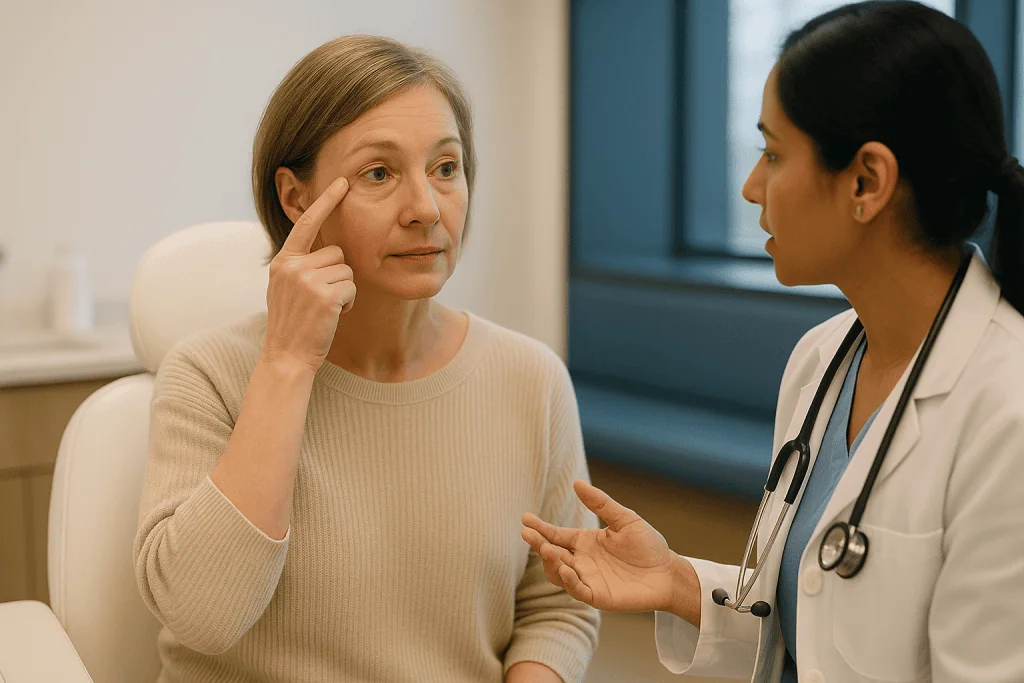
Expectations belong on that list too. Plasma tightening produces a modest change. People who want a subtle refresh, and who would rather avoid an operating room, tend to be happier than those hoping for the dramatic recontouring that surgery can deliver. A good consultation spends as much time on what the treatment cannot do as on what it can.
Skin tone is a genuine clinical variable rather than a cosmetic footnote. Any heat-based injury can trigger post-inflammatory hyperpigmentation, a darkening of skin as it heals, and the risk rises in people with more melanin. That does not automatically exclude darker skin, but it changes the conversation: a test patch, more conservative settings, strict sun protection and honest discussion of the trade-off are typical. The NHS guidance on cosmetic procedures stresses exactly this kind of individualized risk assessment before any treatment.
General health rounds out the picture. Someone who heals well from minor cuts, is not taking medicines that thin the blood or suppress the immune system, has no history of keloid scarring and can follow aftercare for a couple of weeks is on solid ground. None of these points is a promise of a good result. They are the conditions under which the biology described above has its best chance of working as intended, and the treating team weighs them together rather than ticking boxes.
Who is usually asked to wait, or steered toward another option?
Deferral is not rejection. It is the treating team saying that the odds of a clean result are better on a different day, or with a different tool. Several situations reliably prompt that conversation.
Pregnancy and breastfeeding come first, largely because elective procedures are postponed during these periods as a matter of caution rather than proven harm. Active infection anywhere near the eye, including a stye, conjunctivitis or a cold sore, means waiting until it has fully cleared. A recent tan or sunburn raises pigmentation risk and is a common reason to reschedule.
Medical eye conditions deserve their own paragraph. People with significant dry eye, blepharitis (inflammation of the eyelid margins), thyroid eye disease or a history of eye surgery are usually referred for ophthalmology input first. The eyelid protects the cornea, and anything that tightens lid skin has at least a theoretical chance of affecting closure. Mayo Clinic lists dry, irritated eyes and difficulty closing the eyes among the recognized risks of eyelid surgery, and the same anatomical logic applies to non-surgical tightening.
Then there is the medicines list. Blood thinners increase bruising and oozing from the treated points. Systemic steroids and other immune-suppressing drugs slow healing. And isotretinoin, the oral retinoid used for severe acne, occupies a special category that the rest of this article unpacks. If you are taking any of these, do not stop or adjust them for a cosmetic appointment; the prescribing clinician and the practitioner should talk to each other instead.
Finally, a heavy brow or bulging fat pads point away from plasma altogether. Tightening skin over prolapsed fat can accentuate the bulge, and a low brow will keep pushing the lid down no matter how taut the skin becomes. In these cases a practitioner who says no is doing the job well.
Why does isotretinoin matter for a skin procedure months later?
Isotretinoin is a vitamin A derivative taken by mouth for severe or scarring acne. Its power comes from a blunt mechanism: it shrinks the sebaceous glands, the oil-producing structures attached to hair follicles, and cuts sebum output sharply. Less oil means fewer clogged pores and far less food for acne bacteria. MedlinePlus and the NHS both describe the trade-off that follows: dry lips, dry skin, dry nasal lining and dry eyes are among the most common side effects, precisely because oil production has been dialed down everywhere, not just where the acne was.

That whole-body dryness is the first reason the medicine matters for eyelid work. Eyelid skin is the thinnest on the body, and a treatment that deliberately injures it relies on a healthy surface to recover. Isotretinoin also dries the eye itself by reducing secretions from the meibomian glands along the lid margin, which stabilize the tear film. Layering a procedure that may temporarily affect lid closure on top of a medically dried eye is an unappealing combination.
The second reason is deeper and more contested. When skin is injured down to the dermis, new surface cells migrate out from the hair follicles and sebaceous units to close the wound. Isotretinoin shrinks exactly those structures. In the 1980s a cluster of case reports described unusually poor healing and thick, raised scars after mechanical dermabrasion in people on or recently off the drug. Those reports became the basis of a long-standing rule to avoid resurfacing procedures during treatment and for a period afterward.
The medicine also leaves the body over weeks rather than hours, and its effects on gland size and skin dryness fade gradually. That lag is why a course that ended months ago is still relevant, and why the question is never simply whether you are taking it today.
What the evidence actually says about the six-month rule
Two strands of guidance coexist, and both are worth knowing.
The first is conservative and comes from patient-facing drug information. MedlinePlus advises people not to have skin-smoothing cosmetic procedures, naming waxing, dermabrasion and laser treatments, while taking isotretinoin and for at least six months after finishing. The NHS gives the same six-month figure for waxing, dermabrasion and laser skin treatments. These are the sources a pharmacist or family doctor will point to, and they reflect the precautionary tradition that grew out of those early scarring reports.
The second strand is more recent and more nuanced. A systematic review with consensus recommendations from dermatologists and dermatologic surgeons, indexed on PubMed, re-examined the published cases and found the evidence for delaying many procedures thin. The authors concluded there was insufficient evidence to justify postponing superficial chemical peels, manual dermabrasion, minor skin surgery, laser hair removal and non-ablative or fractional lasers in people on or recently off isotretinoin. They kept a note of caution for fully ablative resurfacing and mechanical dermabrasion, where the original concern arose.
Where does plasma sublimation fall? Nowhere neatly. It ablates the surface, so it is not non-ablative; yet it is superficial and spot-based rather than a sheet of resurfacing. The consensus review did not evaluate plasma devices specifically. That gap is the honest heart of the matter: the strict six-month advice is well established but built on older, limited evidence, while the newer, more permissive view has not been tested on this particular technique or on eyelid skin.
Faced with that uncertainty, many practitioners default to the conservative window, and some wait longer for eyelids because the skin is so thin and dry eye is so common on the drug. Others individualize based on how the skin has recovered. Neither approach is reckless; they simply weigh a genuine unknown differently. Your prescribing dermatologist and the person performing the procedure should make that call together.
Plasma tightening compared with blepharoplasty and other options
Eyelid concerns rarely have a single solution, and the right one depends on which layer is causing the problem. The table below summarizes the main routes people consider. It is descriptive, not a ranking, and figures are typical ranges from the cited sources rather than guarantees.
| Option | What it treats | How it is done | Typical downtime | Main limitations |
|---|---|---|---|---|
| Plasma (Plexr-type) tightening | Mild to moderate skin laxity, fine lines | Grid of sublimation points; topical anesthetic | Practitioners commonly describe a week or so of crusting and swelling; not standardized in major guidelines | Cannot remove fat or lift the brow; pigmentation risk in darker skin; unclear evidence after isotretinoin |
| Surgical blepharoplasty | Excess skin, muscle and fat; can address visual field obstruction | Incision in the lid crease or inside the lower lid; local anesthesia with or without sedation | Mayo Clinic: swelling and bruising usually settle over 10–14 days; scars fade over months | Surgical risks including infection, dry eyes, difficulty closing eyes, asymmetry; longer recovery |
| Fractional or ablative laser | Skin texture and laxity | Controlled thermal columns or surface ablation | Varies by depth | Conventional advice defers ablative laser for at least six months after isotretinoin (MedlinePlus, NHS) |
| Radiofrequency or ultrasound tightening | Mild laxity | Heat delivered below the surface without breaking skin | Minimal | Modest effect; eye protection essential |
| Watchful waiting and skincare | Early changes | Sun protection, moisturization, addressing dry eye or allergy | None | Will not reverse established laxity |
Notice how often dry eye appears. It is the thread that links eyelid anatomy, isotretinoin and every tightening method. A person whose eyes already feel gritty at the end of the day has a reason to raise it before choosing any row in this table, and a reason to expect the practitioner to ask.
What a proper eyelid assessment should include
A consultation for plasma tightening can feel brisk, because the procedure itself is quick. The assessment should not be. Several checks separate a considered plan from a hopeful one.
The practitioner should look at the brow before the lid. If gently lifting the eyebrow with a thumb removes most of the hooding, the problem is brow position rather than eyelid skin, and tightening the lid alone will disappoint. Next comes the pinch test: how much skin lifts freely between two fingertips, and whether fat bulges beneath it when the eye looks upward. Bulging suggests the fat pads have pushed forward, a structural issue plasma cannot fix.
Eye health questions follow. Do your eyes water in wind, sting in air conditioning or feel sandy on waking? Have you had LASIK or other eye surgery, which can reduce corneal sensation? Do you wear contact lenses? Each answer bears on how safely the lid can be tightened and on how aftercare is planned.
A full medicines and history review is not optional. That includes prescription drugs, over-the-counter products, supplements that affect bleeding such as high-dose fish oil, and any retinoid, topical or oral, used in the past year. Isotretinoin should be asked about by name, along with the month the course ended, because people often forget that a finished medicine still counts. The NHS recommends that anyone considering a cosmetic procedure discuss their medical history openly and confirm the practitioner is trained and insured for the specific treatment.
Photographs under consistent lighting, a discussion of pigmentation risk based on skin type, and a written aftercare sheet round out a thorough visit. If the consultation skips the brow, the eye questions or the medicines list, that omission tells you something about the standard of care on offer, and it is reasonable to seek a second opinion.
Plasma eyelid tightening recovery: what the first two weeks usually look like
The consumer health sources cited here do not publish a standardized recovery calendar for plasma eyelid treatment, so the sequence below reflects what practitioners commonly describe. Your own team’s written instructions take precedence over anything in this section.
Immediately afterward the treated area shows a grid of small brown dots and feels warm, a little like a mild burn. Swelling is the dominant experience of the first few days, and on the eyelids it can be striking: the lids are loose, thin and drain slowly, so fluid pools there. Some people find the upper lid puffy enough to narrow the eye for a short time. Sleeping with the head raised and applying a cool compress through clean cloth are the usual comfort measures.
The dots dry into tiny crusts. Practitioners typically ask that these be left entirely alone, kept clean and lightly covered with a recommended barrier product, and not picked, soaked or covered with makeup. Picking is the most common self-inflicted cause of pigmentation and small pits. The crusts separate on their own, usually within the first week or so, revealing pink skin underneath.
Redness and a slightly shiny texture then fade over subsequent weeks as collagen remodeling continues. Sun protection during this phase is not cosmetic advice; it is the main lever a person controls over whether the new skin heals evenly or darkens. Contact lenses, eye makeup and vigorous exercise are generally paused until the practitioner clears them.
For comparison, Mayo Clinic notes that after surgical blepharoplasty most swelling and bruising subsides within 10 to 14 days, with scars continuing to mature for months. Plasma tends to sit on the shorter side of that, but the underlying rule is identical: visible healing is quick, structural healing is slow, and the final appearance is judged months later, not at the first mirror check.
Risks and side effects, stated plainly
Every treatment that injures skin on purpose carries risk, and the eyelid is an unforgiving place to have a complication. The neutral list matters more than any reassurance.
Common and expected effects include swelling, redness, crusting, temporary tightness and mild discomfort. These are part of the process rather than problems. Less common but well recognized outcomes include post-inflammatory hyperpigmentation, especially in medium to dark skin tones or after early sun exposure; hypopigmentation, meaning pale spots where pigment cells were damaged; small depressed marks where a point was treated too deeply or a crust was picked; and prolonged redness that lasts longer than expected.
Infection is uncommon when aftercare is followed but possible whenever the skin barrier is broken, and the eye is close by. Rare but serious risks specific to the periorbital area include heat injury to the eye if it is not properly protected, and changes in lid position. If skin is over-tightened on the lower lid, the margin can be pulled downward, a condition called ectropion that exposes the inner lid surface. Over-tightening the upper lid can, in theory, interfere with complete closure. Mayo Clinic lists difficulty closing the eyes, dry irritated eyes and skin discoloration among the risks of eyelid surgery; the mechanisms overlap with aggressive non-surgical tightening.
Isotretinoin history adds its own caveats: potentially slower re-epithelialization, an already dry eye surface, and a small unresolved question about abnormal scarring after ablative injury. These do not turn a low-risk procedure into a high-risk one in every person, but they do shift the balance, which is why the timing conversation exists.
None of these events has a reliable frequency that can be quoted from a named guideline for plasma devices specifically, and any practitioner offering precise percentages for this technique should be asked where the numbers come from.
Skin tone, sun exposure and the pigmentation question
Pigmentation deserves more than a line in the risk list, because it is the outcome most likely to bother a person who otherwise healed well. Post-inflammatory hyperpigmentation happens when inflammation stimulates melanocytes, the pigment-producing cells, to release extra melanin into the healing skin. The result is a brown or gray patch that can outlast the tightening effect it accompanied.
Two factors dominate. The first is baseline skin type: people who tan easily and rarely burn have more active melanocytes and a higher chance of the response. The second is ultraviolet light in the weeks after treatment, which acts on already-primed cells. Fresh eyelid skin under a summer sky is close to a controlled experiment in how to produce a dark patch.
A careful practitioner may propose a test spot on less visible skin, use lower energy or wider spacing between points, or suggest a period of pre-treatment skincare to calm the skin. Some will decline to treat medium and dark skin tones with plasma altogether and offer a different method. That is a legitimate clinical position, not a reflection on the patient.
Isotretinoin intersects here as well. The drug increases photosensitivity, meaning skin burns more readily in sunlight, and MedlinePlus advises protective clothing and sunscreen throughout treatment. Skin that has recently come off the medicine may still be more reactive to sun than the person remembers from before their course, which is one more reason the timing of any heat-based eyelid procedure is discussed carefully.
Practical protection is straightforward: a broad-brimmed hat, wraparound sunglasses once the practitioner permits them, and a mineral sunscreen applied to the treated area once the skin has closed and the team has approved it. The rules are unglamorous, and they are the difference between a result people notice and one they hide.
What people often get wrong about plasma eyelid treatment
Cosmetic procedures accumulate folklore quickly. A few myths appear again and again in eyelid consultations.
The first is that plasma is a scalpel-free blepharoplasty. It is not. Surgery removes and repositions tissue; plasma shrinks the surface. The two can suit the same person at different life stages, but they are not interchangeable, and describing plasma as a non-surgical version of an operation sets up disappointment.
The second is that isotretinoin only matters while you are actually swallowing the capsules. The drug’s effects on oil glands and skin dryness persist for weeks to months after the last dose, which is why both MedlinePlus and the NHS extend their caution on resurfacing procedures to at least six months after a course ends. Finishing the medicine resets the calendar; it does not clear it.
The third, pulling in the opposite direction, is that any cosmetic treatment after isotretinoin is dangerous for a year or more. The dermatology consensus review indexed on PubMed found little evidence to support blanket delays for superficial procedures. The honest position is that the risk is uncertain for ablative eyelid work, not that it is proven high.
Fourth: more dots mean more lift. Denser treatment means more injury and higher pigmentation and scarring risk. Conservative sessions, repeated if needed, are the safer route, and a practitioner who resists doing too much in one sitting is protecting you.
Fifth: results are permanent. New collagen ages like the rest of the face. Sun, smoking, sleep and genetics keep working after the appointment, and repeat treatment is common.
Finally, some assume that because no cutting is involved, anyone can perform the procedure. The NHS is explicit that people should check the qualifications, training and insurance of anyone offering a cosmetic treatment. Around the eye, that check is not a formality.
Plexr after isotretinoin: how the plan usually changes
Suppose Maya, from the opening, sits down for her consultation. She finished isotretinoin four months ago and her skin has settled. What tends to happen next?
The practitioner will usually want to know three things: when the course ended, how the skin has behaved since, and whether her eyes still feel dry. If dryness lingers, that alone may be reason to wait, and a visit to an optometrist or ophthalmologist for a tear-film assessment can be a sensible first step. Artificial tears are frequently suggested for the eye symptoms of isotretinoin by prescribing clinicians, but any change to her regimen belongs to them, not to the aesthetic practitioner.
On timing, the practitioner has two anchors. The patient-information standard from MedlinePlus and the NHS says at least six months after stopping before waxing, dermabrasion or laser. The specialist consensus suggests many superficial procedures need no such delay, while still urging caution for fully ablative work. Plasma is ablative but shallow. A common compromise is to honor the six-month window for eyelids, then begin cautiously: a single test area, moderate settings and a longer gap before any second session. Some clinicians will want the prescribing dermatologist to confirm, in writing, that they see no objection.
Aftercare becomes stricter rather than different. Skin that recently came off a retinoid may stay dry and fragile for longer, so barrier ointment, sun avoidance and hands-off discipline carry extra weight. The review appointment is often scheduled sooner to catch slow healing early.
What does not happen is any adjustment of the acne treatment to accommodate the eyelids. Starting, stopping or pausing isotretinoin for a cosmetic procedure is not a decision for a cosmetic clinic, and a prescriber should never be bypassed. If the acne is still active enough to need the medicine, the eyelids can wait; the reverse is rarely true.
Questions to ask your care team before agreeing to treatment
A good consultation welcomes questions, and the quality of the answers is itself a screening tool. These are the ones worth bringing, written down so they survive the nervousness of the moment.
- Is my hooding mainly skin, or is my brow or fat contributing? What would you expect plasma to change and what would it leave alone?
- How will my eyes be protected during the procedure, and what is your plan if I already have dry eye?
- I finished isotretinoin in a particular month. How does that change your timing, your settings and your aftercare for me specifically, and would you like to speak with my prescribing dermatologist?
- Given my skin tone, what is your assessment of pigmentation risk, and would you recommend a test patch first?
- What training and insurance do you hold for this device around the eye, and how many eyelid treatments do you perform in a typical month?
- What does the first two weeks look like in your experience, and when would you want to see me again?
- Which problems should prompt me to contact you the same day, and how do I reach you outside clinic hours?
- If the result is uneven or too subtle, what are the realistic next steps?
Notice that none of these asks for a guarantee. The purpose is to understand the practitioner’s reasoning, not to extract a promise. Vague replies about how everyone heals beautifully, or a reluctance to discuss the isotretinoin question at all, are useful information. So is an unprompted explanation of why they might decline to treat you today; that is what an evidence-led practitioner sounds like.
Bring a complete list of medicines and supplements, including anything used for acne in the past year, and photographs of your eyes from a few years ago if you have them. Comparing then and now helps everyone agree on what has actually changed and what a realistic target looks like.
When to call your doctor
Most recovery from plasma eyelid treatment is uneventful, and swelling, mild redness and crusting are expected. Some signs are not part of the process and warrant a prompt call to the treating practitioner or, if the eye itself is involved, urgent medical or ophthalmology assessment.
Contact the team the same day for spreading redness beyond the treated grid, increasing rather than easing pain after the first two days, yellow or green discharge, a foul smell, or fever. These can indicate infection, which is treatable but should not be left to see whether it settles.
Seek urgent care for any change in vision, including blurring that does not clear with blinking, eye pain, marked sensitivity to light, a sensation of something in the eye that will not go away, or an eye that will not close fully. The cornea depends on the lid for protection, and exposure can damage it within hours. Sudden severe swelling of the face or lips, or difficulty breathing, is an emergency and needs immediate help.
Call as well if a lower lid appears to be pulling away from the eye, if crusts have been in place well beyond the expected period without separating, if skin is turning noticeably darker or lighter, or if any area looks pitted or raised as it heals. Early review gives the team more options.
People who recently completed isotretinoin should have a lower threshold for calling, because slower healing is the specific concern. A photograph sent to the clinic can often settle whether a visit is needed. Whatever the situation, do not treat the area with leftover creams, do not remove crusts to inspect underneath, and do not stop or restart any prescribed medicine on your own. The decision about what happens next belongs to the clinicians who know your history.
Deciding well when plasma is not the right fit
Sometimes the most valuable outcome of a consultation is learning that this particular tool is wrong for this particular eyelid. That is not a dead end.
Start by asking whether the change is medical rather than cosmetic. Drooping that has appeared quickly, affects one side more than the other, or comes with a change in vision needs evaluation by a physician before any aesthetic discussion. Thyroid disorders, allergies that cause chronic lid swelling, and weakness of the muscle that lifts the lid all produce eyelid changes that no skin treatment addresses. MedlinePlus and the NHS both describe when eyelid drooping should be medically assessed rather than treated cosmetically.
If the problem is structural, meaning fat, muscle or brow position, surgical blepharoplasty or a brow procedure is the relevant conversation, and it belongs with a surgeon trained in oculoplastic or facial plastic work. Mayo Clinic notes that upper lid surgery is sometimes done to improve vision when skin obstructs the visual field, which also changes how the discussion is framed.
If the issue is timing, because of isotretinoin, a recent tan, an eye infection or life circumstances, then waiting is simply part of the plan. Skin that has fully recovered from a retinoid course, eyes that have been checked and treated for dryness, and a season with less sun all tilt the odds toward a cleaner result later.
And if the answer is that the change is mild and you are ambivalent, doing nothing is a legitimate clinical choice rather than a failure of nerve. Consistent sun protection, treating dry eye and allergies, and not smoking preserve eyelid skin more reliably than any single procedure. The people who tend to fare best with cosmetic treatment are those who arrive having already ruled out the medical explanations, understood the limits of the method, and decided that a modest, honest result would be worth the recovery. Everything else is detail for the treating team to work through with you.
Frequently asked questions
Is Plexr safe for eyelids?
Plasma eyelid tightening can be performed safely on suitable people by trained practitioners who protect the eyes and assess candidacy carefully, but it carries real risks including pigmentation change, small scars, infection and, rarely, altered lid position or eye injury. Safety depends on patient selection, device settings and aftercare more than on the device name. No major guideline publishes complication rates specific to plasma eyelid devices, so ask any practitioner where their figures come from.
How long after isotretinoin can I have plasma eyelid tightening?
Patient information from MedlinePlus and the NHS advises waiting at least six months after finishing isotretinoin before waxing, dermabrasion or laser skin procedures, and many practitioners apply the same window to plasma eyelid work. A dermatology consensus review suggests superficial procedures may not require that delay, but plasma was not specifically studied. The timing decision should be made jointly by your prescribing dermatologist and the person performing the treatment.
What does a plasma fibroblast eyelid lift feel like?
Most people describe a hot pinprick or snapping sensation at each point, softened by a topical numbing cream applied beforehand. Afterward the area feels warm and tight, similar to a mild sunburn, and swelling is the main discomfort over the first few days. Pain that increases after the second day rather than settling is not typical and should be reported to the treating team.
Can plasma tightening replace blepharoplasty?
No. Plasma acts on the surface layer of skin only, producing a modest tightening, whereas surgical blepharoplasty can remove excess skin, adjust muscle and reposition fat pads. People with heavy hooding, bulging fat or a low brow are generally better assessed for surgery or a brow procedure. Plasma suits mild to moderate skin laxity in people who prefer to avoid an operation and accept a subtler result.
Why does isotretinoin cause dry eyes and why does that matter here?
Isotretinoin reduces secretions from oil glands throughout the body, including the meibomian glands along the eyelid margin that stabilize the tear film, so tears evaporate faster and eyes feel gritty. Eyelid tightening can temporarily affect lid closure and blink quality, so treating an already dry eye raises the risk of surface irritation. Practitioners often ask that eye dryness be assessed and settled before scheduling treatment.
What is plasma eyelid tightening recovery usually like?
Practitioners commonly describe swelling that peaks in the first few days, small brown crusts that separate on their own over roughly a week, and pink skin that fades over the following weeks. Major consumer health sources do not publish a standardized calendar for plasma specifically. For comparison, Mayo Clinic notes that swelling and bruising after surgical blepharoplasty usually settle within 10 to 14 days. Your team’s written aftercare plan takes precedence.
Does darker skin rule out plasma eyelid treatment?
Not automatically, but it raises the chance of post-inflammatory hyperpigmentation, a darkening of skin as it heals after heat injury. Many practitioners respond with a test patch, more conservative settings, strict sun avoidance and a frank discussion of the trade-off; some prefer to offer a different method. A practitioner who declines to treat a particular skin type with plasma is making a legitimate clinical judgment rather than a personal one.
Should I stop isotretinoin early so I can have my eyelids treated sooner?
No. Starting, stopping or pausing isotretinoin is a decision for the prescribing clinician based on your acne, not a cosmetic scheduling matter. Cutting a course short can leave acne undertreated, and finishing the medicine does not immediately remove its effects on oil glands and skin dryness. If your acne still needs the medicine, the eyelid treatment can wait until your dermatologist and practitioner agree the timing is appropriate.
Who should not have plasma eyelid tightening at all?
People with active infection or inflammatory skin disease near the eyes, uncontrolled dry eye or other significant eye conditions, a history of keloid scarring, pregnancy or breastfeeding, and those taking blood thinners or immune-suppressing medicines are usually deferred or steered toward alternatives. Anyone whose eyelid change is sudden, one-sided or accompanied by vision change needs medical assessment first, because causes such as thyroid disease or muscle weakness are not cosmetic problems.
How do I check whether a practitioner is qualified to treat my eyelids?
Ask directly about their professional registration, specific training on the device, insurance covering eyelid treatment and how often they perform it. The NHS advises anyone considering a cosmetic procedure to verify training and insurance and to be wary of pressure to decide quickly. A thorough consultation that examines your brow, asks about eye health and reviews your full medicines history, including past isotretinoin, is itself a sign of appropriate standards.
References
- MedlinePlus: Isotretinoin
- NHS: Isotretinoin capsules
- NHS: Eyelid surgery
- PubMed: Isotretinoin and Timing of Procedural Interventions: A Systematic Review With Consensus Recommendations
This article is for general information only and is not a substitute for professional medical advice. Please consult a qualified doctor about your individual situation.
Add us as a Preferred Source to see more of our trusted health content across Google Search, AI Overviews and Discover.

More from the Blog
Life After Laser Eye Surgery: Eye Rubbing, Swimming, Makeup and Sports Explained
After LASIK, rubbing your eyes is discouraged because the corneal flap is held in place mainly by suction and a thin layer of healing…

What Follow-Up Imaging After Cryoablation Shows and Why the Treated Area Changes Slowly
Follow-up imaging after cryoablation checks whether the frozen zone fully covered the target and watches for any regrowth at its edge. The treated area…

Preparing for Reconstructive Surgery: Imaging, Anesthesia Review and Medication Adjustments
Preparing for reconstructive surgery usually involves three strands: imaging such as CT or MRI so the surgeon can plan bone and soft-tissue repair, an…
Skincare After Microdermabrasion: Moisturizer, Sunscreen and When Retinoids Can Restart
Skincare after microdermabrasion is deliberately simple: cleanse gently, apply a plain fragrance-free moisturizer several times a day, and wear broad-spectrum sunscreen every morning, because…

After Aesthetic Filling: Swelling, Bruising and the Days to Avoid Sauna and Hard Exercise
Swelling and bruising after dermal filler are expected and usually peak within the first 24–72 hours, then fade over one to two weeks; hyaluronic…

When Filler Results Disappoint: Adjusting, Dissolving and Waiting It Out Explained
When filler results disappoint, there are usually three routes: adjusting with a small further treatment, dissolving dermal filler with an injectable enzyme called hyaluronidase,…